Elliot C. Williams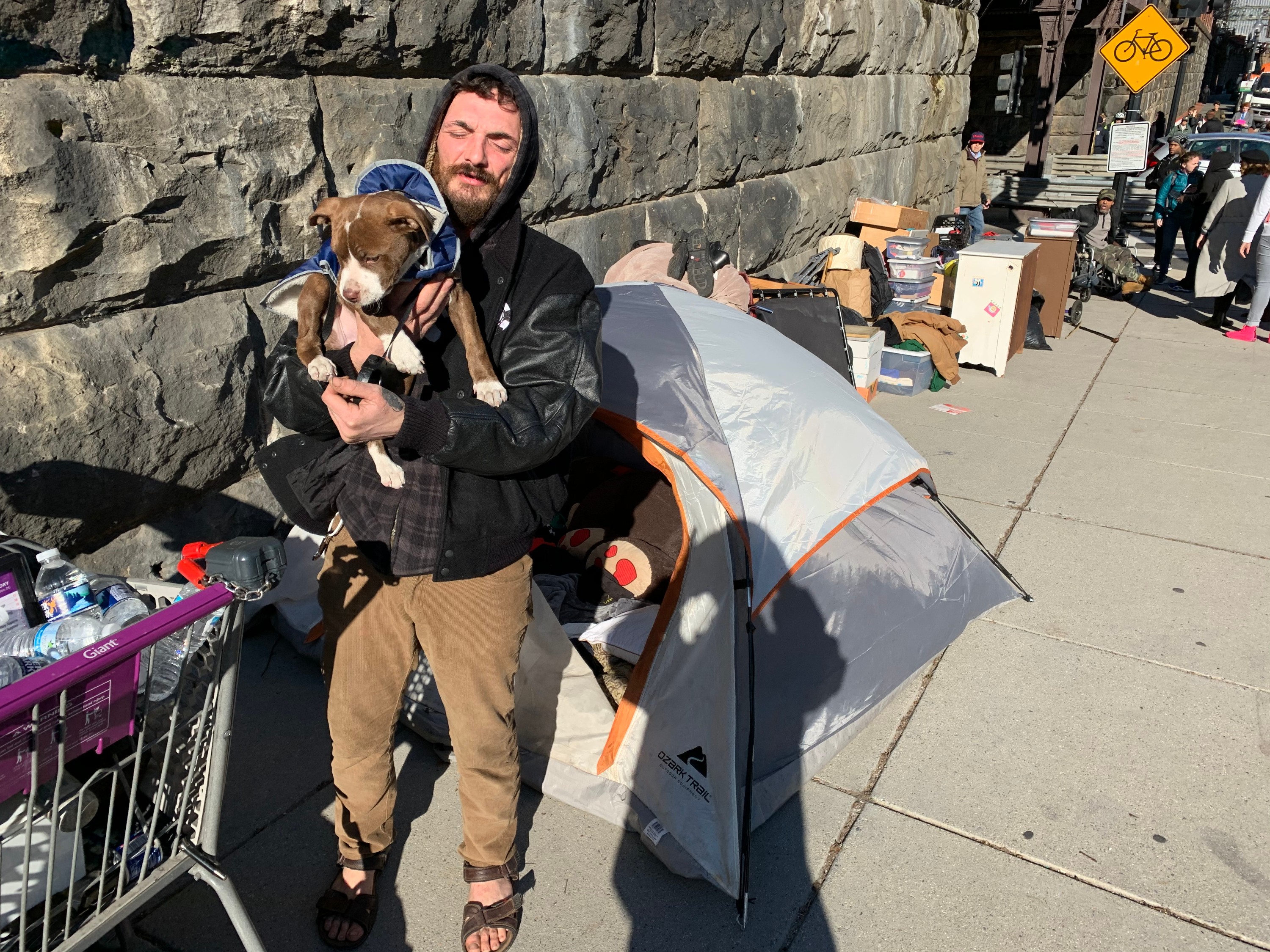

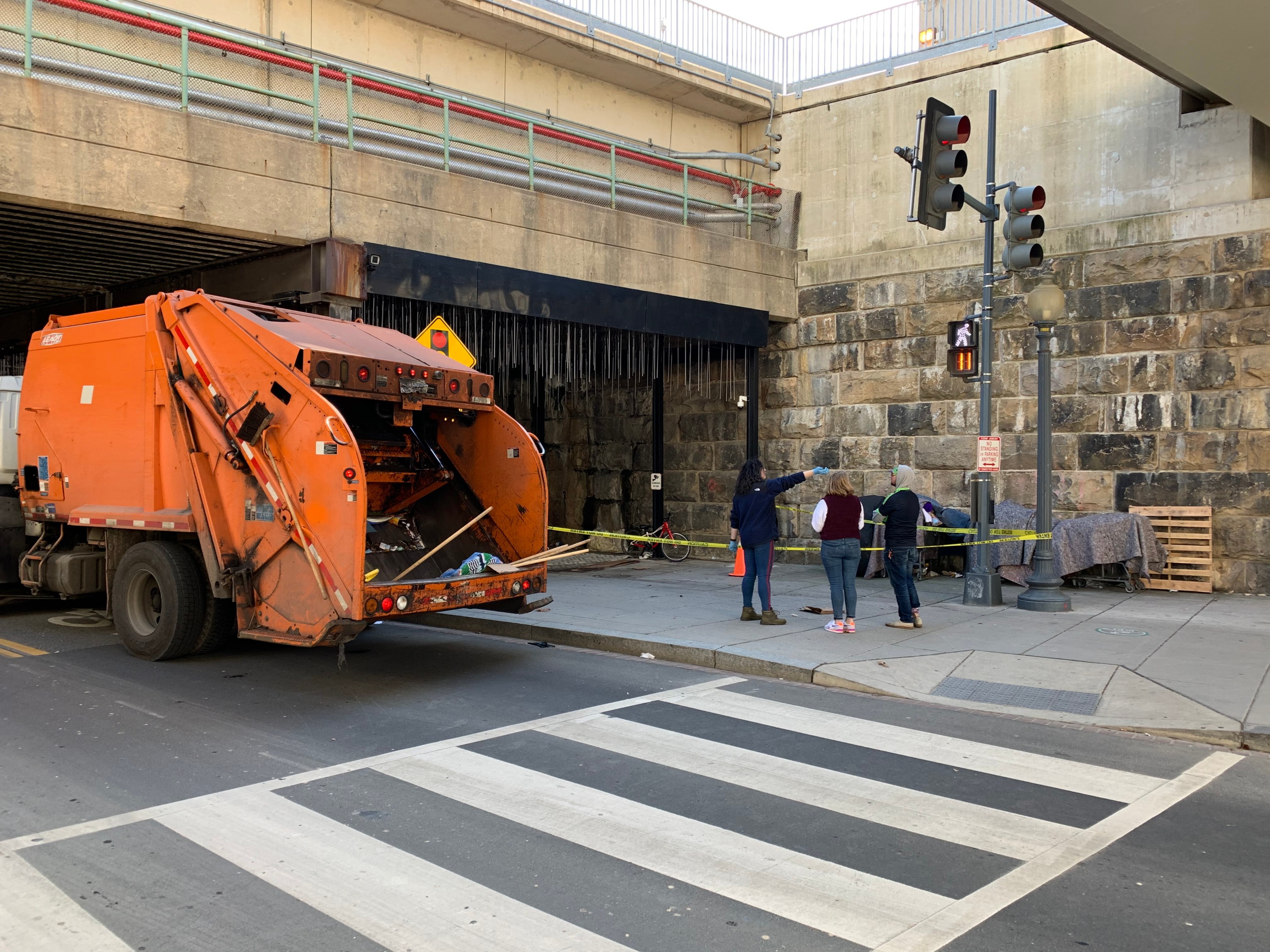
At 9:45 a.m., Michael Harris finally asked for help.
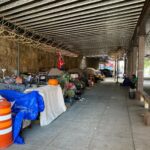
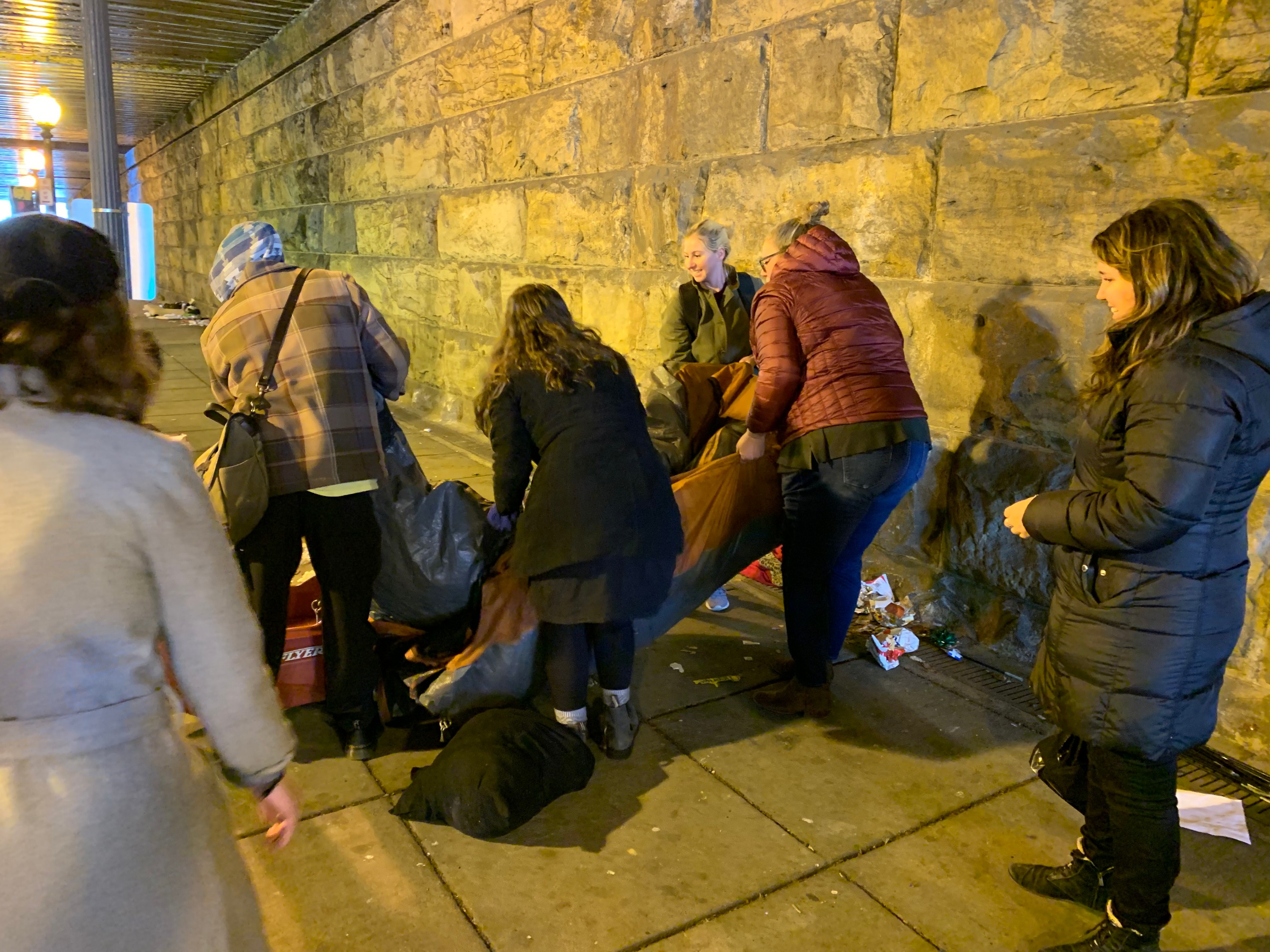
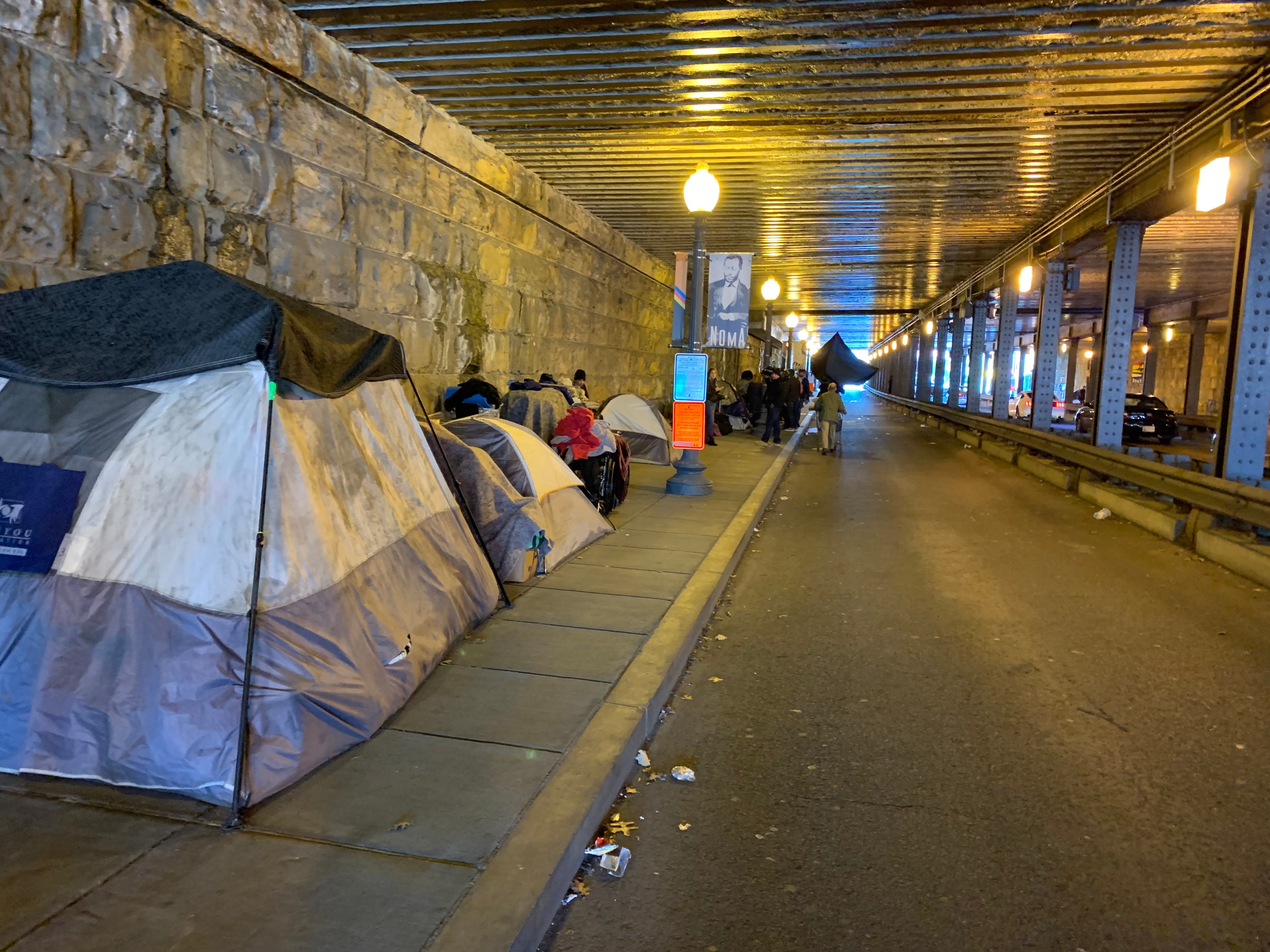
Harris had spent most of Thursday morning waking up his neighbors at a homeless encampment at the K Street NE underpass and eyeing the MPD officers across the street. He wheeled around, offering words of encouragement and checking in on the half-dozen people that remained on his side of the underpass. But just minutes before city workers began the permanent removal of the encampment, the unofficial mayor of the block finally turned to his own things.
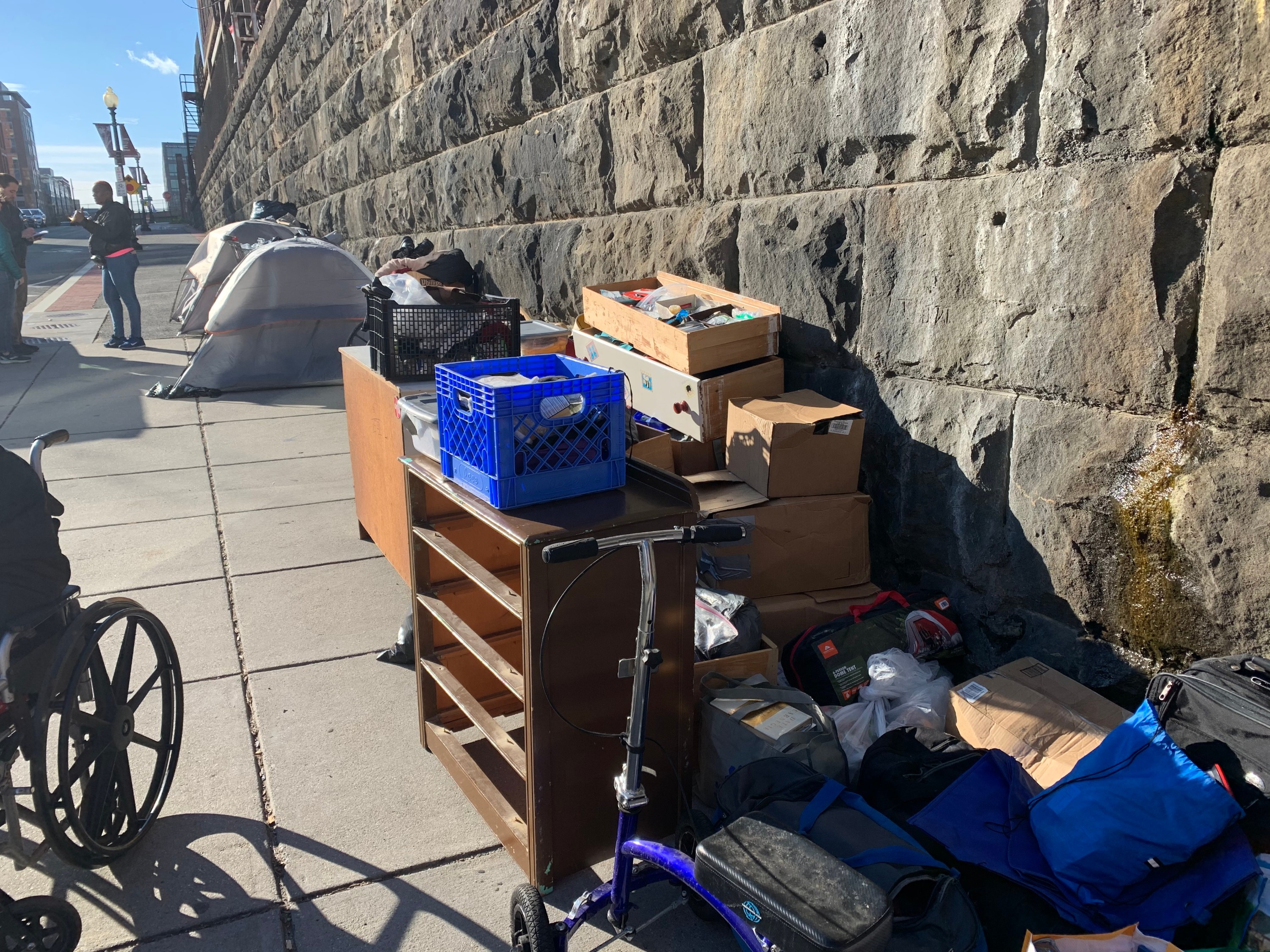
“Two people, I need two people,” Harris said, prompting two volunteers to grab a dresser he pointed at. Within 15 minutes, Harris’ whole life moved a block away.
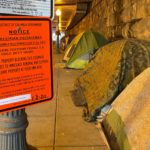
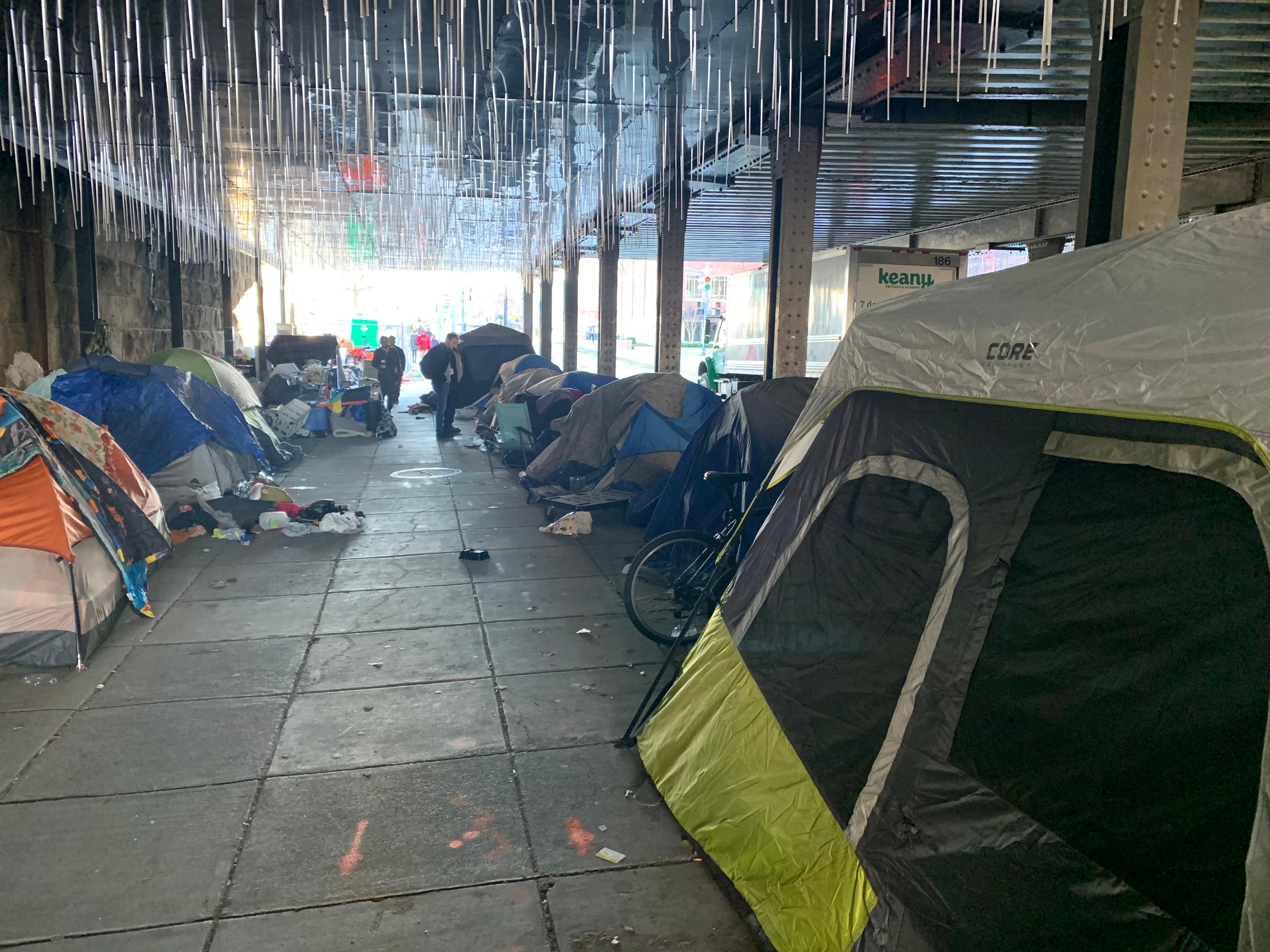
News of the scheduled cleanup spread when the city posted new orange signage on January 3, signaling an “immediate removal and disposal” of all property on the sidewalk. Unlike the previous clearings, which typically happen every other week at the encampments on K, L, and M streets in NoMa, this one will be permanent. The city plans to continuously clear the block without advance warning. Many fear that the other streets could be next.
“There is no plan for us,” Harris says. “They want to cause discomfort. They want us to be uncomfortable here, because they don’t want us here. On K Street, we’re not allowed to come back.”
Starting at 10 a.m., police officers and Department of Public Works employees taped off the narrow outer lanes and slowly moved in dump trucks and Bobcat machines to clear anything that was left, followed by sweeping and power washing of the sidewalks. One woman who was still helping to move the tents shouted, “You will not touch this stuff,” as the clearing began. A man kicked a liter bottle of soda into the street in frustration as he continued to clear out his tent.
Volunteers helping to move the tents and offer other support included Black Lives Matter D.C. activists, students from Gonzaga High School, and at least one passerby.
Edward Goins, a personal trainer, noticed the removal while riding his bike home from work and stopped to help out. Imagine having your home uprooted with such short notice, he says he thought to himself.
“A lot of people weren’t even here to collect their stuff—they’re going to come back and realize that all their things are gone,” Goins says. “Everybody always talks about how much they love D.C., but if you love D.C. you’ve gotta love D.C.’s people.”
Intense scene at K Street homeless encampment, where volunteers are helping move tents and belongings for those who haven’t already moved from the underpass. pic.twitter.com/xltcQFB1YL
— Elliot C. Williams (@ecwilliams30) January 16, 2020
The question that lingered on everyone’s mind: where will these people go?
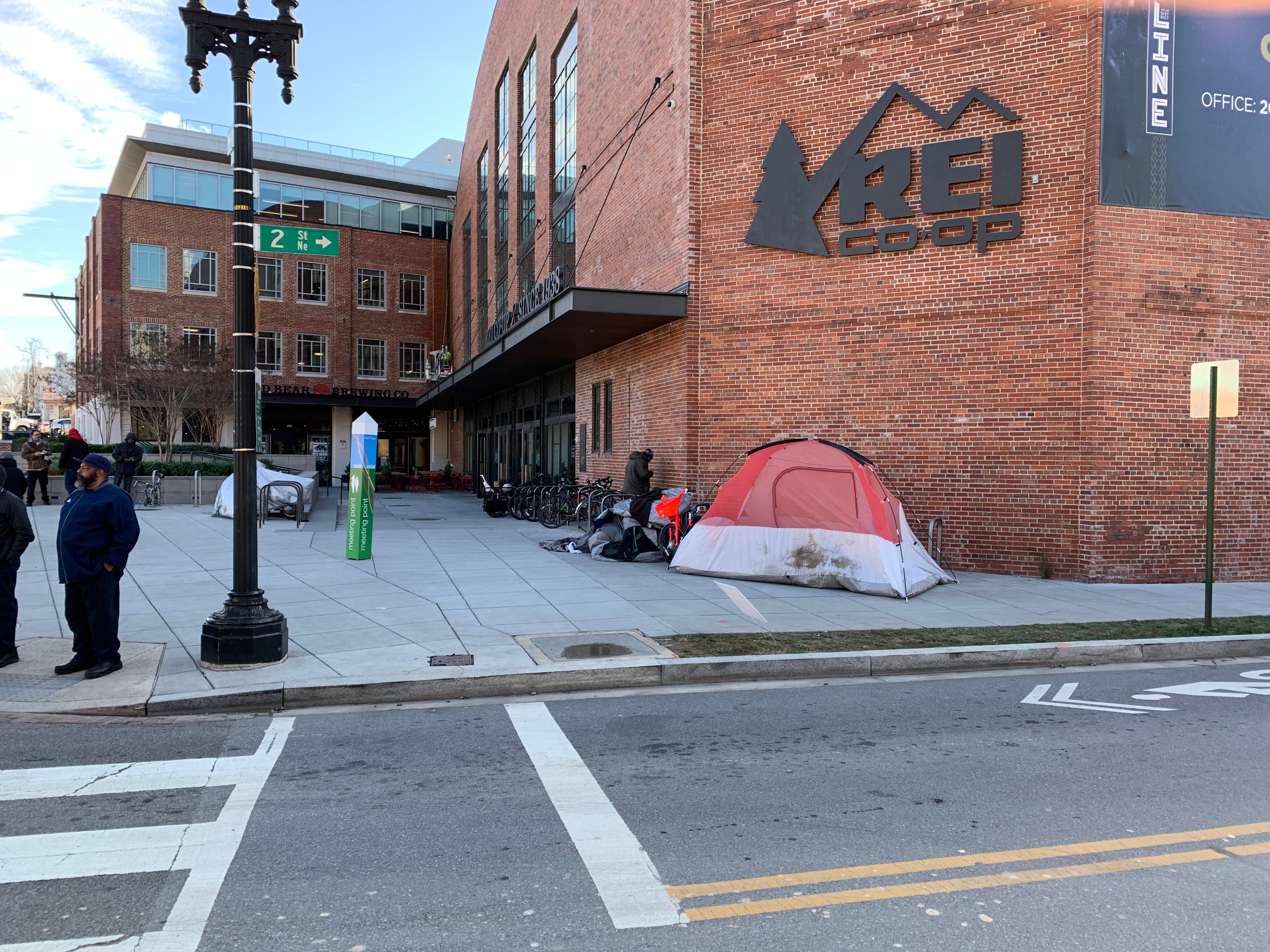
Some plan to move to the nearby L and M Street encampments, like Aaron Garland, who says that a shelter would be a bad option for him and his puppy, Buttercup.
Ann Marie Staudenmaier, with the Washington Legal Clinic for the Homeless, scrambled to figure out where people could move their tents throughout the morning. The clinic, along with firm Covington & Burling, are providing legal assistance to homeless individuals who have filed a lawsuit against the District, citing a violation of their Fourth Amendment rights.
“My general sense of this is just sadness, that the city is following through with this when they know there’s a winter storm coming,” Staudenmaier says. “They have not adequately provided alternatives for the people who are staying in this underpass and have instead said, ‘Well, you can just go to shelters,’ when literally none of these people can be in shelters safely.”
Street Sense Media, which has been closely covering the encampment removal, is hoping to push the discussion on homelessness forward with a January 23 panel featuring NoMa BID president, Robin-Eve Jasper, local residents, and advocates for the homeless. Street Sense has invited Mayor Muriel Bowser and a host of other city officials.
Jasper has previously suggested the creation of “pedestrian safe-passage zones” in an open letter in which she said the encampments create a safety hazard for residents walking by.
“Many report that they have been harassed as they walk by the tent encampments, where people frequently engage in aggressive panhandling and occasionally menace passersby,” she wrote. “Used and bloody hypodermic needles and other drug paraphernalia, rotting food, trash, broken glass, public nudity, prostitution, sales of illegal drugs, and human urine and feces are encountered by those whose routes take them by the encampments and pervade the space in which encamped individuals are living.”
Jasper’s letter prompted backlash from advocates, but city leaders moved forward with discussions about clearing the K Street encampment. Signs announcing the impending cleanup appeared near the underpass in early January.
The District has cleared homeless encampments across the city for years, while simultaneously approving art installations in the underpasses where people have found shelter, leaving the homeless community and advocates searching for answers.
But while the larger discussion looms overhead, people who’d been living under the K Street underpass are facing the immediate pressures of displacement. By noon on Thursday, Aaron Garland was trying to figure out how to transport his pile of stuff, now sitting across the street from the Union Place luxury apartments. Word spread that a volunteer with a flatbed truck was on his way. Garland patted his puppy on the head and whispered, “Shhh. It’s okay. It’s okay.”
There’s No Paywall Here
DCist is supported by a community of members … readers just like you. So if you love the local news and stories you find here, don’t let it disappear!