Rachel Kurzius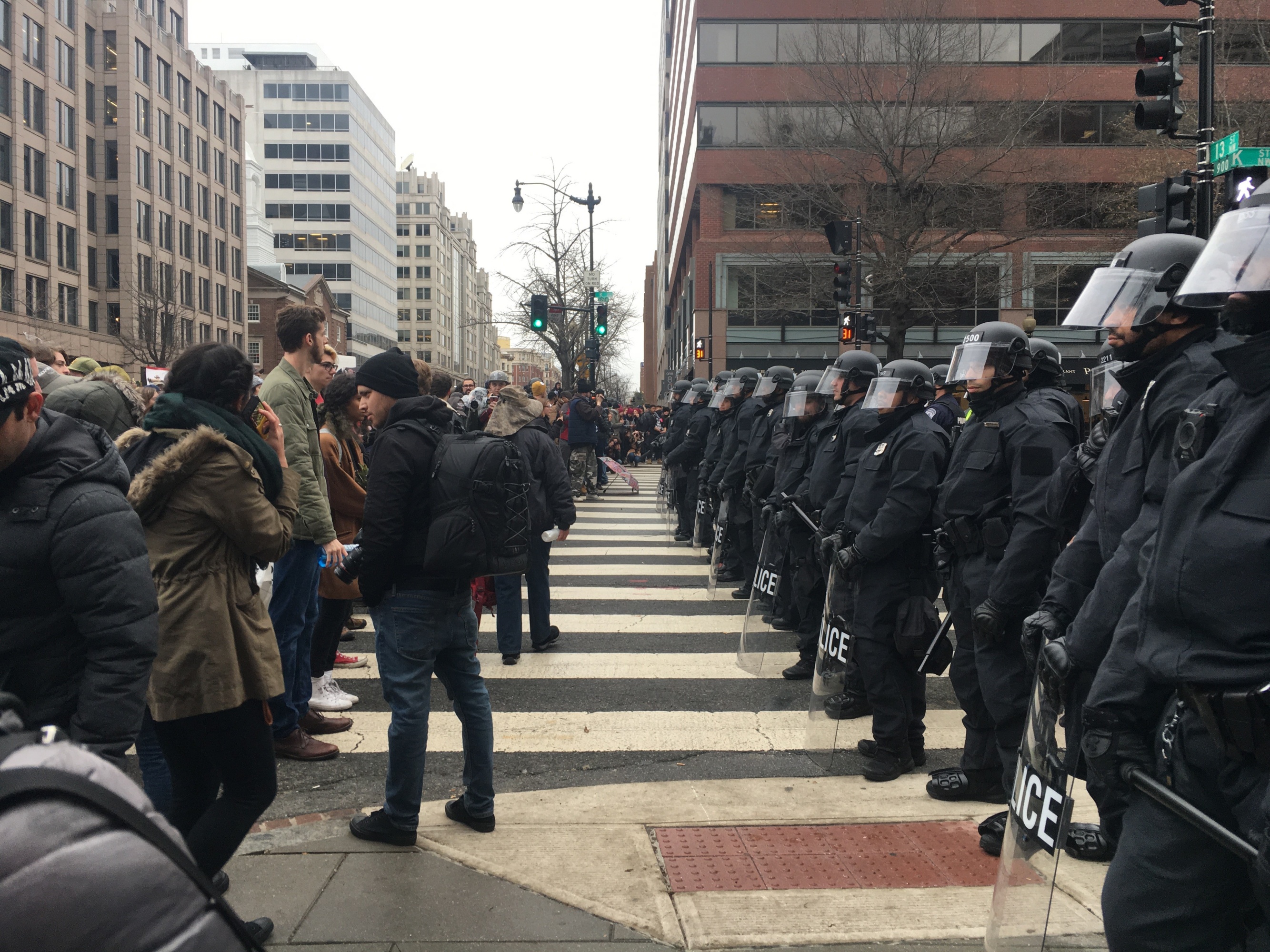
A pair of journalists who came to the District to cover the inauguration of President Donald Trump in 2017 are suing D.C. and its police force after they were pepper-sprayed and arrested during a demonstration that day—actions they claim were unconstitutional. Alexei Wood and Aaron Cantú were both charged with felony rioting, despite contending that they were at the event as members of the media.
“What they did to my life personally, along with 230-something other people, was injustice, and it was used to silence dissent. I just can’t sit well with that and I just can’t let that go,” says Wood, a photojournalist who was among the first arrestees to face trial and the potential of decades in prison. A jury found him not guilty of all charges. “It feels like a really pertinent point that journalists were arrested, just as pertinent as protesters and just as pertinent as legal observers and bystanders … We need to have journalists be able to tell the stories and get to the bottom of things. Otherwise, we live in an utterly ignorant world.”
This marks the latest lawsuit related to police actions on January 20, 2017, and likely the final one—as of Monday, the statute of limitations has expired for many of the civil claims related to alleged police misconduct. Already moving through the courts are a class action lawsuit and a lawsuit filed by the American Civil Liberties Union of D.C. on behalf of six plaintiffs, including a photojournalist, a legal observer, and a 10-year-old boy. In late September, a federal judge ruled that the ACLU lawsuit could move forward, while granting the government’s motion to dismiss some of the claims.
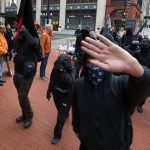
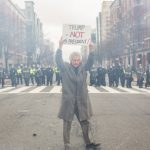
All of these cases stem from Metropolitan Police Department’s response to a permitted protest on Inauguration Day, during which a group of hundreds of people—many of whom were clad in black and wearing masks—marched from Logan Circle to Franklin Square. When some of the marchers began to smash windows, set fires, and commit other property damage, police began to use pepper spray and flash bang grenades against protesters. (Police consistently denied the use of flash bang grenades that day, but a report contracted by the city found that officers indeed employed them, and “these less lethal devices were at times used inappropriately.”)
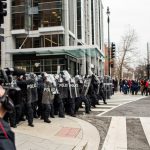
Officers ultimately surrounded more than 200 people, including Wood and Cantú, and conducted a mass arrest. (This was the first mass arrest for D.C. police since the 2002 Pershing Park incident, which led to a policy change after the city was forced to pay out millions of dollars in damages.) The lawsuit alleges that officers took their time with the arrest process to keep protesters “in a state of anxiety, hunger, thirst, and other discomfort.”
The lawsuit alleges that Wood and Cantú have suffered severe emotional distress as well as reputational damage due to their experiences during their arrest and prosecution. Cantú tells DCist that his name appeared in his hometown newspaper and on a white supremacist website, in the latter case alongside a racist slur, and Wood describes the publicity he received before and during trial as “horrendous.”
They are seeking damages, claiming that MPD violated the First, Fourth, and Fifth amendments, by arresting them for protected speech and without probable cause, using excessive force, and intentionally inflicting emotional distress.
While Wood and Cantú weren’t the only journalists arrested by police that day, the U.S. Attorney’s Office of D.C. dismissed felony charges against a handful of other reporters covering the protests in the following weeks. Both Wood and Cantú were operating as freelance journalists, and were among the more than 200 people charged en masse with felony rioting.
The prosecution argued that everyone arrested should be held responsible for the destruction that day. “A person can be convicted of rioting without breaking a window,” Assistant U.S. Attorney Jennifer Kerkhoff said at a pre-trial hearing. “It is the group who is the danger, the group who is providing the elements.”
This legal argument led to criticism from free speech and journalism advocates. The prosecution of Wood and Cantú in particular led to outcry. “In order to cover these newsworthy events, journalists have to be present. As the march progressed down city streets, journalists would have to follow it and move in proximity to it in order to cover it,” a number of press freedom groups wrote in an open letter before Wood’s trial. “Yet, because of this proximity prosecutors are arguing that journalists are not only guilty of property damage committed by at most a handful of individuals in a march the journalists sought to cover, but guilty of conspiracy to riot and inciting a riot. Under such a theory, the very act of journalism is criminalized.”
During his trial in late 2017, Wood’s status as a journalist was often questioned by prosecutors. He had livestreamed the unpermitted demonstration, and the 42 minutes of footage showed definitively that Wood was not among the people who destroyed property, though he provided commentary about the goings-on. Before the trial began, Judge Lynn Leibovitz said that Wood was not like journalists like broadcaster Andrea Mitchell because the livestream was “a cheering of the event publicly to others. It’s a broadcasting to others as events are happening.”
Still, Wood, along with the other five defendants in the first trail, was acquitted. Ultimately, Kerkhoff and the other prosecutors were not able to secure any guilty verdicts from a jury after series of trials. Prosecutors did, however, face sanctions after what the judge deemed a “serious violation” for keeping recordings from defense attorneys. The attorney’s office dropped all of the charges against the rest of the people waiting for trial, including Cantú, in July 2018.
But, according to the lawsuit, Wood and Cantú both remain deeply impacted by their arrest and their experiences as defendants.
“I’m still very angry about what happened to me, Alexei, and hundreds of others, but I’m trying to channel this anger constructively by attempting to hold D.C. police accountable,” Cantú says in a written statement. “Unfortunately, because of the immense power courts grant police, this isn’t the first time D.C. police have been sued for outrageous conduct at public protests and I doubt it will be the last time.”
As a matter of practice, MPD does not comment on ongoing litigation. However, D.C. police, including Chief Peter Newsham, has consistently backed its officers’ handling of the protest. “The Metropolitan Police Department stands by its assertion that our officers acted responsibly and professionally during Inauguration Day,” MPD spokesperson Rachel Reid said in an emailed statement after the city’s police complaints board called for an independent investigation. “In response to the riots, the men and women of MPD made reasonable decisions during extremely volatile circumstances.”
Wood says that the arrest and five-week trial “really instilled a lot of fear and disillusionment.” The lawsuit outlines PTSD and other physical consequences, as well. “It just completely derailed my life. From the arrest on it was just like, that was all I could deal with,” he says. “That affected all of my life, including my relationship to photography. You know, I’ve been studying photography for two decades, and I don’t take photos anymore.”
While the ACLU lawsuit was able to move forward with its Fourth and Fifth amendment claims, the judge dismissed charges on First Amendment grounds in September. Wood and Cantú’s lawyer, David Scher, says that because his plaintiffs are both journalists, there is a possibility that a judge would allow these First Amendment claims to go forward, even though he thinks the government will move to dismiss the case.
“They really absolutely made themselves known as reporters, acted like reporters, clearly engaged in no misconduct of any kind, and especially [Wood] was literally filming himself being pepper sprayed, saying ‘I’m a reporter,'” says Scher. “To me, that’s just a dramatic exercise of the First Amendment.”
There’s No Paywall Here
DCist is supported by a community of members … readers just like you. So if you love the local news and stories you find here, don’t let it disappear!