Natalie Delgadillo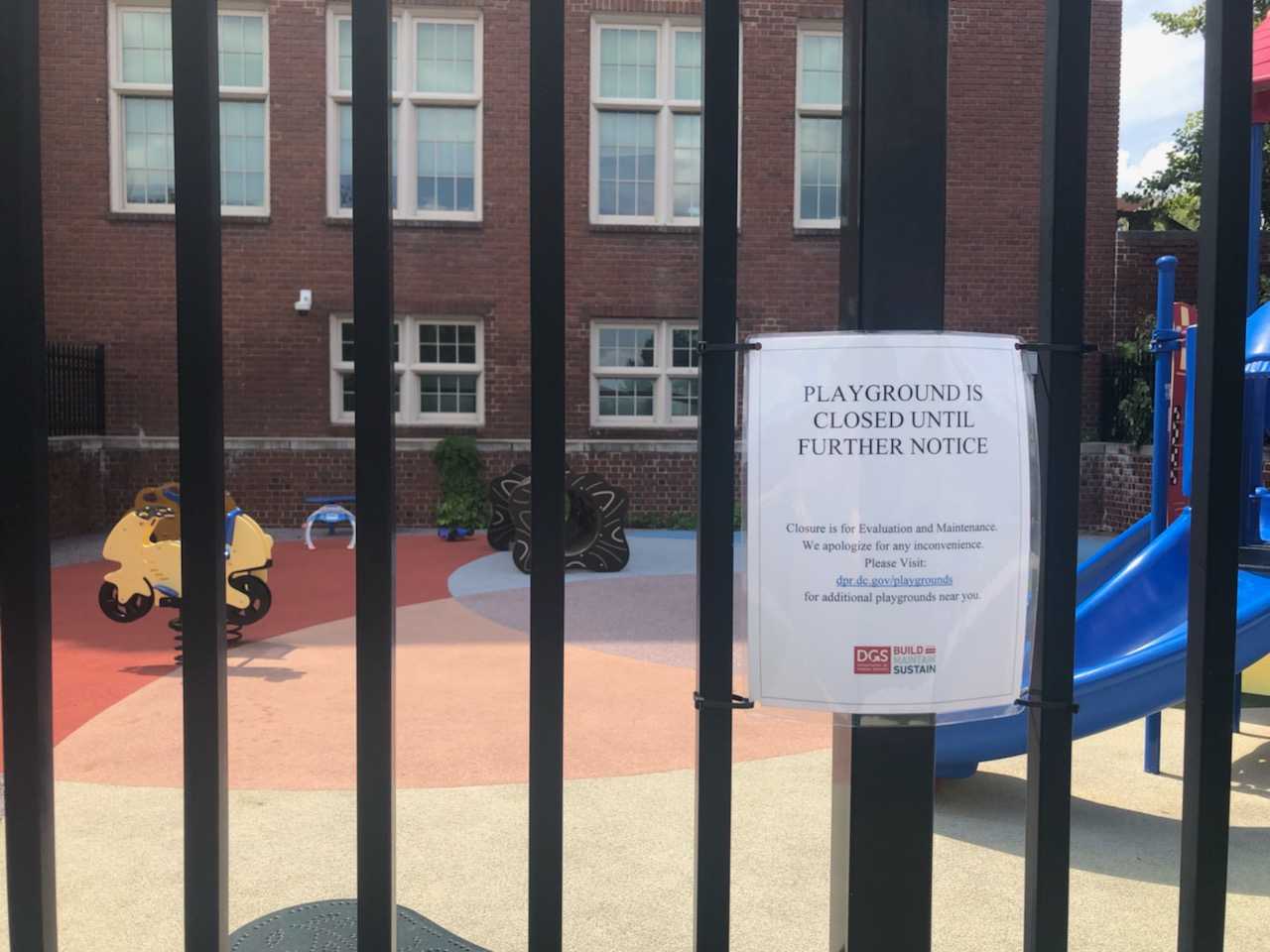
At-large Councilmember Robert White introduced a bill on Tuesday imposing stricter standards on the city to test and remediate publicly-owned playgrounds for hazardous materials like lead. The bill comes in the wake of city analyses last year that found 17 D.C. school playgrounds contained elevated levels of lead. Three of those playgrounds had to be closed for remediation.
White chairs the D.C. Council committee that oversees the Department of General Services, the entity charged with maintaining government property–including many playgrounds—and overseeing city construction.
The councilmember has been openly critical of the executive office’s handling of lead on playgrounds. “I’ve been very frustrated with the way the city has handled lead in our playgrounds. We have known for many months that there are high lead levels in some of the places where children play, but there has been no sense of urgency [from DGS],” White tells DCist.
In December, White and 10 other councilmembers sent a letter to the mayor demanding that the city accelerate a report containing lead testing results on all D.C. Public School playgrounds, as well as retest remediated playgrounds to make sure the remediation was successful. White says he hasn’t gotten any updates he requested from DGS.
A staffer with the Office of the City Administrator told White the city was declining to expand lead testing to synthetic playgrounds beyond those at D.C. public schools, he adds. His bill would mandate testing at all city-owned playgrounds made of synthetic materials.
Much of the concern about lead in playgrounds surrounds a specific kind of playground material called pour-in-place rubber, a bouncy material that’s made up of recycled tire shreds and a top layer of poured rubber. An organization called DC Safe Healthy Playing Fields has been pushing for an end to the use of PIP in D.C.’s playgrounds, as they worry that the heterogeneous material might contain elements with a high lead concentration. Even trace amounts of lead are dangerous for young children, who can suffer permanent physical and neurological damage from any exposure.
Last year, Safe and Healthy Playing Fields commissioned their own studies of PIP playgrounds from a Michigan-based organization called the Ecology Center. The Ecology Center found elevated lead levels at Janney Elementary School, Takoma Education Campus, and Truesdell Education Campus. The results prompted DGS to do their own analysis, for which it contracted another company, Soil and Land Use Technology. SaLUT recommended that three school playgrounds close down for lead remediation after testing. It isn’t clear exactly where the lead in these analyses was coming from—other culprits could include paint chipping from nearby buildings or soil from nearby areas, especially when there’s nearby construction activity.
DGS said last year that it would test all of the PIP school playgrounds under its purview by January 2020. The agency confirms to DCist that it has completed lead testing of all 320 PIP playground surfaces at D.C. Public Schools. The tests found “no consistent pattern of actionable lead levels across PIP playground sites analyzed, with the majority falling below such levels,” per a letter sent to residents from DGS and provided to DCist. The 17 playgrounds identified last year remain the only ones where SaLUT found elevated lead levels, according to the letter.
Last month, the agency told DCist that it would release a full analysis of its testing and findings in a report “on track for completion early this year.” The agency does not have any updated information on the release of the report.
White’s bill would require DGS to test all District-owned playground surfaces made of synthetic materials for lead contamination (not just the ones at DCPS). It would also require the agency to analyze all available synthetic and non-synthetic playground materials available on the market for safety, as well as test any occupied government buildings for lead if there’s construction happening within 250 feet. Before the city closed down the D.C. General shelter in 2018, the city found elevated lead levels in the soil nearby, likely due to deconstruction work happening on one of the buildings.
This story has been updated with comment from Robert White and to further clarity in the headline.
Previously:
D.C. Finds Elevated Lead Levels At 17 City Playgrounds
D.C. Closes Three Playgrounds After Tests Show High Lead Levels