 Mikaela Lefrak
One of the lushest spots in Washington celebrates its 200th anniversary this year.
The U.S. Botanic Garden, the oldest continuously operating botanic garden in the country, opened a new exhibit this week in honor of its bicentennial. “We’re tracing back to our roots,” said the garden’s executive director, Saharah Moon Chapotin (pun intended, assumedly), during a tour of the two-gallery show.
The exhibit explores the establishment of the nation’s botanic garden, which dates back to the time of the Founding Fathers. Thomas Jefferson and James Madison both supported the idea for a national garden, and George Washington wrote a letter in October 1796 pointing out a possible location for a botanical garden within Pierre L’Enfant’s plan for the fledgling city.
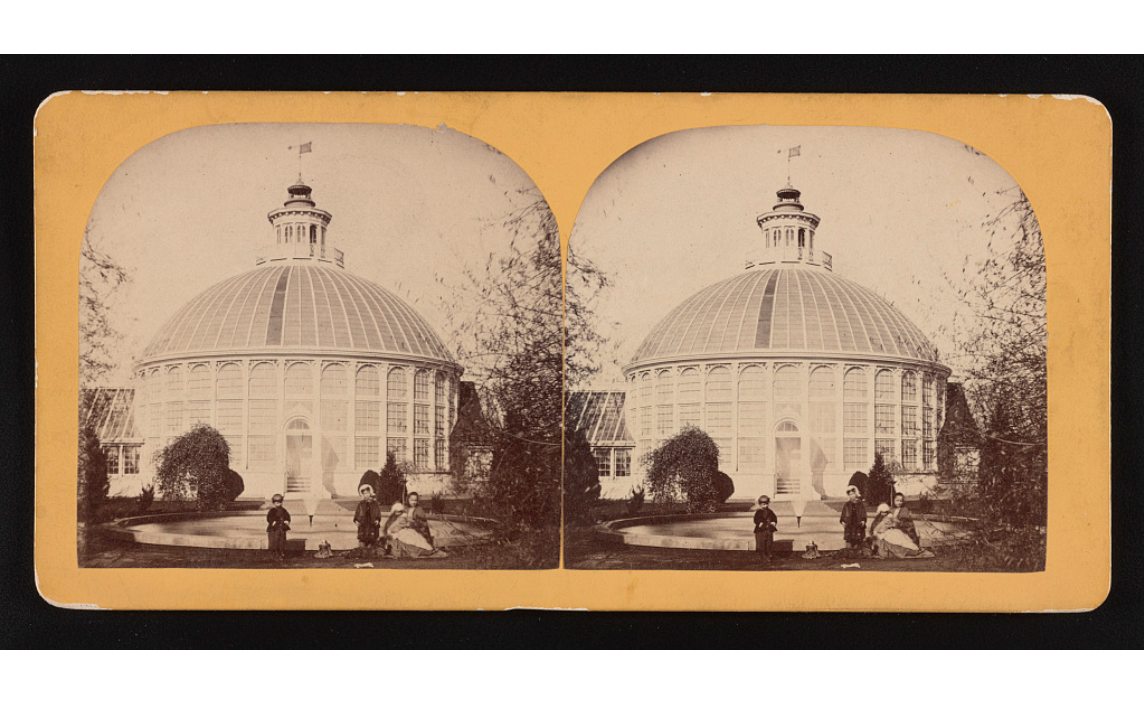
The garden used to be housed in a conservatory at 480 Pennsylvania Avenue NW.
The first iteration of the Botanic Garden opened in 1820 on a five-acre parcel of land on the western side of the Capitol building. But the group of private citizens that ran it faltered financially, and it was dismantled by the late 1830s.
It was tough timing: The federal government needed a place to store and display thousands of plant samples and live plants from a U.S. Exploring Expedition that had just returned from a global tour. (The anniversary exhibit includes models of three of those exploration ships, on loan from the Navy). Congress allocated funds for a new facility near the Capitol and opened its doors in 1850. Remarkably, four plants from the original U.S. Exploring Expedition are still on display today.
The garden moved into its current glass-enclosed facility in 1933 during a massive reorganization of the area around the National Mall.

Two women stood in the Botanic Garden’s Palm Promenade on July 19, 1898.
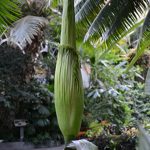
Today, the garden is perhaps best known for its wintertime poinsettia display, orchid collection, and the corpse flower, one of the smelliest tourist attractions in the city. The anniversary exhibit includes a box that masochistic visitors can stick their noses into for a whiff of the smell.
Sunlight, temperature, and humidity in the conservatory are regulated with misting systems, shades and windows—no air conditioning. The garden also maintains a greenhouse complex in Anacostia where it stores most of its collection; that facility is not open to the public.
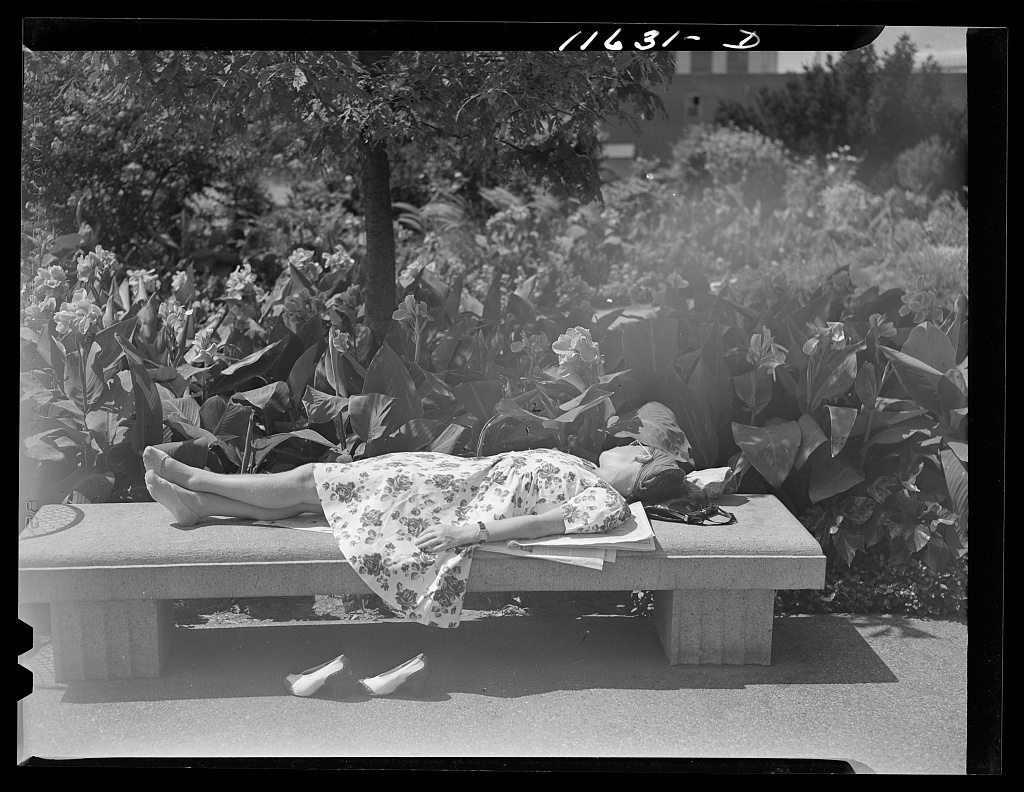
A government employee napped on a bench in the Botanic Garden in September 1942.
The anniversary comes as plants experience something of a millennial-driven moment. Boutique house plant stores in Washington are thriving, from Little Leaf near the U Street Corridor to Gingko Gardens in Navy Yard. Five of the six million Americans who took up gardening in 2016 were ages 18 to 34, according to the National Gardening Survey, and plant Instagram has even become a thing.
“When you care for something, you gain a greater appreciation for it,” said Chapotin, who is also a botanist. “People are really understanding that plants are organisms with needs.”
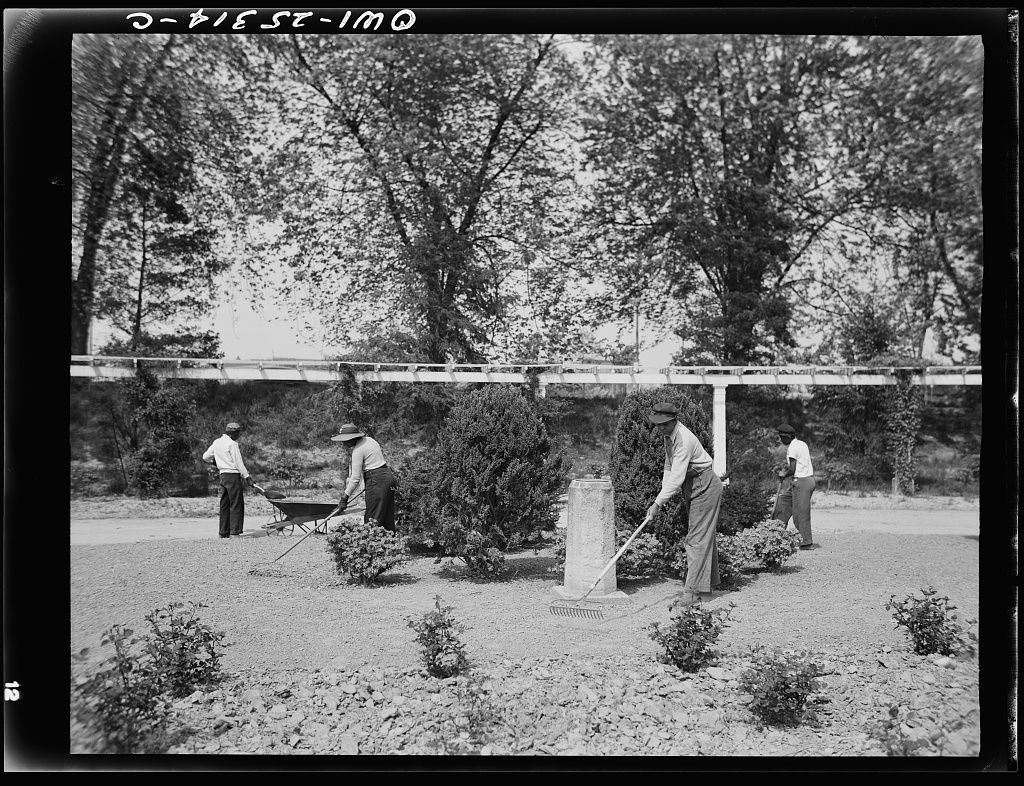
During World War II the Botanic Garden hired African American women for the first time due to a manpower shortage. Here, four female employees tend to the rose garden (circa 1942-45).
The garden is having its own moment, too. In 2017, staffers conducted the first plant-collecting trip for the garden in about 150 years. Two years later, it established its first green roof. Last year, a northern Virginia orchid grower donated his collection of 600 orchids to the garden, marking it the second-largest donation in the organization’s history.
Chapotin, for her part, wasn’t willing to pick favorites out of the garden’s 65,000-plant collection. “We have so many plants that I love so dearly,” she said.
The bicentennial exhibit, “The U.S. Botanic Garden at 200: Deeply Rooted, Branching Outward,” will be on display through Oct. 15 in the Conservatory’s East and West Galleries.