Elliot C. Williams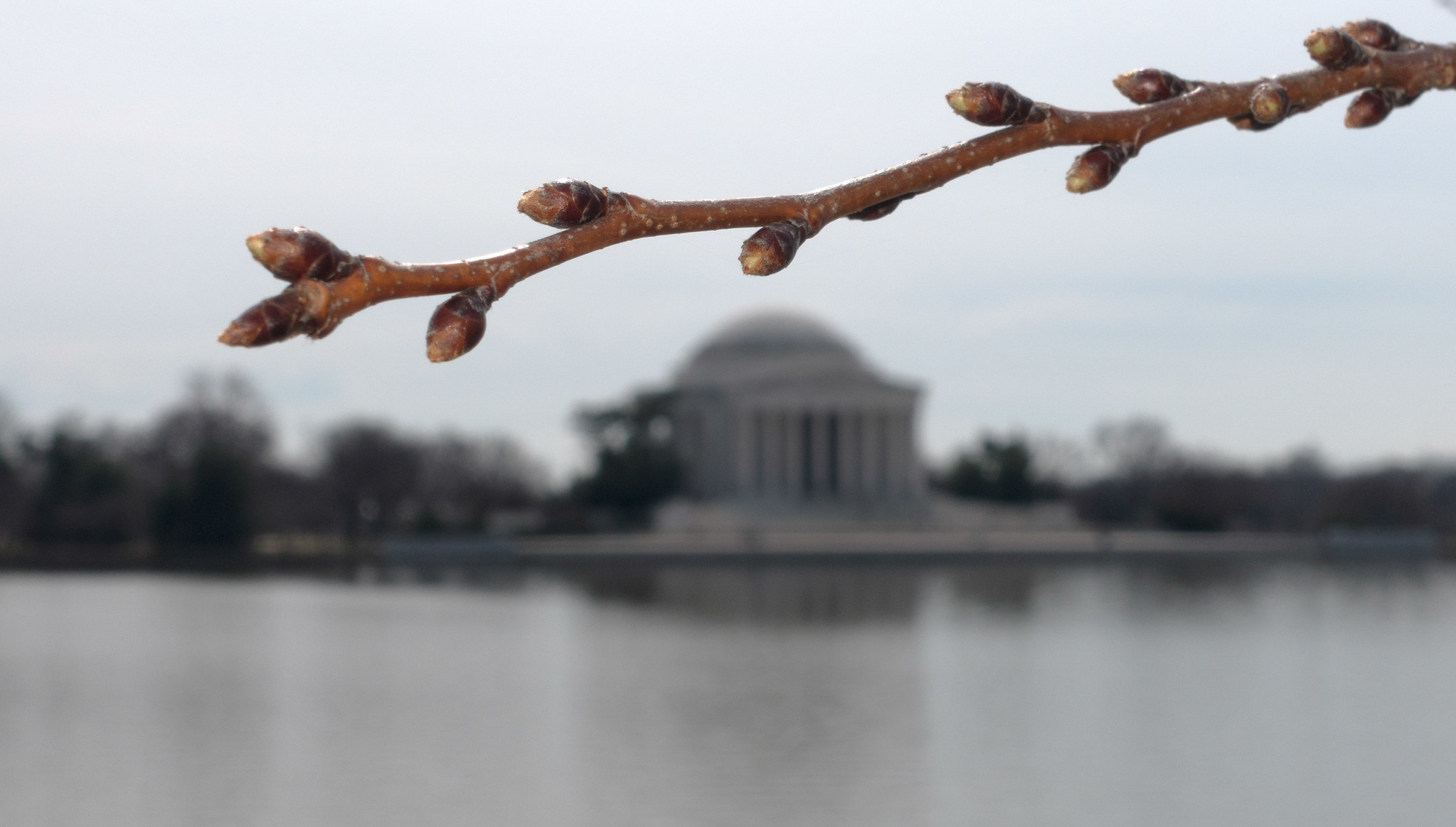
As Washington continues to experience weather in the upper 50s, a complete lack of snowfall, and the warmest January ever recorded, it seems that any hopes of a real winter are long gone. In fact, spring leaf out (one of the early indicators springtime biological activity) started 24 days ahead of schedule in D.C., according to the USA National Phenology Network.
What does that mean for the Tidal Basin’s iconic cherry blossoms?
According to the National Parks Service, the Yoshino trees—the ones that make up most of the population and which horticulturalists watch to predict peak bloom—reached green bud on Friday, indicating the first of six stages that culminate in peak bloom, when 70 percent of the Yoshinos reach full bloom.
The Yoshinos, which were gifted by Japan over a century ago and draw more than 1.5 million annual visitors, have shown their green buds six days earlier than last season—but later than 2017 and 2018, when the peak bloom was March 25 and April 5, respectively.
With the record-warm winter, many Washingtonians have spotted blossoming trees since mid-February. But the blooms that have surprised passersby along the National Mall are from the Higan Cherry Trees, or the autumn flowering trees, which typically produce buds a bit early anyway.
In 2017, half of the Yoshino blossoms were lost to a late frost in mid-March, and horticulturalists warn that a similar fate could await blossoms any season that begins this warm. Similar weather has led to a peak bloom as early as March 15.
Theresa Crimmins, director of the USA National Phenology Network, says the springlike temperatures in Washington and the eager cherry blossoms reflect research that ties early peak bloom to the effects of climate change.
“This year, spring leaf-out in DC occurred on or around Feb 19, 18-22 days (3 weeks!) ahead of schedule,” Crimmins tells DCist over email. “Also, this is consistent with the pattern of a very early start to spring all across the Southeast and mid-Atlantic region.”
The next stages that will transform the Tidal Basin into an Instagrammable collection of fully flowered trees: visible florets, extension of florets, peduncle elongation (a strange name that means, essentially, “fourth stage before peak bloom“) puffy white, and, of course, peak bloom.
It’s tough to predict when exactly peak bloom will begin, and most years, the Parks Service isn’t fully confident in its forecast until 10 days out. But as NPS spokesperson Mike Litterst tells DCist, “If we continue to have above average temperatures, then it’s likely that peak bloom will occur before the historic average date of April 3.”
The NPS will announce the projected date of peak bloom on Wednesday, March 4, Litterst says.