Natalie Delgadillo
 Martin Austermuhle
 Elliot C. Williams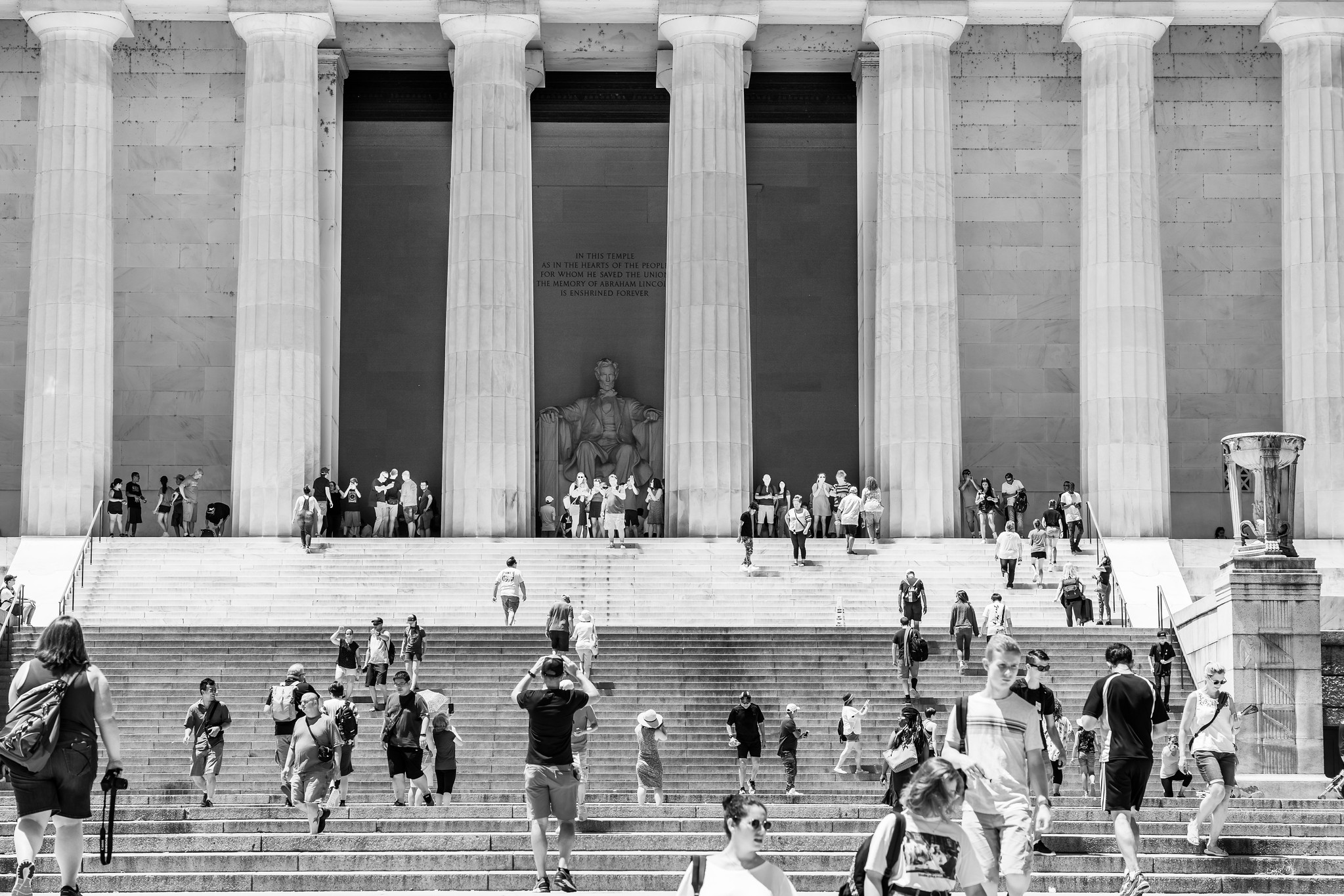
For Canden Arciniega, March is the start of the busiest — and most profitable — time of the year. As a part owner of Free Tours on Foot, she can usually expect to have 20 to 30 tours scheduled every day through June. This Wednesday, 10 groups canceled on her.
And more cancellations are rolling in.
“The groups that are canceling for the end of May and June, I want to say like, ‘Please wait. Don’t make that decision yet,’” she says. “But at the same time I have kids, I understand. It’s very hard to separate my personal opinions and my opinions as a business owner.”
Growing concerns over the global spread of the coronavirus have come to the Washington region. A state of emergency has been declared in D.C. and Maryland as officials tally cases of COVID-19, the disease caused by the novel coronavirus. And those concerns could well infect the area’s broader economy, especially as residents opt to stay in and visitors choose to stay away—or are prohibited from traveling.
For local industries and small businesses, the effects of these restrictions — a tourism slowdown, canceled conferences and events, and a general aversion to public places and large gatherings — have already begun. Business owners and workers in the hotel industry, restaurants, and independent consulting operations are bracing themselves for the potentially devastating ramifications of an uncharacteristically slow spring and summer season.
In a letter to city leaders in February, D.C. Chief Financial Officer Jeffrey DeWitt said a “disruption to tourism… would be felt immediately in sales tax receipts from restaurant and hotel stays.” According to Destination D.C., the city’s tourism arm, in 2018 the 23.4 million visitors brought in $851 million in tax revenue and helped sustain more than 75,000 jobs.
Arciniega says business has been slower than usual since February, when fears about the coronavirus began taking hold in the United States. But the cancellations began in earnest at the end of last week, as the number of cases in the U.S. ticked upward and people became more hesitant to travel. Arciniega says she is scrambling to process the rush of cancellations, and her company is straining beneath the requests for refunds.
“It’s kind of soul crushing daily trying to figure out if I should still be encouraging people to come to D.C.,” Arciniega says, noting that she’s not a public health expert and she doesn’t know how safe it is for people to travel. “But at the same time, I can’t survive if they don’t.”
The slowdown in tourism will also likely affect local restaurants and small businesses, which were preparing to come out of the slow winter season. Millions of people visit the District in the spring, many for the annual Cherry Blossom Festival, which usually takes place this month. DC Health released an advisory Wednesday recommending that all non-essential mass gatherings (of 1,000 people or more) be postponed through March 31 or canceled entirely — and that includes events linked to the festival.
“That’s probably the busiest time for us. Anything that will slow down the cherry blossom season will affect our business dramatically,” says Vinh Ngo, owner of Honest Abe’s Souvenir Shop across from Ford’s Theatre. “If tourists are not coming the times that we need them, it’ll impact us financially down the line. You have to deal with rent, you have to deal with wages.”
The same goes for other locally owned businesses, including bars and restaurants.
“D.C. is a huge tourist destination, and the spring quarter is without a doubt the busiest quarter of the year,” says David Winer of EatWell DC, a restaurant group with four restaurants in the city: Grillfish, Logan Tavern, Commissary and The Pig. “Without it being a successful quarter, it is really hard for the rest of the year to be profitable.”
Winer says he has seen a slight downturn in business this month already, and he’s expecting it to get worse. He says it’s possible that people living in D.C. will have a “bunker mentality” due to the virus, declining to go out to eat and drink. The worst case scenario for him is that the restaurant industry as a whole is shut down for several weeks due to quarantines (much like those imposed in Italy). He says this would be “devastating” for him and many others.
In preparation, Winer says he has imposed a moratorium on hiring except for essential staff, even though this is normally prime hiring time. Smaller crews will be working the restaurants, and some seating areas will have to be closed off, Winer says. He will also be postponing repairs and nonessential purchases.
“We were planning on refurbishing a couple of the patios this spring and that’s been put on hold,” he says. “We can live with slightly battered furniture for another season.”
Hotels, too, are feeling the impacts of the coronavirus. Large events and professional conferences drive a lot of revenue for hotels in the District, says Benjy Cannon, a spokesperson for Unite Local 25, a union that represents local hotel, restaurant, and casino workers in the D.C. area.
“A lot of our members are already contending with layoffs and fear that with cancellations, it could get worse,” Cannon says.
One Local 25 member, Rickea Luster, says she’s expecting work to slow down significantly in the coming weeks. Luster works as a banquet cook at the Marriott Marquis in Mount Vernon Square, and says there have already been several dropouts and cancellations for events at the hotel in the last several days.
“It’s not having a direct impact yet because this week I’ve still been working, but I have to have in mind that in the coming weeks I won’t be able to,” she says. She’s expecting that she’ll be working anywhere from zero to 24 hours per week in the coming weeks, during a busy time of year where she’s normally working 40.
“I’m trying to figure out how long we think this is going to last, because I have to save up for rent coming up next month, car notes and stuff,” she says.
Pascal Forotti, the managing director of the Watergate Hotel, says that they too have seen a dropoff in big group reservations. Many of those groups are moving their reservations to a later time in the year, Forotti says.
“Individual travelers are still booking, still coming to D.C.,” he says. “But it’s just the larger groups that are postponing D.C. right now.”
This hits another significant part of D.C.’s lodging options — Airbnb. Lynette Craig lives in Brookland but owns a home in Eastern Market that she rents out on the homesharing service. On Tuesday, she woke up to two cancellations — and then four more rolled in.
“I’m a stay-at-home mom, this is basically the income that I bring into the household. This is the high season, so this is damaging me pretty seriously if they keep canceling on me,” she says.
Other D.C. industries that heavily depend on conferences are also likely to be hit hard in the crisis, namely consulting firms and independent consultants who get paid to speak at conferences or who do crucial networking there.
“Last year, my company’s revenue suffered as a result of the government shutdown, because a lot of the federal government people did not show up [to conferences], and that basically meant a big hit to my bottom line,” says Renee Leduc, a consultant who owns Narayan Strategy, a company that consults to the government on climate, weather, and aerospace policy. “I was feeling sort of reassured this year, but now I’m feeling like oh my gosh, things are going to start to be canceled.”
The number of COVID-19 cases in the District will almost certainly continue to tick upwards in the coming weeks and months, and it’s still unclear how day-to-day life in the city will be affected. Many upcoming events, including the annual St. Patrick’s Day Parade, have already been canceled, and arts organizations have been forced to cancel shows, galas, and events that are huge revenue drivers.
For local businesses and their employees, the next several months will be largely about hunkering down to get through a leaner spring than they could have anticipated.
“If we can hold on and get to the other side, I think that’s the most important thing in front of us now for the next three months,” Winer says. “Hold on and get to the other side.”