Matt Blitz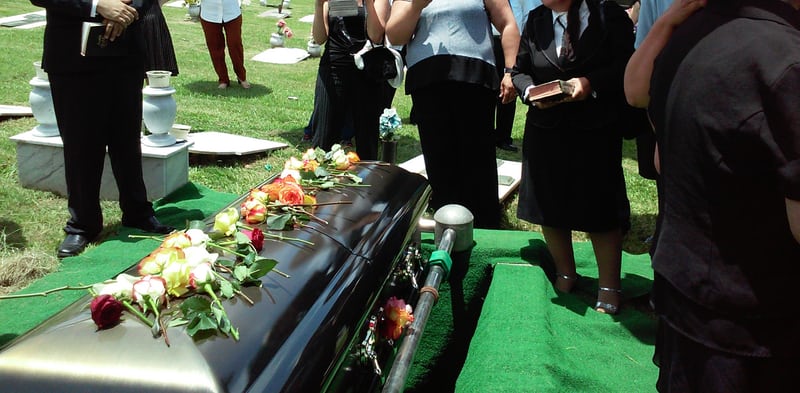
Randolph Horton, owner and funeral director for the eight-decade-old R.N. Horton Company Morticians in Northwest, really didn’t want to impose the District’s mass gathering restrictions at a funeral this past weekend. But he knew he had no choice.
“We had a service on Saturday where we had more than 50 people show up and I had to tell some they couldn’t come in,” says Horton, who is also on the D.C. Board of Funeral Directors. “I understand how they feel, but we need to protect those who are living so we don’t have another death.”
When a loved one dies, a funeral or memorial service is a source of comfort and a way to celebrate the life that was lived. But a simple scan of the obituaries from the last two weeks reveals that many are making the tough decision to postpone or forgo the ritual due to COVID-19, an illness that spreads via contact and close proximity.
While the District has restricted mass gatherings to 50 or fewer people, the Centers for Disease Control has strongly recommended against gathering in groups of more than 10 people. That means if a service does happen, attendance has to be severely limited, perhaps to close family members.
The same restrictions apply to religious funeral rituals like wakes. Albert Bloomfield, of the Rockville-based Jewish Orthodox funeral home Shomrei Neshama, says that he has strongly discouraged shivas, a Jewish mourning ritual that requires the attendance of at least 10 Jewish adults. “When you are culturally used to a way of grieving and that’s taken away from you … it’s hard,” he says.
Funeral home owner Horton says he’s saddened by all of this, knowing that people are often in need of physical comfort while grieving, which is something that’s strictly forbidden in this age of social distancing. “It’s such a challenging time for all of us,” he says.
Bloomfield agrees: “[Mourning] is a time for comfort. Hugging and kissing. But we have to respect social distancing.”
All of this has left local funeral homes scrambling to provide ritual and comfort at a time when that is so badly needed. Murphy Funeral Home in Arlington is offering to live stream funeral services free of extra charge. They’ve also set-up a “compassion hotline,” a phone number that mourners can call to talk with a grief counselor. General Manager Branham Mann says that this can help people looking for closure at a time when conducting an in-person funeral service is not possible.
Horton says he also offers video and live streaming services, but no one has taken him up on it yet. “Most people want to come be part of a physical celebration,” says Horton. “And they want to see family.”
Of course, as the COVID-19 death toll rises around the country and regionally, there’s the very real concern of how these funeral homes will stay safe while providing services.
On March 23, the National Funeral Directors Association released guidelines on how to handle deaths caused by the novel coronavirus. This includes transportation regulations, proper embalming techniques, and rules about protective uniforms.
While none of the funeral homes we spoke to have yet dealt with a COVID-19 case, they are preparing. They all say they follow what is known as “universal protocol,” no matter if it is a suspected COVID-19 case or not. This means personal protection equipment, full-body uniforms, gloves, and masks.
Ronald Taylor II, who owns two funeral homes in the area, one of which is on North Capitol Street, says their protocol for handling the deceased hasn’t changed a whole lot. They take extreme precautions anyway. “We never know what anyone has, especially when at a nursing home,” says Taylor. “We care for everyone the same way.”
There remains the fear, however, of what will happen if the death rate spikes. The situation could overwhelm funeral homes, in much the same way that area hospitals may be become overwhelmed with COVID-19 patients.
“Yeah, that’s a concern,” says Horton, “Where will we store the bodies for later burial or cremation? I don’t know.”