 Daniella Cheslow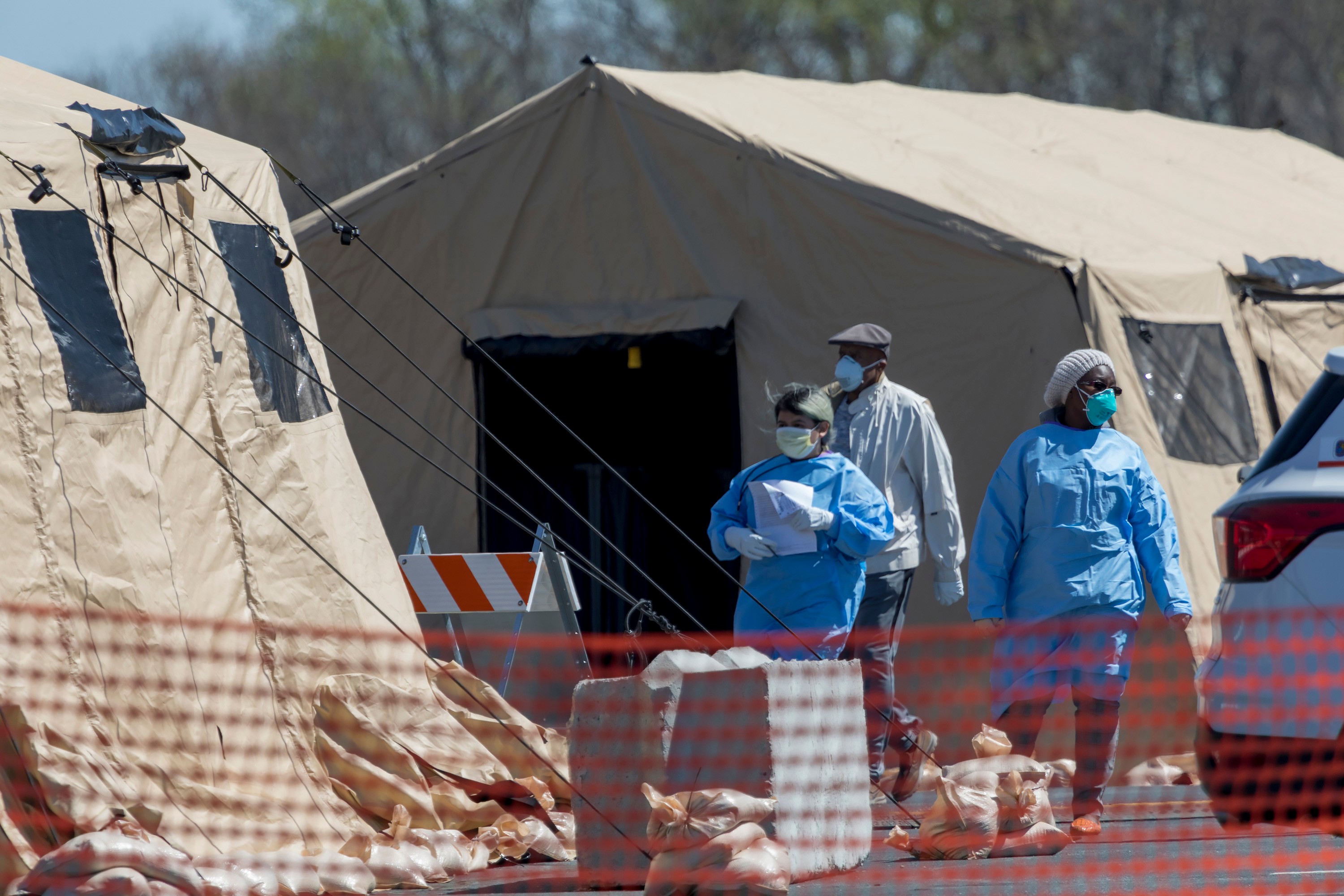
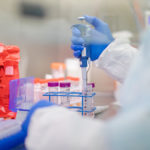
Across the region, hospitals, clinics, and state health departments are opening more sites to get people tested for coronavirus without bringing sick patients into hospital emergency rooms. But a shortage of testing kits and protective gear, along with a long turnaround time continues to keep local doctors largely in the dark as they try to stave off coronavirus in the region.
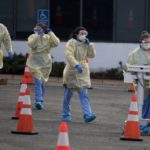
On Monday, Prince George’s County opened a free testing site at FedEx Field, set up with the help of the Maryland National Guard. Officials expect to test around 100 people per day at the site even though only people with appointments and who meet the Centers for Disease Control and Prevention’s guidelines will be eligible for testing.
Maryland Gov. Larry Hogan, meanwhile, has said more testing sites would be available at the state’s auto emissions testing stations. In D.C., Mayor Muriel Bowser announced the city would open a testing site for first responders, with a second one planned for medical residents. And across the region, Kaiser Permanente, Inova Health System, AllCare Family Medicine and the Virginia Hospital Center are offering on-site tests. Inova said so far it has conducted about 2,000 tests at its three sites in Northern Virginia.
But even with new testing sites opening daily, the scale of testing continues to be limited.
In D.C., some 3,085 people were tested as of Monday night, about 0.4 percent of the city’s population. In Virginia, some 12,038 people were tested by the same time, roughly 0.1 percent of the state’s residents. And in Maryland 14,729 people were tested, about 0.2 percent of the population.
On Monday, area leaders announced stay-at-home orders in D.C., Maryland and Virginia after a particularly sharp rise in cases and coronavirus-related deaths over the weekend. The orders essentially restate what city and health officials have been saying for weeks: residents should stay at home as much as possible to limit the further spread of the virus.
The D.C. region saw 2,928 cases of COVID-19 as of Tuesday morning, a roughly four-fold increase over the course of a week; that increase, in part, can be attributed to more testing. According to the World Health Organization, communities in which most coronavirus tests come back positive suggest that there are many more cases there that have yet to be found.
Area doctors say there are a number of hurdles to wider testing. Among them, the region’s public health departments receive a limited number of COVID-19 tests from the federal government.
Dr. Eran Greenberg, a physician in Alexandria, told WAMU last week hat he was unable to get a single patient with possible symptoms tested for the coronavirus because of a test shortage. On Monday, Greenberg said he still had not succeeded. One patient who exhibited symptoms of respiratory illness went to the hospital, and Greenberg says that rather than test him, doctors there told the patient they presumed he had COVID-19 and sent him home to recover.
But there has been progress in lab processing in the region. John Silcox, spokesman for the Fairfax County Health Department, said the Fairfax County Public Health laboratory also is now able to perform tests for some suspected coronavirus patients. Previously, all tests approved by the Virginia Department of Health were sent to the state lab. Private labs, including LabCorp and Quest Diagnostics, process other samples, but those can take as long as a week to issue results.
Dr. Robert Shesser, chair of the Department of Emergency Medicine at George Washington University Hospital, said Monday his organization got access to some tests it could run through its own lab, with results available in just two hours. Still, Shesser said there are a limited number of tests, and he’s unsure when he’ll get more.
Despite increased access to testing, health officials urge people who think they have COVID-19 symptoms to consult their doctor before going to hospitals or testing sites to avoid spreading the virus. If more urgent care is needed, officials say to call ahead to an emergency room so personnel can prepare.
For other questions, including finding a testing site in the D.C. region and what to do if you don’t have a primary care doctor, officials recommend calling local COVID-19 hotlines: Virginia’s is 877-ASK-VDH3; Maryland, 2-1-1; and D.C., 3-1-1.
This story first appeared on WAMU.