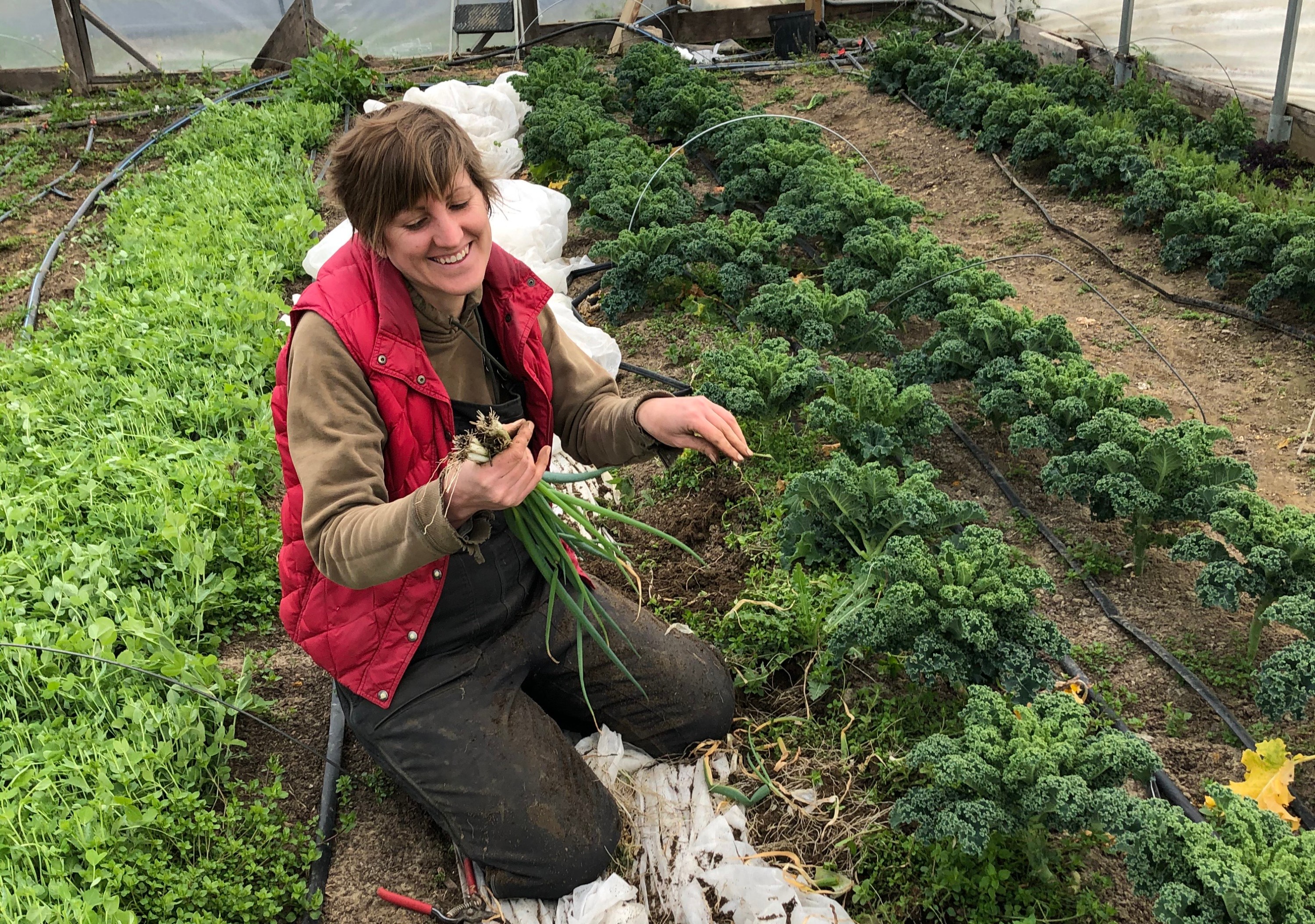
When COVID-19 began spreading across the U.S., David Giusti assumed it would be a slow year for his Northern Virginia farm. The economy was heading into a nosedive and business wasn’t looking good for his community-supported, or CSA, operation, which provides produce for customers across the D.C. region.
“Nobody was signing up in the early part of March,” Giusti says of his Second Spring Farm, a 5-acre site in Purcellville, Va.
But as the crisis evolved into a full-blown pandemic, people started signing up. A month later, his CSA is almost at capacity with more than 150 members—a number he usually doesn’t hit until late May.
Second Spring is one of several local farms reporting a surge in customer registrations over the last few weeks. At Even’ Star Farm, a 104-acre site that grows organic fruits and vegetables in St. Mary’s County, Md., business is evidently booming. “We’re having the highest sign-up rates for our CSA that we’ve seen in eight years,” Brett Grohsgal, the owner, tells DCist.
The uptick likely has to do with the fact that some people want to avoid crowded grocery stores right now, especially with stories of empty shelves and COVID-19-infected employees becoming more common, say farm owners. (“The stores are war zones,” a Giant worker in Silver Spring, Md., told WAMU last month.) And while others have turned to delivery services like Amazon Fresh and Peapod out of concerns that packed isles and long lines could increase the risk of catching the virus, ramped-up demand is slowing some orders.
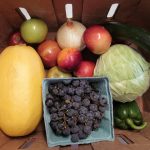
Enter CSAs as an alternative way of getting fresh produce. The basic premise is that members help local growers cover their anticipated costs for the season, in exchange for a portion of the farm’s crops. For example, Second Spring’s CSA program runs for 22 weeks a year and allows members to pick up boxes of vegetables once a week, at designated drop-off sites in the region.
Although CSAs may not be a perfect substitute for grocery stores given that they typically don’t offer the same amount of choice year-round as supermarkets do, Giusti says the pandemic is a chance to remind people about the importance of local agriculture.
“People are coming to us because we have stuff for them, whereas people are concerned about the reliability of the wider conventional system,” he says. “And that’s an opportunity, in terms of local food system proponents, to show people that we are a place that can feed you when things are not so easy in the world.”
Over 7,000 U.S. farms sell their products directly to consumers through CSA arrangements, according to 2015 data from the U.S. Department of Agriculture. Another part of their current appeal, notes Grohsgal of Even’ Star, is that CSA products are handled by fewer people than store-bought ones. (To be clear, federal health officials report no evidence that the coronavirus is transmitted through food or food packaging.)
Even’ Star grows vegetables all year long, offering both winter and summer CSA subscriptions. At the height of summer, the farm harvests 30 cases of cherry tomatoes and 400 pounds of large tomatoes a day, along with other crops. “By IRS standards we’re considered a medium farm,” Grohsgal says. Normally, some of that produce would get sold to local restaurants, but with many eateries closed or offering take-out only, the farm has reallocated about 30 percent of its harvest to its CSA program.
Still, while some farmers have seen their CSA revenue jump, others are struggling with low attendance due to social-distancing measures, including at local farmer’s markets. Licensed farmer’s markets can still operate in D.C., Maryland, and Virginia because they’re considered “essential” operations under local government directives, but many are seeing lower foot traffic than normal. As a result, some growers are changing their business models to account for more CSA sales.
“We’re shifting our wholesale business more and more to CSA,” says Liz Whitehurst, the owner of Owl’s Nest Farm, a 4-acre plot in Upper Marlboro, Md. Owl’s Nest usually produces a limited variety of crops, at a high volume, for restaurants like Petworth’s Call Your Mother. But the farm is now looking to grow a wider array of goods to accommodate new CSA members.
Whitehurst hopes that the COVID-19 crisis will push people to reflect on the state of D.C. area agriculture, which has significantly declined since World War II, according to a 2019 report by the Metropolitan Washington Council of Governments. Today, 12,000 farms remain in operation in the region, compared to more than 32,000 farms in 1945. Total farmland has also dropped by 57 percent, or 2 million acres.
“I think it is a time for us to consider: Does our regional food system have the capacity to meet the needs of the people who live here?” Whitehurst explains. “And if it doesn’t, what can we do about that and how can we go about strengthening it?”
As the virus proliferates, the coming months hold both promise and uncertainty for local farmers. Second Spring’s Giusti says whether markets remain open will be a “huge deal” for his industry. “We really have to be flexible and reimagine how we can sell this stuff,” he says. “People want our products, but our normal sales mode might or might not be allowed this year.”