Natalie Delgadillo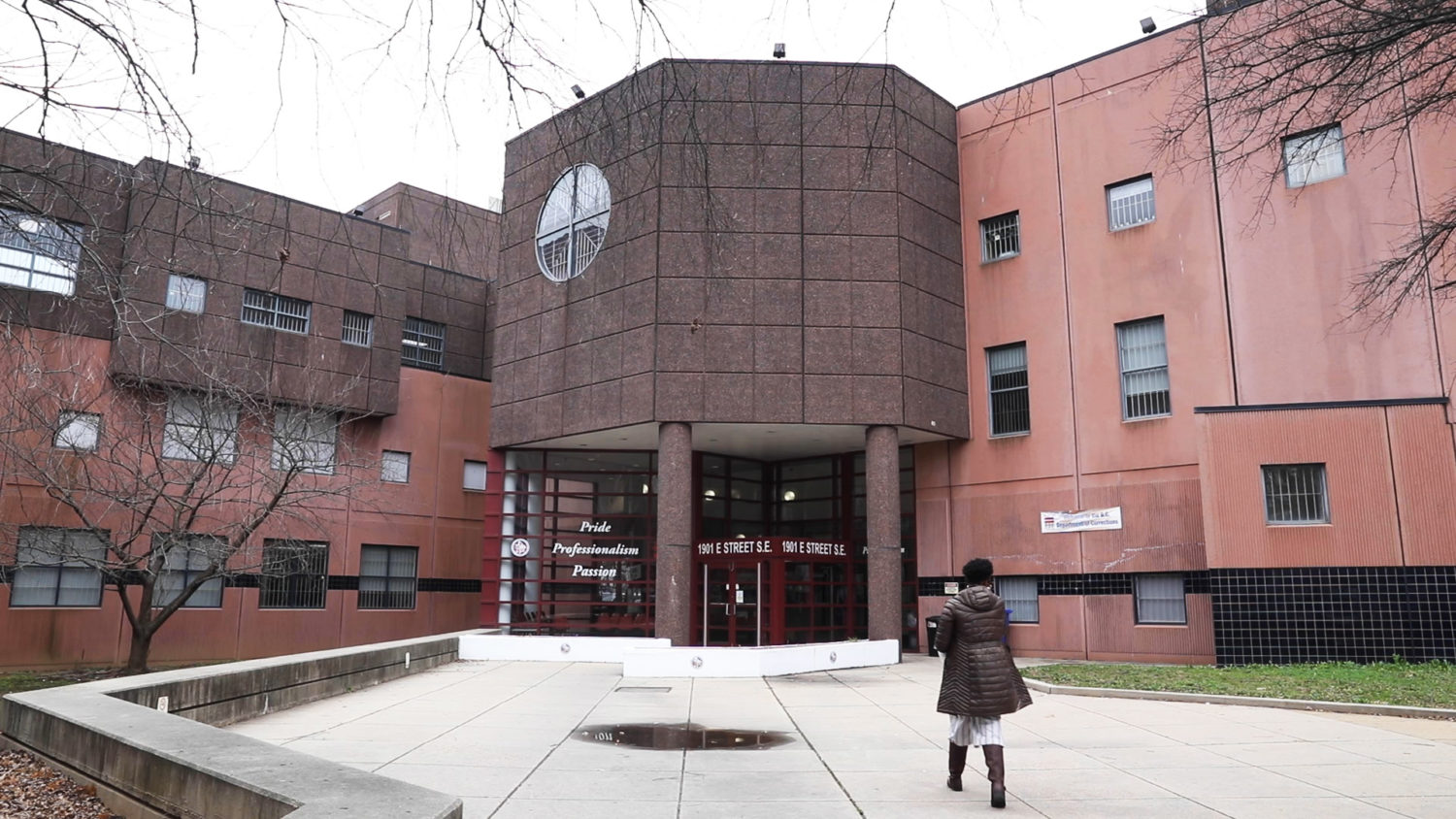
Kamal Dorchy, an inmate at the D.C. Jail, suffers from leukopenia, or a lowered white blood cell count. And as the count of coronavirus cases climbs past three dozen at the jail facilities, he fears the worst.
“Every day a new person gets sick, and if I get sick, I fear that I will die due to my fragile health,” he wrote in a declaration to the D.C. District Court. “I am preparing for my death.”
In personal accounts shared as part of a lawsuit against the D.C. Department of Corrections, D.C. Jail inmates describe an institution rife with risk and profoundly unprepared to deal with a burgeoning outbreak of the novel coronavirus behind bars.
The sworn declarations report that people in the jail are ill with symptoms of the virus—coughing, fever, and shortness of breath—but have not been seen by a medic. The testimonials describe a lack of access to cleaning supplies and basic personal hygiene materials like soap; one inmate described using diluted disinfectant and his personal shower towel to clean his cell. Hand sanitizer is preserved for jail staff and withheld from inmates, according to several of the accounts. One quarantined unit shares a TV remote with non-quarantined unit, according to one testimonial.
“We see the situation that is unfolding and we are afraid,” Keon Jackson, an inmate in the Correctional Treatment Facility, wrote in his declaration. “We do not think CTF and the Department of Corrections is taking coronavirus seriously. In fact I know they are not taking it seriously, because when I and other inmates raise our concerns about the virus, the counselors on our unit tell us we should stop watching the news. The counselors say that the media is blowing the virus out of proportion.”
As of Wednesday evening, there were 37 inmates with confirmed cases of COVID-19 inside the D.C. Jail, with 8 of those recovered from their illness. Approximately 230 inmates are also in quarantine due to possible exposure to the coronavirus, which has begun to spread in earnest among the incarcerated population in D.C. Just last week, there were only five confirmed positive cases.
These numbers are almost certain to rise. In other jail systems in major urban areas, the virus has spread widely: at Rikers in New York, the rate of infection among inmates is seven times as high as among the general population. The Cook County Jail in Chicago is the largest single-site outbreak in the country, at 355 total cases. Both inmates and corrections employees have already died in Texas, Illinois, Louisiana, Florida, and New York.
As the outbreak behind bars worsens in D.C., activists, inmates’ families, and defense lawyers have continued pushing for the D.C. DOC to release more prisoners, as well as to institute different testing and hygiene practices. The ACLU of D.C. and the D.C. Public Defender Service have filed a class action lawsuit against the DOC for the alleged unsafe conditions inside the jail facilities.
“The DOC has failed to implement many basic procedures — steps as simple as distributing sufficient hygienic products and providing prompt medical attention and testing to those with COVID-19 symptoms — and has waited far too long to implement others,” the lawsuit reads. “Consequently, experts predict that COVID-19 will ‘spread like wildfire’ in DOC facilities.”
The suit alleges that testing didn’t begin at the jail facilities until March 20, after inmates had begun complaining of symptoms. Some inmates have had to wait days for medical attention, the suit alleges. These conditions amount to “cruel and unusual punishment,” the ACLU says.
In court filings, the DOC says that it started screening new inmates for COVID-19 on March 13, and began testing on March 15. New residents aren’t tested for COVID-19 “consistent with [federal] guidelines of not testing individuals unless they are symptomatic.”
The DOC declined to comment about any of the above allegations to DCist, citing pending litigation.
“Certainly we remain concerned about the spread of the virus. I think you know that the census of the jail is significantly reduced since we started having these briefings, which we think provides more opportunity for social distancing in the jail,” said D.C. Mayor Muriel Bowser at a Wednesday press conference. “As I’ve mentioned, I have not been alerted to anybody not having soap.”
In press conferences, city officials have also maintained that, thanks to new police guidelines to arrest fewer people, the population of the jail has been reduced to enhance social distancing practices in the institution.
There were 1,534 inmates in the D.C. Jail facilities on April 3, down about 100 inmates from late March and almost 200 inmates from a count in December 2019.
As the D.C. litigation makes its way through the courts, the city and the ACLU are working to find an expert inspector to impartially monitor conditions at the jail, per instructions from the court. Judge Colleen Kollar-Kotelly is weighing whether and how to release more prisoners from the institution to prevent further spread.
The Public Defender Service had previously filed a motion with the court asking for DOC to release all inmates in DOC custody currently serving a sentence for a misdemeanor. The United States Attorney’s Office for D.C. has vocally opposed that motion. “This pandemic should not be used as a basis to release violent criminals onto the streets of Washington,” USAO for D.C. Timothy Shea said in a statement about the PDS filing.
Activists have started a petition demanding that city officials let prisoners out of the jail. And a caravan of protesters drove by the jail, the city’s halfway house, and the mayor’s press conference on Wednesday to protest inmates’ conditions and demand their release.
The correction officers’ union has also filed a brief in support of the inmates’ lawsuit, claiming that the DOC is also failing to keep staffers at the jail safe from the disease.
Meanwhile, inmates and their loved ones continue to express frustration and fear about the conditions of the facility.
“I’m more worried, because they already don’t have good living conditions. It’s not a good place to live,” says DeNisha Jackson-Hall, whose fiance, Tyrone Hall, is incarcerated in the D.C. Jail. “It does bother me because he has asthma, he has anemia … and he is already always sick because of that.”
Kamal Dorchy’s mother, Lucretia, is equally worried for her son’s health.
“He needs to get out, because he is ill,” Lucretia Dorchy told DCist in March. “If he gets that virus he could die.”