With D.C. residents under stay-at-home orders during the coronavirus pandemic, access to nature feels tenuous for many, even as spring marches forward. But there’s at least one socially distant solution: backyard birding, though backyards aren’t necessarily required.
“If you can’t get out, the birds come to you,” says Dan Rauch, a fisheries and wildlife biologist at the D.C. Department of Energy and Environment. “This is a great time to become a backyard, front yard, or window birder. They are all in shiny new plumage for the breeding season. They are also very vocal at this time or year, announcing who they are and where they are.”
While some residents lack easy access to nature—especially private outdoor space—urban birds move across the whole city, traveling more freely than most people are supposed to currently. With them, they bring bright colors, unique behaviors, and personalities.
“We can learn a few things from birds at this time,” Rauch says. “One is that even though our lives are in a very strange place, nature is doing its best to continue on.”
So you think you can bird? DCist spoke with several experts to find out how to properly admire our feathered friends while maintaining social distance.
Tips For Becoming A Backyard Birder
Many birder field guides, among them David Allen Sibley’s seminal Sibley Field Guide to Birds of Eastern North America, start with a common rule for identification: “Look at the bird.” If that sounds simple, it is—the size, shape, color, beak, feathers, markings, and any other identifying characterizations of a bird are key for figuring out its species.
Michel Cavigelli, a lifelong birder and a soil scientist at the U.S. Department of Agriculture, suggests that birders should act like detectives by looking for details, including specific coloration on a bird’s body. Coloration can even determine a bird’s common, or nonscientific, name, such as the ruby-throated hummingbird, white-breasted nuthatch, or red-winged blackbird, which all live in or pass through D.C.
“Also, look at what it’s doing behaviorally,” Cavigelli explains. “If you look at a robin feeding on the ground, you will see it cock its head as it listens, before either moving on or stabbing the ground with its beak in hopes of getting a meal.” The meal is often a worm.
Dana McCoskey, a biologist who serves on the board of the D.C. Audubon Society, recommends that amateur birders begin by looking for the most common birds in the District. To help novices, her group created a list called the “Familiar Fifteen,” which includes the tufted titmouse, Carolina chickadee, and Carolina wren.
Eyeing a bird can get amateurs started, but sound is equally important. “More often you will hear a bird before you see it,” says DOEE’s Rauch. Take the Carolina wren as an example. It’s “small but feisty,” he points out. “For a pint-sized bird, they’re the loudest bird out there. And they’ll nest anywhere—in a house plant, an old shoe, anywhere.”
Rauch also advises learning a couple of common birdsongs before building up one’s repertoire. Mnemonics help. “[A] Carolina chickadee’s song sounds like it is saying ‘I-am-so-sweet,’ or a Carolina wren can be ‘tea-kettle, tea-kettle, tea-kettle,’” he explains. “Listen carefully, and then invent your own when you hear a new bird.”
After you’ve consistently identified species from your window or at a safe distance from others while outside, you can draw up a “backyard list” of the ones you’ve observed, continues Rauch. (There’s precedent for this in the District, according to him: “President Teddy Roosevelt kept a backyard bird list for the White House.”) Such lists can boost your identification skills and even stoke light competition among neighbors, family, and friends.
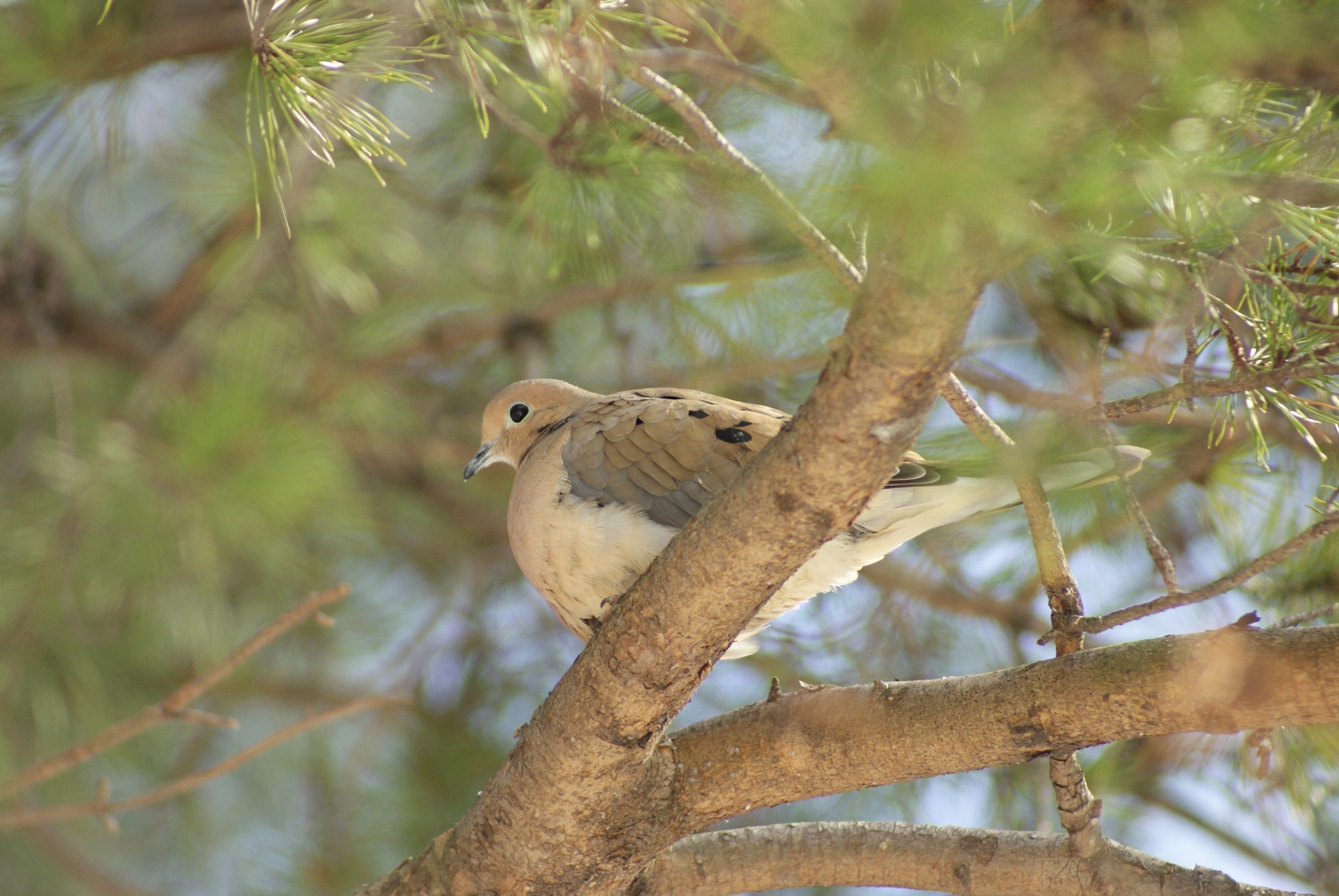
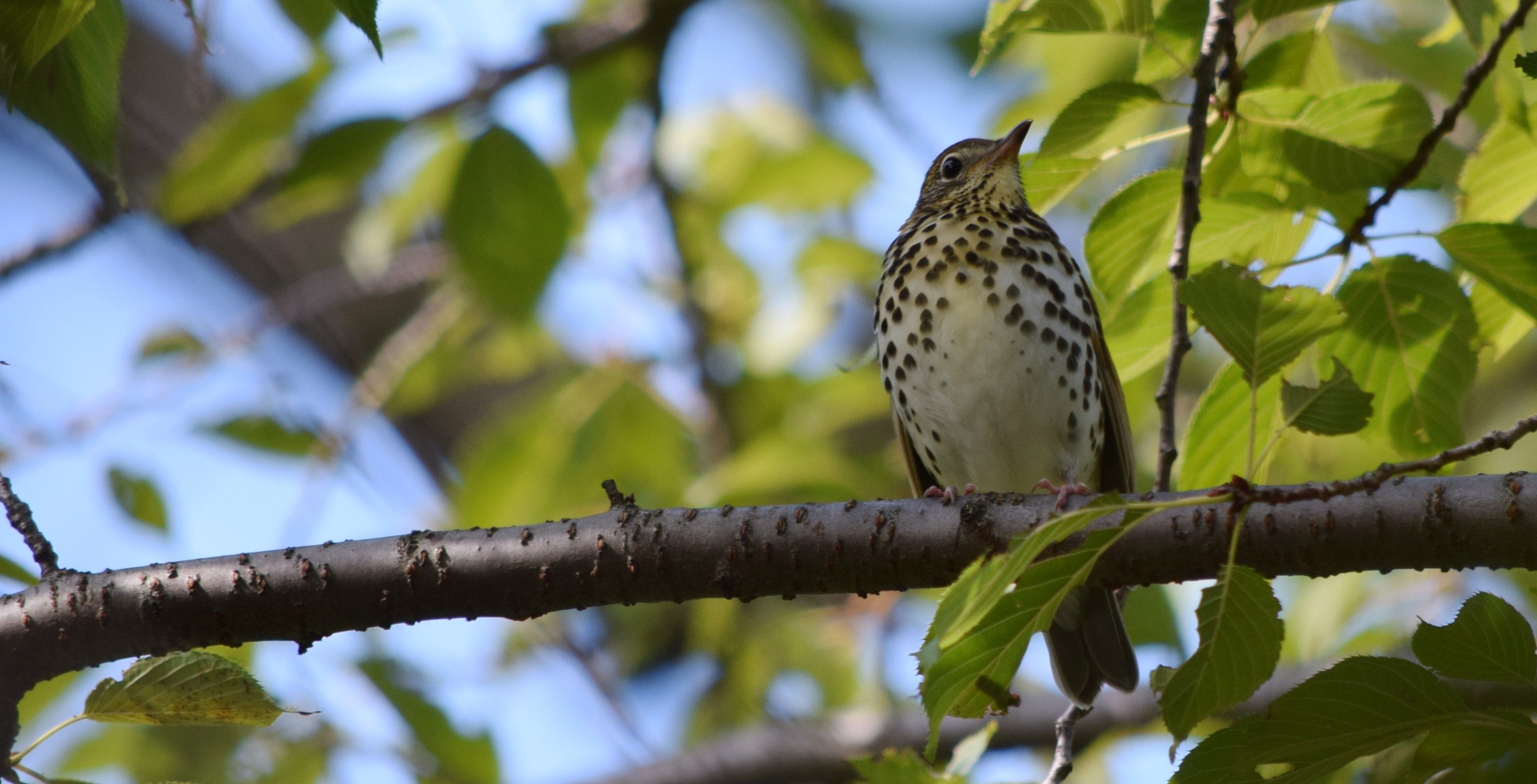
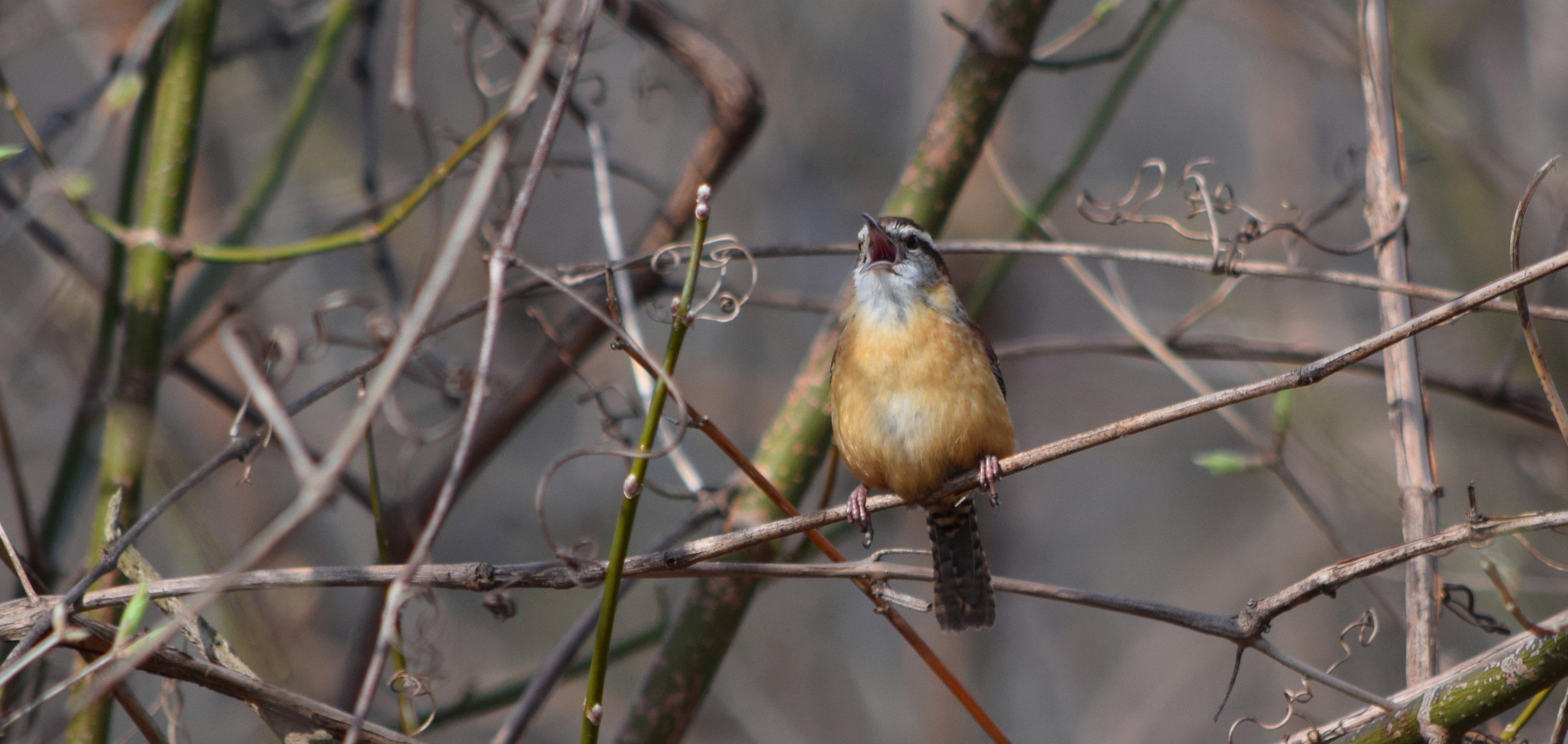
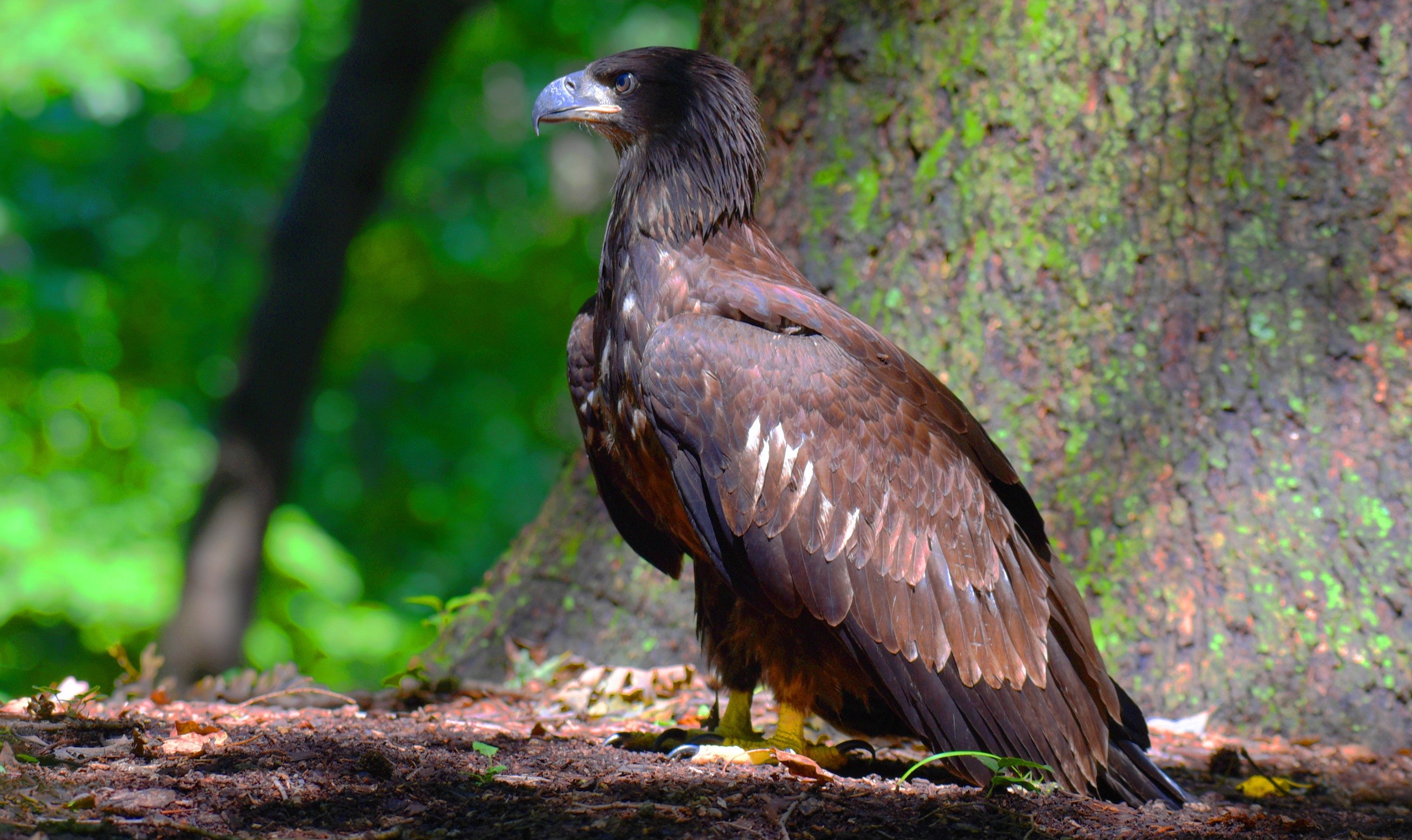
For deeper dives, mobile apps like Merlin Bird ID and eBird—both from the Cornell Lab of Ornithology—are another tool at birders’ disposal. The latter doubles as a “citizen science tool because Cornell collects the data” gathered by users, Cavigelli says.
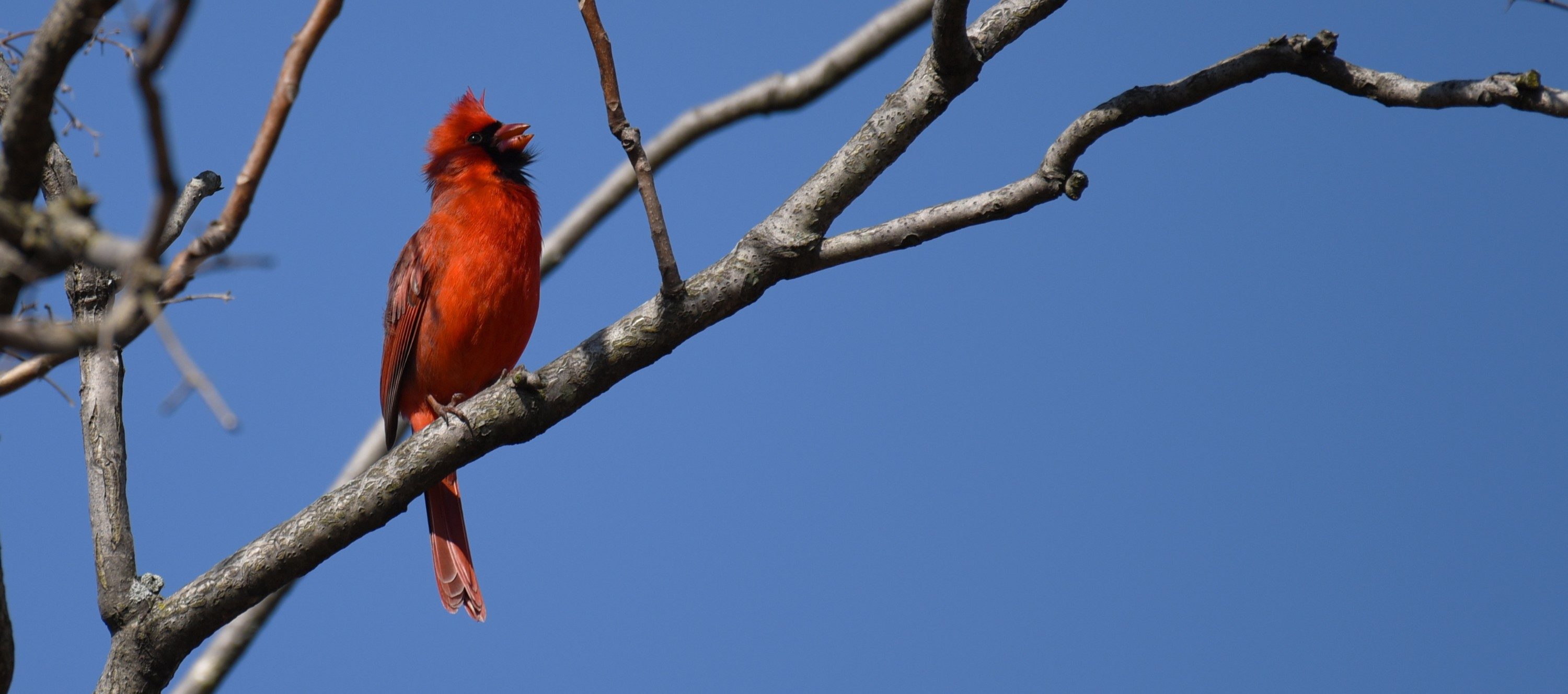
Besides keeping lists, installing a bird feeder in one’s window or yard can attract neighborhood birds and also support migratory birds on their long journeys. Rauch recommends using shelled sunflower seeds as feed. “Once the word gets out, they tell their friends, and it won’t be long until goldfinches, house finches, cardinals, wrens, mourning doves, song sparrows, and woodpeckers visit,” he says.
“Backyard birding is a perfect family activity for those sheltering at home,” Rauch adds. “It is a great STEM lesson in terms of biology, ecology, food webs, adaptation, and more.”
Why D.C. Birds Are Special
During the coronavirus pandemic or not, D.C. sees a wide variety of birds throughout the year thanks to its location along the Piedmont’s fall line and the Atlantic Flyway, an important corridor for migratory birds.
“Right now, there are millions of birds coming up from Central and South America,” Rauch says, noting there are 240 species seen in the city annually on average. That’s more than a quarter of the 800 species observed across all of North America, according to the National Audubon Society. Cavigelli says the District’s protected lands, wooded suburbs, and open-water areas bolster this biodiversity.
And there’s an array of species within the city itself, given its range of local bird habitats. For instance, some species live along the Anacostia River but likely won’t be found in Rock Creek Park, says Jorge Bogantes Montero, a natural resource specialist with the Anacostia Watershed Society.
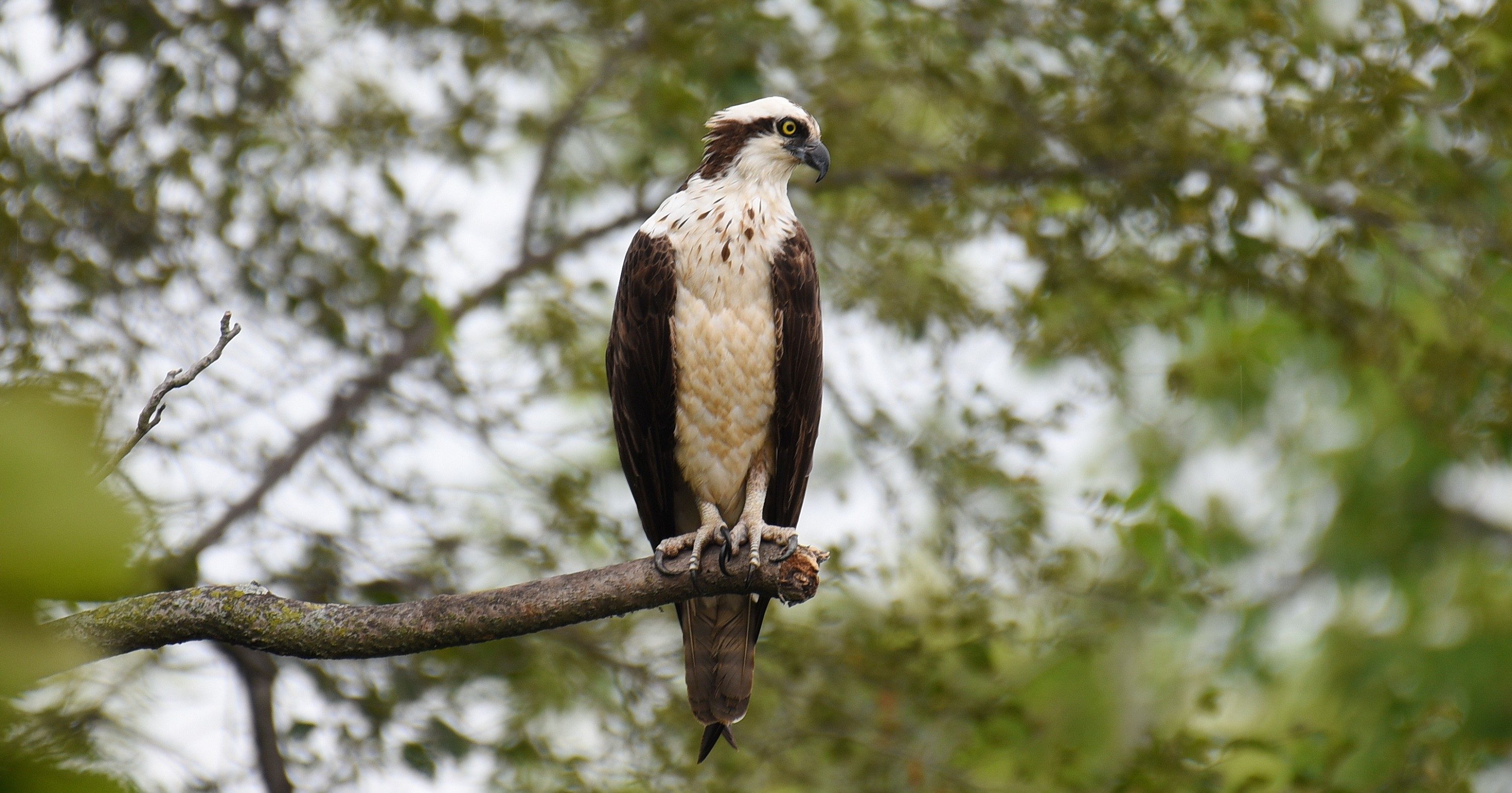
“In the Anacostia, we have unique ecosystem[s] such as tidal wetlands,” Bogantes says. “There are over 200 species of birds in the Anacostia Watershed. It’s a great area for bird-watching and a great time for it.” He says to watch out for kingfishers, ospreys, and double-crested cormorants, which are currently arriving from the south. Bald eagles and other piscivorous, or fish-eating, birds are also active now due to the spring shad run in the Anacostia and Potomac rivers.
D.C.’s bird population benefits from parks with forested interiors, like Rock Creek and Fort Dupont parks, since migratory birds, including scarlet tanagers and wood thrushes, prefer to breed inside urban forests. The wood thrush, famous for its birdsong, has been the District’s official bird since 1967.
“People have been swooning over that song for years,” says Steve Dryden, a board member for the D.C. Audubon Society. “Some people say it sounds like several wood instruments at a time.” Dryden started the Rock Creek Songbirds initiative in 2013 to help build new habitats for the wood thrush and other songbirds, coordinating the planting of more than 500 native trees along Piney Branch. Native trees host more insects, and “more insects mean more food for the birds,” Dryden says.
In addition to planting native trees and plants, Rauch says people can support birds by setting up feeders and keeping cats indoors. But proper care starts with paying attention and the first rule of birding: look at the bird.
“You never know what you’re going to see,” says Cavigelli. “It’s like a treasure hunt every day. There’s a meditative value to it.”
Spring migratory patterns reaffirm nature’s continuity: Winter birds are starting to soar north while tropical birds are gliding back in. In this time of social distancing from other humans, some might feel a familial warmth in watching the birds fly home to D.C. “It’s like seeing old friends,” says Rauch.
Birding Resources:
Online Field Guides and Resources for Bird Identification
- Merlin Bird ID by Cornell Lab of Ornithology (app)
- Thayer Birding Software (now free)
- National Audubon Society for all things bird including songs
- Anacostia Watershed Society Field Guide
Books or eBooks
- The Sibley Field Guide to Birds of Eastern North America by David Allen Sibley
- Field Guide to the Natural World of Washington, D.C by Howard Youth (available at local book stores for order)
Citizen Science Apps (also for making backyard bird lists)
- iNaturalist
- eBird by Cornell Lab of Ornithology