 Mikaela Lefrak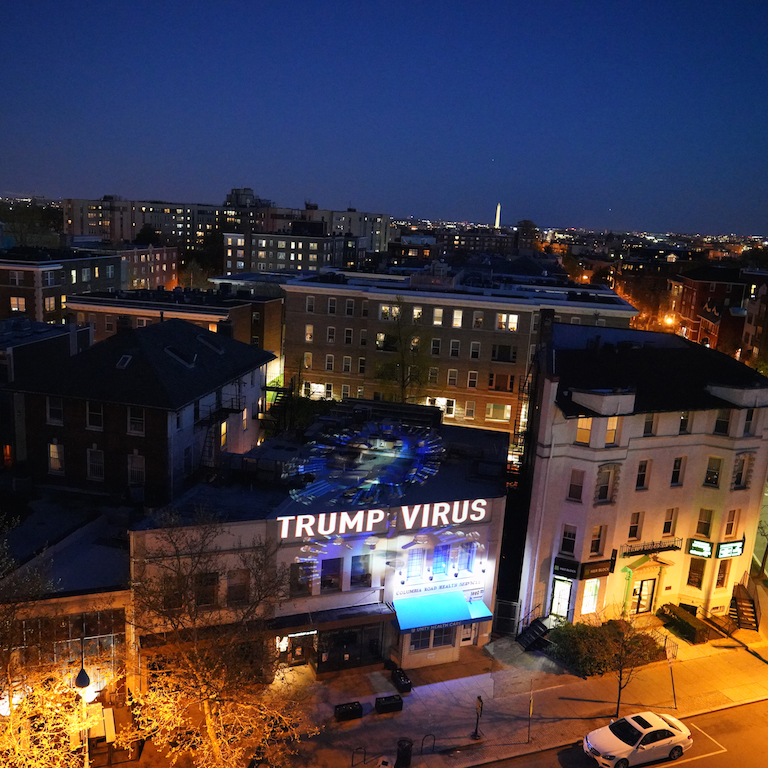
Music venues, galleries, museums, and theaters are shut down across the District, leaving hundreds of local artists with nowhere to present or sell their work during the coronavirus outbreak.
Meanwhile, D.C.’s street artists — people who create graffiti, outdoor installations and other forms of public art — face another problem entirely. The city streets that serve as both canvas and venue are, technically, still open. But the people aren’t there, as they remain inside under stay-at-home orders around the region.
We spoke to five artists in D.C. about what it’s like to make highly public work during a citywide shutdown. Many of these artists said they continue to make art in the city, often related to coronavirus, but they’ve had to get creative to find an audience — turning to the internet, creating supplies for essential workers, or finding a new canvas.
The Projection Artist Who Transmits Messages Out His Window
Robin Bell was in bed for most of March with what he assumes was COVID-19. “It was rough. I didn’t go to the hospital, but I came pretty close,” he said.
Bell is best known for projecting images and political messages onto D.C. buildings, many in protest of the Trump Administration. Now he only projects onto an Adams Morgan apartment building across the street from his bedroom window or the Subway across from his Mount Pleasant studio. So far he’s done: “TRUMP VIRUS,” “DO WHAT YOU CAN AND STAY HOME” and “WHERE ARE THE TESTS.”
He tweets about his new projections — he’s always had a big social media following — but now he feels nervous about his tweets attracting crowds to the pieces, as they have in the past.
WHERE ARE THE TESTS?#flattenthecurve pic.twitter.com/5gBYOWlO60
— Robin Bell (@bellvisuals) March 31, 2020
While he can still find an audience for his new projections online, he can’t find an income. Bell typically pays his bills by collaborating with musicians and other artists, but most of his contract work has dried up. To save money, he’s moving out of his apartment and into his studio.
“The income that we have is gone, and D.C. is an expensive place to be,” he said. “But it’s more important for us than ever to make art.”
The Muralist Who Self-Isolates At Construction Sites
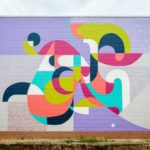
When Cita Sadeli started painting a seven-story mural on the new Hotel Zena in Thomas Circle, her biggest concern was getting pedestrians out of her way so she could set up a crane on the sidewalk.
That was in early March. After about a week, the bustling urban landscape had transformed into a ghost town. Sadeli, who signs her work as Miss Chelove, watched from her solitary platform as office workers dragged desk chairs down the sidewalks and loaded computer monitors into car trunks.
She kept working as the city shut down. She was technically part of the hotel’s construction crew and therefore an essential worker.
Occasionally she’d see people looking up at her from the steps of a large church on Thomas Circle where they’d go to exercise or sunbathe. “At times,” she wrote on Instagram, ” I wondered if all this was really happening. Things still seemed so normal, and quite beautiful from way up there.”
The letdown came when she finished the piece — a colorful painting of two indigenous women, resplendent with jewelry and spears, standing sentinel over the city’s streets.
“It feels weird,” she told WAMU, “to have birthed something so public that only a small swath of the population has seen.”
She still has more commissions to finish. Her next project is a mural inside an unfinished Crystal City restaurant. Construction on the restaurant has halted, but she’s still allowed to go inside and work as long as she’s alone.
“I think these murals could be a source of hope,” she said.
The Poster Artist Who Is Reclaiming The Daylight
In normal times, the anonymous street artist known as Absurdly Well goes out around 3 a.m. to put up posters around the city. Darkness is a tool, as his work is technically illegal. His stencilled posters feature left-leaning political messages and portraits, like one of Rep. Alexandria Ocasio-Cortez and the quote “Fear is not a plan.”
But with the streets nearly empty due to D.C.’s stay-at-home order, Absurdly Well now plasters his posters around town in the middle of the morning. His new posters are influenced by coronavirus: “WA$H YOUR HANDS,” “COVID FLU & 45 KNEW.”
“I’m going to use my voice as an artist so the subject matter can confront your point of view,” he said. “I like the perceived power of that.”
https://www.instagram.com/p/B-zmsvkhXU7/?utm_source=ig_web_copy_link
Not many people are seeing the new posters in person, so he posts photos of them on social media to build his following. He’s also earning some money by selling prints.
Even with that income, Absurdly Well is earning less from his various projects than he was before the outbreak. “Less money, but more support,” he qualified. He’s trying to keep the city’s arts community together by planning a virtual art auction on May 29 to benefit artists and the nonprofit Martha’s Table.
“My art stands for community awareness and empowerment,” he said. “I want to help people right now.”
The Performance Artist Who Is Experimenting With Zoom
Holly Bass describes herself as “a lifelong hustler.”
The D.C.-based poet, director and performance artist has been working on a multifaceted performance series about gentrification called “Race: Talc & Ash.” The events are two-person movement pieces, structured like sporting events and themed around gentrification and class.
Bass was planning to stage a version of the event in New York this month, but now she’s moved everything online. The new format is making her a little worried about getting Zoom bombed.
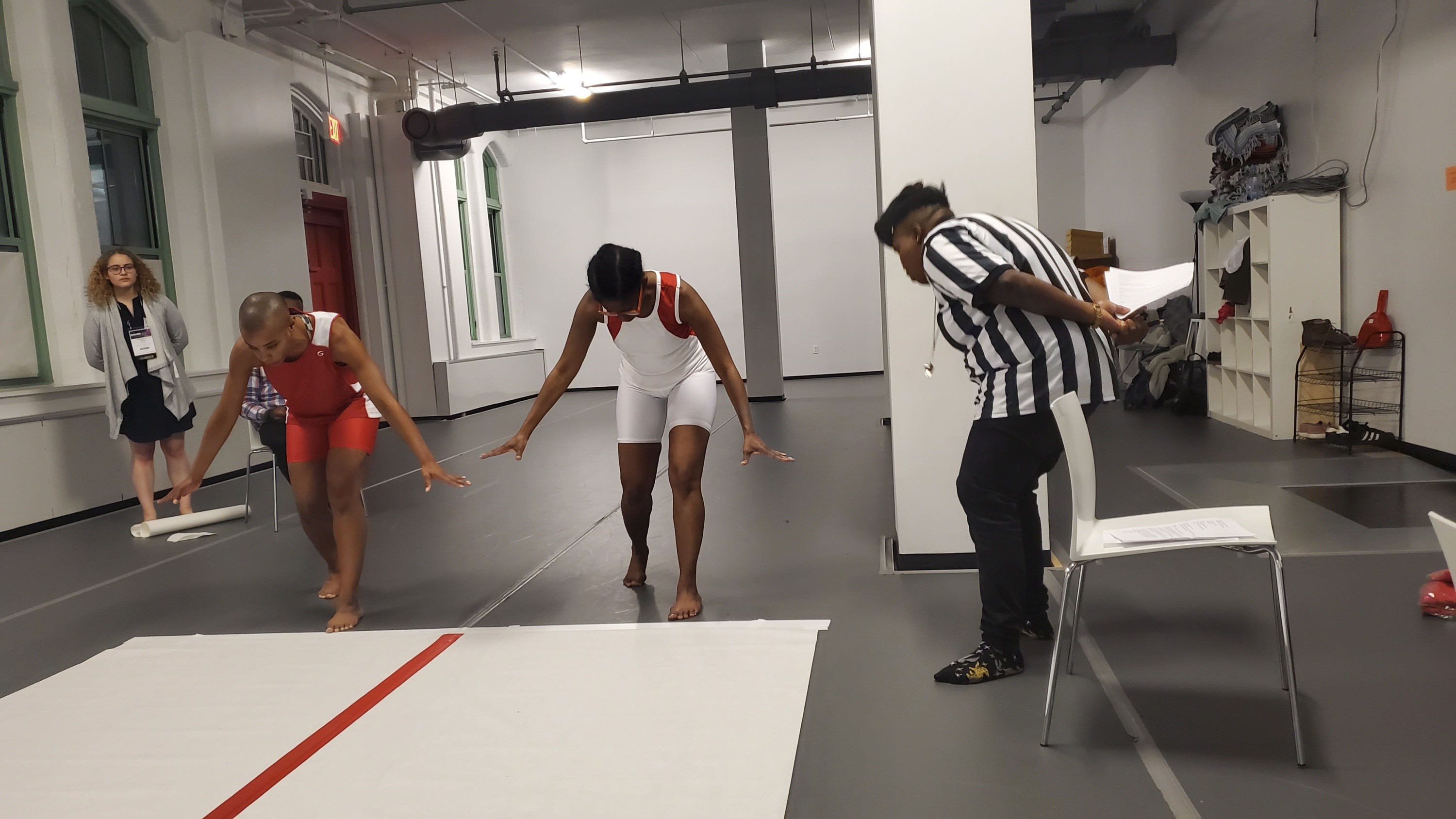
Bass (in white) rehearsed in New York in January.
She’s also struggling a bit with her subject matter. The original conceit focused on housing and neighborhood gentrification, but now she wonders if she should include something about coronavirus, too.
“I can’t accomplish all of my goals, and I just have to accept that,” she said of the process. “There’s a lot of surrender.”
Bass has lived through her fair share of starving artist years, but ironically, 2020 hasn’t been one of them. A job at the Kennedy Center provides her with health insurance benefits, even though she’s currently furloughed. She’s teaching online classes as an adjunct professor at George Washington University, and she has money saved up from a recent fellowship.
Last month she participated in a livestreamed poetry reading that attracted more than 40,000 people — way more than she’d ever get at an in-person reading, she said. Viewers could donate to the poets during the performance, but she opted out of receiving any money.
“I’m doing ok right now,” she said.
The Installation Artist Who Repurposes Her Material For Masks
Monica Jahan Bose has been traveling between Bangladesh and D.C. for months in anticipation of a big, city-funded installation she was supposed to do in late April.
She planned to hang 18-foot-tall saris along the C&O Canal in Georgetown in honor of the 50th anniversary of Earth Day, accompanied by projections by Robin Bell. All of the saris would be decorated with messages and drawings made by people in Bangladesh and D.C.
Her last in-person sari-decorating workshop was in early March. Before the next one, she bought a Zoom account.
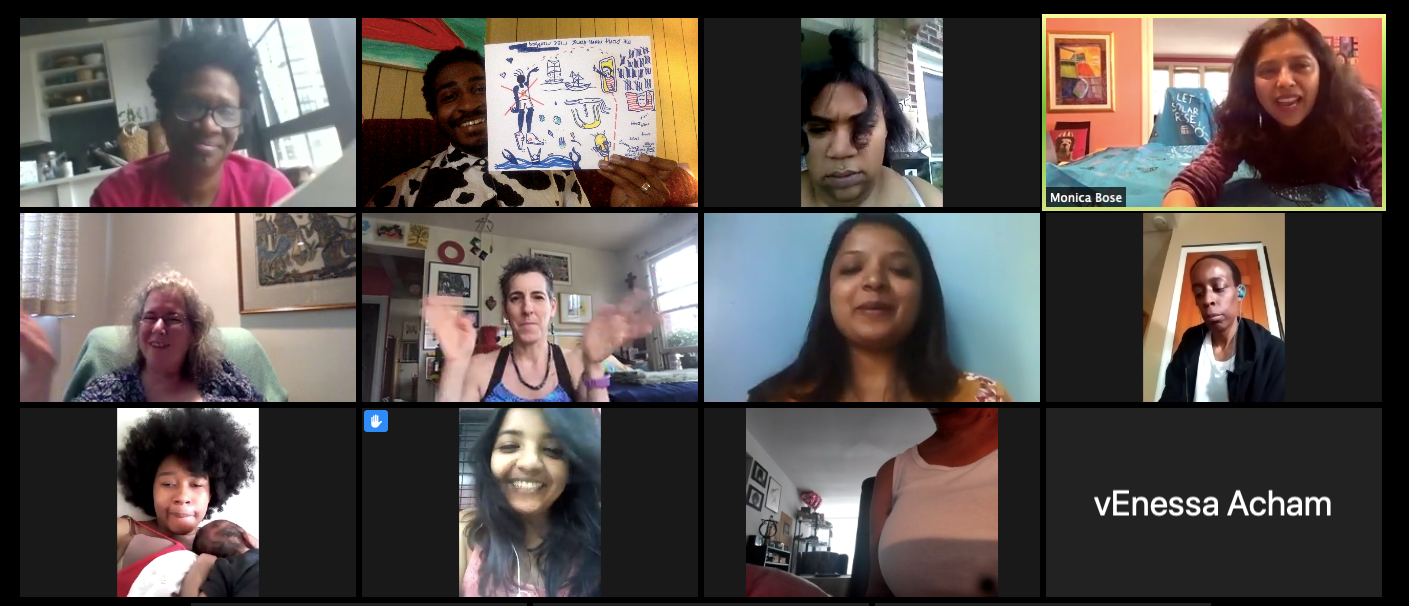
A sari-decorating workshop on Zoom.
“People are feeling really isolated, so the first half hour they just talked about how they’re feeling,” she said of her first virtual workshop. The participants suggested messages and designs that Bose then applied to the saris herself.
Next, the installation itself got cancelled. She thought about hanging the saris from her house, but both she and city officials worried that it would draw a crowd. She decided to plan a livestreamed indoor event for April 22 instead.
Bose now has a new project on her hands: She’s working with her teenage daughter to make fabric masks out of recycled saris that she gives away for free to seniors and fellow artists. And now that her flagship event is virtual, she says she’s excited that people in both D.C and Bangladesh can participate in one unified Earth Day event.
“There are pluses to making things online,” she said. “A whole lot more people can see it.”