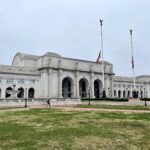
Union Station normally teems with life on weekday mornings. Congressional staffers emerge from the Metro, headed for the Hill. Customers line up at half a dozen coffee shops for their first cup of the day. Amtrak trains and intercity buses release hordes of travelers in the heart of the nation’s capital.
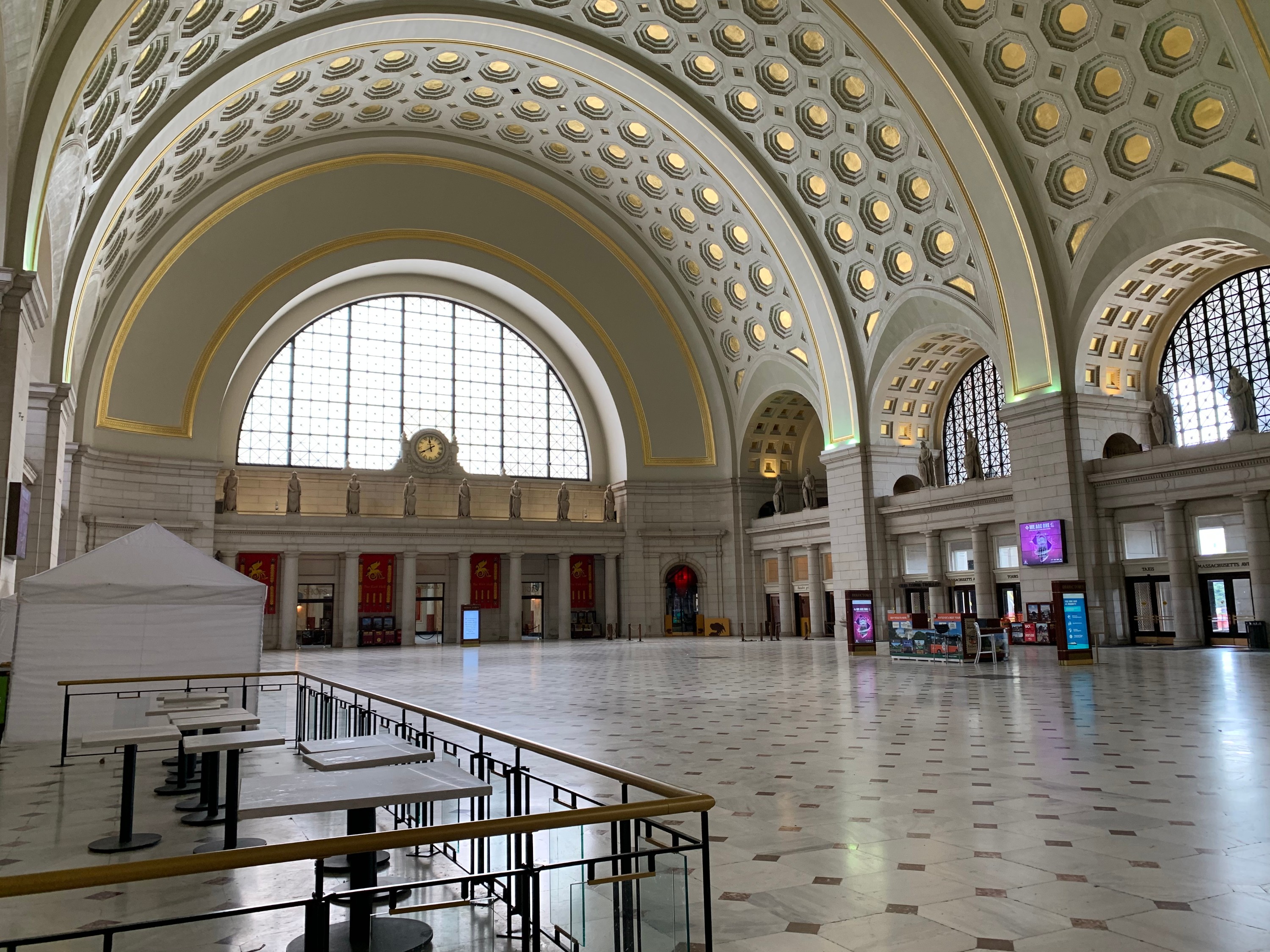
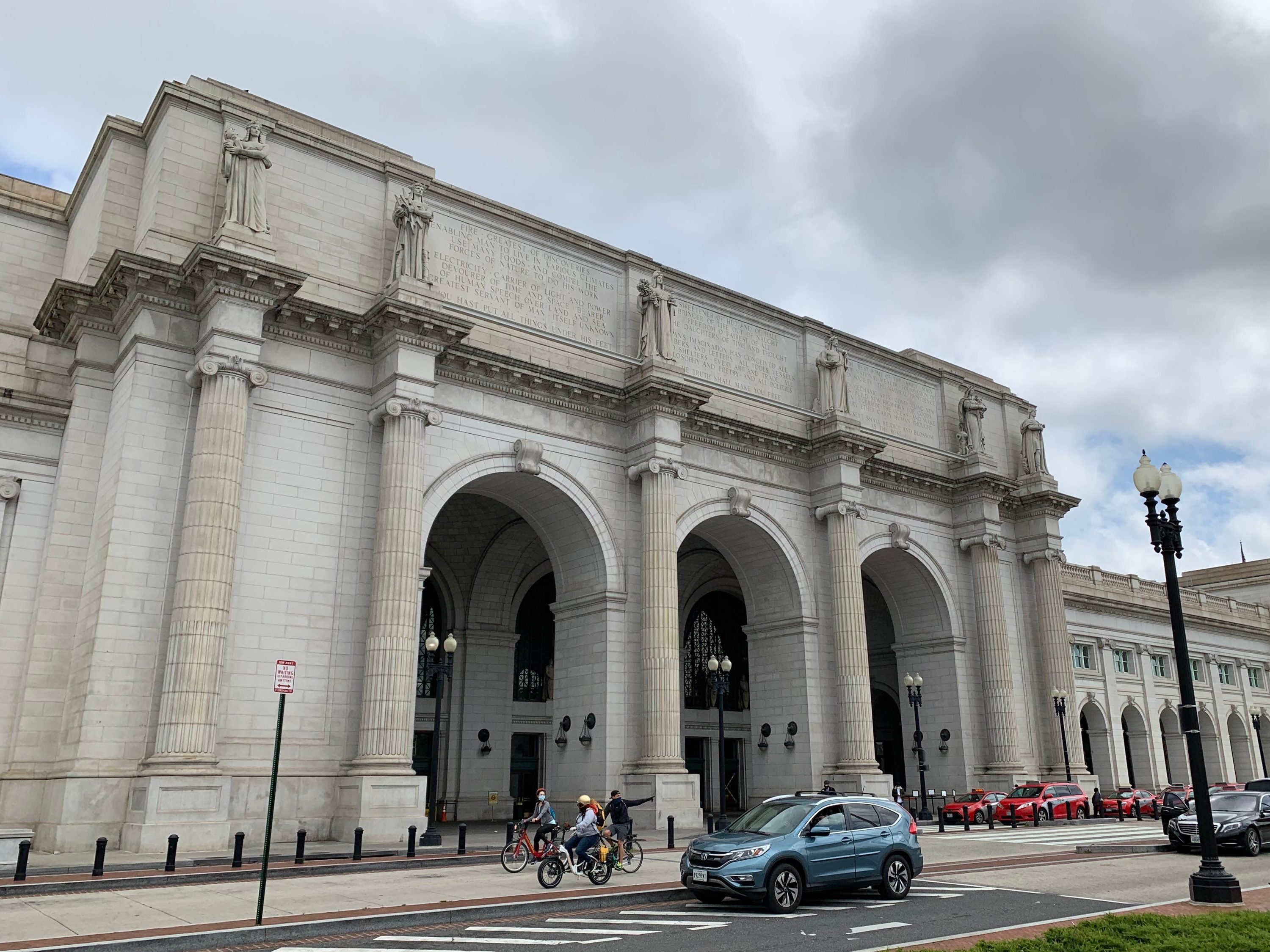
These days, due to the coronavirus pandemic, the station is much emptier—a dramatic change that can make this more than century-old landmark feel positively eerie. Union Station is typically the second-busiest Amtrak station in the U.S., ranking only behind New York City’s Penn Station.
While essential transportation services continue, allowing doctors, public officials, and other key employees to get to and from work, the District’s most iconic transit hub is a shell of its usual self.
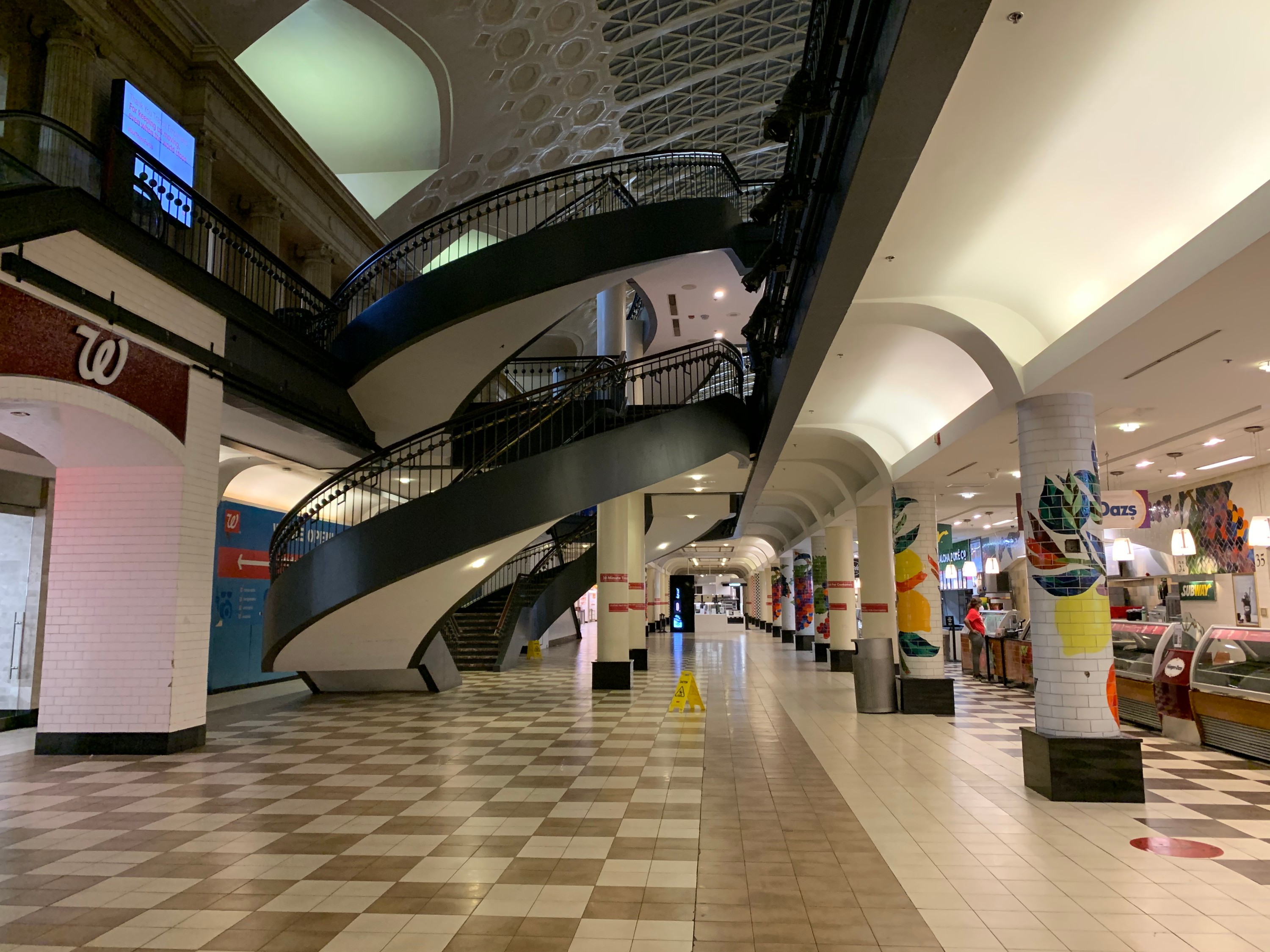
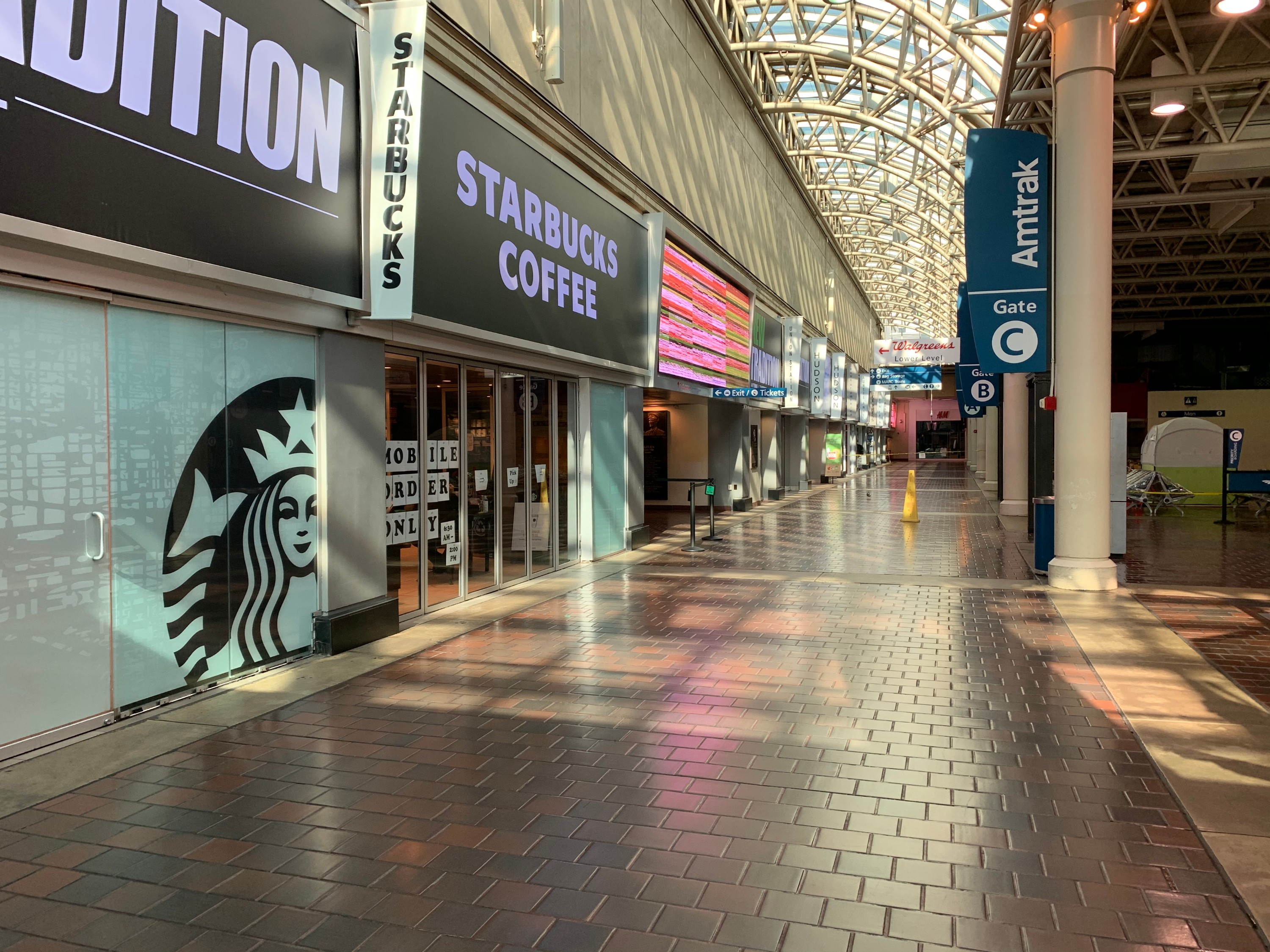
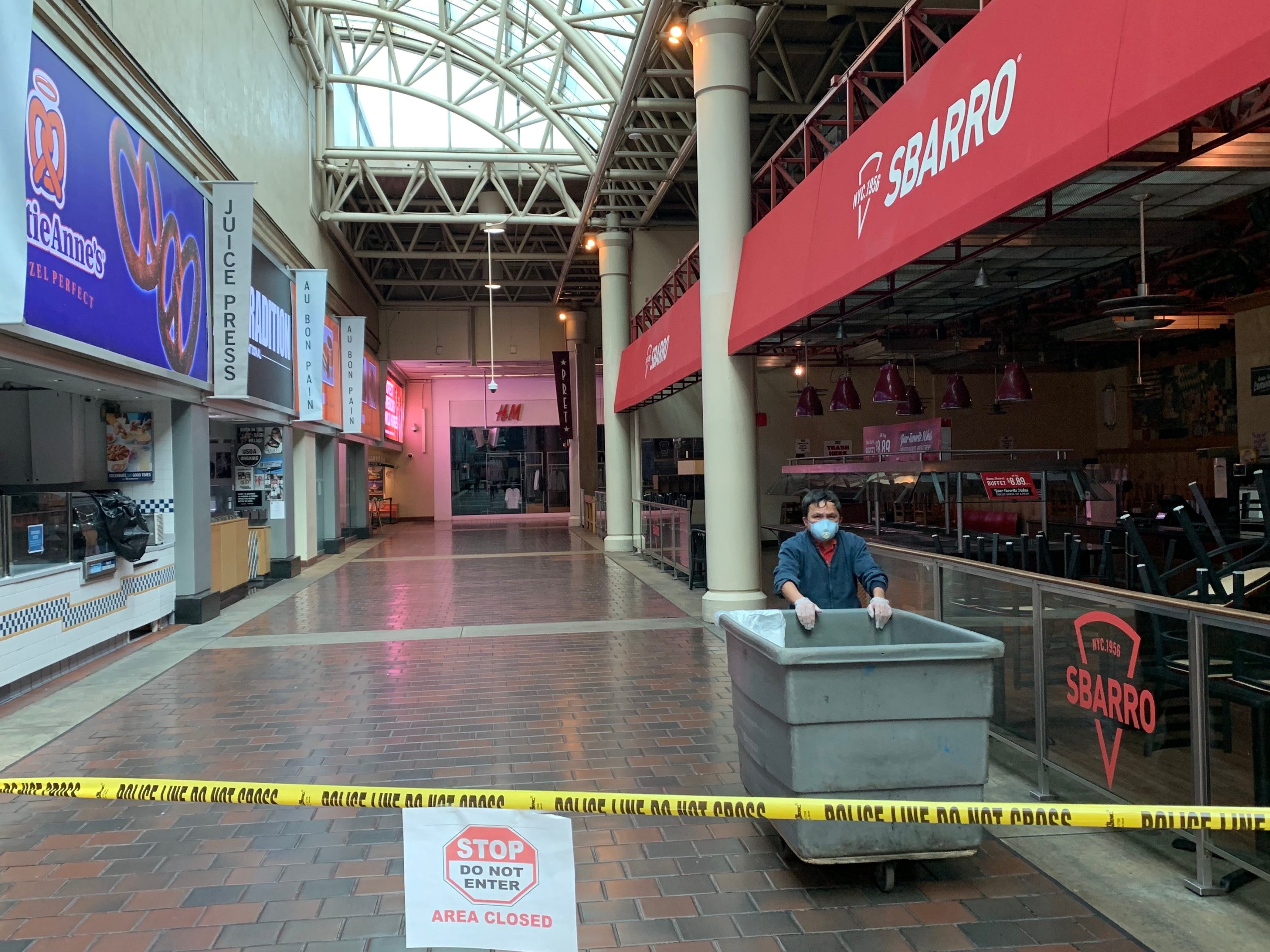
On a recent morning, the cavernous main hall and the subterranean food court at the 1907 Beaux-Arts building were both virtually empty.
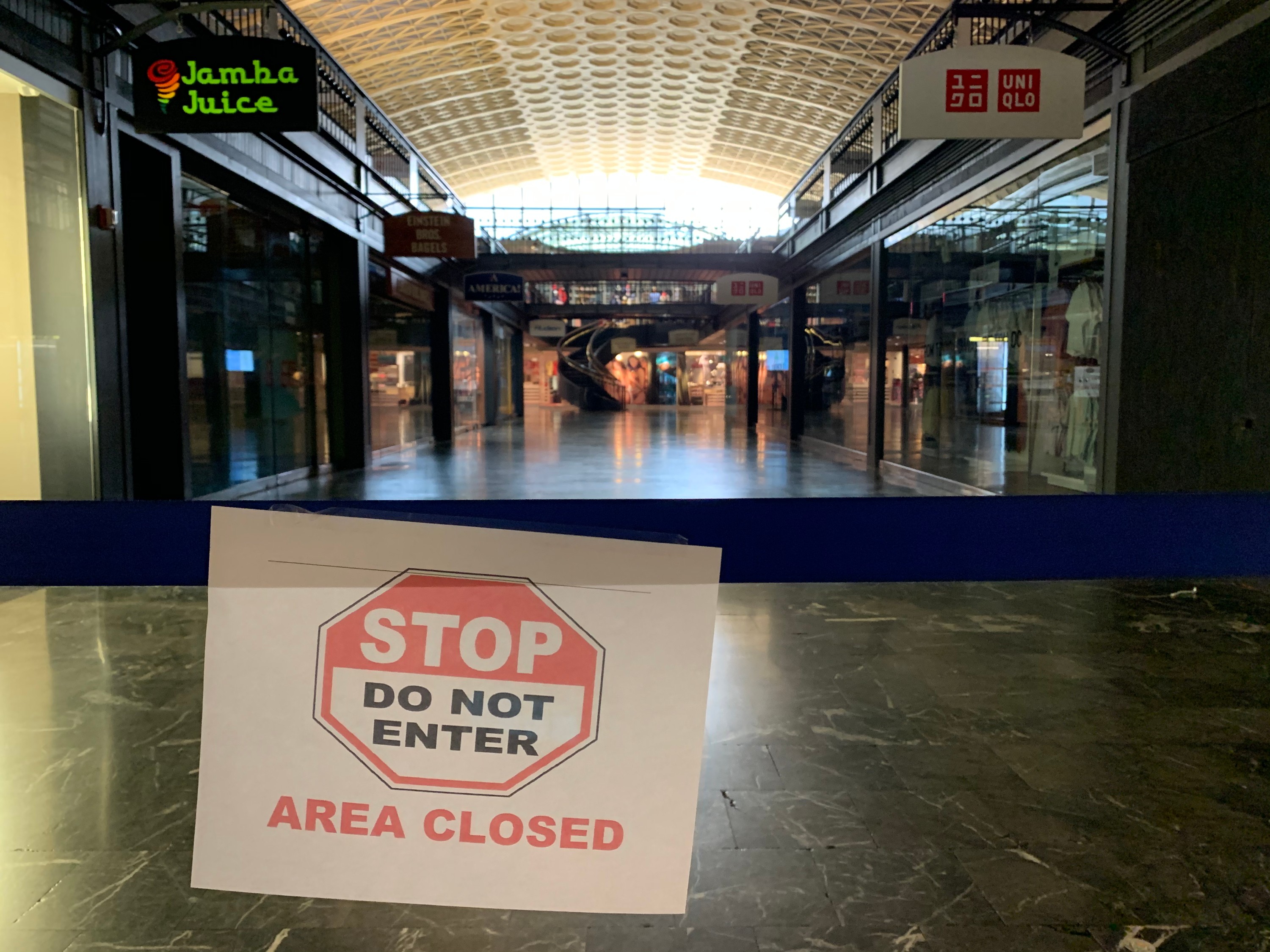
Many of the restaurant and retail areas were roped off with paper signs reading “DO NOT ENTER” and “AREA CLOSED.” Birds fluttered through the food court, where a handful of masked security guards and employees stood around the few businesses still serving the station, including Wendy’s, Subway, and Chipotle. Near the Amtrak gates, the statue of civil rights leader A. Philip Randolph surveyed the scene. Rows of waiting seats sat empty.
A spokesperson for Amtrak says that though specific ridership figures for Union Station weren’t available, Amtrak’s national ridership was down 95 percent for the week ending April 26 as compared with 2019, but up somewhat as compared with the previous week, to roughly 26,400 passengers. Meanwhile, the Union Station Metro stop, which is on the Red Line, saw a 97 percent decrease in ridership on April 29 relative to the same date the year before, to 970 trips, per Metro.
The pandemic has resulted in plummeting business for the station, raising concerns about its finances and long-term future. The funding for maintenance at Union Station comes from the site’s restaurants, retail stores, and parking spots—not its transportation services, as many might assume.
With the former either closed or well below their regular levels of activity, “that means you don’t have any funding coming in to keep Union Station going,” says D.C. Del. Eleanor Holmes Norton, who, along with seven other D.C.-area representatives, is calling for Congress to include funding for the station in the next round of COVID-19 legislation.
In an April 21 letter to the leaders of the House Appropriations Committee, the group requested $26 million in federal dollars to bankroll Union Station’s operating costs for roughly the next six months. The House members wrote that the station might face a budgetary shortfall as soon as May, impeding passenger services “well beyond” the coronavirus crisis.
The federal government owns Union Station, but it is managed by a public-private partnership.
“Our revenues are going to be way off this year,” says Beverley Swaim-Staley, the president and CEO of the nonprofit Union Station Redevelopment Corporation, which leases the site from the Federal Railroad Administration. Seventy percent of USRC’s revenue flows from parking, according to the group’s 2019 annual report. All parkers pay a fee (the maximum daily price is $20) and some employers lease spaces by the hundreds.
“We have about 2,500 parking spaces and [prior to the pandemic] the garage has been full,” Swaim-Staley points out. “In fact, we were looking to start double parking because it’s been so full since last summer.”
Swaim-Staley ran Baltimore-Washington International Airport during 9/11. She says even though that crisis transformed travel and the economy, this one will likely be more impactful over the long term, given the nature of the coronavirus and current mitigation capabilities.



Norton tells DCist she is “reasonably confident” she and her colleagues will secure the emergency funding, considering that every member of Congress is intimately familiar with Union Station, which faces the U.S. Capitol. The alternative, she says, is delayed maintenance and construction, which could cause safety issues and future disruptions.
“You’ll have to close up to do maintenance,” says Norton. “You’ll have to close parts of the station to do capital projects.” (It wouldn’t be the first time. Union Station fell into such disrepair that it had to close for five years in the mid-1980s to undergo a major refurbishment. That’s also when USRC came into being.)
Projects at Union Station that were already planned for the next couple of years include roof replacements and updates to its heating and air-conditioning systems. This is to say nothing of bigger-ticket items, like the proposed redesign of the Amtrak concourse that’s supposed to double the concourse’s passenger capacity, or the planned overhaul of the station’s above-ground parking garage.
In the near term, operating Union Station will require special measures to help prevent COVID-19 from spreading. Directories and loudspeaker announcements at the station are already reminding visitors to practice social distancing and keep six feet apart from one another.
Additionally, USRC says it plans to put out hand sanitizer and signs urging people to wear masks in the parking garage on the H Street NE side of the site. Health officials have recommended that people don masks when making essential trips in public and frequently clean their hands.
Both Norton and USRC say any congressional relief funding wouldn’t go to the station’s businesses, many of which are large corporate chains. “No, no, no,” Swaim-Staley says. “This is literally for maintaining the building, everything from replacing doors when they break to replacing the concourse roof. That’s the gamut of what this will go for.”
Whether the station receives federal assistance or not, it’s likely to remain significantly empty for months as the pandemic endures. In mid-April, D.C.’s state of emergency was extended to May 15, and it could be extended again. City officials have given a range of dates for a gradual reopening process to begin, from late May to late July, but things will not immediately return to normal.
Even after transportation services start to return to pre-pandemic levels, people may avoid taking crowded trains and buses, out of fear of contamination.
“It’s unfortunately going to be a while before people feel confident to ride public transportation in the same way they did before this, until we have a vaccine,” says D.C. Councilmember Charles Allen, whose Ward 6 includes Union Station and who serves on the National Capital Region Transportation Planning Board.
Still, Allen stresses that bringing a semblance of normalcy back to the station is critical for his constituents, the city, and the broader area. “The fact that people can live and just walk three or four blocks to Union Station, that means you’re three or four blocks from the world,” he says, calling the transit hub “essentially the region’s fourth airport.”
“When you compare it to National, Dulles, and BWI [airports], that many people move through [Union Station] on a regular basis,” adds Allen.