 Dominique Maria Bonessi
After multiple issues surfaced during Maryland’s mostly mail-in-ballot election Tuesday, the state’s lieutenant governor and comptroller are asking the administrator of the board of elections to resign before the November general election.
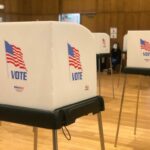
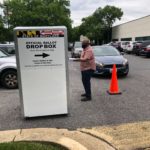
Many Marylanders who voted in-person on primary day reported not receiving a ballot in the mail and were greeted by long lines at a limited number of voting sites, leading to renewed concerns over social-distancing measures amid the coronavirus pandemic. And among those who were able to vote by mail, some ballots arrived weeks after being requested in Montgomery and Baltimore counties, while others came in a different language than voters’ preferred one.
A major issue occurred Tuesday evening when mail-in and drop-off ballots for Baltimore city, along with in-person vote totals, were temporarily removed from the state elections board’s website. While those results were reposted Wednesday, Maryland officials blamed the problem on one of the board’s vendors.
This isn’t the first election that’s seen significant troubles during the pandemic. During Congressional District 7’s primary election in April, ballots contained inaccurate postage instructions and there were glitches with the tablet devices used to register voters. And during D.C.’s primary Tuesday, in-person voters experienced hours-long wait times at polling places across the city, while many residents who’d requested mail-in ballots expressed confusion about their ballot status because of communications and technical issues. (Some District officials, including Mayor Muriel Bowser and various councilmembers, have criticized the D.C. Board of Election’s handling of the primary and said they’re concerned about the general election.)
At a Maryland Board of Public Works meeting Wednesday, Lt. Gov. Boyd Rutherford said he was unhappy with the public-relations firm the state elections board hired to assist with communicating changes in the voting process. Rutherford said the firm was politically connected and shouldn’t have been hired.
“I have lost faith,” he said. “I think it is time for some change, some new blood, some new thinking.”
In a statement Wednesday, Maryland Comptroller Peter Franchot also called for the resignation of longtime state elections administrator Linda Lamone, adding that it was time for the “endless excuses” from the state elections board to end. “It’s time for a new culture of accountability and competence,” he said.
At the Board of Public Works meeting, Lamone, who has served as the elections board’s administrator since 1997, responded to the criticism by saying the primary “presented unanticipated challenges.”
“We had no time to plan for the two elections [including the congressional primary] that were held a month apart, all by mail, and [this was] something, frankly, we had never done before,” said Lamone. She added that she was proud of the work that went into the elections, but didn’t comment on the calls for her to resign.
The state elections administrator is appointed by the state board of elections and confirmed by the Maryland Senate. Lamone earns $137,000 a year in salary, according to records maintained by the Baltimore Sun. The board may dismiss the administrator with a vote from four of its five members.
But before such a vote can occur, the members must put in writing the grounds for the administrator’s dismissal, whether due to “incompetence, misconduct, or other good causes.” Then, the administrator has time to respond to those comments, and—in any event—would remain authorized to serve until a replacement is found.
“We need a new coach to get the team over the hump,” Rutherford said. “I think mail-in voting is going to be here for a long time.”
At a press conference Wednesday, Maryland Gov. Larry Hogan said “there were obviously significant failures in Tuesday’s elections” and a “serious lack of leadership.” Hogan said he’s requesting the state elections board to provide a full report on what went wrong with the elections, by no later than July 3. He’s also asking state lawmakers to begin oversight hearings on the board and elections logistics.
“I want to assure you that we are going to take whatever actions are necessary to make sure that those responsible correct these problems in order to safeguard our democratic process,” noted Hogan. “And ensure that the November election is free of these failures and these issues.”
Senate President Bill Ferguson, a Democrat from Baltimore city, and Speaker of the House Adrienne Jones, a Democrat from Baltimore county, have requested that both Lamone and Michael Cogan, the chair of the state elections board, appear at a Senate committee hearing June 16.
In a letter, Ferguson and Jones included a list of topics they would like to discuss with board officials, such as the mail-in process, the process used to set the number of voting centers, and the collaboration with local elections boards.
“The right to vote is the cornerstone of our democracy and our country’s endurance,” Ferguson and Jones wrote in a joint statement. “We must have clear answers to what happened and how we can do better in November.”
Despite the new calls for Lamone to be removed as the state elections administrator, this isn’t the first officials have raised that possibility. In 2005, Maryland Gov. Bob Ehrlich, a Republican, sought to fire Lamone because he said he’d lost confidence in the elections board. State lawmakers ultimately changed the laws so that the elections administrator couldn’t be fired by the governor or members of the Maryland Senate.
On Tuesday, Hogan told reporters that lawmakers could decide to change the law again, as they see fit. And regardless of Lamone’s status, the elections board still has to resolve issues before the November general election, which could be affected by the coronavirus pandemic as well, particularly if a second wave of COVID-19 cases hits the D.C. area.
Amy Cruice, a legal program manager with the American Civil Liberties Union of Maryland, told The Baltimore Sun that she’s recommended a logistics team that could visit polling places, find bottlenecks, and solve problems quickly.
“The [state board of elections] took a series of unexplained steps, and released incomplete statements that did nothing but unnecessarily sow confusion and mistrust regarding the election results,” she told DCist/WAMU in a statement. “[It] can, and must, do better, and must do so right away.”