Margaret Barthel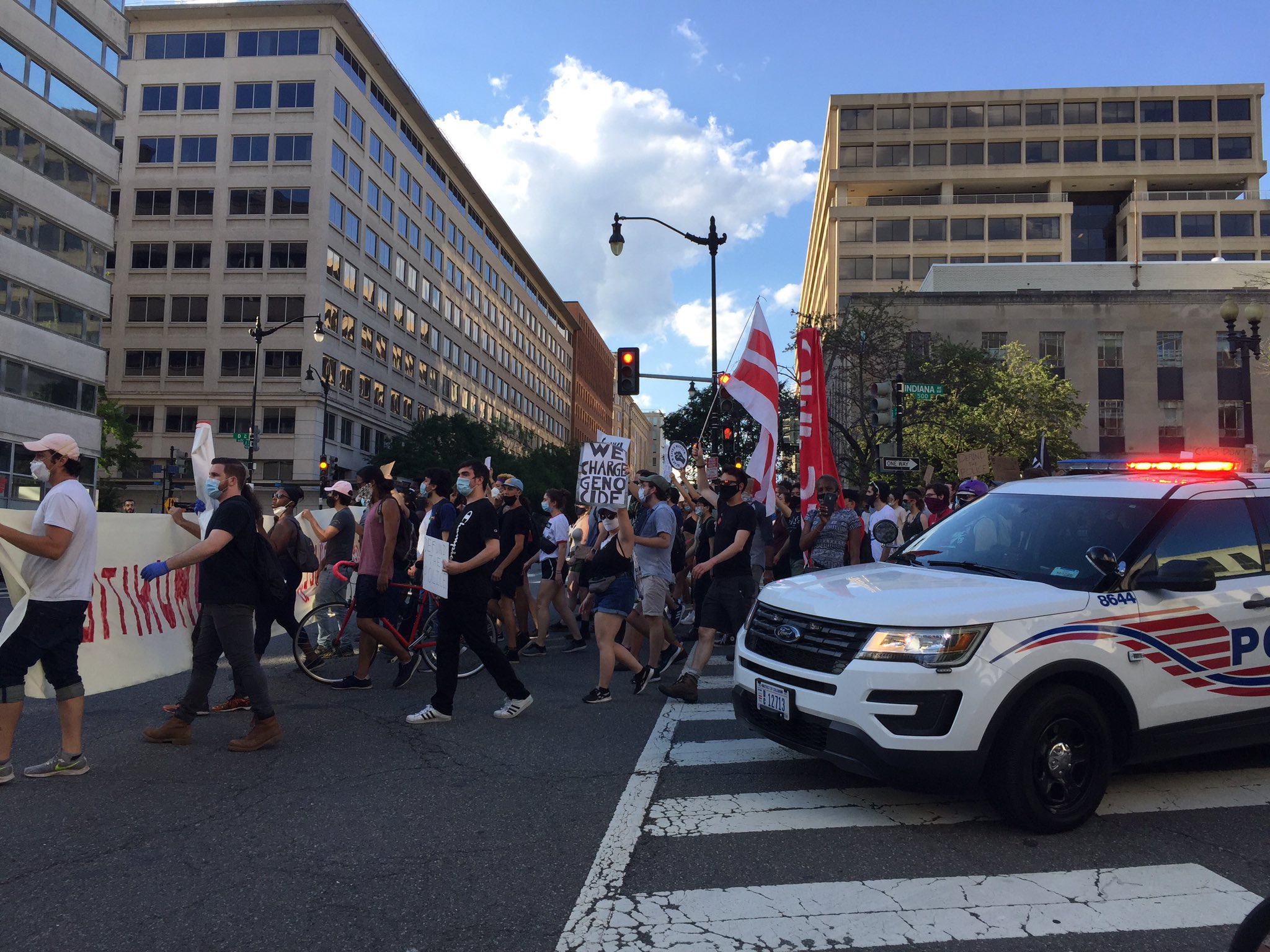
Protesters have now gathered in the streets of D.C. for two weeks straight. Over the last 15 days, tens of thousands of people have marched through all corners of the city to express their grief and their outrage — and to demand change.
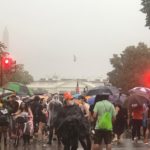
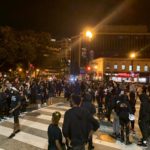
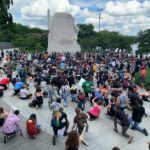
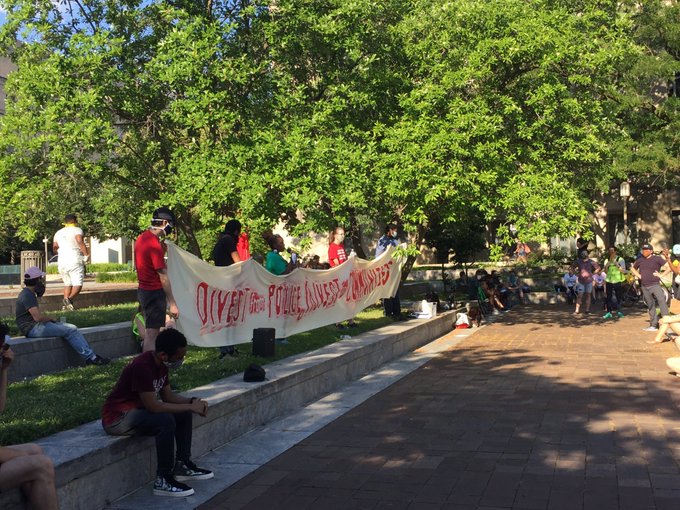
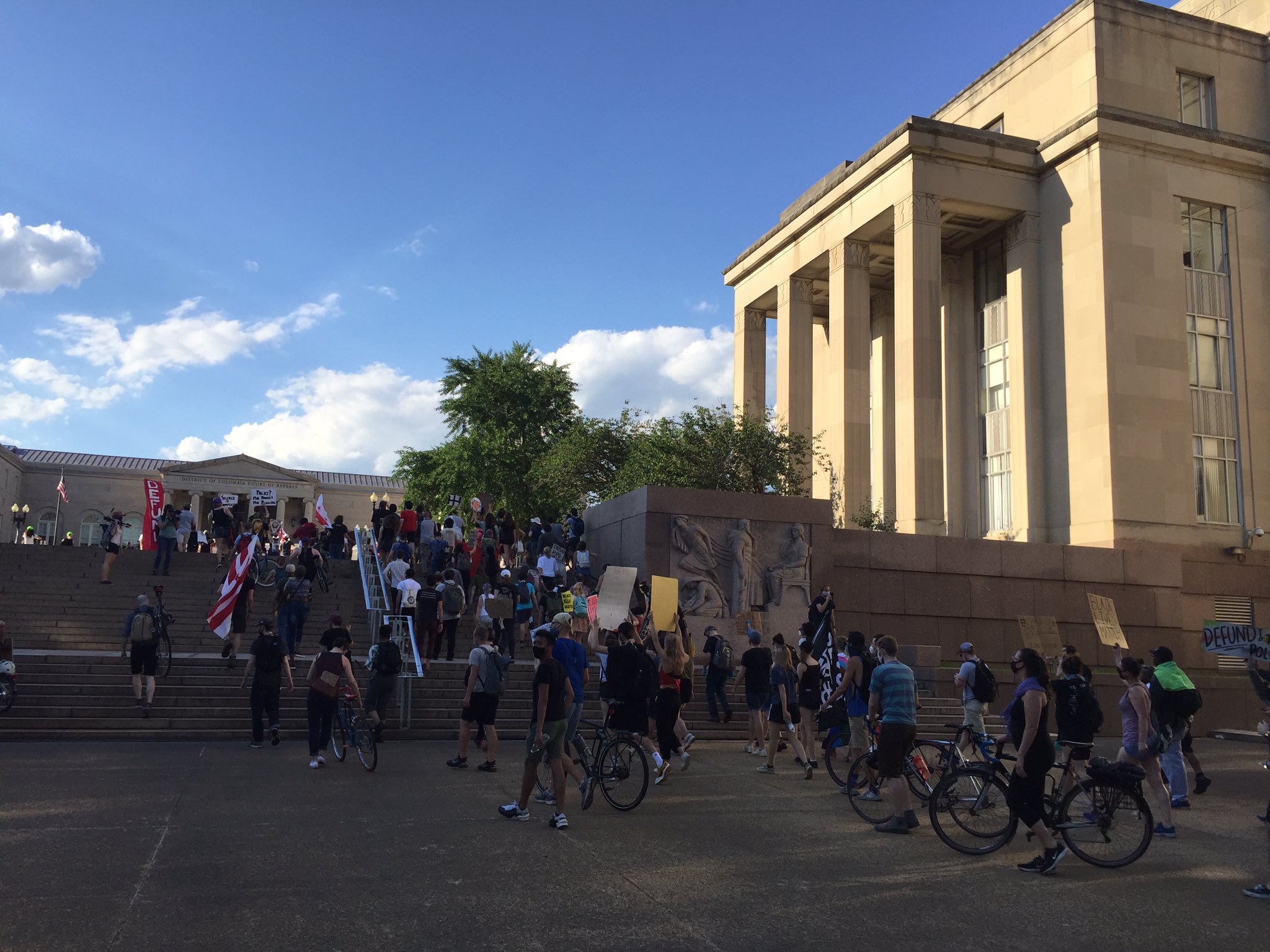
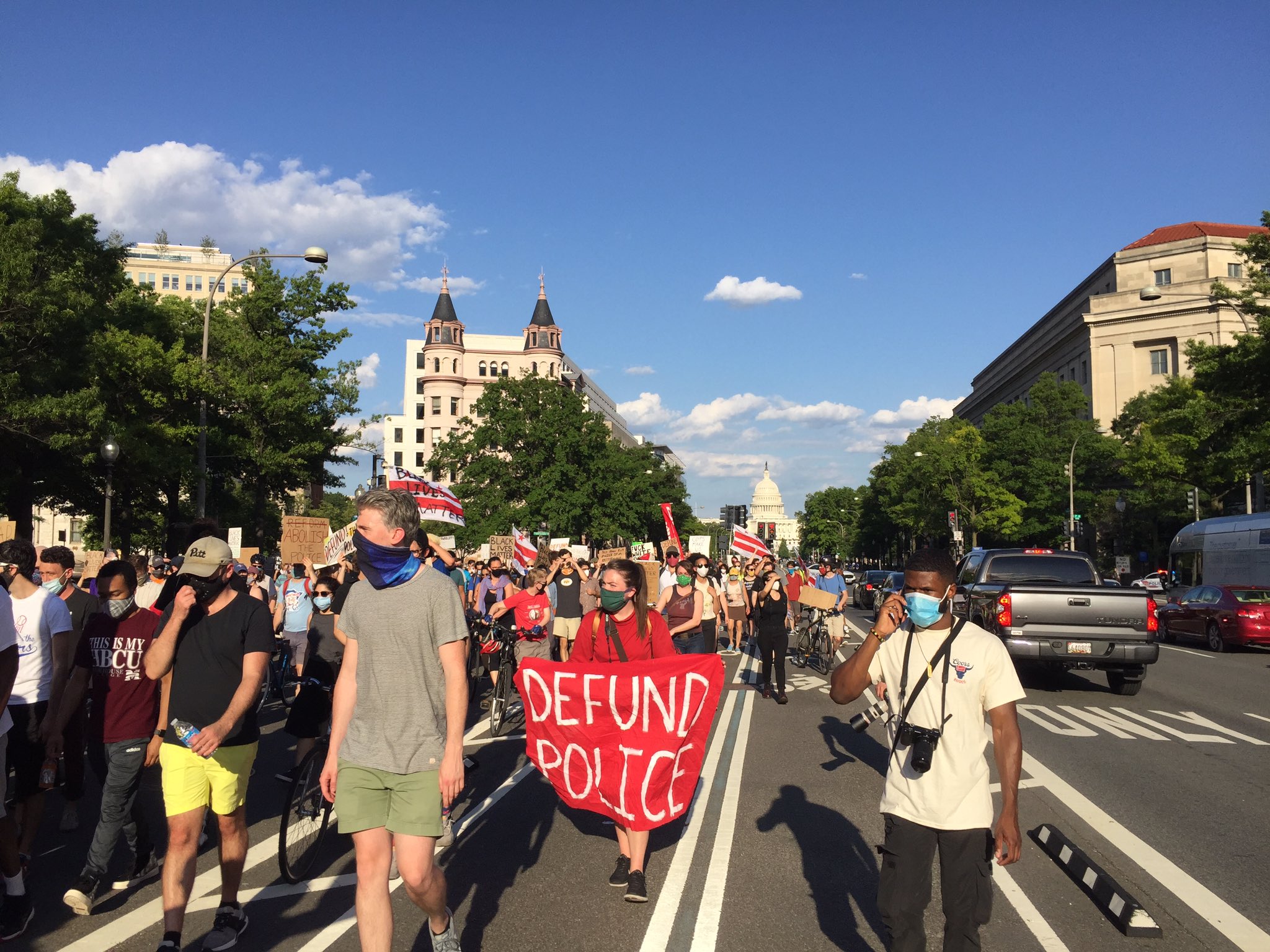
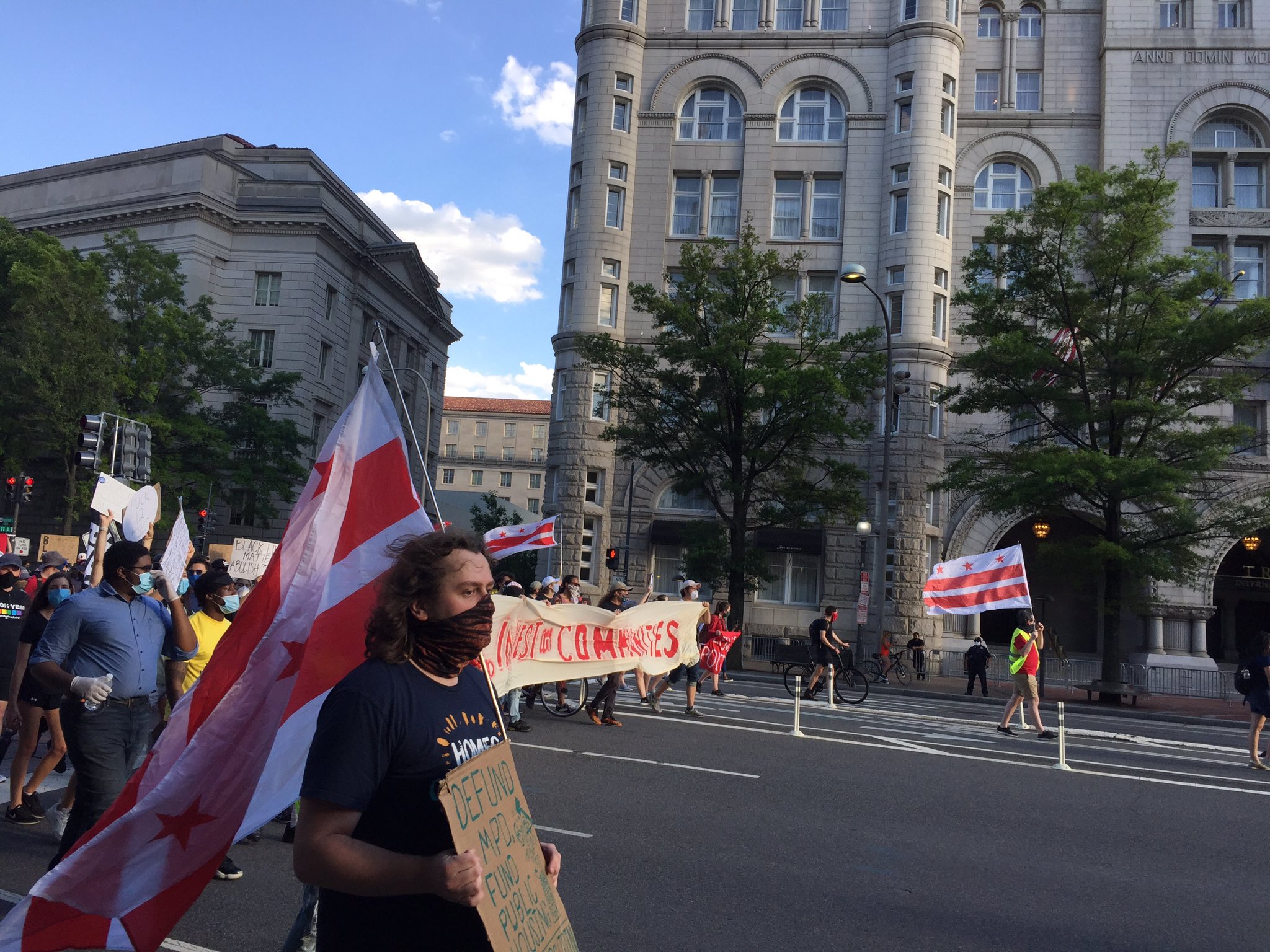
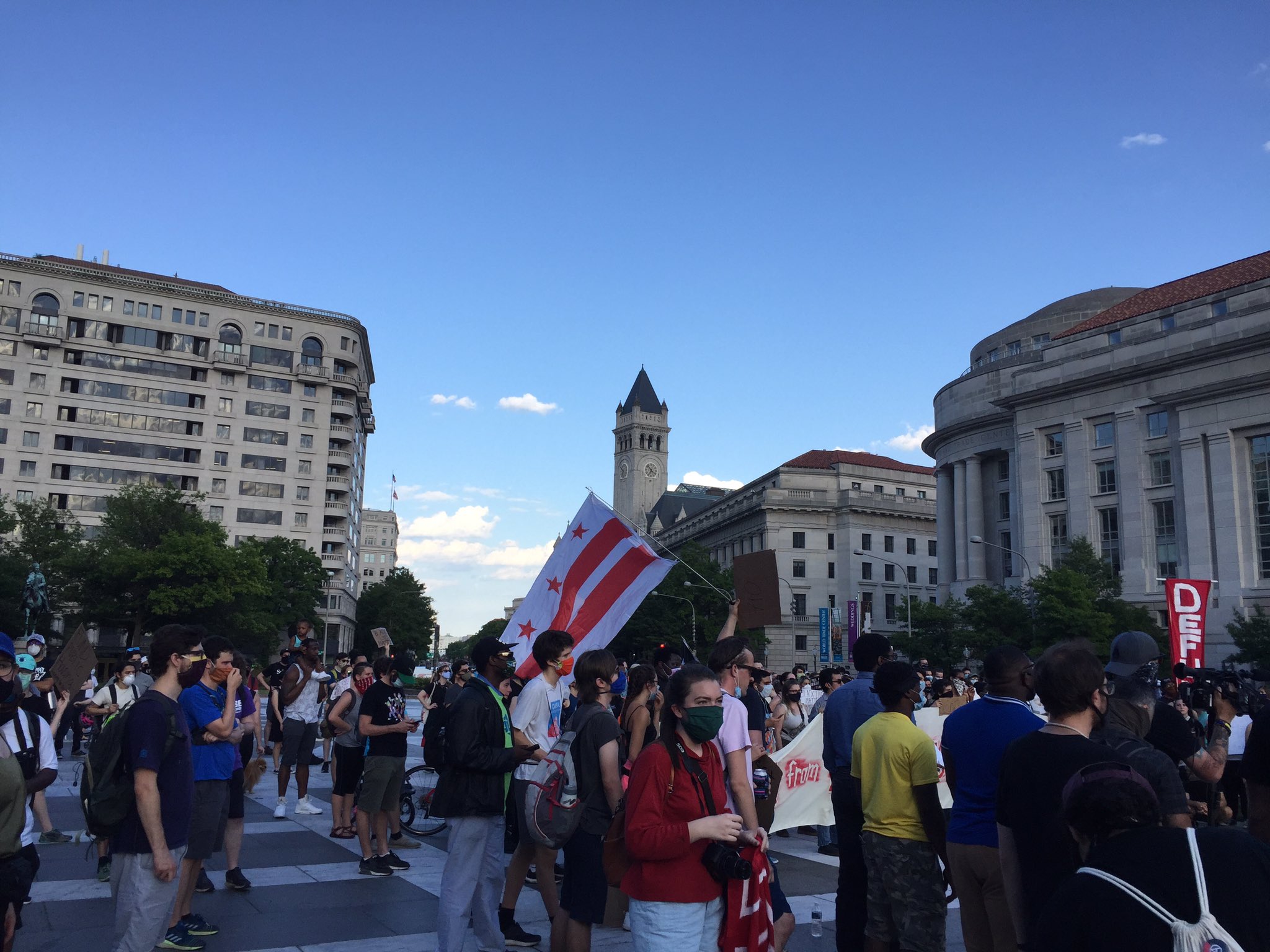
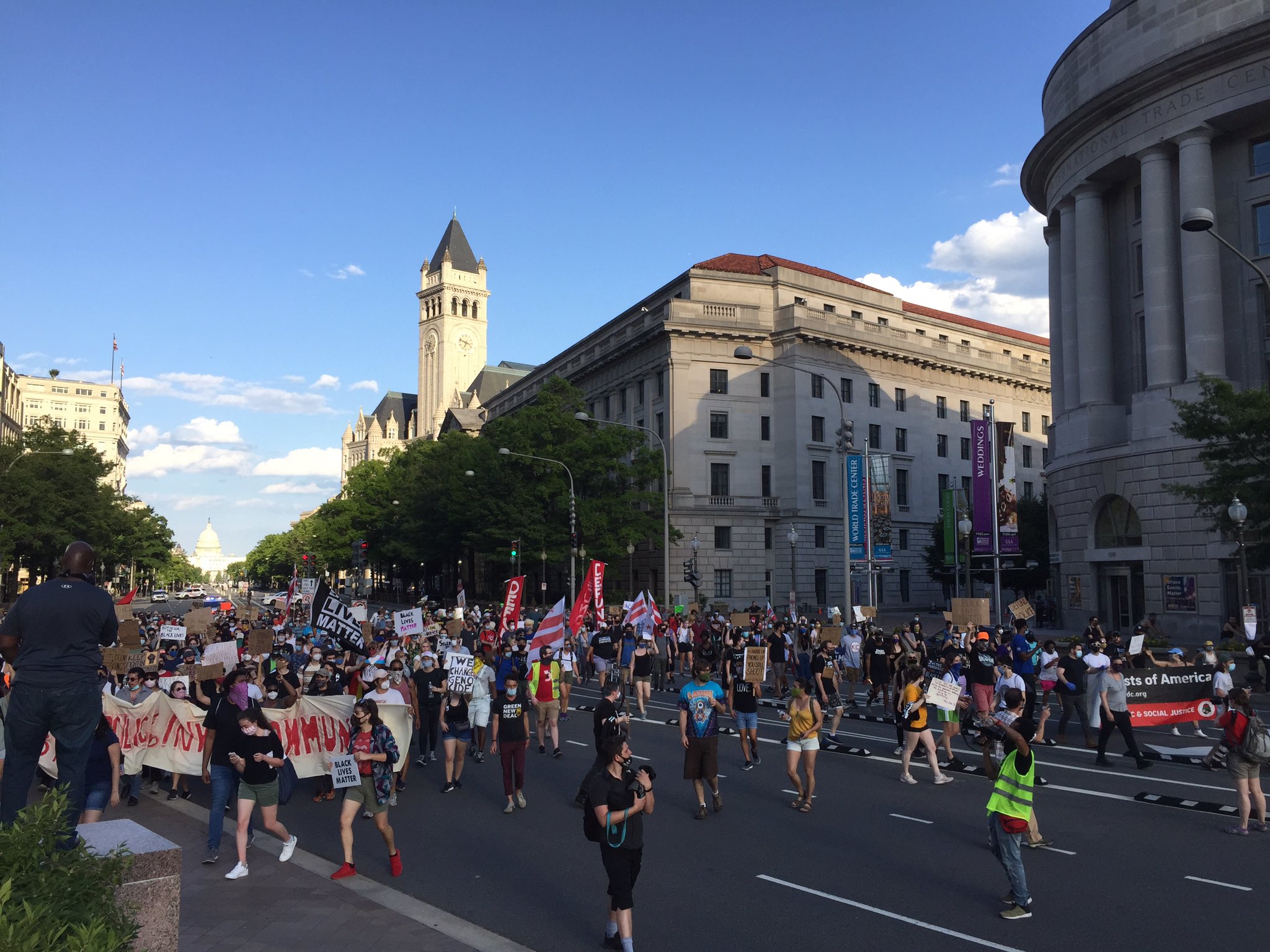
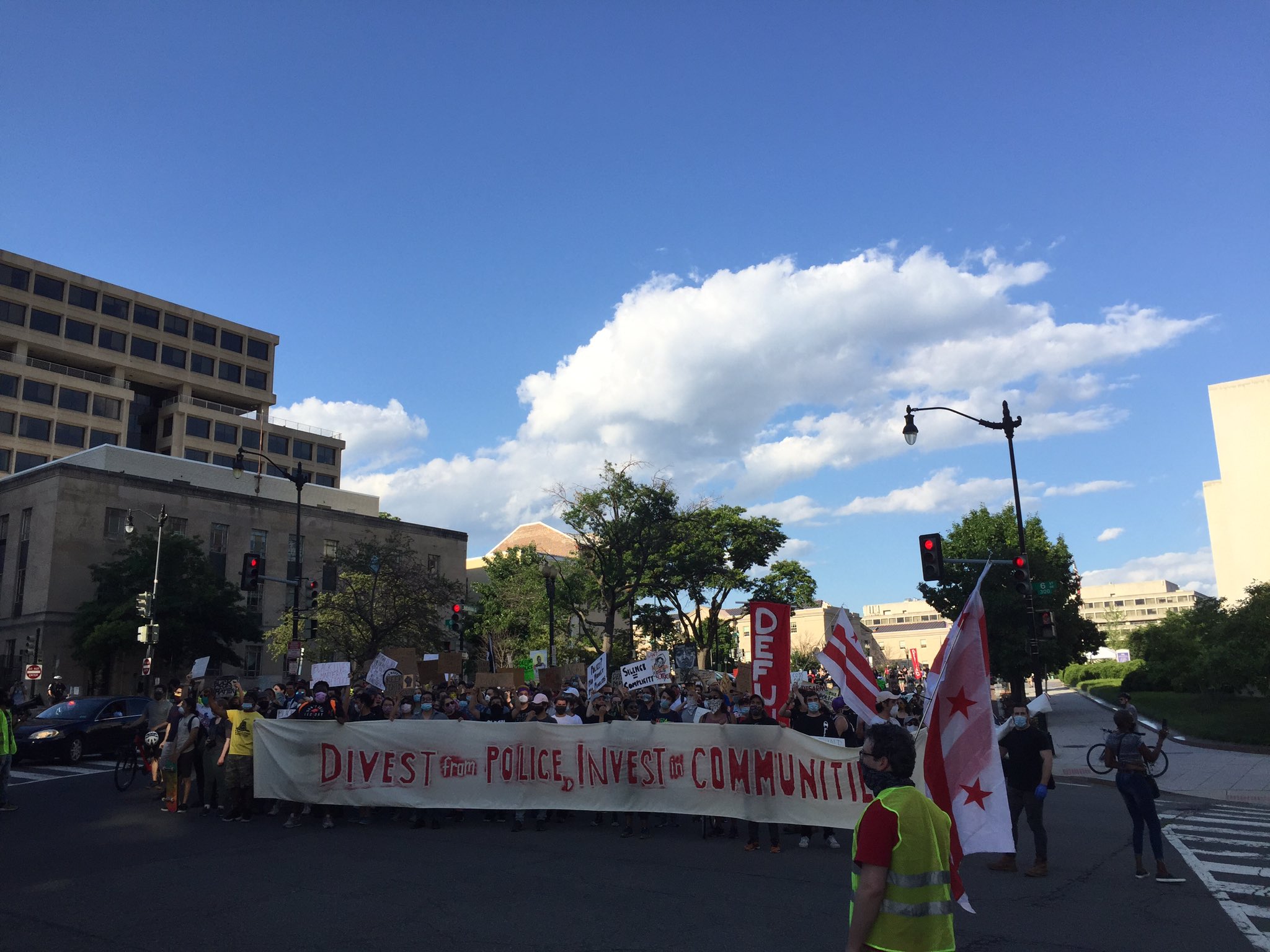
Friday was one of the smallest crowds yet, a few hundred protesters who mostly dispersed by around 10 p.m. One group, organized by the Metro D.C. Democratic Socialists of America and a coalition of other community groups, numbering about a hundred, marched from Judiciary Square to Freedom Plaza, near the Wilson Building. Other protesters congregated at Black Lives Matter Plaza.
Among the demonstrators who show up day after day, there’s a strong sense of determination to keep the momentum going and keep the pressure on lawmakers to make systemic change.
“At the end of the day, it’s about human rights,” said one protester, Juice, a 31-year-old from Northwest D.C. He’s attended demonstrations all but one day, and he plans to keep going, even in the middle of a pandemic.
“We’re at the point that, you never want to say sacrifices have to be made, but for black people in America, we don’t get to see tomorrow, so this is literally a fight to see tomorrow, fighting to live.”
Juice says that, in America, “people become acclimated and get used to pain, and our job and our responsibility as citizens is to not let up.”
Some protesters were frustrated to see the crowds thinning out.
“This is crazy. I don’t know where the people are, but they need to be out here. People are driving by in their cars, honking, screaming on their balconies,” Jimia Mozie, from Montgomery County said, “No … You need to be out here.”
“Are we supposed to stop protesting because you put up a sign and made a painting in the street?” Mozie, 24, added, referring to the massive Black Lives Matter mural Mayor Muriel Bowser commissioned.
Throughout the evening, crowds gathered in Freedom Plaza, Judiciary Square, and outside the Trump International Hotel. These protests have been decentralized, and, at times on Friday, multiple marches intersected with one another.
Janeese Lewis George, who won the Ward 4 D.C. Council primary last week, spoke to multiple groups that congregated at Freedom Plaza, only steps from her future workplace in the Wilson Building.
“I want to be clear, this isn’t a moment, it’s a movement,” George said.
Speeches on Friday focused not only on ways to address police brutality but other issues that contribute to systemic racism like inequity in housing and education.
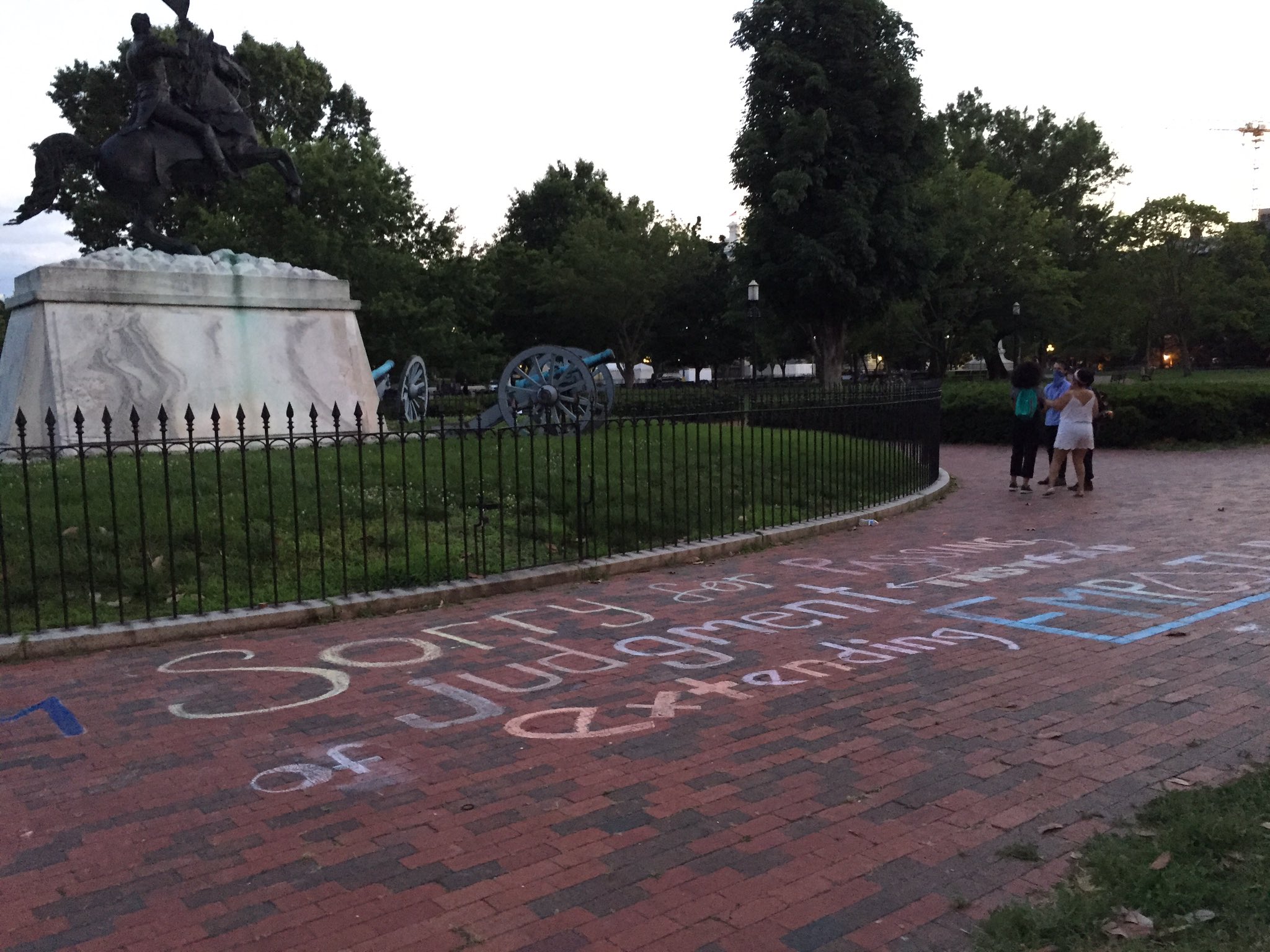
Some protesters also ventured back into Lafayette Square — now that crews have taken down the eight-foot-tall fence that surrounded the White House for over a week. But more people congregated on Black Lives Matter Plaza.

Michele Davis and Corbett Leatherwood, from Manassas, Va., visited Black Lives Matter Plaza Friday night, not long after their wedding.
The interracial couple got married earlier in the day outside the Supreme Court on the 53rd anniversary of the Loving v. Virginia decision that legalized interracial marriage, NBC4 reports.
“The message we are spreading is that love wins in the midst of all the bad things happening,” Davis said, according to the AP. “Being able to get married today and then come down here where people are fighting racial injustice was very important to us.”
A lot has happened since May 29, when protesters first shouted George’s Floyd’s name outside the White House.
On day four of the protests, a mass of law enforcement officers used tear gas to clear peaceful protesters from Lafayette Square so the president could pose for photos at St. John’s Church.
In the days to follow, crowds grew steadily, peaking last Saturday when tens of thousands filled the streets.
Families have brought their kids to experience history. Doctors and nurses who work on the front lines of the coronavirus pandemic have come out to show their support. When fencing pushed protesters away from the White House, they responded by covering it in posters and art.
And the protests have already sparked policy change. The D.C. Council this week passed emergency legislation that, among other things, bans police from using chokeholds and prevents MPD from hiring officers with a history of misconduct in other departments.
The Speaker of the House in Virginia also announced the General Assembly would convene for a special session on policing this summer. And a Maryland state senator laid out a number of reforms he’d like the state to pursue.
Protesters plan to keep advocating for major structural change, amplifying calls to defund police departments and instead direct resources to social workers, mental health services, or housing. Some said their own ideas about policy have shifted since they’ve been coming out to demonstrate.
Brittiany Broadwater said throughout the protests she’s learned more about the movement to defund the police.
“We’ve had to do a lot of education about what does that actually means to defund the police, but I think when you understand it more, I think it makes a whole lot of sense,” she said.
Though crowds have shrunk considerably since last Saturday, there are a number of protests and vigils planned for this weekend both in D.C. and surrounding suburbs.
Broadwater herself has been keeping track of events happening throughout the region. She created the website dmvprotests.com and the Twitter account @DMVProtests. “Every day, I sort of think, okay this is gonna wind down, and then I wake up and … there’s a bunch more new events.”
This story has been updated to correct the name of the church that Trump posed in front of.