Martin Austermuhle
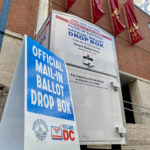
The D.C. Board of Elections says it plans to mail a ballot to each of the city’s 500,000 registered voters ahead of the November election, as well as expand in-person voting opportunities and take other steps to prepare for what officials say could be twin challenges of “record-shattering turnout” and a possible second wave of COVID-19 cases.
The changes come in the wake of the city’s June 2 primary, whose planning was upended in late March by the pandemic and whose execution was marred by absentee ballots that were never delivered and hourslong lines at vote centers. The moves also represent an about-face of sorts, with D.C. officials embracing a vote-by-mail system they initially warned could take years to implement.
Ahead of the primary, officials decided to send ballots only to those voters who specifically requested them, saying that proactively sending every voter a ballot — as Maryland chose to do — was too risky in such a short time frame. While more than 92,000 voters did ultimately request absentee ballots and roughly 80,000 votes were cast via mail, election officials said in a report published this week that technical, staffing and time issues strained the agency and led to ballots not being delivered to some voters.
“The DCBOE’s underlying assumption was that the absentee ballot process could scale to manage a significantly greater volume. However, the IT systems supporting the processes were overwhelmed,” said the board’s report. “The technology systems we used to process the over 92,000 absentee requests had previously processed less than one quarter of the volume of requests received for the June election.”
There were also technology hiccups with the board’s app, which voters could use to request an absentee ballot. The app didn’t work well on Android phones, leading some ballot requests not to be processed. And at least some confirmations of requests that were processed were not sent to voters.
“There was confusion and frustration caused by the Vote4DC app,” said Alice Miller, the director of elections, during a meeting on Wednesday.
And that fueled a separate problem: hourslong waits at 20 vote centers that were open on Election Day. (Under normal circumstances, D.C. has 144 polling places.) While fewer than 35,000 people voted in-person, the elections board says 65% of them did so on Election Day itself. (The remainder voted during two weeks of early voting.) Those day-of voters — some of whom hadn’t requested an absentee ballot, or did and never received one — were left to cast ballots in vote centers that were limited to 10 people at a time and where voting machines had to be disinfected regularly, further slowing the process.
For the November election, election officials say they plan on doubling the number of vote centers across the city for early and day-of voting. They say they will also revamp the app, hire additional IT experts, increase staffing in a call center to field voter calls, and launch a wider communications campaign on voting by mail. They’ve also starting talking to the U.S. Postal Service, to determine whether mail-delivery problems may have contributed to some absentee ballots and other election materials never being delivered.
“A known unknown was how the Postal Service responded to this increased activity. We knew that could be an issue, but we didn’t know how,” said Michael Bennett, the elections board chair, on Wednesday.
As for mailing ballots to all voters, election officials say that they will hire an outside vendor to manage the task, instead of doing so in-house as they did ahead of the primary. (The board mailed all Ward 2 voters a ballot for Tuesday’s special election, but that was only for 48,000 registered voters.) But even using an outside vendor has risks. In Maryland, which mailed a ballot to more than four million voters for the state’s June 2 primary, there were printing errors and delayed ballot deliveries.
Advocates of vote-by-mail — which has long been used in Western states like Colorado, Oregon and Washington — say it’s more convenient and increases turnout. But critics, including President Donald Trump, have raised unfounded allegations that it is more prone to fraud.