Colleen Grablick
Updated at 9:03 p.m. on July 6
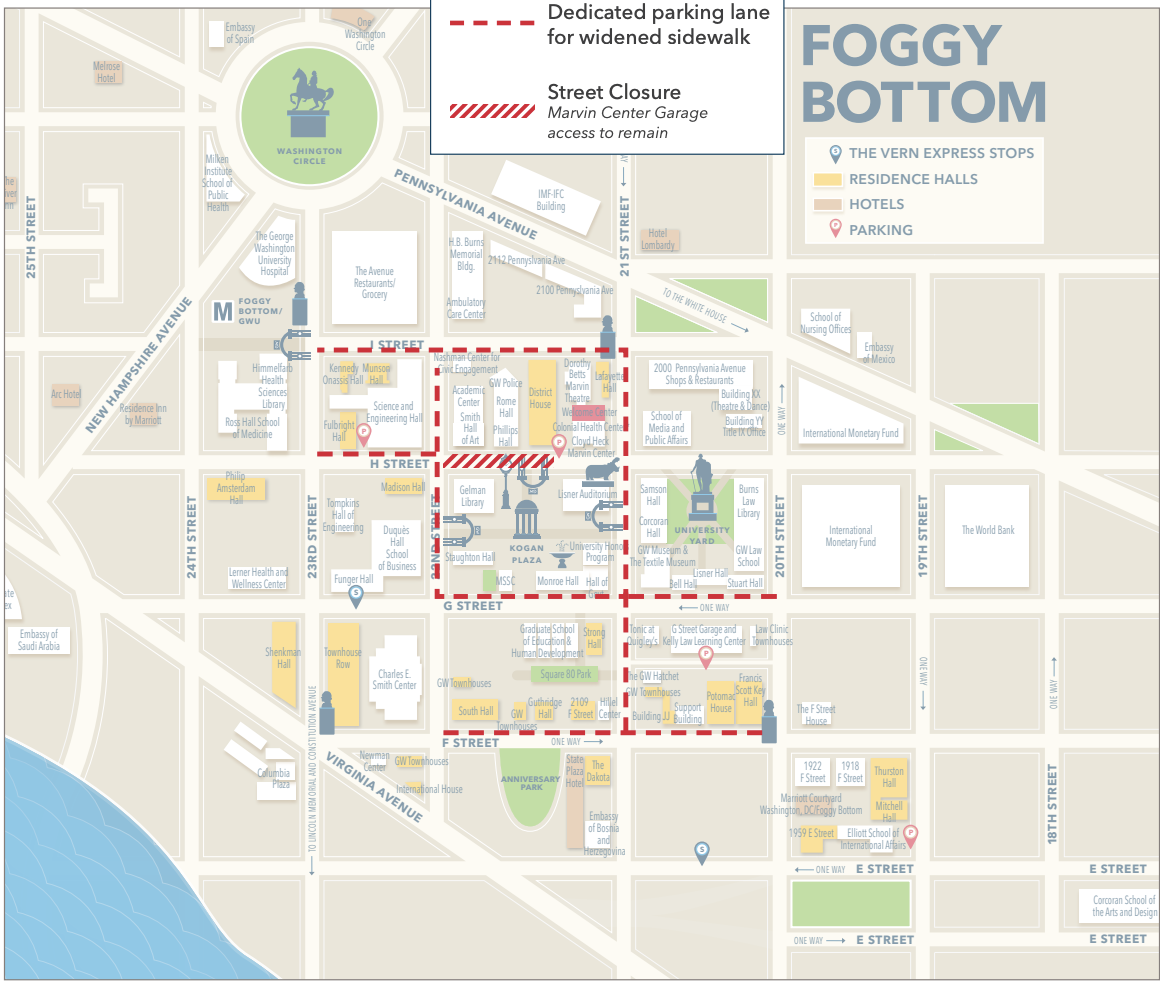
Georgetown University announced on Monday it will reopen in-person classes this fall to approximately 2,000 undergraduates, including members of its incoming first-year class, a limited number of upperclassmen, resident assistants, and students whose personal or family situations make it difficult to study online, according to a press release.
Students living on campus will be housed in single rooms and spread across residence halls to avoid concentrating in one location. They will attend a mix of in-person and virtual courses. Those who are living off-campus or have already secured housing for the fall will still be required to take online classes.
The university left open the possibility of moving into the next stage of reopening if conditions improve, starting with members of the senior class. At any point, Georgetown said it is prepared to transition into fully online learning if the situation worsens. The university assured students that improvements have been made to its online learning services to help smooth the transition into online learning. Extracurricular activities and student services will also be limited to online.
On Monday, ICE announced all international students not attending in-person classes will have to return home or transfer to a school offering in-person courses if they wish to stay in the country, according to a press release. Similarly, the U.S. Department of State will not issue visas to students enrolled in online programs, nor will U.S. Customs and Border Protection permit them to enter the country. Students taking hybrid courses will be allowed to stay in the country so long as their program is not entirely online.
Original story continues below.
Following months of uncertainty and incremental updates from administrators, several D.C. universities have released the most comprehensive plans for their fall semesters yet.
Some schools will welcome students back to campus, while others will stay virtual. But it remains to be seen how students, faculty, and other staff will adjust to the new academic year under the circumstances as well as significant financial pressures caused by the coronavirus crisis, which could see a second wave of cases in the region this fall, according to public health experts.
The schools’ plans come as students hoping to return to campus express frustration about being stuck at home, and also as COVID-19 infections spike around the U.S. The national increase in cases could affect travel arrangements and other logistics for D.C. university students, many of whom hail from outside the region, including abroad.
So far, American University, Catholic University, George Washington University, Georgetown University, and Howard University have laid out plans for on-campus living and classes that limit campus density. (Disclosure: AU holds the license for DCist’s parent company, WAMU.) Gallaudet University and the University of the District of Columbia say they will stick with distance learning only, for now.
The varying scenarios are the result of strategic planning by each individual university, according to Sarah Van Orman, the chief health officer at the University of Southern California and a member of the American College Health Association’s coronavirus task force. The association has helped schools like AU design their reopening plans, and in May it released a 20-page report outlining best practices.
“Every institution has to make that decision themselves, but it’s very complex,” Van Orman says in an interview. “It has to do with a combination of interactions between the community in which the school is located, and then certain characteristics of the school itself,” including programs and resources, student demographics, and overall coronavirus restrictions.
One best practice: reducing campus density. Van Orman says that keeping some classes online throughout the semester and decreasing dorm capacity is crucial for minimizing the risk of an outbreak. She adds that it’s also important for students and university employees to maintain social distance, wear masks, and exercise caution.
“You should assume everywhere you go, every room you’re in, every surface you touch, is infectious, and that the person sitting next to you is infected,” Van Orman says. Still, she acknowledges that keeping students apart on campuses—communal places by their nature—comes with challenges. In April, a working paper by Cornell University sociologists found that, under pre-pandemic conditions, the average Cornell undergraduate would be in contact with more than 500 different students each week, reported the Chronicle of Higher Education.
At this point in D.C.’s phase two reopening, which began June 22, the city has achieved a coronavirus positivity rate (the portion of positive cases out of total residents tested) of less than 10 percent, and five days of sustained decrease in a metric known as “community spread.” Although the District hasn’t announced a projected date for its phase three reopening, jurisdictions in Northern Virginia are delaying lifting certain restrictions as they move into their third phase.
In early May, Catholic University became one of the first schools in the city to announce its intent to resume in-person classes this fall, saying it would reopen its campus in August and create a reopening advisory group. On June 18, the school published an updated plan that includes an early semester start date of Aug. 24 and an early end date for face-to-face classes as of Thanksgiving break.
Also in June, George Washington University and American University released comprehensive plans involving on-campus classes and living this fall. Like CU’s, both schools’ plans call for on-campus activities to end before Thanksgiving break, so that travel to and from campus is limited. GW’s plan eliminates traditional breaks like Labor Day and fall break to further curb such travel, while AU’s plan incorporates online courses for students who are uncomfortable about returning to campus. (Two-hundred GW faculty members, or about 15 percent of all faculty, have asked the university to allow them to teach virtually in the fall after they were given that option, the GW Hatchet reported this week.)
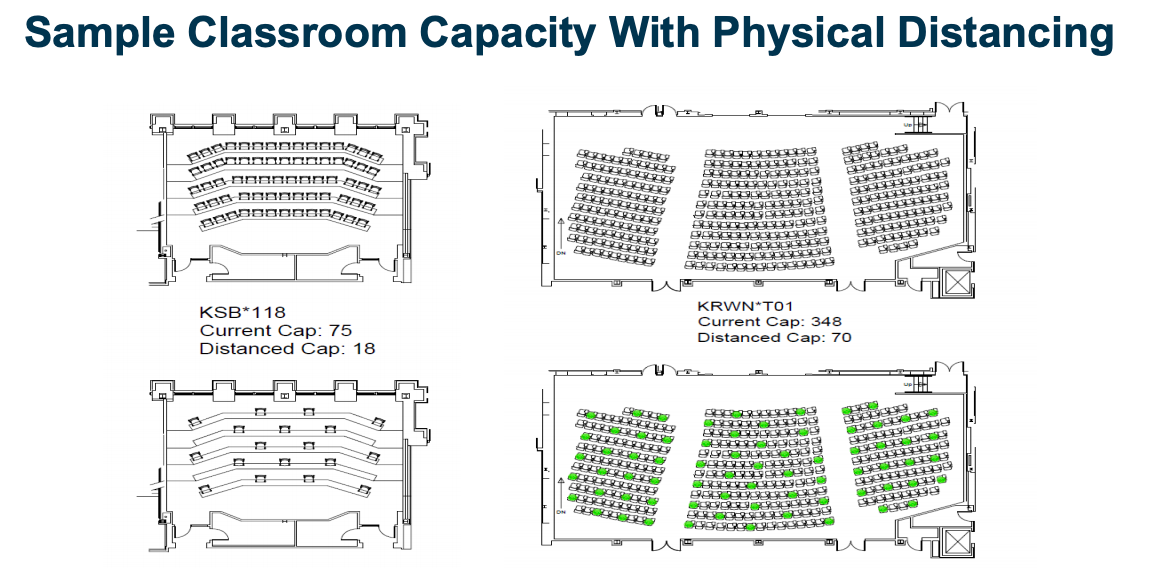
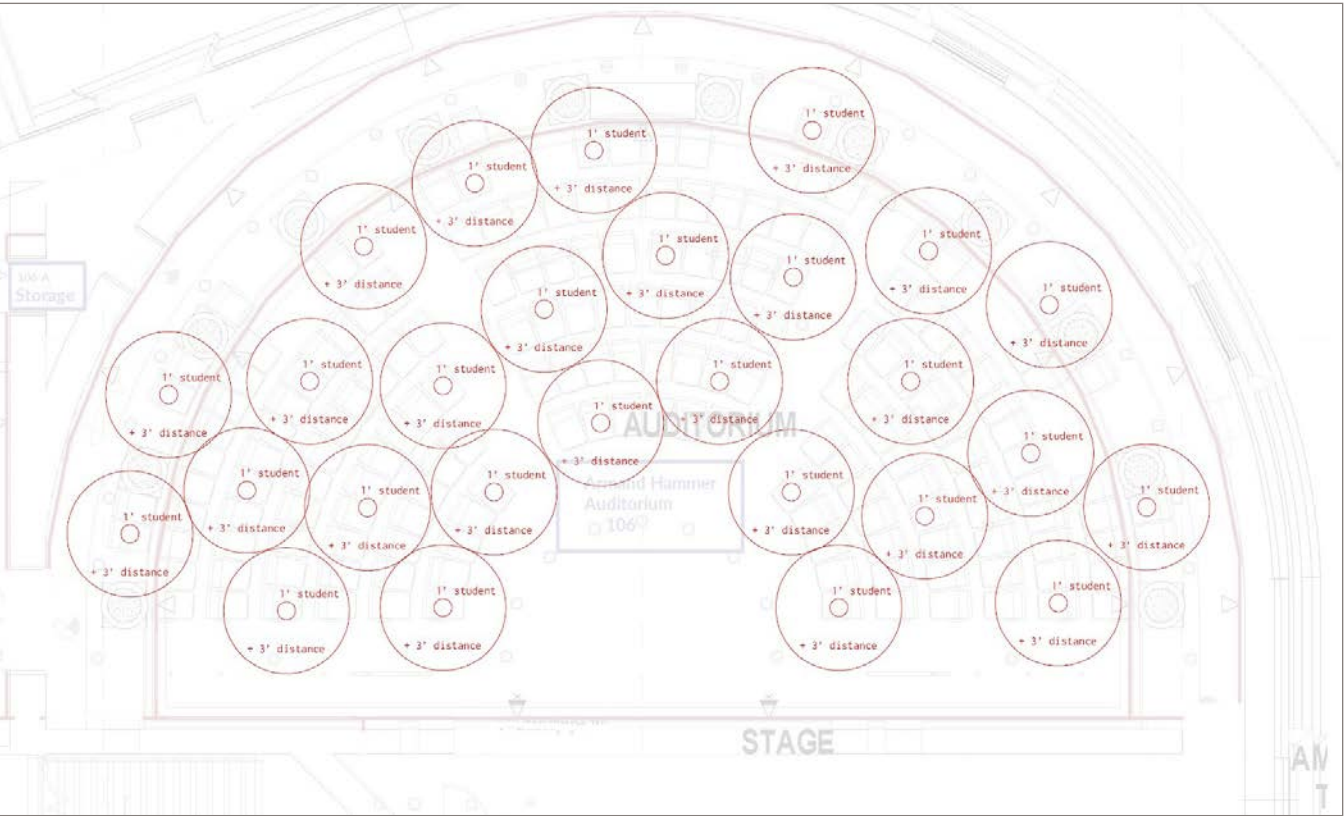
Both GW and AU say they will conduct coronavirus testing and contact-tracing on campus in partnership with city health officials. Both also say dorm capacity, including most communal spaces in residence halls, will be limited, and that classrooms will be reconfigured to ensure six feet of distance between students and staff. At AU, administrators are prioritizing freshmen and sophomores for 2,300 single-occupancy dorm rooms, with the result that upperclassmen who’d previously secured on-campus housing in the spring now must find alternatives.
Like AU, Howard University will use a hybrid learning model this fall, with some classes returning for face-to-face instruction and others staying online. Under the school’s 25-page reopening plan, students will be required to be tested for COVID-19 the week before they return to campus and share their results with the campus health center. Students and employees will also be screened for the coronavirus throughout the semester, says the plan.
Some dorm rooms that formerly housed two students will be converted into single-occupancy rooms, while triple and quadruple options will be removed. Freshman and sophomores will be prioritized for housing, as many Howard upperclassmen normally seek off-campus living arrangements, according to the school.
Meanwhile, UDC will start classes Sept. 8—two weeks later than originally planned—and administer all classes online. All campus buildings will remain closed unless the administration grants permission otherwise.
Gallaudet University will start the fall semester remotely, and slowly bring students back for in-person learning based on recommendations from the school’s reopening task force and city officials. Other schools in the region, such as the University of Maryland and Trinity Washington University, will offer classes in a mix of remote and face-to-face models.
Across the U.S., schools appear to be taking similar approaches to those in the District, according to news reports. The University of California, Los Angeles is instituting a hybrid model like Howard and AU, and the University of Massachusetts, Boston will continue with mostly remote learning for the fall. Others like Stanford and Yale will have staggered returns to in-person activities, letting freshmen and sophomores come back for only portions of the academic year.
Chris Beyrer, an epidemiologist and professor at Johns Hopkins University, has already decided to teach his class remotely next semester. He says that bringing students from across the country to a central campus will likely increase the spread of the coronavirus, particularly as case numbers continue to rise in dozens of states.
“The mixing of people from all over the country is a very real problem,” says Beyrer. “What that means is that for the students who are coming back, social distancing measures will need to be continued and universities are going to have to be vigilant about enforcing mask-wearing in public [and] spacing in lecture halls.”
Beyrer adds that the annual flu season in the Northern Hemisphere, which typically begins around the time students return to campus in the fall, will pose another obstacle as schools try to monitor their communities’ health. “It’s going to be challenging to figure out who has COVID and who has the flu, if there are flu outbreaks on campuses in the fall,” he explains, adding that it will be important for schools to have robust testing capacity.
It’s possible that the plans local universities currently have for the fall could change as the pandemic progresses, especially if D.C. rolls back any of its reopening relaxations due to a regional spike in coronavirus cases.
For now, the main concern heading into August is preventing a potential outbreak that could be deadly for high-risk students and employees on campus, such as those with preexisting health conditions and older staffers, says Van Orman, the University of Southern California health chief.
“That’s the end result we don’t want for any of our communit[ies], and it’s easy to sometimes lose sight of that,” she says. “That’s the sobering part of this all.”
Christian Zapata contributed reporting