Margaret Barthel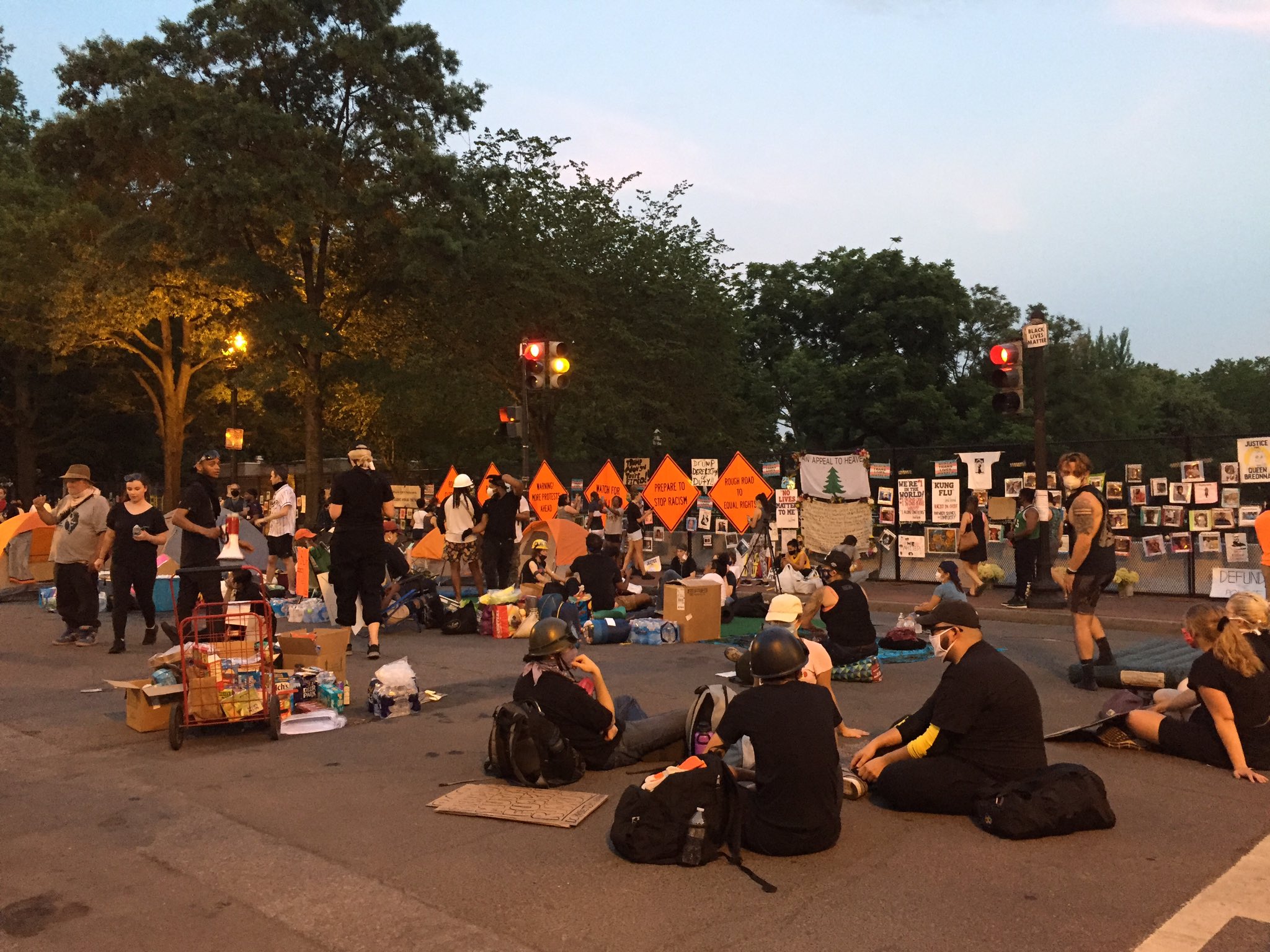
Updated July 4 at 1:50 p.m.
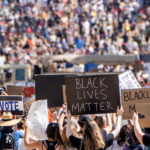
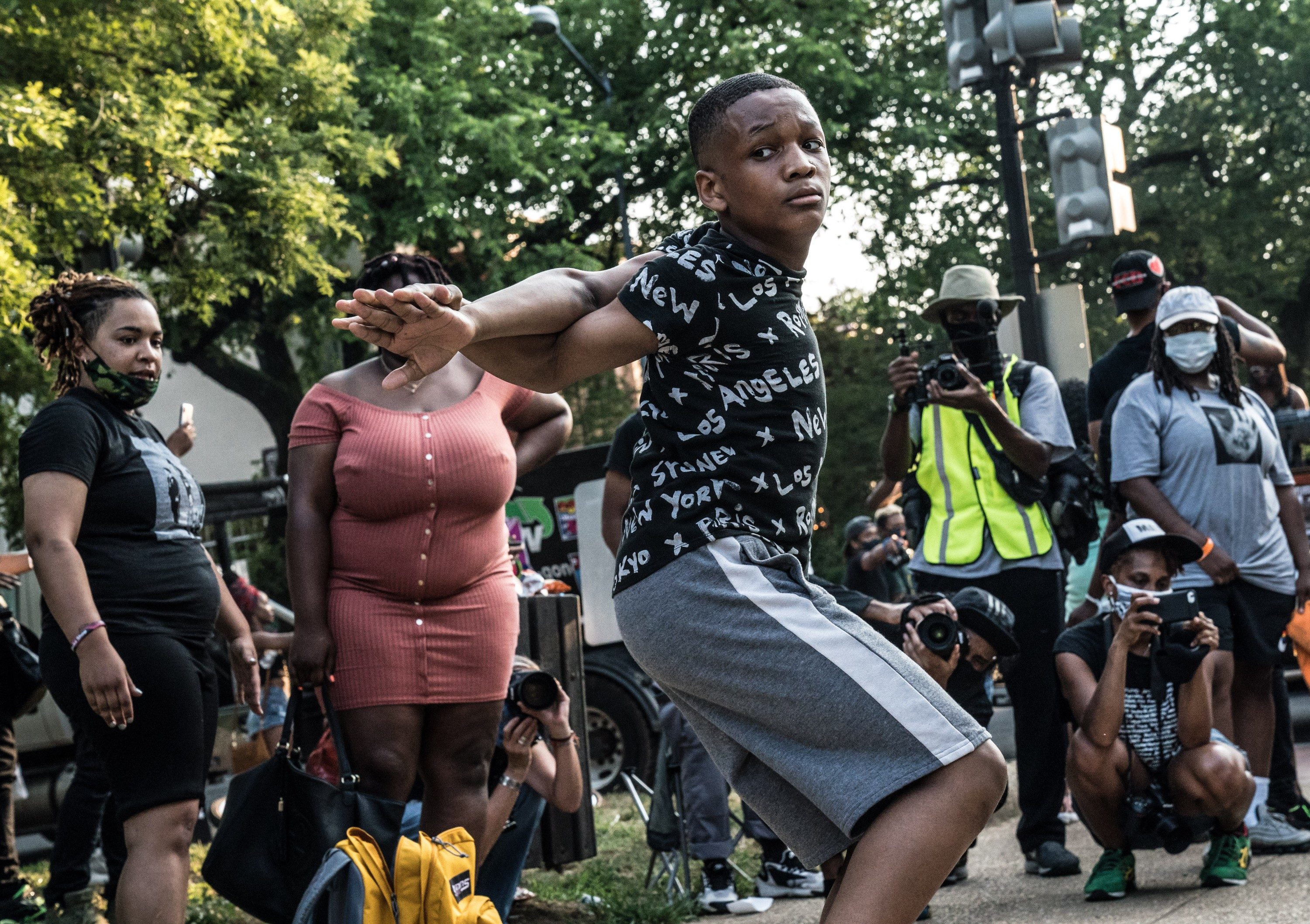
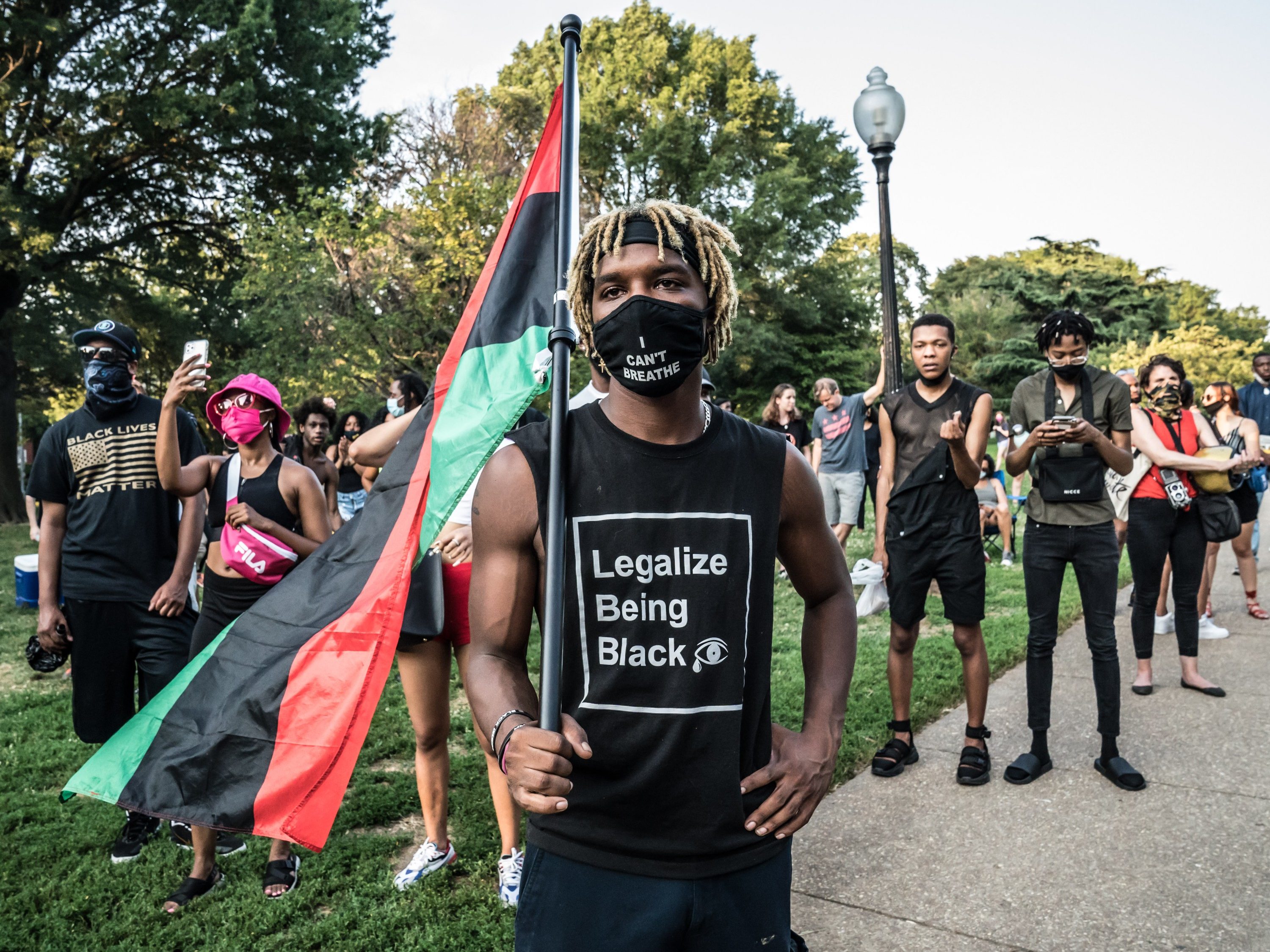
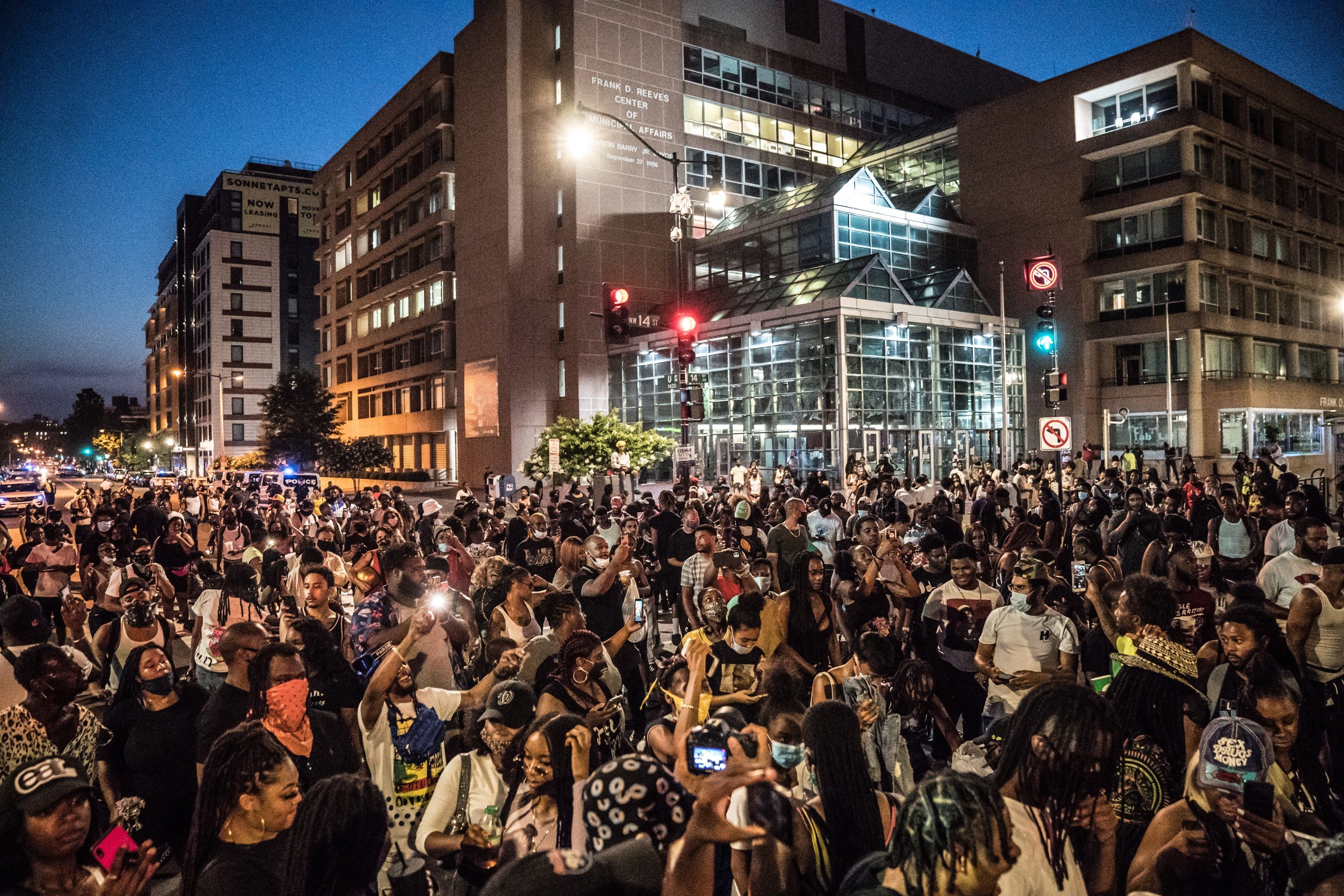
At the start of an unusual Fourth of July weekend in the wake of COVID-19 and widespread protests, demonstrators blended music and protest throughout the city Friday night, marking the sixth consecutive weekend of protests in D.C. following the killing of George Floyd.
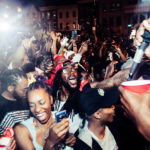
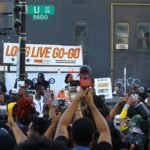
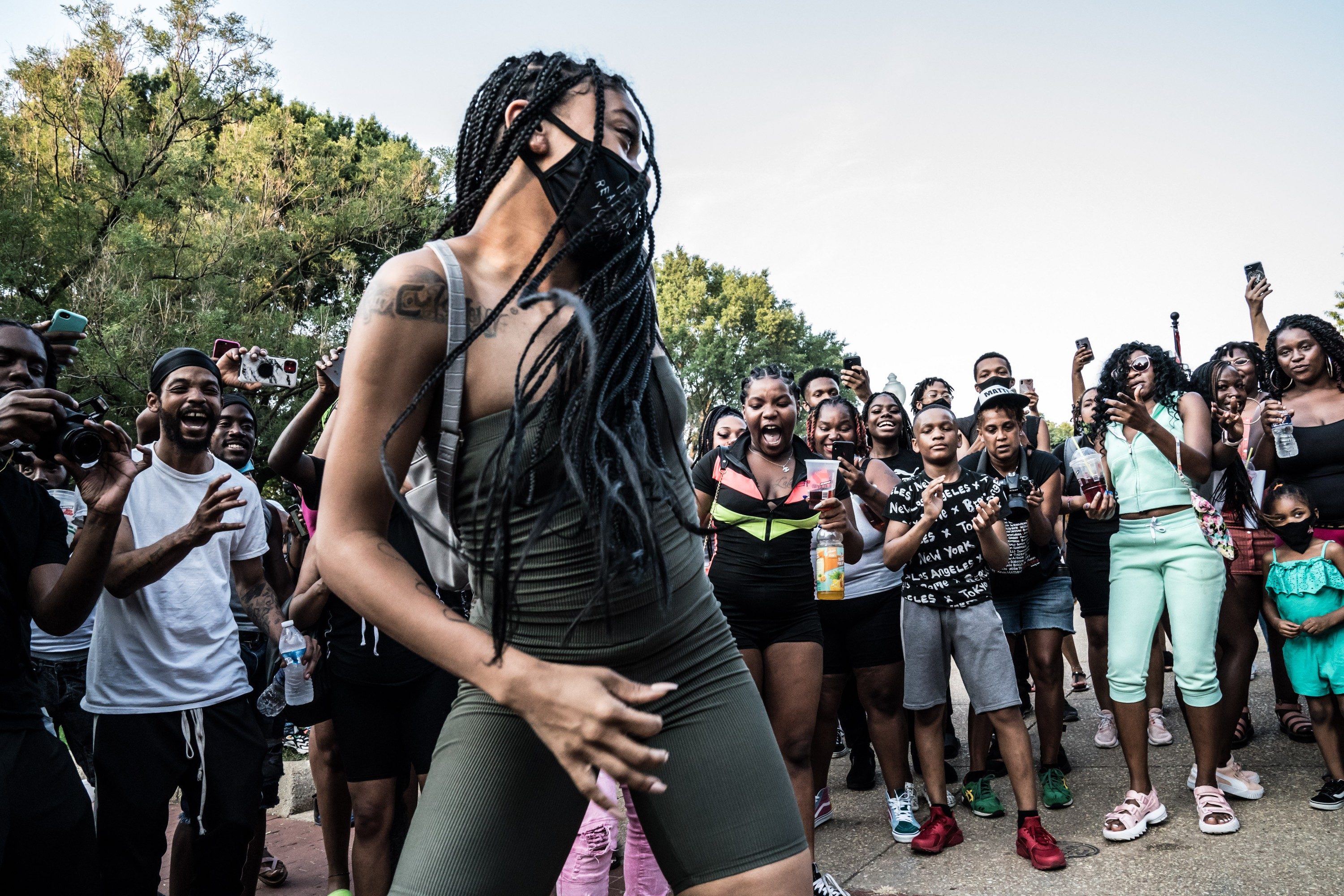
In scattered demonstrations across town, protesters danced to go-go and set off fireworks, while tensions occasionally flared between participants, police, and counter-demonstrators.
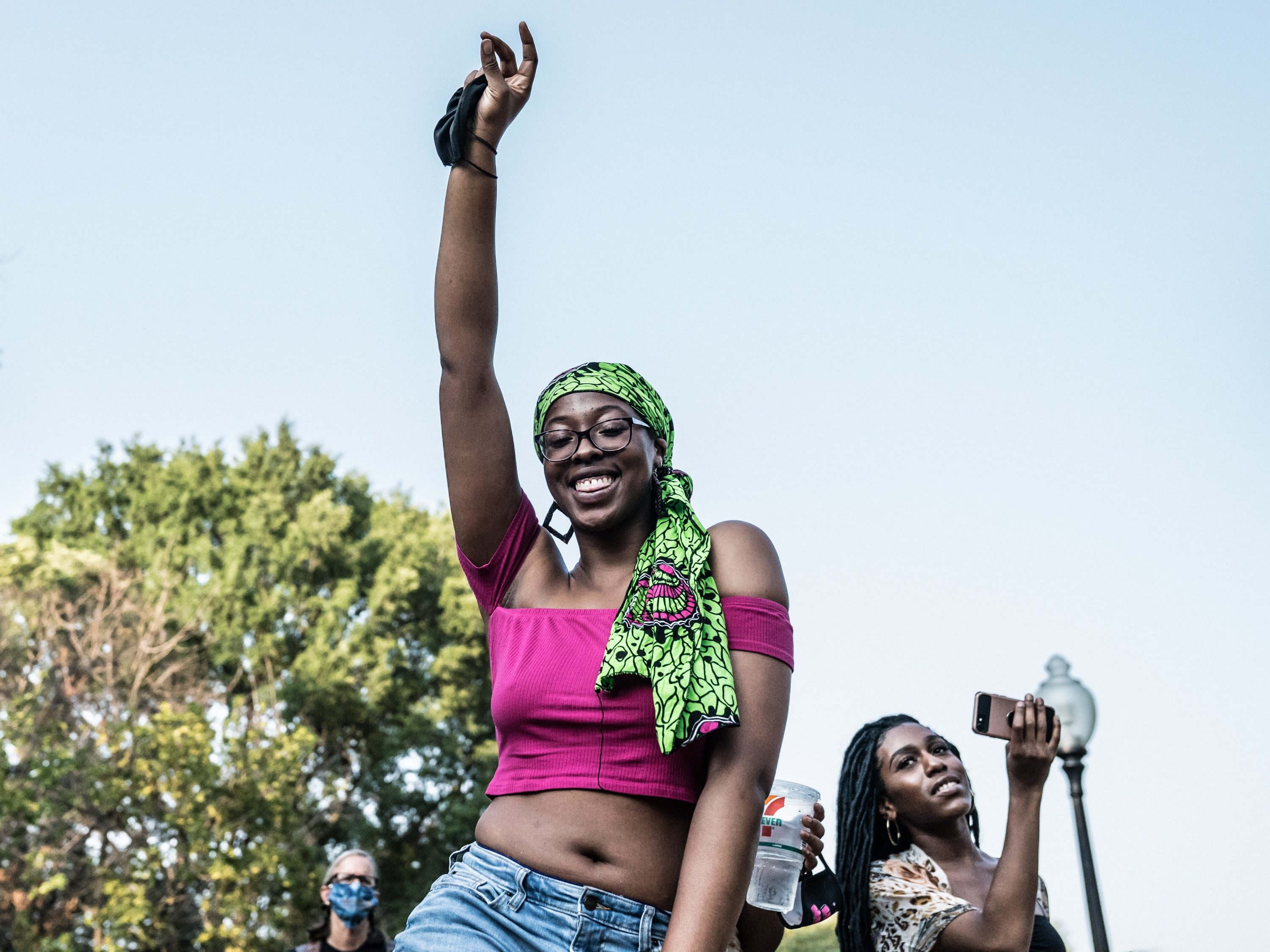
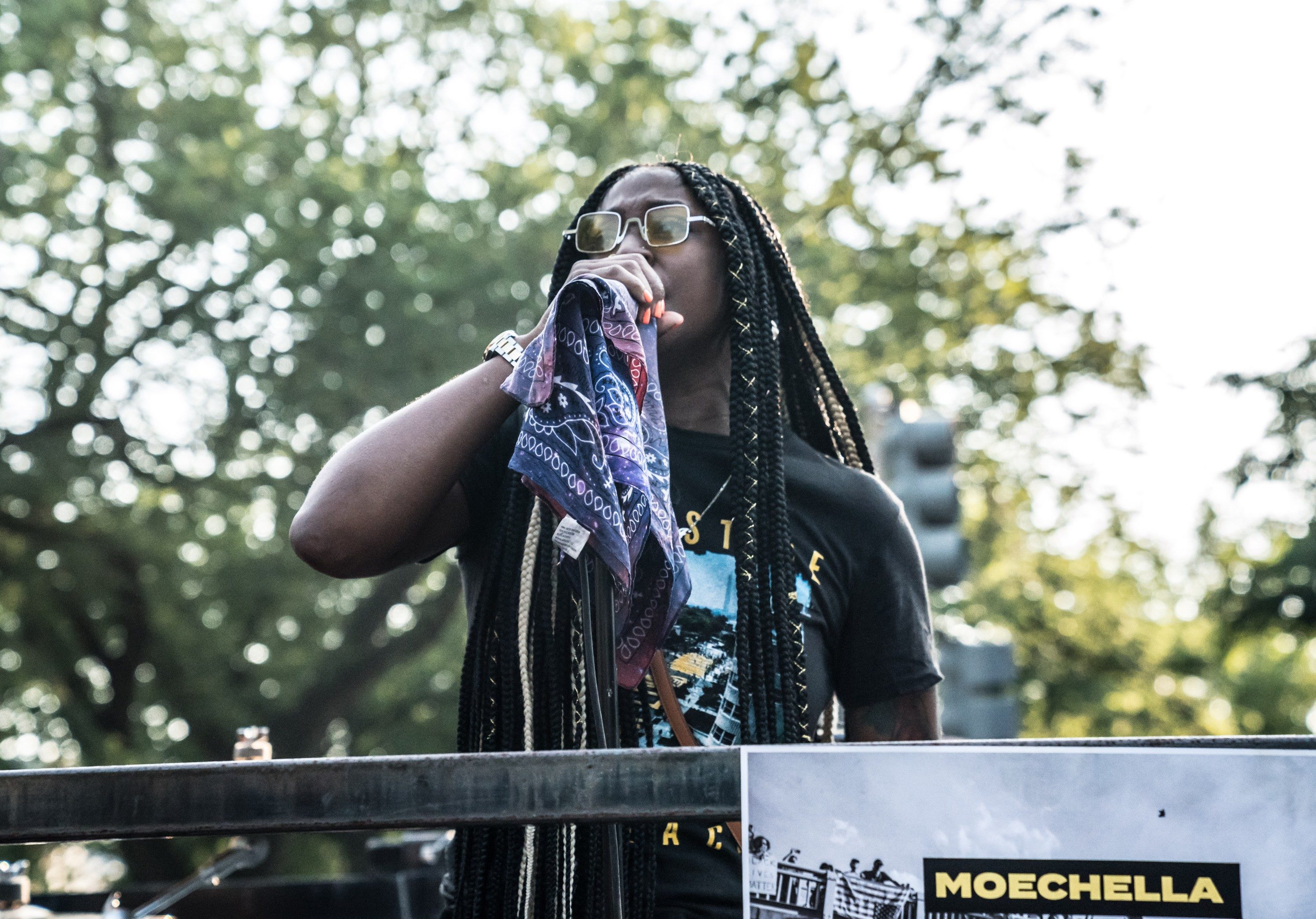
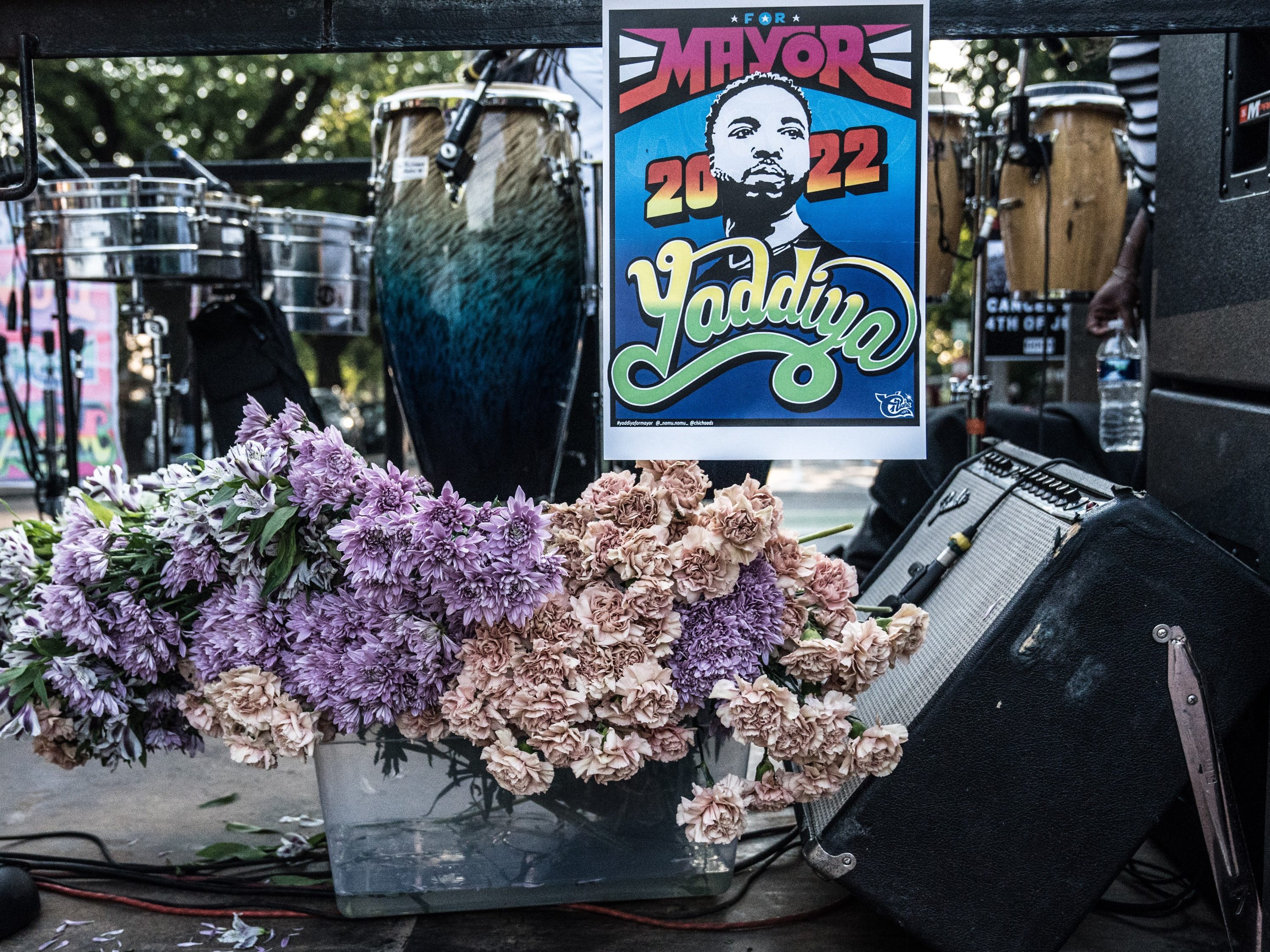
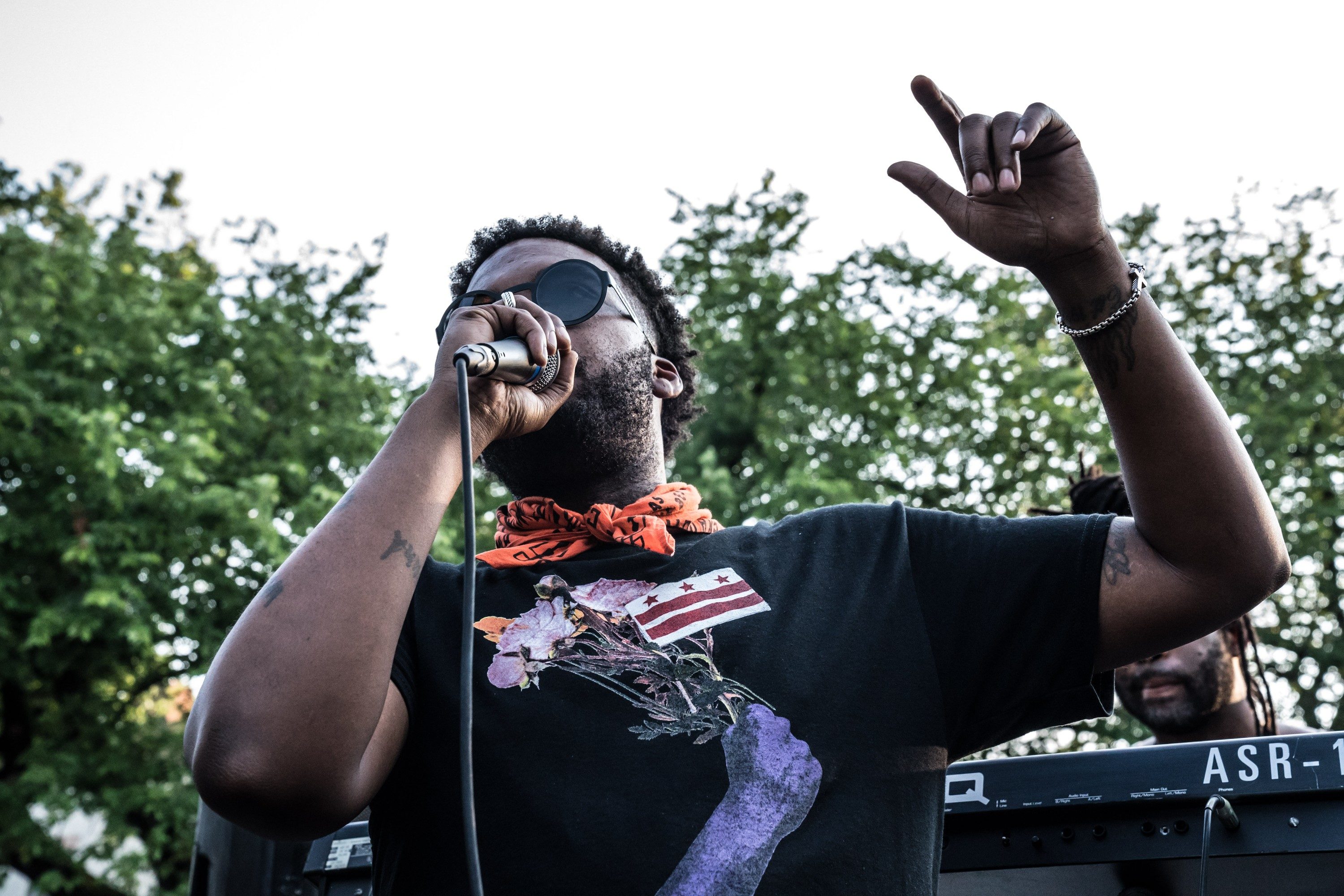
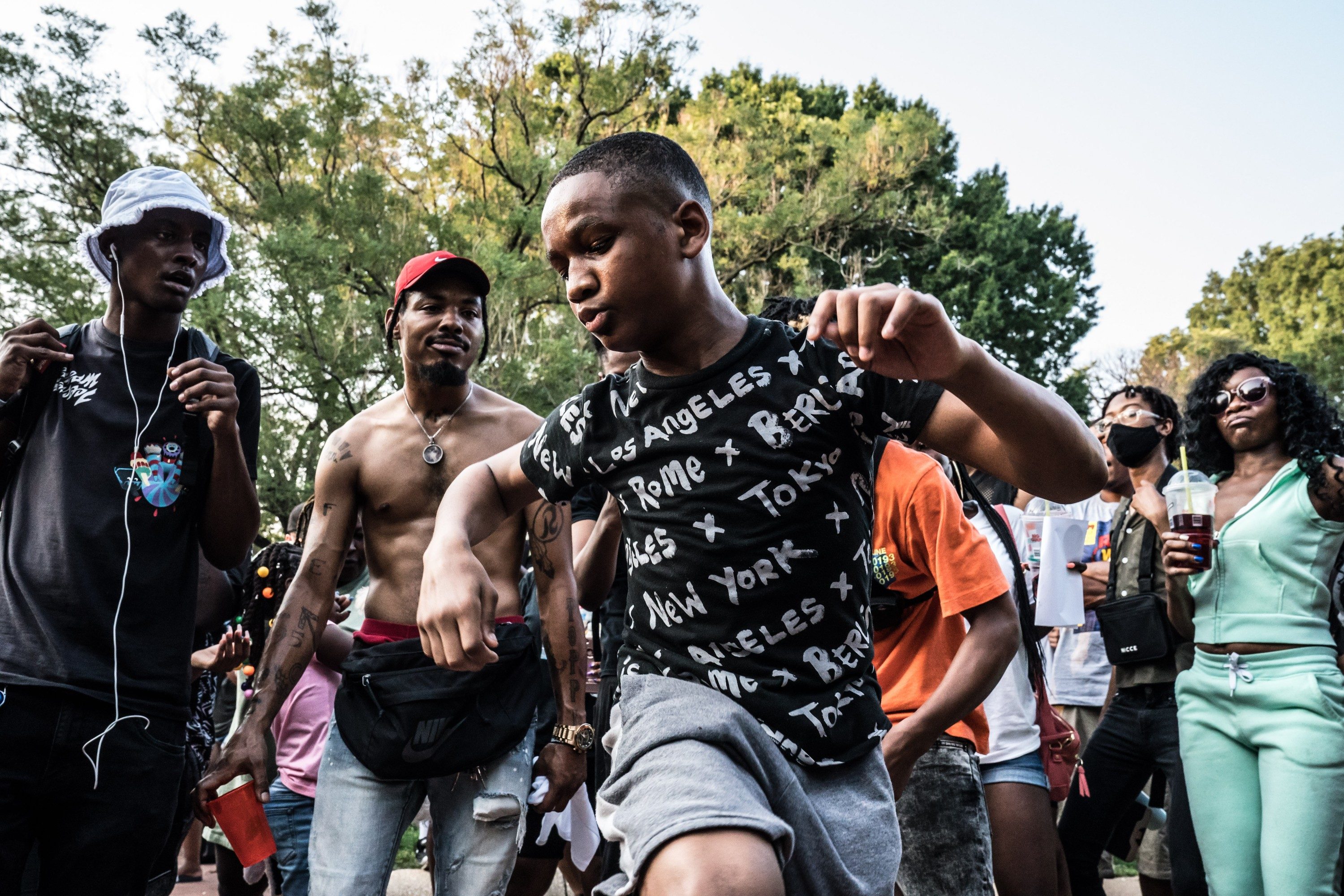
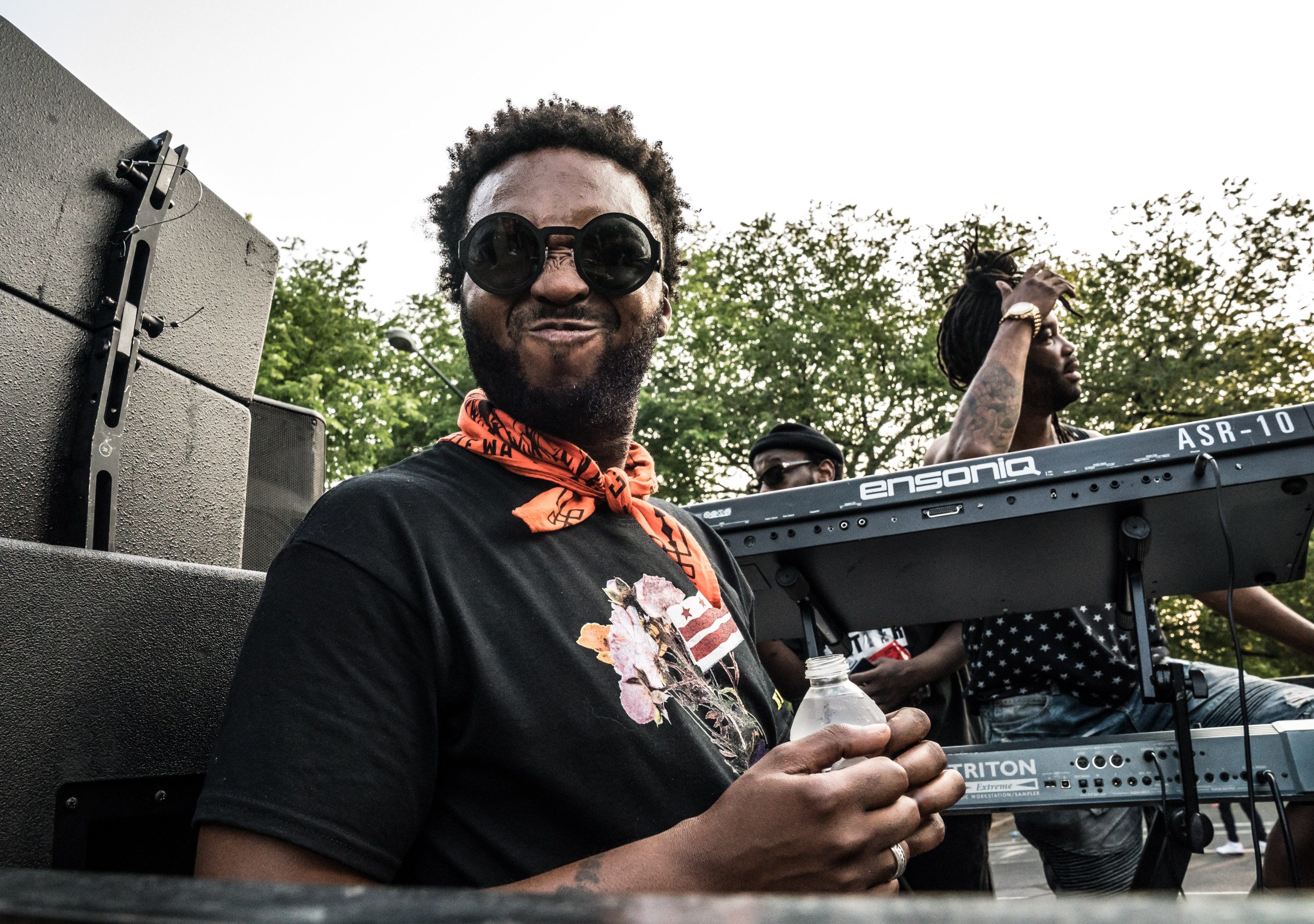
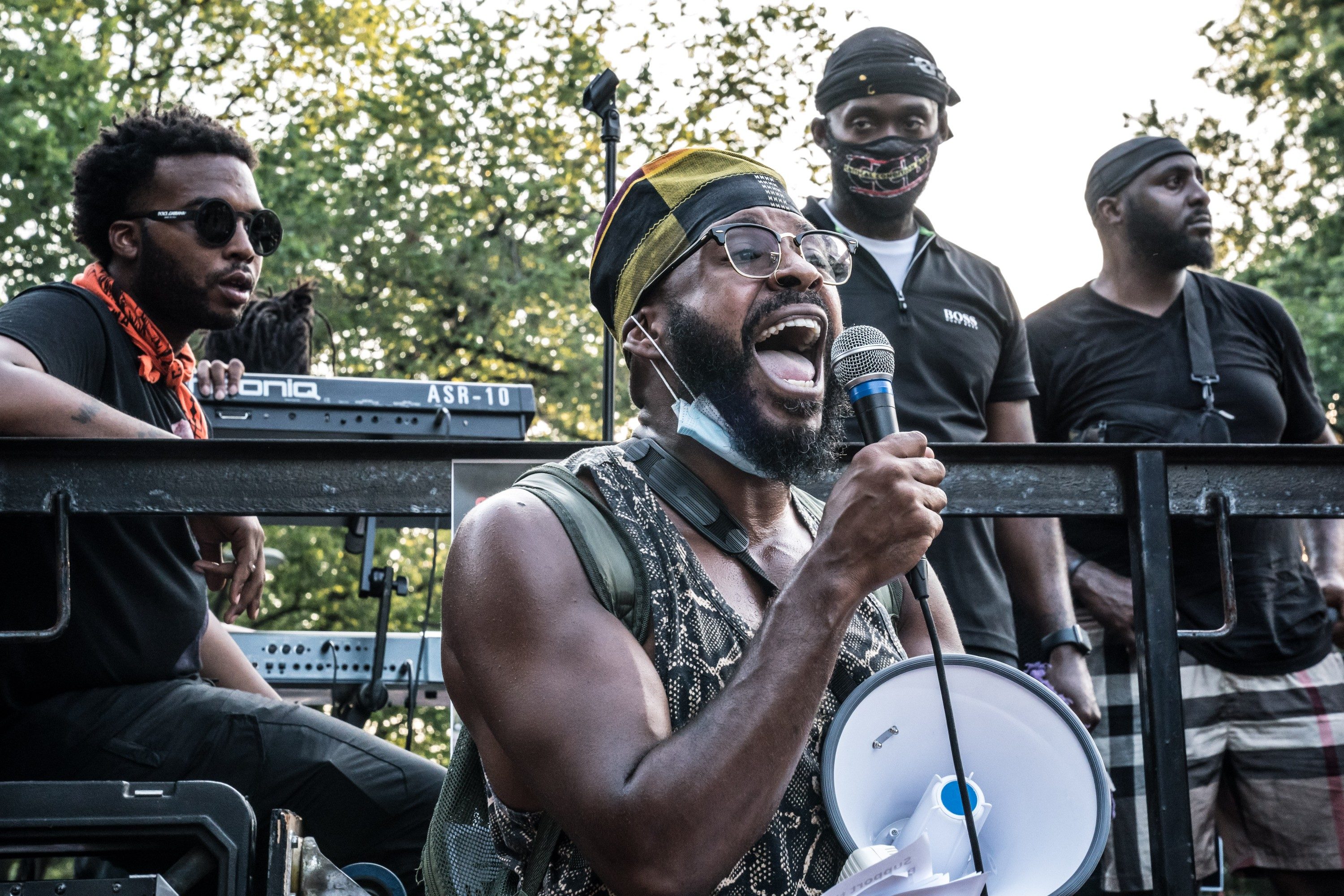
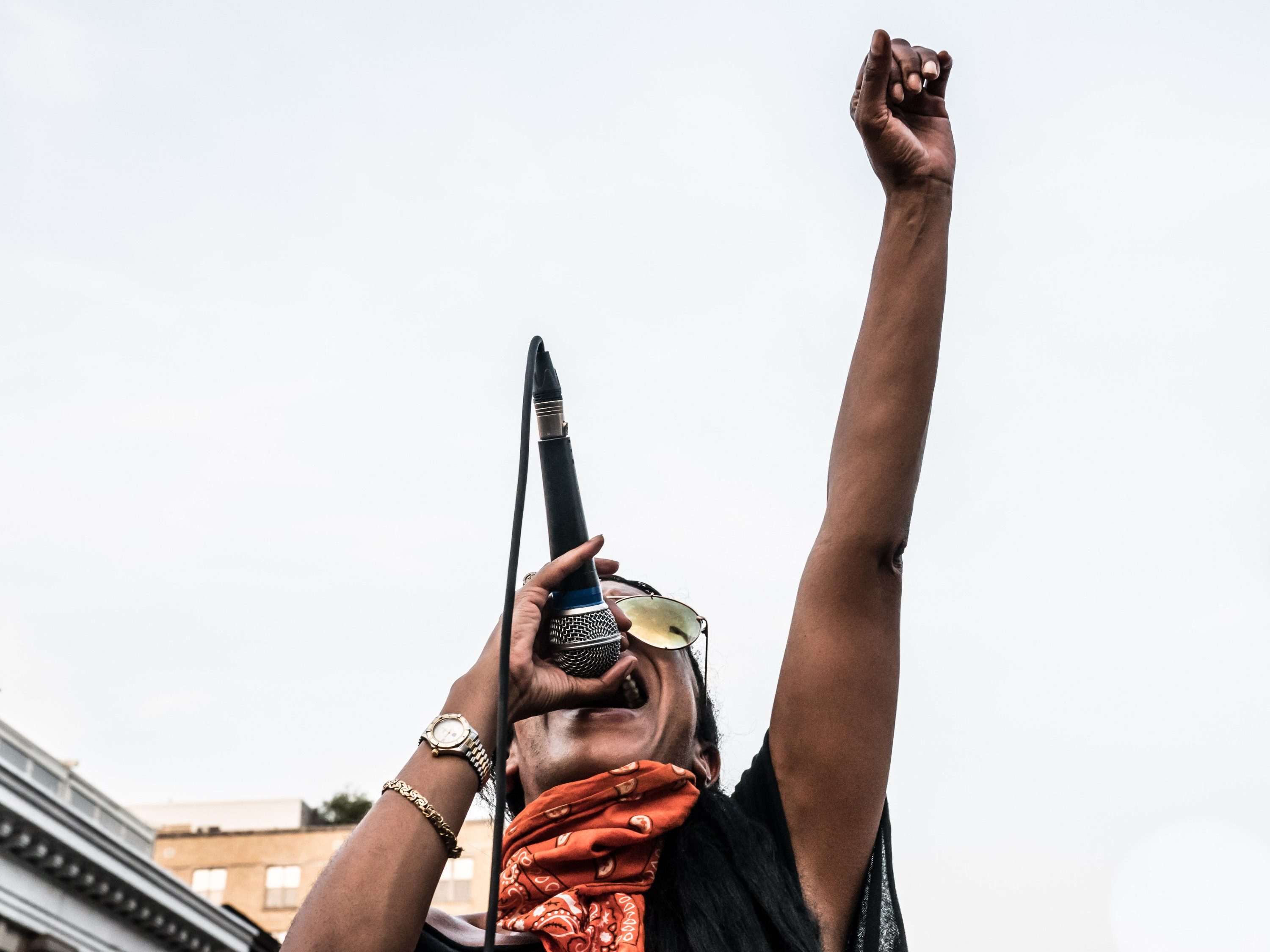
A special edition of Moechella, a combination of D.C. slang “moe” and the music festival Coachella, kicked off at Lincoln Park on Capitol Hill around 5:30 p.m., in an effort to demand that controversial statues be taken down.
Glenn Foster, founder of youth-led organization the Freedom Neighborhood and organizer of many recent demonstrations, spoke at the event, condemning the Emancipation Memorial, a statue of Abraham Lincoln standing above a kneeling formerly enslaved man that has faced calls for removal in recent weeks.
The Freedom Neighborhood has pledged the statue will come down “by any means necessary.”
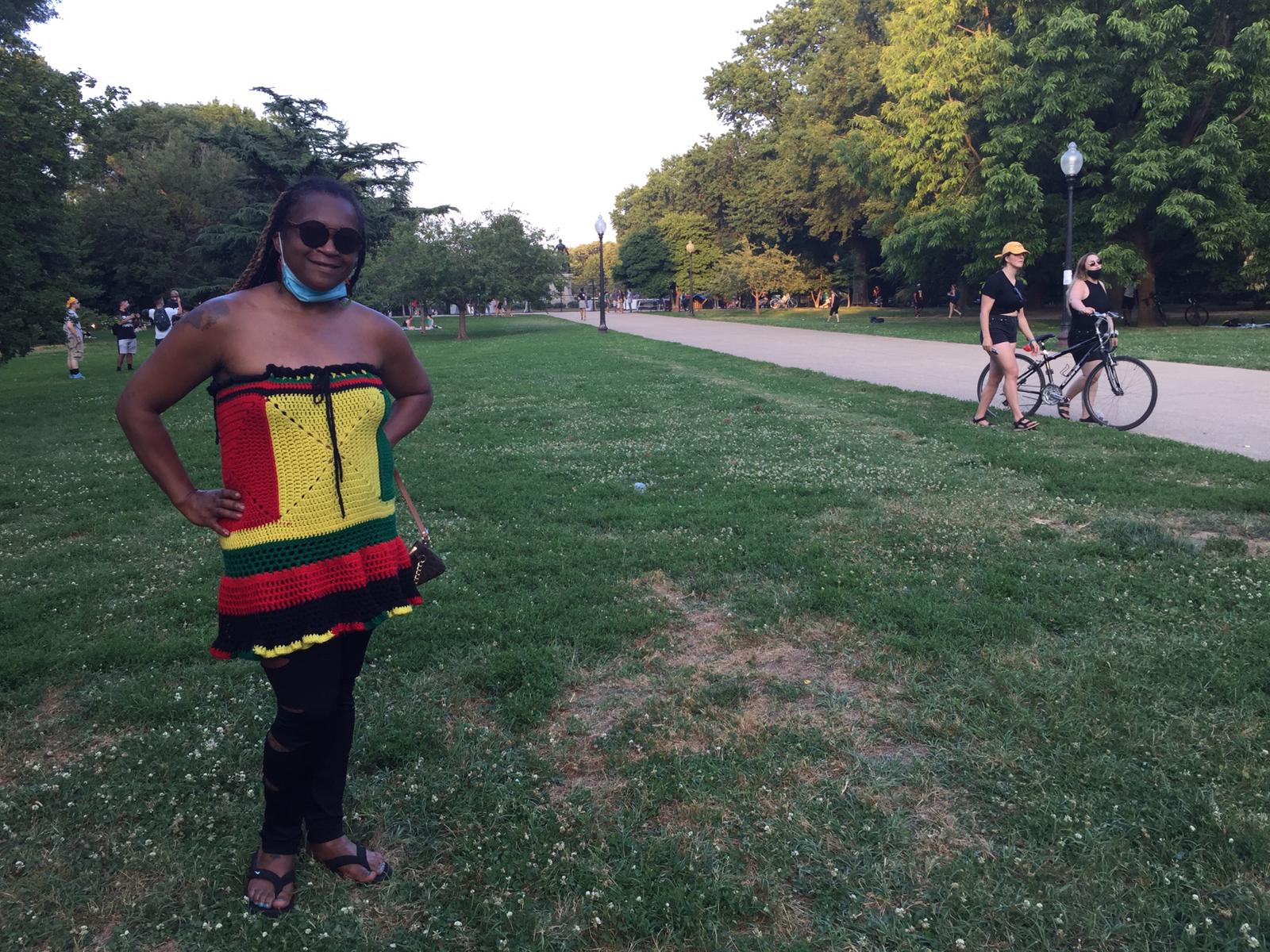
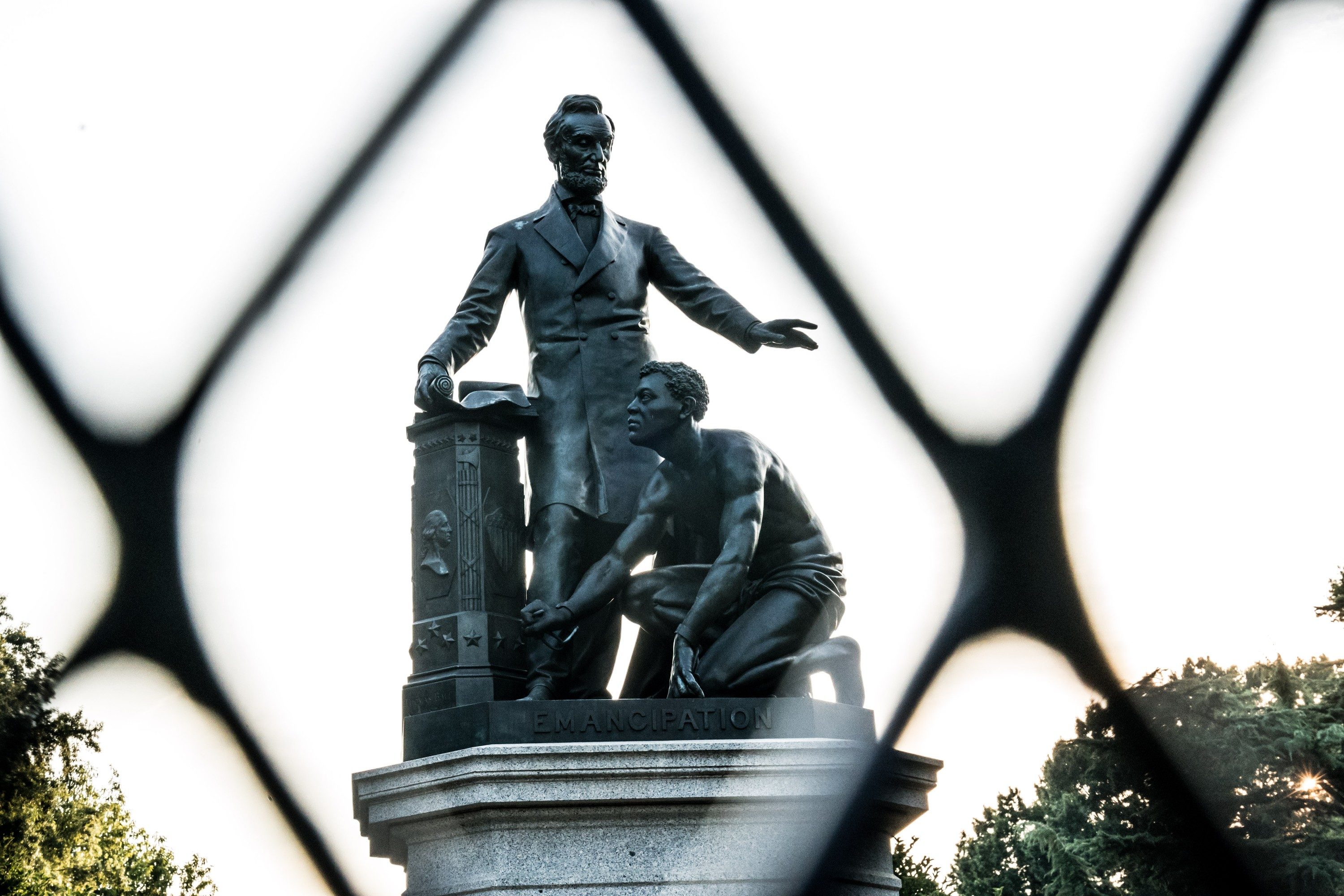
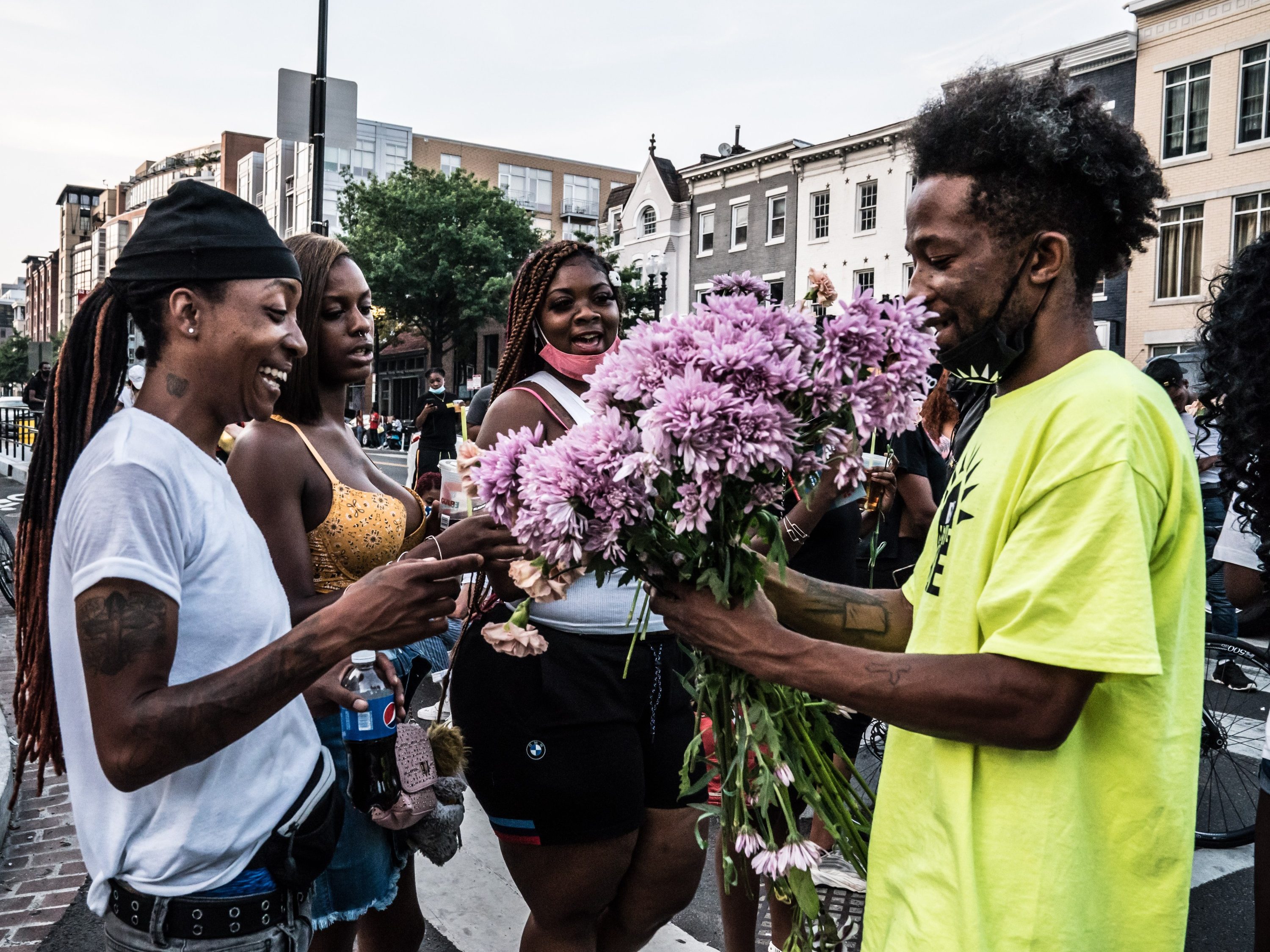
Sharon Stringfellow, who is from Capitol Hill, said she didn’t see the statue, which remained behind a tall metal fence Friday, the same way growing up.
“I remember the statue when we were little, but back then we didn’t know what was going on,” she says. “So now that everything is coming to light and we’re getting more information about it, I just want to support change.”
Stringfellow, 53, said the demonstrations have brought a sense of community back to the area, which she’d watched disappear as the neighborhood gentrified.
“All the changes that I’ve seen during the years, it’s good to see everybody coming together now, cause it did seem like we were separated.”
She said she’s met more of her neighbors since the demonstrations began, ones she didn’t even know she had.
Around 7 p.m., go-go group Critical Condition Band (CCB) started playing to a crowd of roughly 100 as people gathered around them, dancing, as others lounged in the grass.
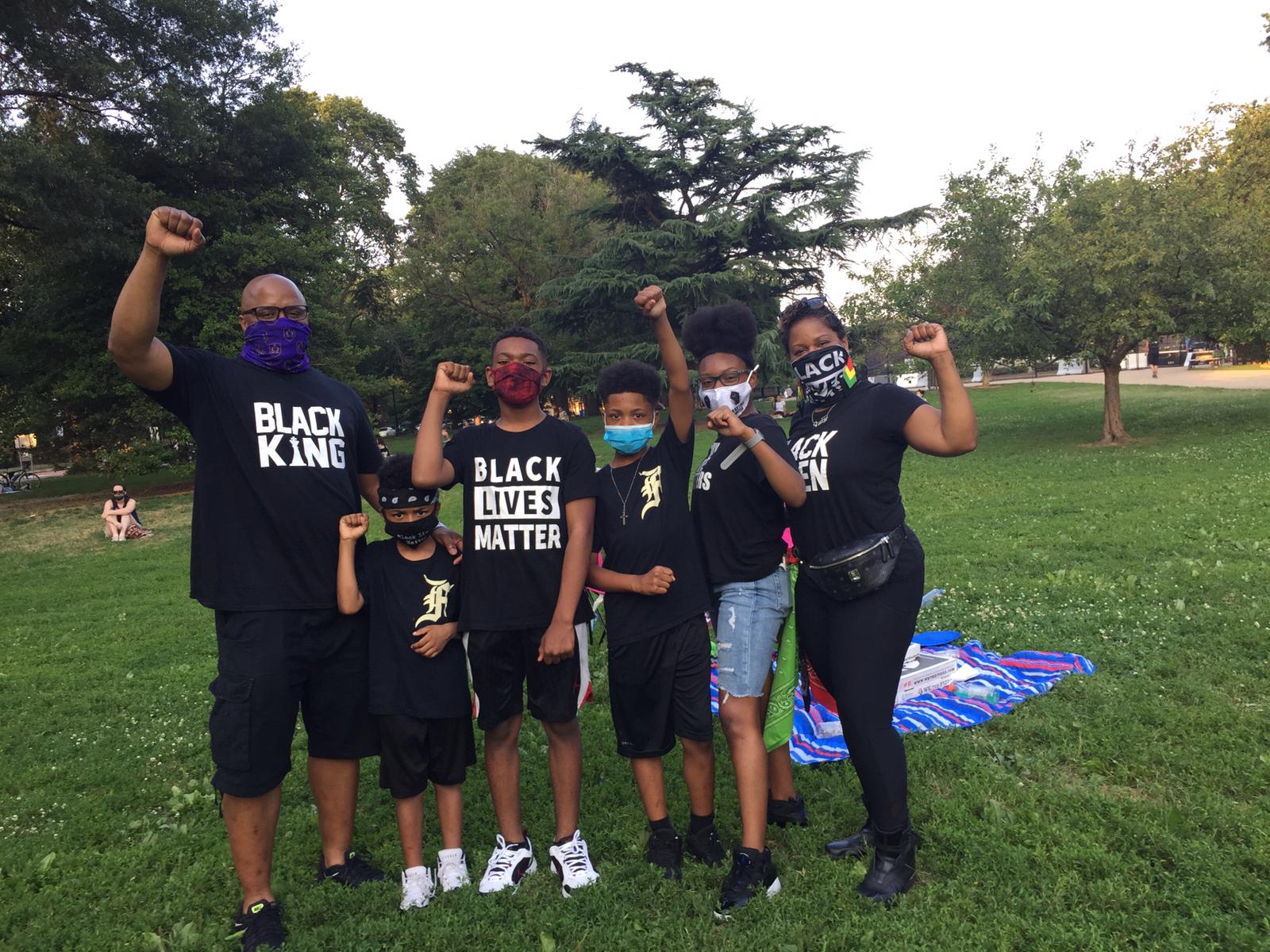
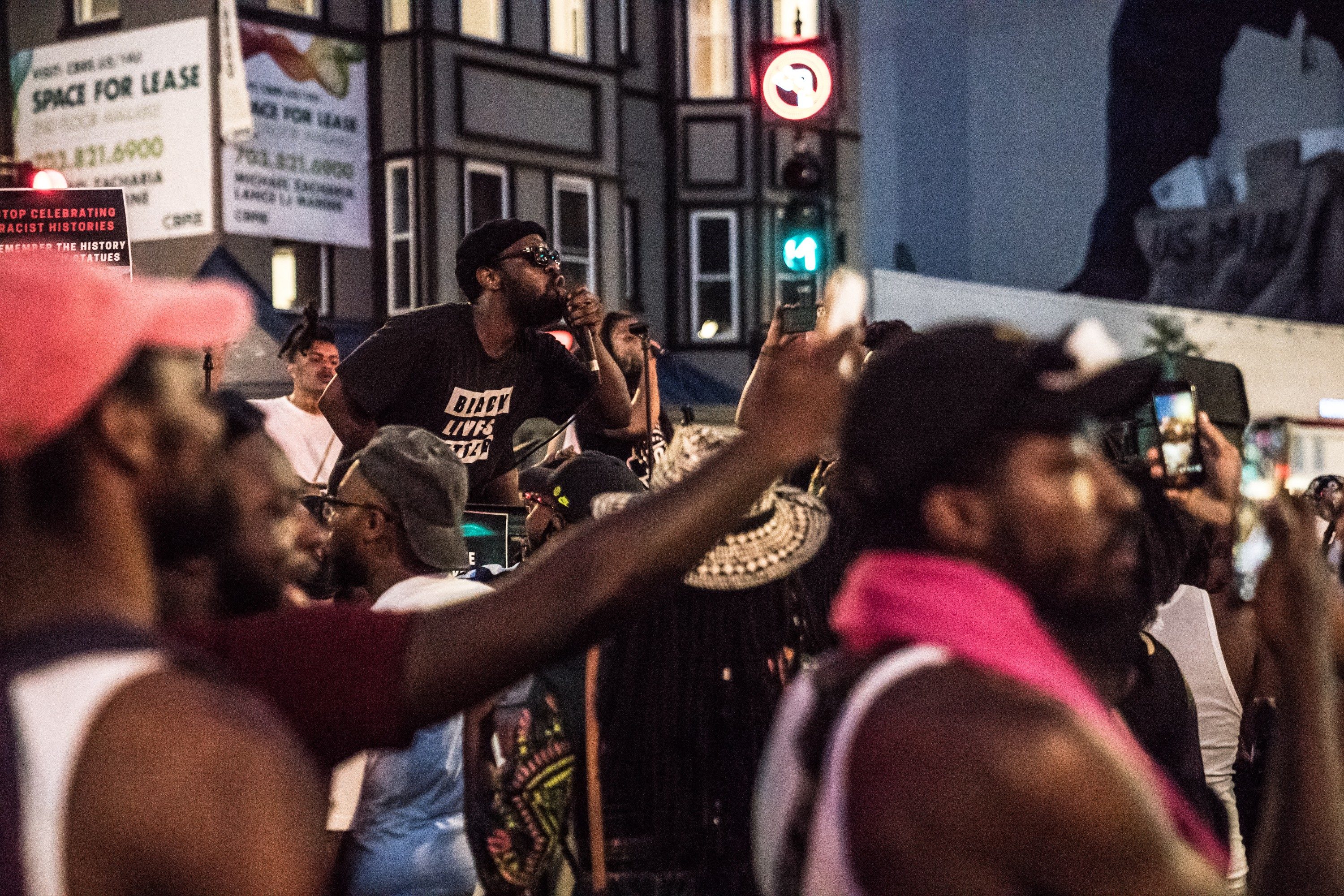
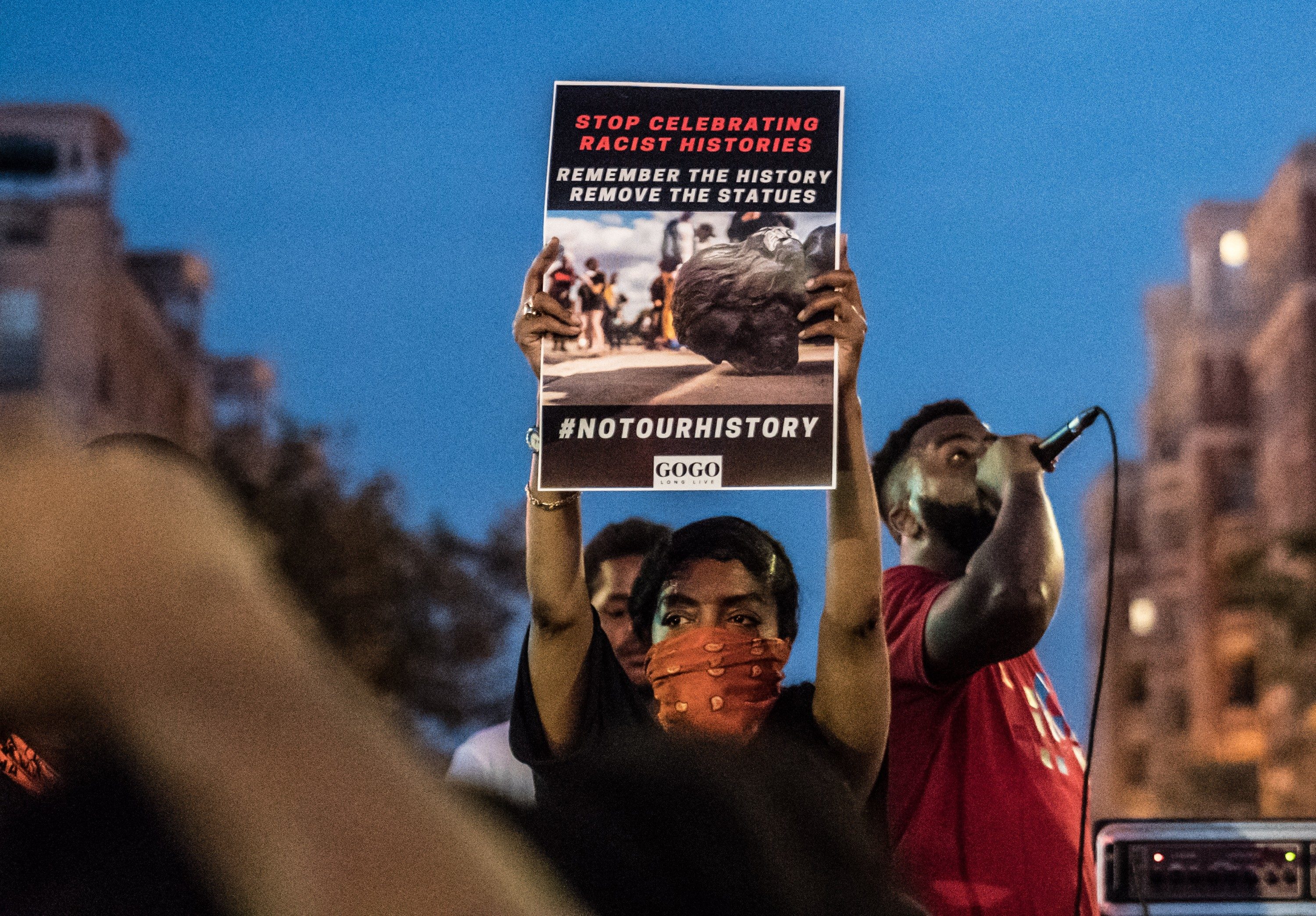
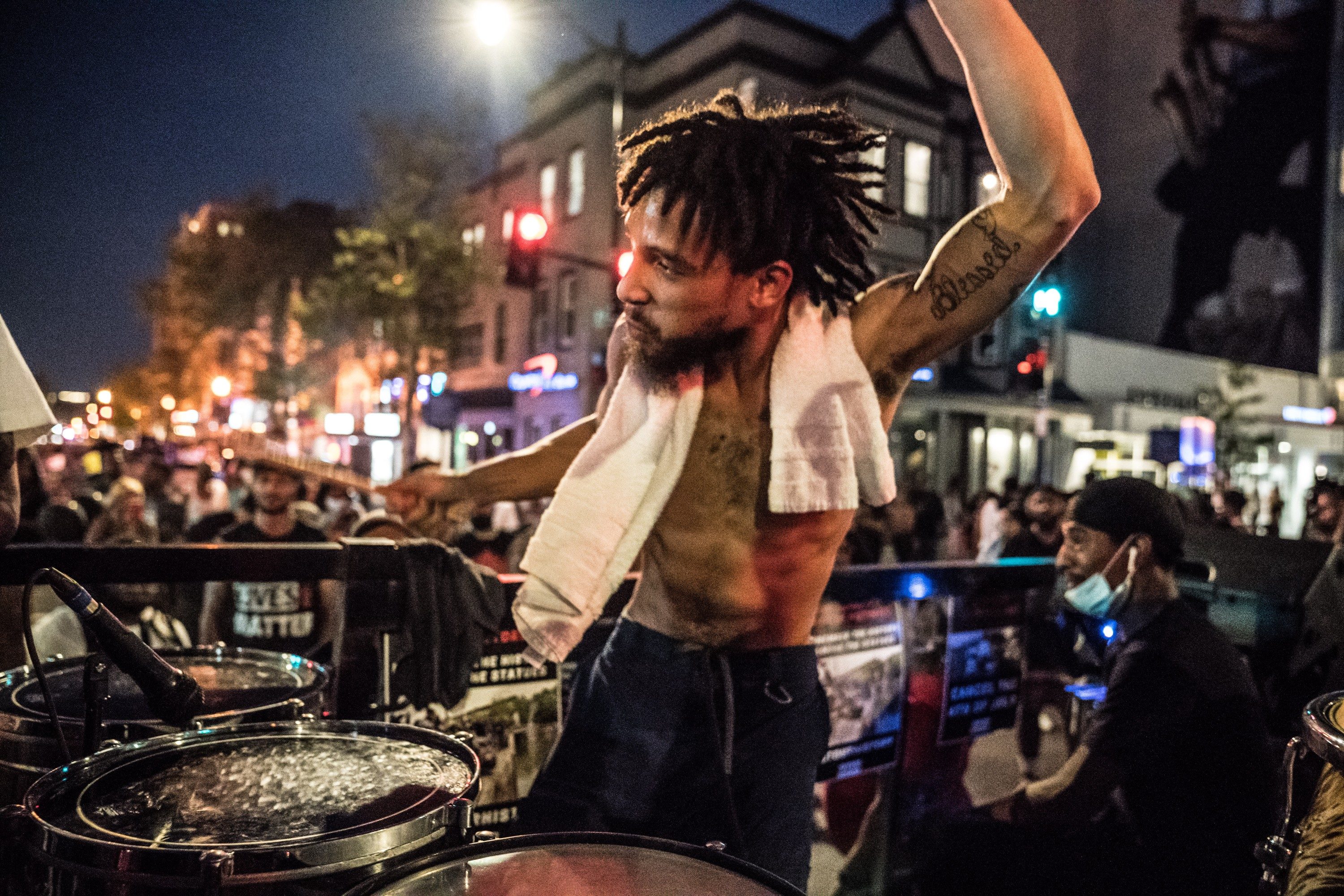
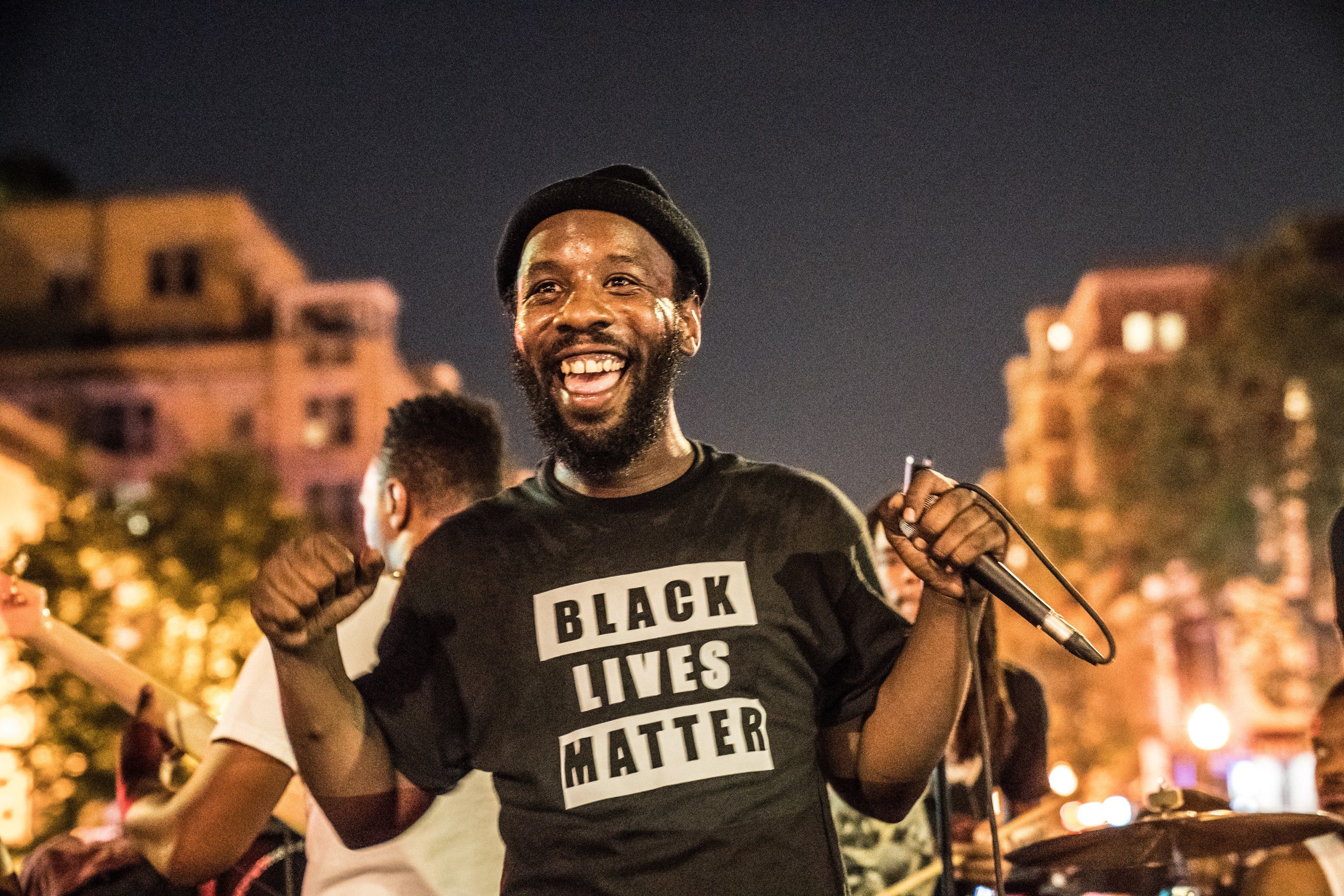
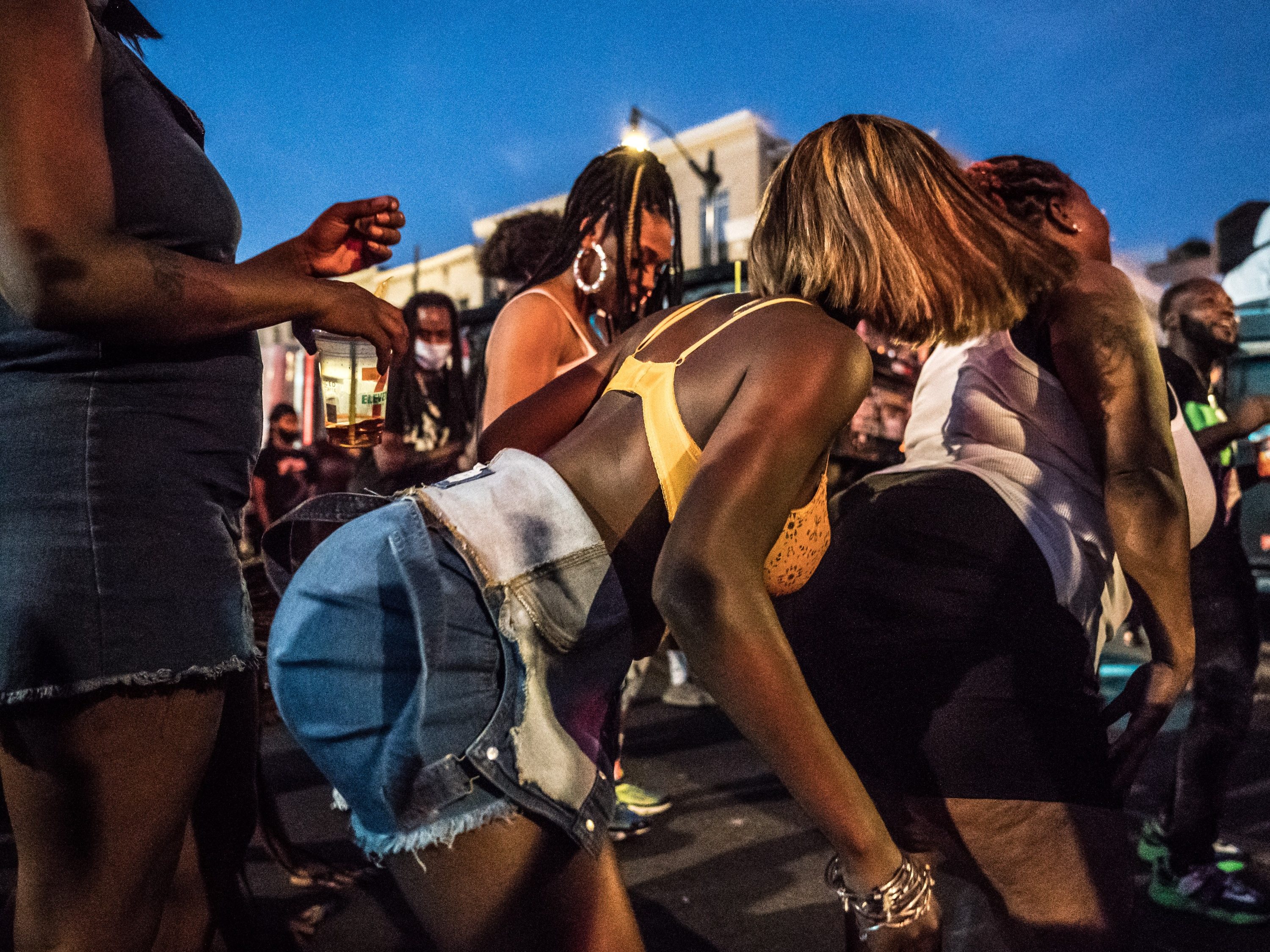
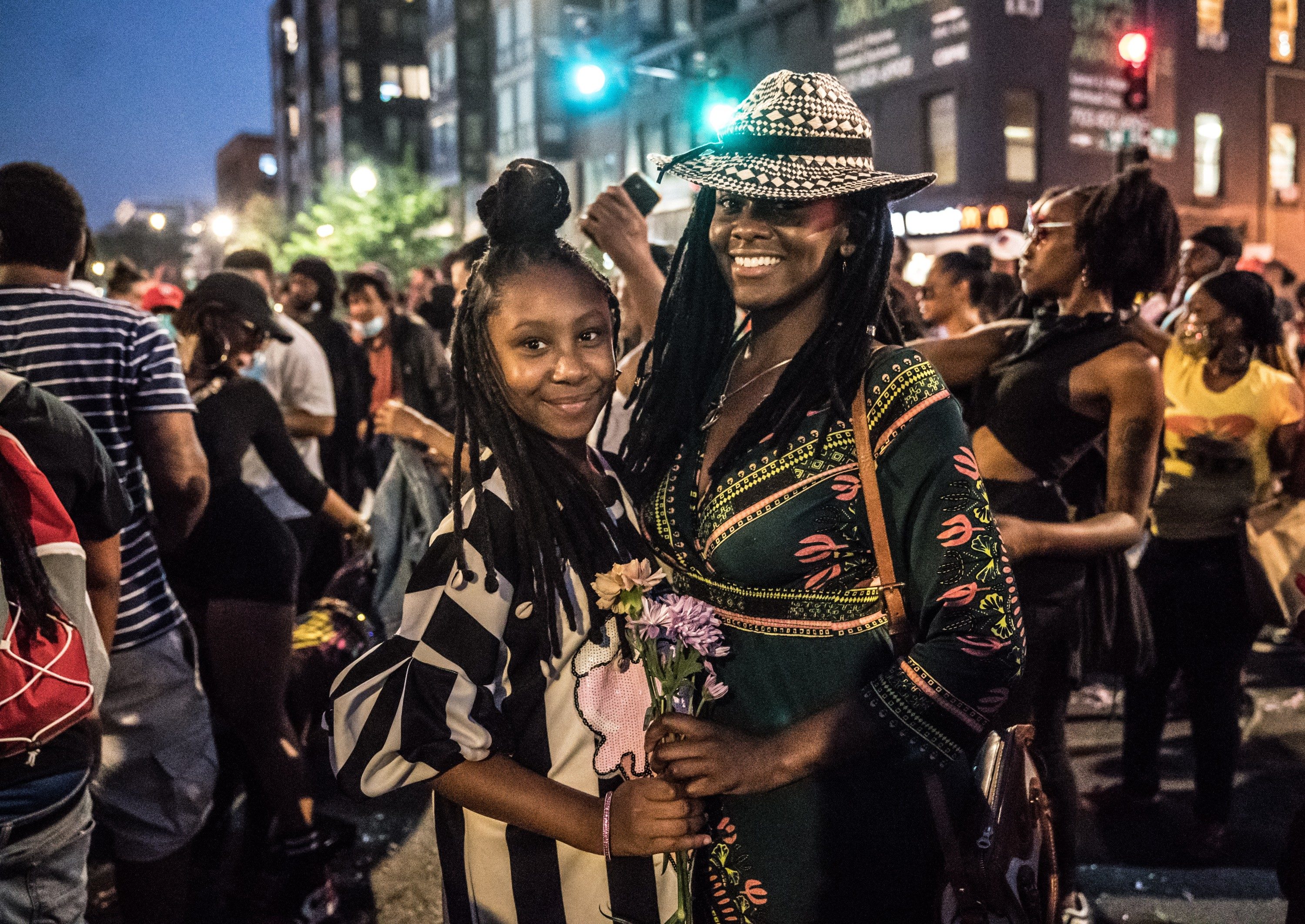
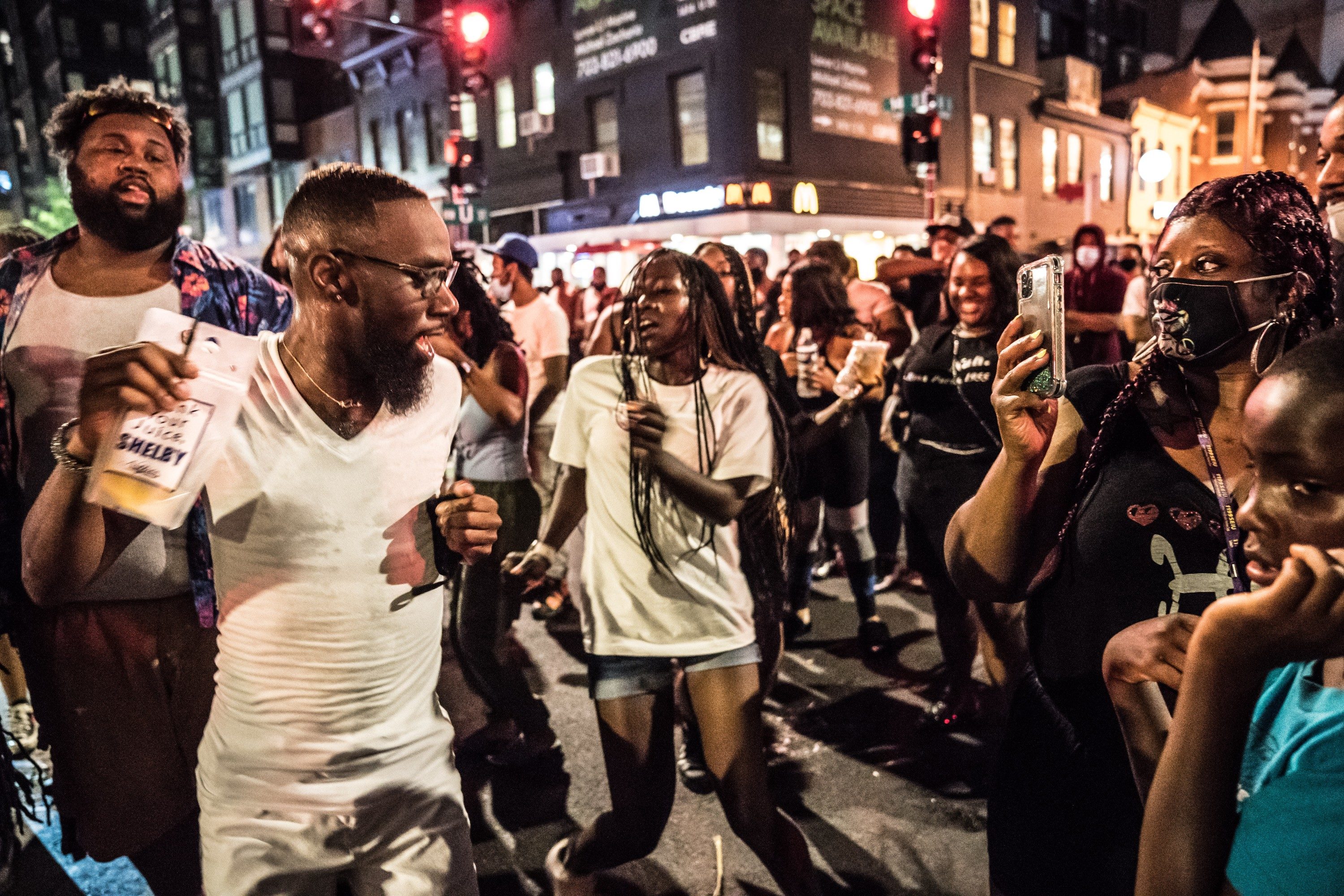
Glen Yonkers, a freelance TV editor from Fort Lincoln, came with his family to show support for the statue’s removal, but said the event felt less like a protest and more like a party.
“We’re all out here to protest the statue, that’s definitely the goal of why we’re out here,” he said. “But while we’re out here we’re having a good time spreading the message and letting people know, letting our civil leaders know that we aren’t happy with what the statue represents right now.”
Yonkers took issue with the formerly enslaved man’s position in the statue.
“I’d rather see him on his feet addressing President Lincoln instead of on his knees,” he said. “I think it’s an image, maybe for the time it worked for them, but for now, I don’t think that’s the right kind of image to have displayed in D.C. right now.”
Yonkers said he remains hopeful and believes in the ideals the Founding Fathers set out for the country, despite flaws in the system. “The basic ideals of what they believe America should be is what I believe in, and I believe we can get there,” he said. “We really can. But we’ve just got to listen to each other and learn from each other and appreciate each other.”
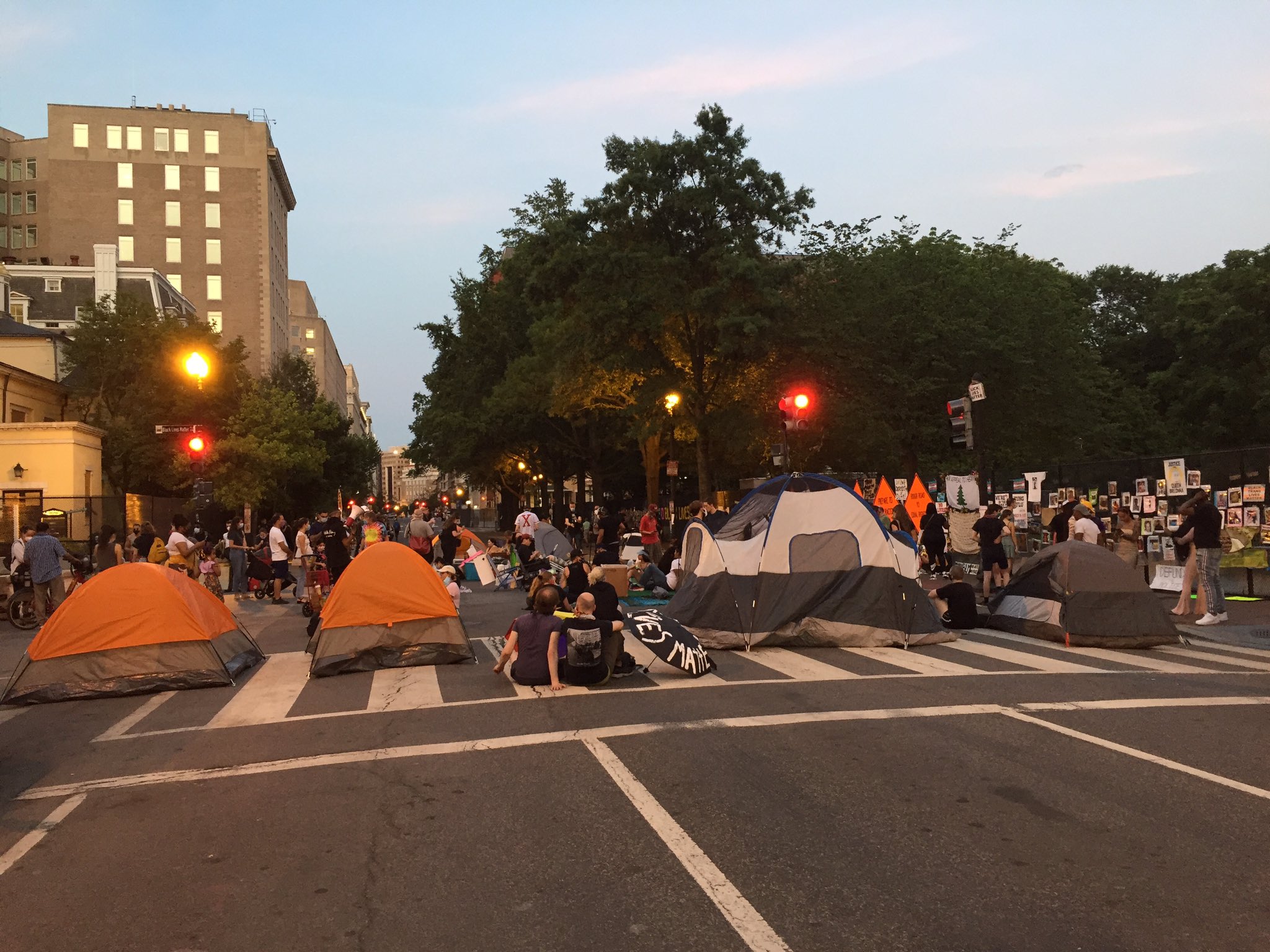
While the group began to make its way to 14th and U Streets NW, across town at Black Lives Matter Plaza, another group of protesters staged an overnight sit-in outside Lafayette Square.
Roughly 100 people gathered on and around H Street NW, some with lawn chairs and tents, and one with what looked like an air mattress.
On the sidewalk near St. John’s Episcopal Church where police forcefully cleared protesters from the area a little over a week ago, about a dozen officers stood behind concrete barricades.
T, a Maryland resident who declined to share her last name, came out in part to show support for a friend who had been arrested a week earlier.
She said occupying the space Friday night felt like a kind of victory.
“This is the way we make our voice heard, because now the street is shut down,” she said. “You can’t drive up the street no more. That’s some type of power, be it what it may and whatever your criticisms are of people who protest.”
Protesters chanted “Occupy!” and “H Street!” in a call-and-response, followed by “All night!” and “Every night!”
Some protesters traveled to D.C. from out of town specifically for the demonstrations.
Kaliyah Lindsey came up from Charlotte, N.C., and had never seen the White House before.
“It’s the first time I’ve seen the White House and it has to be this way,” she said. “But you gotta do what you gotta do.”
Lindsey said she, like a number of Black people, is choosing not to celebrate the Fourth of July, because her ancestors weren’t free to do so. She said tomorrow is “kind of like a revolution.”
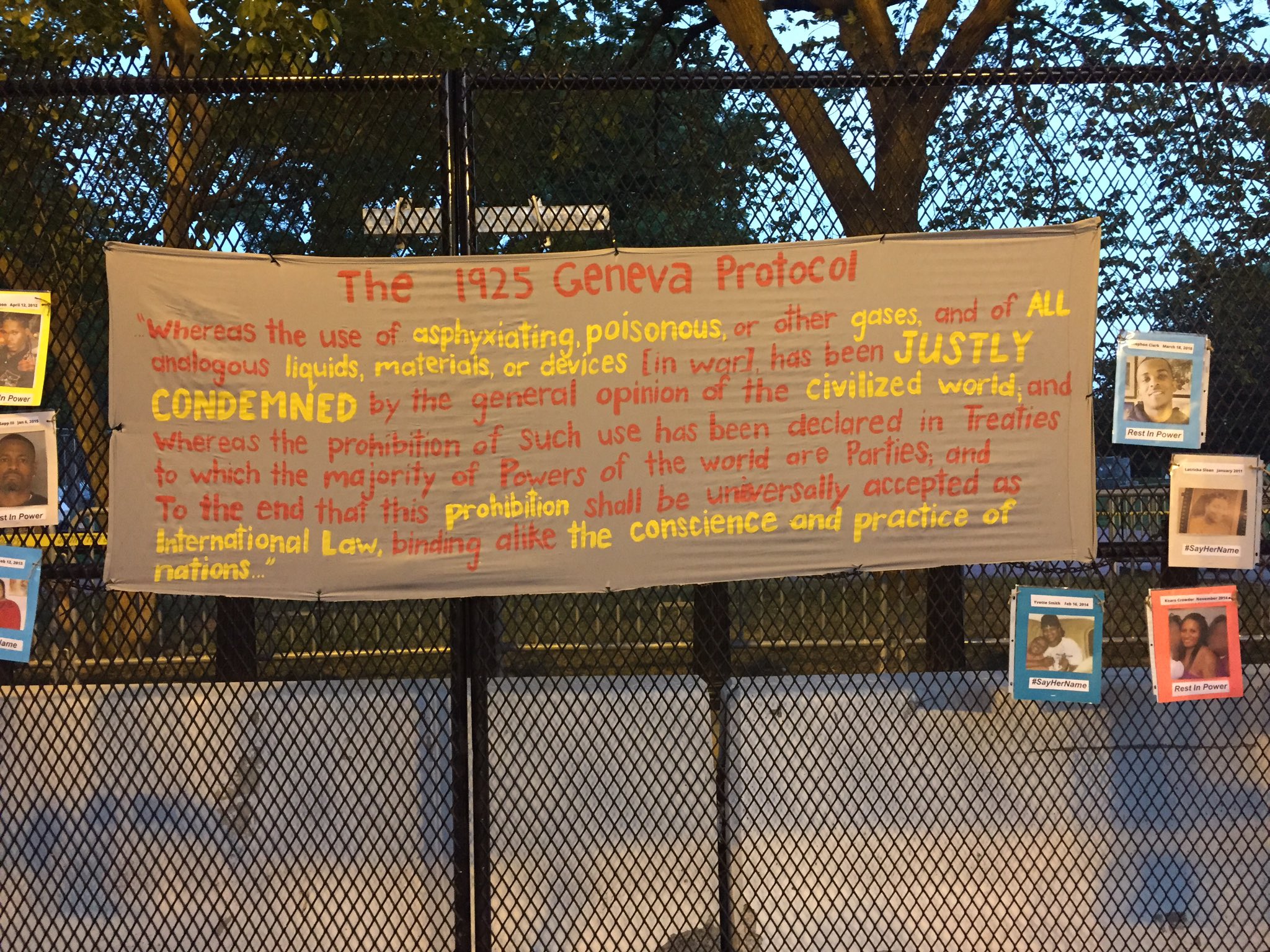
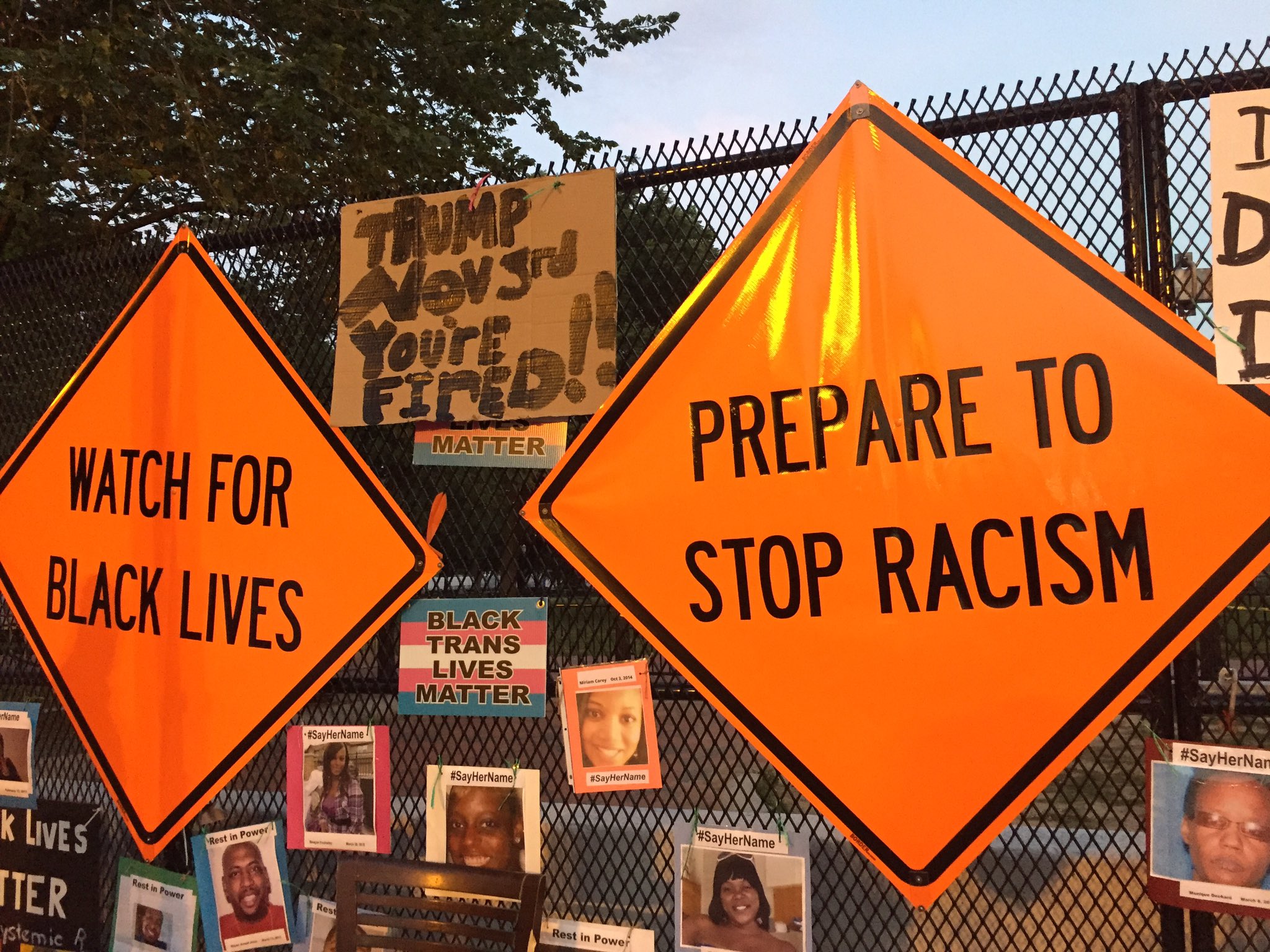
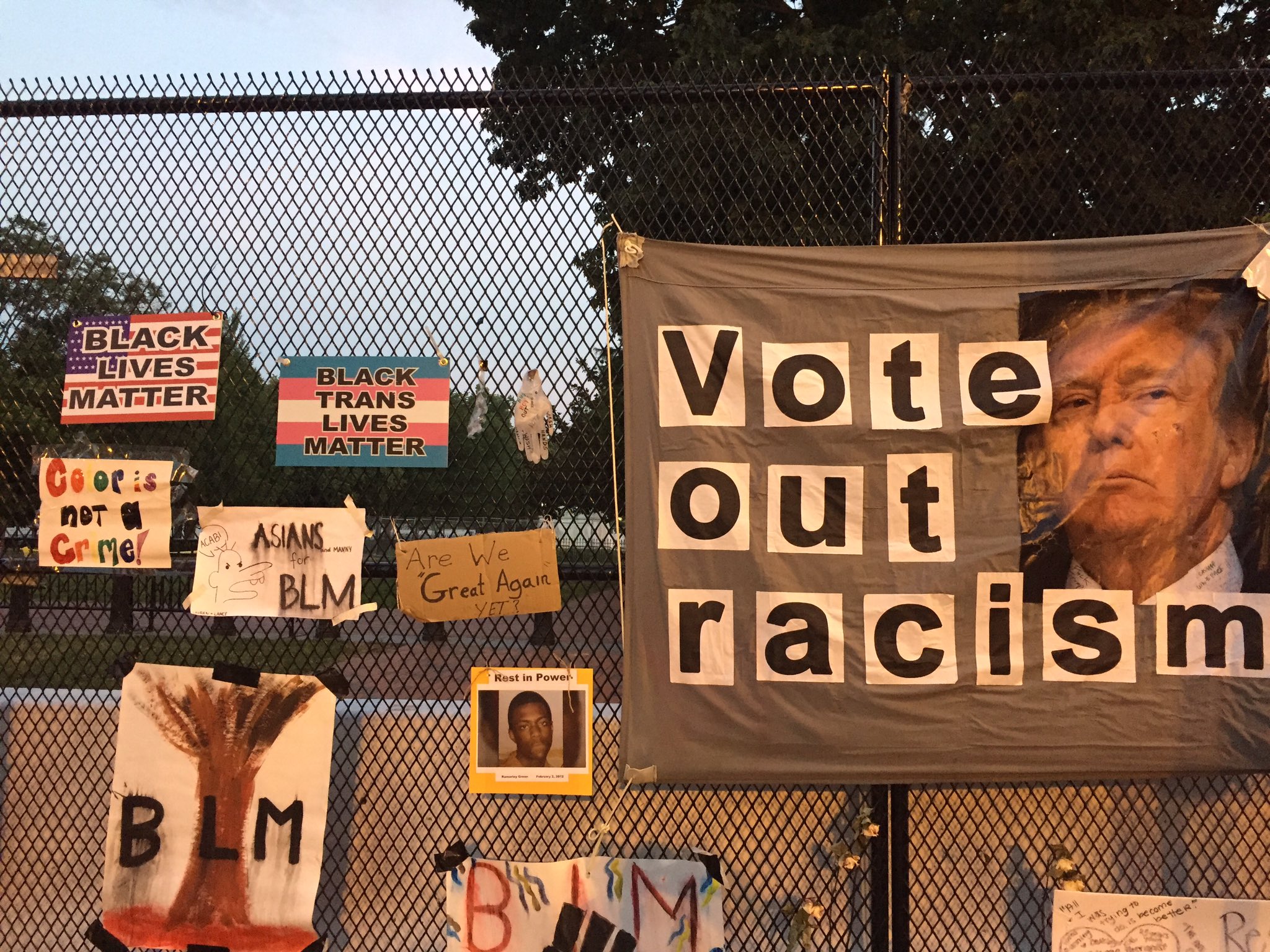
Lloyd Bailey, a doctor visiting from New York, was struck by seeing the scene in person, from the statue of Andrew Jackson silhouetted against the White House, to the fence in front of it, featuring “the names and faces of so many people who have been taken by state violence.”
He added, “I’m so happy that this energy is still here, even so many weeks after Mr. Floyd’s death.”
Later in the evening just after 9 p.m., tensions rose after a woman wearing a Make America Great Again hat ran through the sit-in. Protesters alleged that she had tried to use a stun gun on someone, and police intervened, forming a line between the demonstrators and two people wearing merchandise showing support for President Donald Trump. WAMU/DCist was not able to verify that a stun gun was involved.
The group called for police to arrest the woman, though they did not. Officers approached the main group but retreated as demonstrators chanted, “We police ourselves!”
As the night wore on, protesters shot fireworks off from the ground and a DJ blared music, as many vowed to stay all night and through the weekend.
Lindsey, the Charlotte, North Carolina resident, was among those preparing for an all-nighter.
Being at Black Lives Matter Plaza, she reflected on her family’s experience of racial injustice, which she called “a tradition that I wish wasn’t a tradition, because my mother had to go through this, and her mother had to go through this, and it’s sad that three, four generations later, we’re still doing the same thing and still fighting for the same thing.”
This article was updated to add a clarification about the possible use of a stun gun and to include photos from July 3 demonstrations.