 Jenny Gathright
Against the backdrop of a pandemic that has laid bare the life-and-death consequences of racial and economic inequality in the District, the D.C. Council took its first budget vote on Tuesday. Much of the debate centered on whether to increase taxes on the city’s wealthiest residents and corporations in order to free up funds for affordable housing, violence interruption programs, school-based mental health, economic relief for undocumented workers, and other interventions that benefit the city’s poorest residents.
In the end, the council voted to move about $60 million in additional funding toward these programs, funds they freed up by increasing the city’s estate tax, further increasing cuts to a tax credit for tech companies, delaying some corporate tax cuts,increasing the gas tax by 10 cents per gallon, and increasing a tax on advertising.
The council will take a second budget vote on July 21 before submitting it to the Mayor.
The council was divided on the issue of taxes throughout its more than eight hours of contentious discussion on Tuesday. Several councilmembers opposed raising taxes on corporations and the wealthy, saying that they wanted to reserve those cuts for a few months from now, when the council may very well have to make additional budget cuts because of the ongoing coronavirus pandemic.
Council chairman Phil Mendelson said he suspects that “at that time we will have to look at cuts and other revenue measures.
“I have been informed that we will later this year be asked to increase the tax rate for the unemployment insurance program,” says Mendelson. “That falls on businesses. So we know that there will already be an increase in the tax burden on our businesses.”
Mendelson and some of the more fiscally-conservative members of the council succeeded in voting down an amendment that would have modestly raised taxes on the city’s wealthiest residents in order to pay for a locally-funded version of the low-income housing tax credit.
Allen, who proposed the amendment, questioned whether the city’s wealthiest residents were paying their fair share during a pandemic that has forced middle-income government workers to forego pay raises and put many other city residents out of work.
“Those that are on unemployment claims … they’re out of a job and sacrificing right now,” said Allen. “We need to ask everyone to chip in just a little bit.”
In response to criticism from those who say increasing taxes on the rich will cause them to move from the city, Allen argued that his proposed tax increases were modest, and if “you make a million and a half dollars, I don’t think $1,800 is going to force you to flee the District.”
Ultimately, the councilmembers who argued that tax changes were necessary to address the urgent needs of poor residents succeeded in pushing three amendments to the budget.
The first redirects $7.4 million from a tax break for publicly-traded corporations and puts the money toward support for undocumented workers, school-based mental health programs, vouchers for affordable housing, and emergency rental assistance. (The council will work out the details of the funding before its final vote on the budget.)
The second increases the estate tax for wealthy residents. The $1.7 million in additional revenue will be put towards violence interruption programs, school- and community-based mental health programs, and mentoring grants for middle schoolers in the District.
And the third tax change transfers about $28 million from a tax incentive for tech companies (which the council already scaled back last year) to permanent supportive housing, homeless outreach services, legal services for immigrants, payments for undocumented workers, and other social services.
Ward 8 Councilmember Trayon White, whose ward has seen the most deaths from COVID-19 and a tragic series of deadly shootings, said that he has seen a lot of discussions about equity in his three years on the council, and he sees the reinvestment in violence interruption programs and other social services as a chance for him and his colleagues to follow through on the spirit of those conversations with action.
A budget, he said, “is a clear way to show that we’re being equitable … Do we really do what we say we want to do?”
In advancing the tax changes, the council went against the guidance of D.C. Mayor Muriel Bowser, who strongly urged lawmakers not to raise taxes in a letter to the D.C. Council over the weekend.
“It would be foolhardy to raise taxes this year,” wrote Bowser. “Nor is it necessary to balance a budget that increases education investments, delivers on a system of health care in Wards 7 and 8, including new hospitals at St. Elizabeths and Howard University, and continues to make significant investments in affordable housing and ending homelessness.”
Changes To School Security, But Not To Streetcar Expansion
The council also passed an amendment that transferred control over a contract for school security from the Metropolitan Police Department to D.C. Public Schools. Youth advocates who have been pushing to remove police from schools entirely cheered the move as a “small step” in reducing the power of the police department in schools.
Meanwhile, lawmakers did not move forward with an amendment that would have transferred $35 million from a streetcar expansion plan along Benning Rd. NE toward urgent repairs to public housing for fiscal year 2022.
At-large Councilmember Robert White, who proposed the amendment, said “there are other ways to get around” the city, but public housing residents living in dire conditions (that in some cases make them ill) cannot find other places to live. White said a predictable funding stream for the Housing Authority would help them make necessary investments.
Ward 7 Councilmember Vincent Gray opposed moving the funds from the streetcar project, which he says would break “a promise to the residents and businesses of Ward 7, who already have limited transportation access going east to west.” Others supported Gray, saying that they were hesitant about the streetcar project but thought the funding for public housing repairs in fiscal year 2022 could be addressed at a later date.
As it stands, the council’s budget puts $50 million towards public housing repairs next fiscal year, and additional funds for the following year. The Housing Authority has estimated that it would need $2.2 billion dollars over the next 17 years to get the city’s public housing stock back in good condition.
Concerns About Process
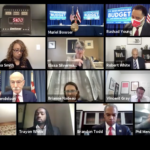
As the council debated taxes and other budget amendments on Tuesday, many onlookers questioned the process of moving money around in the hours before a vote without much regard to oversight and deliberation. The D.C. council budget process typically involves last-minute amendments, but the challenges of conducting the meeting remotely via Zoom seemed to bring communication struggles to the forefront. Mendelson, the council chair, seemed to be upset with councilmembers who circulated their amendments late Monday evening and in the wee hours of Tuesday morning. But councilmembers quipped back at Mendelson, noting that he did not circulate the proposed budget they were working off of until approximately 6 p.m. Monday night.
At-large Councilmember Elissa Silverman noted that she and other councilmembers were receiving harsh feedback about their process in real time.
“We all just got an email from a resident who’s like, ‘This is crazy. Y’all need to reschedule this budget meeting,’” Silverman said at one point.
Ultimately, the debate over taxes highlighted existing divisions between the more progressive wing of the council and the more fiscally-conservative members.
Ward 4 Councilmember Brandon Todd, who was recently defeated by Janeese Lewis George in this spring’s primary elections, said at one point during the debate over increasing taxes on the rich that “it’s easy for us to say people who have more should pay more, but … everybody is struggling during the downturn in our economy.”
Ward 1 Councilmember Brianne Nadeau, in introducing her amendment, emphasized that she saw decisions about redistributing money and income from large businesses and wealthy residents as part of a larger dialogue about racism and racial justice.
“We’re all kidding ourselves if we don’t recognize that making investments in our human services is about race equity,” said Nadeau. “If we can’t find the political will to invest in health care for undocumented residents during a global pandemic, how will we ever?”
Additional reporting was provided by Eliza Berkon and Nathan Diller.
This story was updated to correct a quote from Ward 1 Councilmember Brianne Nadeau.