Matt Blitz
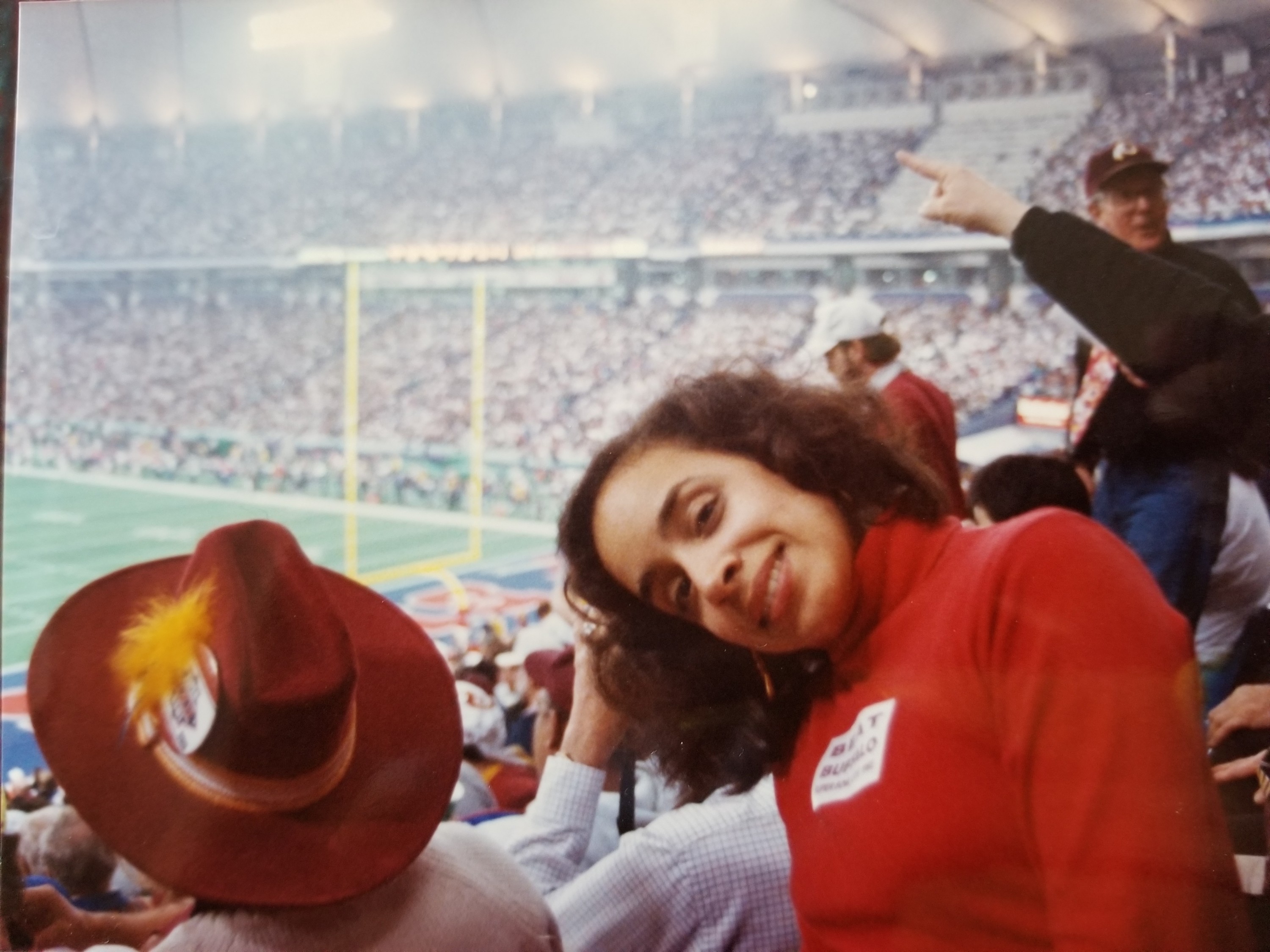
Lisa Bland Malone has plenty of memories from her more than 45 years as a fan of the Washington professional football team. “My father got season tickets back when the team integrated and Bobby Mitchell joined the team,” says Malone.
She grew up in upper Northwest D.C. and remembers family outings to the old RFK Stadium. Malone has even attended two Super Bowls, in 1988 and 1992 (which is the last time the team has played in the game).
Monday was probably the most memorable day in recent memory for fans like Malone, as the team officially announced it would be “retiring” the team name, which is a dictionary-defined slur.
Some have praised the decision as a long time coming, while others are angry and using it as proof of “cancel culture.”
For Malone, though, the name isn’t the defining force of her fandom. “If it is offensive to any group or anyone, then I absolutely yield to that. The fact that we are changing the team name in 2020 … I absolutely get it and am fine with that,” says Malone who now lives in Chevy Chase and works at the NAACP.
For her, the team will always be about those family outings, cheering along with a stadium full of other diehards, and seeing great teams excel on the field. She says she’s proud that she raised her son, now 27, to also be an avid fan.
“My football team is more than a name,” says Malone. “And, hopefully, will return soon to the greatness that I grew up watching.”
Native American activists have been calling to change the Washington NFL franchise’s name for decades, though owner Dan Snyder insisted the name would “never” do so.
This time, of course, is different.
The recent national reckoning around racist symbols began with this summer’s protests against the killing of George Floyd and has led to jurisdictions, institutions, and sometimes protesters themselves pulling down monuments honoring those who advocated for injustice. This includes the removal of a monument at the football team’s former home, RFK Stadium, depicting former owner and ardent segregationist George P. Marshall.
In recent weeks, big corporate sponsors have finally come out and demanded a name and logo change for Washington’s NFL team. FedEx, which paid hundreds of millions of dollars for stadium naming rights, asked the team to change it. Nike also pulled all team merchandise from its online store. Pepsi and Bank of America, both big sponsors, also called for a change.
Then, on July 3, the team announced a “thorough review” of the name. Ten days later, the change was official. What the Washington NFL franchise’s name actually will change to, though, is still very much pending.
For some Washington football team fans, including Malone, it has become increasingly clear that the now-defunct team name was a blight on the sports franchise they love (despite having made no Super Bowl appearances in nearly three decades and winning less than 40% of their games over the last ten seasons).
There are some that continue to be avid supporters and keep watching despite their misgivings. But others have already abandoned their fandom of the team, given its racist name and logo.
Bethesda native Josh Silver had rooted for the team since 1972. “My dad, myself and my brother, we went to lots of games at RFK. It was a great community feeling and really something special,” says Silver, 56. But in 2013, he had a realization. “I was rooting for a team that was using cultural appropriation and people’s culture and religion in an inappropriate way to root for a team.”
He stopped going to games and weaned himself off watching them on television. Last year was the first time ever, he says, where he did not watch a single game. “It was no longer fun.”
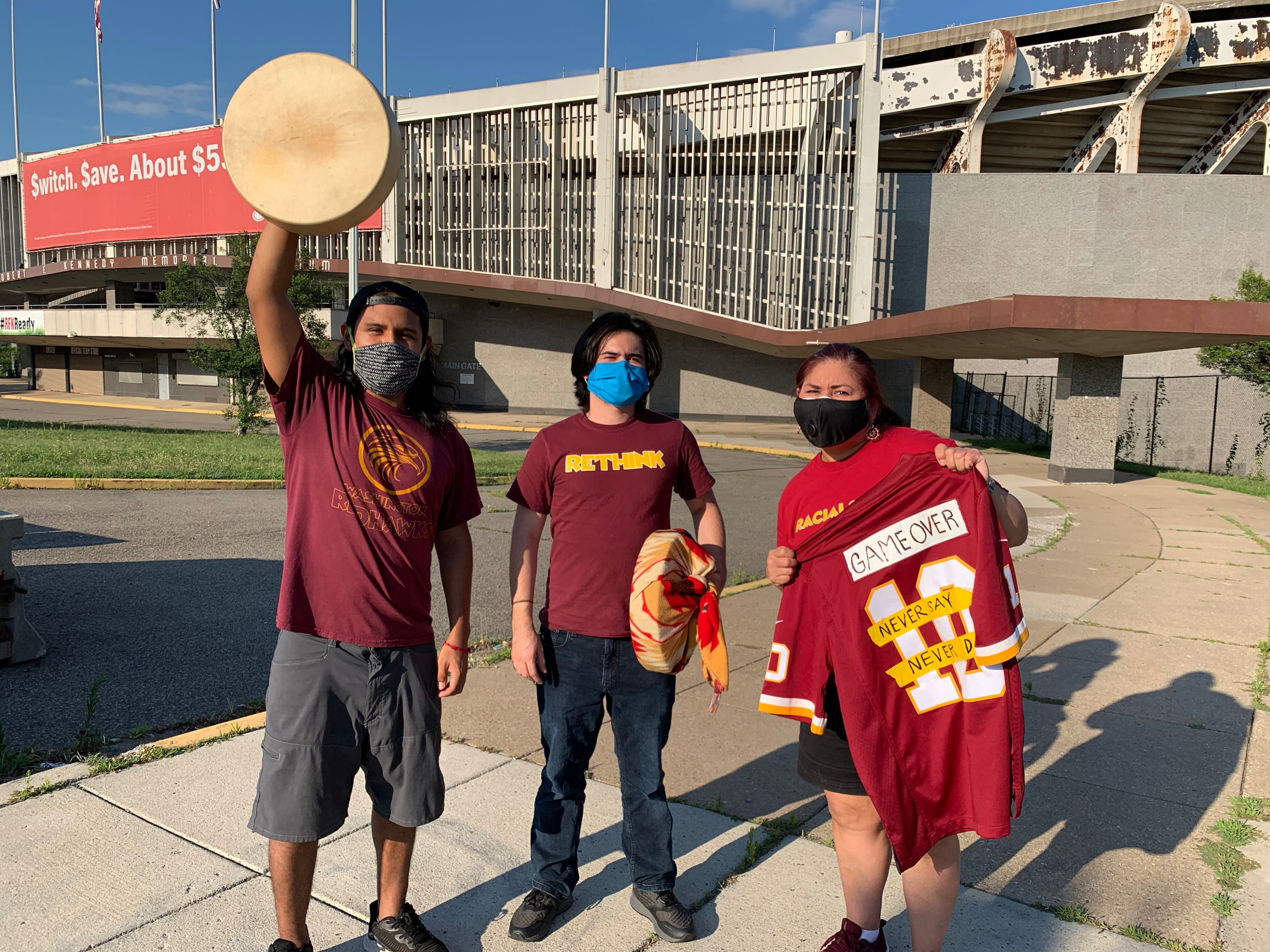
In 2015, he and two other fans formed Rebrand Washington Football, an organization devoted to convincing the team to drop the offending name. They held protests, made t-shirts, and collected signatures for petitions that they delivered every year to the team’s headquarters. They partnered with Native American-led advocacy groups, including No Name Change, No Stadium.
Silver says he was shocked when the announcement about the team name came in on Monday. “It feels like the Berlin Wall falling. It’s just not something that you’d think would have happened all of a sudden,” says Silver. “We thought we would still be at this for a number of years.”
Silver says as long as Synder doesn’t continue to use any Native American imagery (which he’s worried about due to reports that Warriors could be the choice: “Warriors is also a stereotype… the brave Indian warrior”), he’ll become a fan again.
But it won’t be the same, he says. “I have become educated about the damage the game inflicts on the bodies and brains of the players,” says Silver. “I don’t think I will resume my previous rabid fandom, but it would be fun to take in an occasional game and not have to worry that doing so supports a racial slur.”
Even D.C. elected officials admit having a hard time rooting for their hometown team.
D.C. At-Large Councilmember David Grosso is a lifelong Washingtonian who spent his teenage years and early 20s living near Brookland and was a huge fan of the team. “We lived in a group house on Michigan Ave and we had a huge Super Bowl party in 1992. When it was over [and they had won], we spilled onto the streets,” says Grosso. “The team was a unifying force in the District of Columbia. Everyone was out; poor, rich, white, Black. Every one of us was out in the streets celebrating this team’s victories.”
He stopped going to games in 2013 “in protest of the name … it was something I felt as a principle.” That same year, he introduced a D.C. Council resolution calling for a name change and suggesting the “Red Tails” (an ode to Tuskegee Airmen) as an alternative.
Still, he admits that the team is tough to break up with. “I try very hard not to watch [games] on television,” says Grosso. “If you know anything about sports, you know it’s very hard to break from it.”
D.C. Congresswoman Eleanor Holmes Norton, also a native Washingtonian, admits she was never a fan of the team due to its racist past. “It was the last team [in the NFL] to integrate. Its owner was an avowed racist. Griffith Stadium (where the team played prior to RFK Stadium) was segregated,” the Congresswoman tells DCist. “There wasn’t much to … draw me to a team with that kind of history.”
Synder’s refusal for years to make a name change was further evidence to her that this wasn’t a team she wanted to root for.
“He had resisted all attempts to change the name,” she says. “And now he’s simply got to do it because of the climate in the United States today on such names and slurs.”
Norton says she thinks it all came down to money, once the corporate sponsorships spoke up, and Synder felt like he had no choice. She says that he wished he would turn to the fans for a new name, but that’s unlikely to happen. “If he turned to the fans for ideas, and even if he didn’t choose that one, it would help him buy some goodwill,” says Norton. “He has none in the city at the moment.”
For some D.C. transplants who often look to sports teams to feel more connected to their adopted hometown, the racist imagery is not welcoming. Mary Phillips came to D.C. from Nebraska in 2004. “I was in the [Nebraska] Cornhusker marching band, so I lived a life of being a fan and a fanatic of Cornhusker football,” says Phillips.
Phillips is also Native American, an enrolled member of the Laguna Pueblo tribe of New Mexico and Omaha tribe of Nebraska. She says hearing the name and seeing the logo used casually is hurtful and makes her feel like she doesn’t belong here.
“I don’t feel welcome in a city that allows the promotions of a racist name and the stereotype logo. It’s everywhere. It’s on cars, it’s in grocery stores, it’s up in people’s windows,” says Phillips. “I’d rather … enjoy a football team than have to deal with this daily imagery.”
She also says that this casual use has given license to fans to dress, paint themselves, and act in an “obscene” manner that has made her never want to attend a game, despite her enjoyment of the sport. “If I went to a football game, I would be surrounded by all these racist acts and casual behaviors of racism.”
Phillips founded the organization No Name Change, No Stadium two years ago, which calls for a new name—one without Native American imagery—as a prerequisite for the team to come back to the District. (Though D.C. Mayor Muriel Bowser has said she wants to see the football team play in the city, the D.C. Council was divided on the idea as recently as 2018.)
She says if this happens, she would definitely be a fan of her adopted hometown football team. “If there’s a mascot that’s not demeaning to any group of people in any way, then yes, I’d absolutely [be] a fan. I want to be a part of that.”
There are others who say they’ve never had a huge issue with the name, but recognize that change may be a good thing.
Rodney Thompson grew up in Landover, Maryland, across the street from FedEx Field. He now lives in Alexandria and has a spare bedroom in his condo dedicated to all things Washington football: framed photos, helmets, and old Wheaties boxes with players on the front. Even the room’s carpet is a giant football adorned with the logo. He says that even with the name change, he’s not dumping any of his memorabilia. In fact, he’s been scrolling online to see if anyone is offering up paraphernalia on the cheap.
He thinks the team might be making the change for money-making potential. “Some people may be offended by the name. I get that … but [Synder] is a money guy,” says Thompson, 41. “If they change the name to the Washington whatever, and they win, this will all work out better for [Snyder]. He’d sell more merchandise.”
Former Washington NFL team quarterback Joe Theismann, who played for the team from 1974 to 1985 and won a Super Bowl, agrees that change could be a good thing for the franchise’s potential on the field.
“I believe this is a great opportunity… it’s a chance for all of these young players to create their own legacy going forward,” Theismann tells DCist. “We did it under the [the past team name] for 87 years.”
But Theismann knows that the only way change is accepted is if it ushers in success.
“It all boils down to one thing. Sports is not just going out there and participating. I don’t believe in participation trophies. I think you want… to accomplish something. You want to be able to win.”
There’ve been plenty of rumors and ideas thrown around for what that new name and logo could be. There’s the Redhawks, which Silver and Phillips favor. The historical-inclined Red Tails, which Grosso recommended in his 2013 resolution and Norton thinks would make for a good moniker. Theismann says that he likes the Generals to honor the military. There’s also the internet-favorite Red Wolves and the military-inspired Warriors and Veterans.
For Lisa Bland Malone, she’d prefer it not to be something like Presidents or Monuments since she feels with the Nationals or Capitals that “we have checked that box.” She likes Red Tails, though. “I do find that refreshing, in light of so much that’s going on in the world,” says Malone.
For Thompson, his fandom comes down to one thing that he does wish would change. “Call it whatever,” Thompson says. “Just win again.”