Colleen Grablick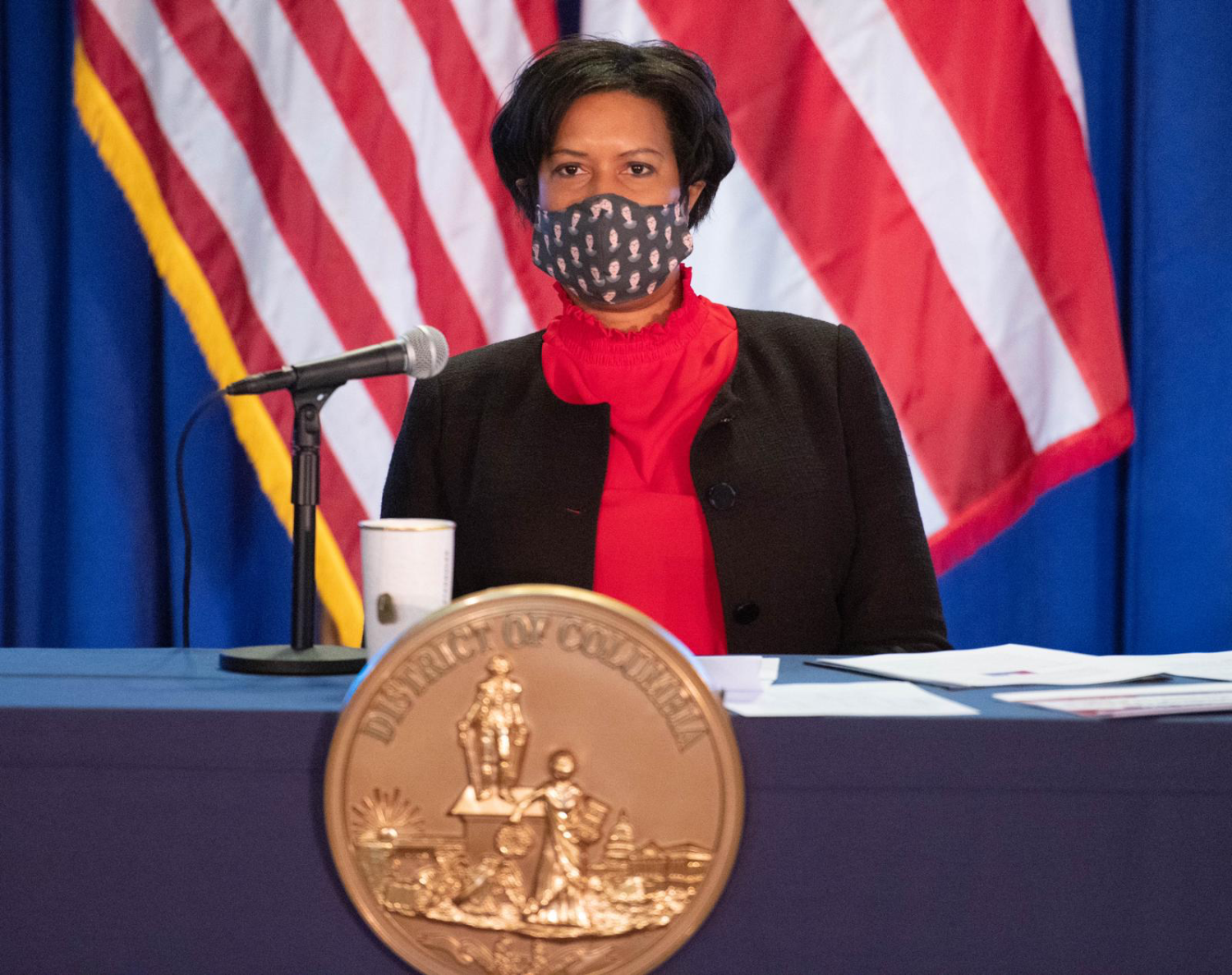
Updated at 4:15 p.m.
Beginning on Monday, July 27, people traveling into D.C. from what the city is calling “high-risk areas” will be required to self-quarantine for 14 days.
D.C. Mayor Muriel Bowser announced the news Friday morning.
The new regulation (which excludes those entering the city from Virginia and Maryland) applies to nonessential travelers from areas where a seven-day average of daily coronavirus cases is 10 or more per 100,000 people. The list of high-risk areas will be published on the city’s coronavirus website on Monday, July 27 (the day the order goes into effect) and updated every two weeks.
The order will be effective through October 9 — the expected end of the city’s public health emergency — and will also require college students returning for the fall semester from high-risk areas to self-quarantine in on-campus dorms or in off-campus living situations.
Individuals self-quarantining are required to stay in their residence or hotel room — leaving only food or medical appointments — and guests are not permitted.
Those coming into the city for essential activities (like an essential job, or seeking medical care) or those returning home to D.C. after participating in essential travel should be “more vigilant,” Bowser said at a Friday press briefing, and should only leave their homes for essential activities. Other states have instated mandatory travel quarantine; earlier this week, Maryland and Virginia were added to New York, New Jersey, and Connecticut’s lists of states whose residents must quarantine after arriving there.
According to the order, employers, universities, and apartment buildings could require compliance with the order before allowing entrance into buildings or properties. In Friday’s press conference, Bowser said universities will provide a list of students who require self-quarantines, but stressed using social pressures to enforce the new order.
“There’s nobody standing at the hotel door telling people if they can come or go, but certainly they will be required to make all of their travelers aware of the guidelines of the local jurisdictions,” Bowser says. “We should be asking our social group circles, our family, our work colleagues, ‘you’re making a nonessential trip, you’re going to a hot spot, why are you doing that? And you do know that when you get back, you have to stay in your house?'”
Bowser also put a pause on waivers for arts and entertainment events in the city. No restrictions have been reinstated, but Bowser says the city is considering potential dial-backs on activities like personal grooming, indoor dining, recreational sports, and elective procedures. The mass-gathering limit (currently at 50 people) could also become stricter. Bowser did not identify which metrics would prompt those dial-backs.
The new order comes as coronavirus cases are rising across the region, and two days after Bowser signed a mayor’s order mandating mask-wearing outside of the home.
The city reported 78 new coronavirus cases on Friday, and no new deaths. D.C.’s surrounding region saw spikes — Maryland reported its highest number of daily coronavirus cases since May 30, and Virginia saw its highest number of daily cases since June 7.
This post has been updated with the text of the order.