 Christian Zapata
 Colleen Grablick
Updated Sept. 18, 2020:
The D.C. Housing Authority filed a motion to dismiss and a motion for summary judgment in the lawsuit filed by its former general counsel Chelsea Andrews.
In a statement released Friday, the authority claims that it did not violate “internal policies” when it purchased KN95 face masks, and that Andrews’ complaints about counterfeit masks are “without any basis, and are unsupported by evidence.”
According to DCHA, the authority was “able to authorize an emergency sole source procurement” for KN95 masks, as the N95 respirator masks were reserved for healthcare professionals and first responders at the time.
The statement also appears to refute Andrews’ allegations of a wrongful firing as a result of her complaints.
“Andrews may have been disappointed in DCHA’s decision to end its contractual relationship with her as general counsel, the terms and conditions of her employment were accepted and agreed to between Andrews and DCHA,” it reads. “Andrews has been paid all wages and other monetary amounts due.”
Lawyers for Andrews did not immediately return DCist’s request for comment.
Original:
A former D.C. Housing Authority employee is suing the agency and its executive director Tyrone Garrett for allegedly purchasing counterfeit face masks for employees, and then terminating her employment for investigating the authenticity of the masks.
Former D.C. Housing Authority general counsel Chelsea Andrews filed a lawsuit on July 29 claiming Garrett placed the lives of the agency’s 900 team members and the 40,000 residents it serves at risk by failing to follow the proper steps to procure certified masks for DCHA workers. The lawsuit claims Garrett used his post to protect his friends and harbored a personal animus toward Andrews that resulted in termination without notice and breach of her contract. Washington City Paper was first to report on the lawsuit.
The lawsuit claims that Andrews was pushed out of her position as senior vice president and general counsel—“the second highest executive in the agency”—after investigating the authenticity of KN95 masks procured by DCHA. In the lawsuit, she alleges she was fired because she expressed concerns about whether the masks were counterfeit.
Andrews is asking for back pay, at least $12 million in damages, and to be reinstated to her position.
DCHA Vice President of Communications Jose Sousa denied the allegations in an email to DCist/WAMU. “Contrary to the assertions in the Andrews Complaint, [the authority’s] actions were appropriate and complied with all policies and procedures,” he wrote. “The DC Housing Authority has made, and will continue to make, the health and safety of our residents and employees a priority during this pandemic. DCHA will vigorously defend itself in the appropriate forum.”
Andrews started working at the agency in Oct. 2012 and worked with Garrett when he was appointed to executive director in 2017, according to the lawsuit. She was periodically promoted in the years leading up to 2019 when she became senior vice president and general counsel and is described in the lawsuit as an exemplary employee who received mostly positive feedback from her colleagues and Garrett himself.
The lawsuit states that on April 15, Andrews learned the agency sole sourced KN95 masks, a Chinese alternative to N95 masks. DCHA workers wear N95 masks when entering homes where residents are likely to be or confirmed to be infected with the coronavirus. The lawsuit says Andrews learned that masks were purchased through an acquaintance of Senior Advisor to the Executive Director Bandele McQueen, who is Garrett’s college roommate. The agency also failed to follow proper procurement rules when buying the masks, the suit alleges.
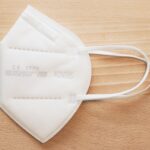
Andrews perceived a variety of red flags related to the purchase of the masks, per the lawsuit: the invoice was “vague,” and did not reference the purchase of masks; in addition, photos of the masks—which she requested from Director of Property Management Operations Larry Williams—showed that they had ear loops, which are a common sign of counterfeit KN95s according to the National Institute for Occupational Safety and Health.
Following Andrews’ questioning, the lawsuit says she received an email from Williams with a supposed certificate from the FDA attached, vouching for the masks’ legitimacy. The next day, she received an email from the FDA that said the manufacturer of the masks was not on its approved list of vendors. The email also said the FDA does not issue certificates to medical device establishments, meaning the one Williams issued would be considered a falsified government document.
Not long after, according to the lawsuit, Andrews received a call from Director Tyrone Garrett saying she had “gone too far with the masks.”
Andrews alleges that after the incident—and, in particular, after a phone call she had with two DCHA officials where she voiced the hostility she was feeling from Garrett, McQueen, and Williams—Garrett stopped answering her messages, canceled meetings with her, and became curt in their interactions.
On May 21, Andrews was told she was terminated, effective immediately, without the typical 60-days notice, per the suit. The next day, she received a notice of termination from then Director of HR Paulette Campbell, indicating that DCHA would continue to pay her for 60 days as though she’d gotten the notice, as well six months severance specified in her contract, according to the lawsuit. Andrews told Campbell at the time she believed her termination was in retaliation for investigating the masks.
The lawsuit alleges that firing Andrews in this way violated the terms of her contract by preventing her from accruing annual and sick leave, life insurance coverage, health insurance coverage, and other benefits in the 60 days she would have typically been given as notice.
When Andrews alleged to DCHA that Garrett was retaliating against her, the housing authority stopped her pay without notice, though they had initially agreed to pay her for 60 days and six months stipulated in her contract, the lawsuit says.
Garrett allegedly expressed concern that Andrews would openly discuss the procurement of the masks: “Mr. Garrett told others that he had concerns that Ms. Andrews may whistle blow about the illegal and unethical procurement of the counterfeit masks,” the suit says.
In a statement to the Washington Post in July after Andrews was fired, Garrett said: “The safety and security of all our residents is of paramount importance to DCHA.”
Andrews is suing DCHA on five counts, including termination in violation of D.C.’s whistleblower act, breach of contract, violation of D.C. wage payment laws, negligent supervision of an employee, and intentional interference with business expectancy (the latter two are addressed specifically at Garrett).
In an emailed statement to DCist/WAMU, Andrews said her role was to ensure the agency operated according to federal and local legal and regulatory parameters.
“At a time when COVID-19 is plaguing our nation and running rampant in black and brown communities (the majority of DCHA residents), it was paramount for me to do everything possible to ensure the safety of the team and the community we served, ” Andrews wrote. “I was terminated for doing my job and subjected to retaliatory and hostile treatment by DCHA leadership for conducting due diligence to ensure the safety of our staff and DC residents.”
This story has been updated to better reflect the time Tyrone Garrett has spent as DCHA’s executive director.