Joe Englert, local nightlife titan known for his numerous bars and restaurants all across the District, including on H Street NE, U Street, and in Capitol Hill, has died. He was 59.
The cause of death was complications from a recent surgery, WTOP reported. Englert leaves behind not just a nightlife legacy, but countless people in the local restaurant industry whose businesses opened because of him, and who say they will always recall Englert’s generosity.
“A lot of people started businesses because the money came from him, the ideas came from him, and the help came from him,” business partner and longtime friend Kyle Remissong told DCist.
Originally from Pennsylvania, Englert moved to D.C. in 1984. His former Penn State classmate Karen Jabo, who moved to D.C. at the same time, remembers him as the life of the party, often throwing huge gatherings in his 16th Street home.
“He was the party king. He’d always have potluck dinners, always have crowds of people,” she says. “He’d always be out to clubs or dancing.”
So, it only made sense when, in the late 1980s, Englert quit his day job and got into the nightlife industry.
It started with Club Random, a dance club conceived in the upstairs room of Danker’s, a then-steakhouse, Jabo says. A 1989 Washington Post review described the club as a “ranch house rec room” and noted its eclectic taste in music.
From there, Englert’s pace was relentless. Today, the list of bars and restaurants Englert has had a hand in, whether as the owner, investor, or just a helper, is expansive: The people close to Englert name The Rock, Capitol Lounge, Andalusian Dog, The Big Hunt, Planet Fred (which later became Lucky Bar), Granville Moore’s, and DC9.
But those who worked with Englert know him especially for his role in expanding nightlife on U Street and H Street NE.
Matthew Weiss, owner of Union Pub, who worked with Englert at PoliTiki in 1998, says Englert is partially responsible for the “revitalization of U Street” in the ‘90s.
“I’m a D.C. native,” Weiss says. “Back then, it was not a place where people went.” According to Washingtonian, Englert brought in “attention-getting” bars, like Soviet-themed State of the Union.
But beyond U Street, many will remember Englert for the explosion of business he brought to H Street NE in the early 2000s.
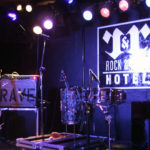
In 2005, Washington City Paper reported on Englert’s bold plans to open new establishments along the strip, at the time still heavily marked from the 1968 riots. His plans ranged from Grecian- to boxing-themed bars, all garnering mixed reviews from residents. In the beginning, he bought up eight buildings, and would go on to open establishments including The Red & Black, H Street Country Club, and the now-closed Rock n’ Roll Hotel.
The Washington Business Journal said Englert’s foray into H Street NE “would prove to be one of the District’s biggest commercial revitalization successes.”
But as those who knew him say, Englert did have a few critics. In a 2014 interview with neighborhood blog Capitol Hill Corner, Englert would defend his businesses along the H Street corridor, although he acknowledged that his own success sometimes came at the expense of other longtime retailers, especially non-food retailers.
“I was much more idealistic when I started H Street. I saw restaurants and bars as a way to get people back on the streets,” Englert said.
Tony Tomelden, the owner of The Pug, who became acquainted with Englert while DJ-ing at Lucky Bar and 15 Minutes in the ‘90s, says Englert was often cognizant of those who existed in the U and H Street neighborhoods before him.
“He was influential but he always knew the history before and I think that was part of the deal with him,” Tomelden says.
Englert also didn’t go without some business failures and setbacks, his colleagues say, yet he always remained positive. That much was clear in 2007, when the Capitol Lounge was hit with its second fire in two years, reportedly costing $100,000 in damages.
“He said, ‘We have insurance. It’ll come back better than ever,’” Jabo says.
Englert remained unstoppable throughout his life. His expansion of establishments was not just seen on H Street NE and U Street NW, but also Capitol Hill and Dupont Circle, including the Big Hunt where Remissong first met Englert.
Those who have been to the Big Hunt know it for its funky style, from the heads of past presidents on the wall to the decorative rib cage of the whale from Jonah and the Whale—all of which are a testament to Englert’s unique, and at times chaotic, taste in bars. There’s also the school bus inside Trusty’s on Pennsylvania Avenue SE and the Mobil Pegasus that hung in Toledo Lounge.
“He thought, ‘Wouldn’t it be crazy to do this?’ And then he did it,” Remissong says.
Tomelden agrees: “He would see obscure things and think that was pretty cool and he would build a bar around it.” Both note that Englert’s wacky design ideas were most often carried out by artist Lee Wheeler.
Englert not only brought his vision for bars and restaurants to fruition—he also helped many others in the industry in D.C. do the same. “He always moved people up,” says Tomelden, who opened the Capitol Lounge for Englert in the ‘90s.
In 1993, Englert asked sisters Mary and Stephanie Abbajay to meet him at a shuttered restaurant in Adams Morgan.
Inside, the purple walls were lined with mirrors and giant potted palm trees filled the space. “It was so gaudy,” Stephanie Abbajay recalled to DCist. But Englert had an idea.
“He said, ‘This is your new place. You and your sister need to open a bar here,’” Mary Abbajay says. The sisters were shocked. Both had worked in politics—Mary was in local government and Stephanie had recently started bartending for Englert after losing her job as a Bush administration appointee after President Bill Clinton took office.
“We were like, ‘You are crazy,’” Mary Abbajay says.
Nonetheless, with Englert’s help, the Toledo Lounge opened in 1994 and was well-loved until the sisters sold it in 2011.
“He doesn’t see problems where other people see problems. He just sees potential and success,” Stephanie Abbajay says.
Englert was known for building neighborhood bars, a lesson that continues to stick with other bar owners, like Weiss, the Union Pub owner. Weiss, who owns several other establishments as well, aims to make his own bars “the best place in the neighborhood.” That doesn’t always mean appealing to everyone.
“All of Joe’s places were not ultra-hip,” Weiss says, but their uniqueness and lack of pretentiousness contributed to why many became neighborhood hangouts.
“Joe instilled in me that if you just do something that you’re passionate about, and kind of put your flag out there, you hope that people respond and hope that they feel the authenticity of that,” Weiss says.
Englert’s willingness to offer advice extended to his own competition, too. “He didn’t care if you were going to open the place down the street from him. He wanted everyone to do well,” Weiss says.
Beyond being remembered for the unabated businessman he was, Englert is also remembered by his friends as a genuine and kind character. Both Abbajay sisters and Tomelden credit Englert with directly or indirectly introducing them to their now-spouses.
Meanwhile, Capitol Lounge regulars may recall Englert bartending during Sunday football games. From behind the bar, Englert knew everyone’s names and would readily make jokes about the teams, especially the Pittsburgh Steelers.“Everyone loved it,” Weiss says.
And through his success, Englert remained humble, his friends say.
“He didn’t have a voicemail. He didn’t have a business card. He wore shorts all winter long,” Weiss says. And in important restaurant industry meetings, Weiss says he would get a kick out of how Englert would introduce himself.
“He’d just say, ‘I’m Joe Englert from Capitol Lounge.’”