 Mikaela Lefrak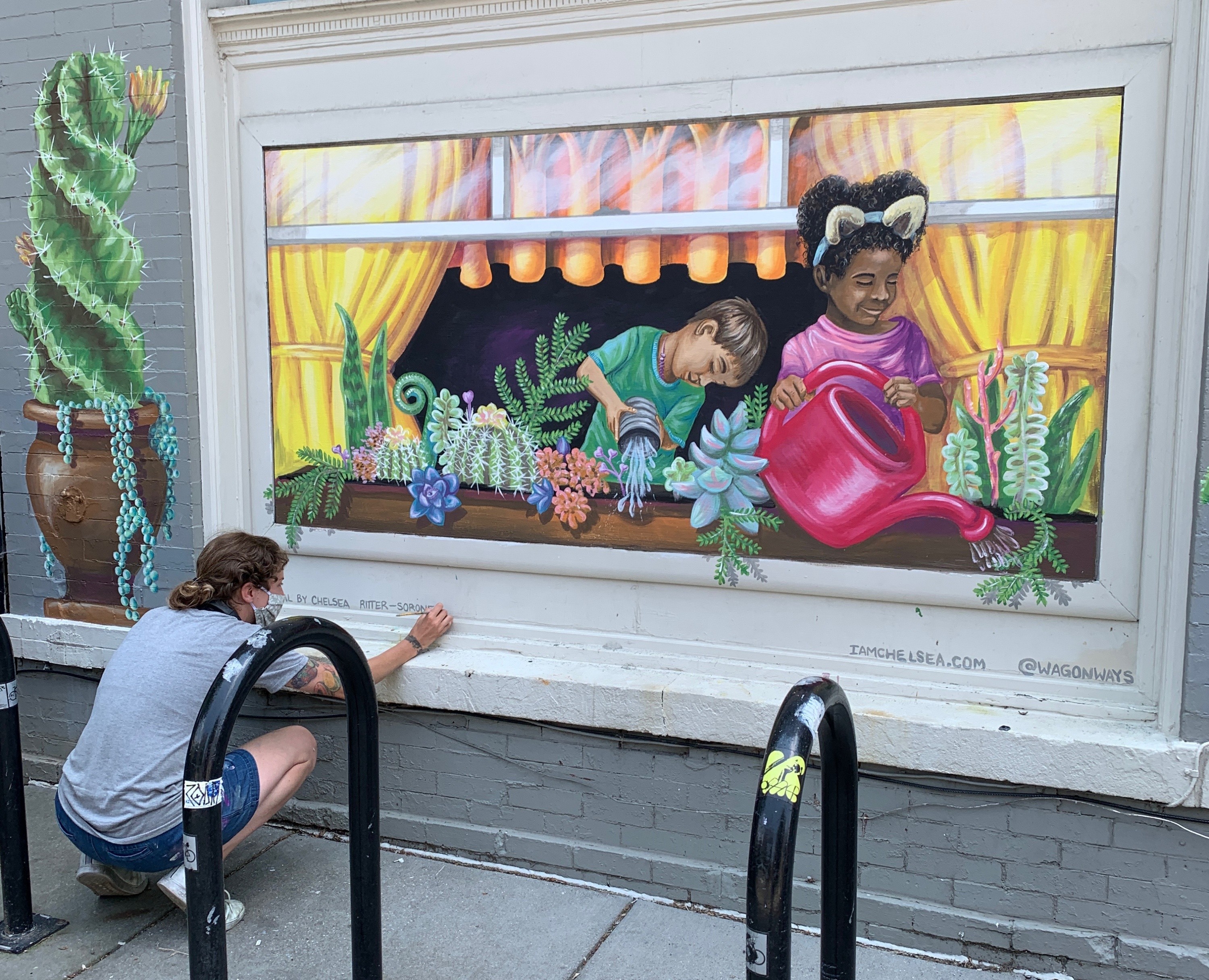
The coronavirus pandemic put an abrupt halt to paid work for most artists in the Washington region. Galleries, museums, music halls and performance venues have been shuttered for nearly six months, and many arts organizations have had to furlough or fire staff, including artists.
Muralists, however, have been relatively lucky. The city categorizes building and house painting as essential work, and some business owners who can afford an extra expenditure see the pandemic as a good time to invest in murals.
For some muralists, job opportunities continue to surface at a regular clip. But the work conditions are anything but ordinary, and the realities of life in a pandemic have begun to influence their art.
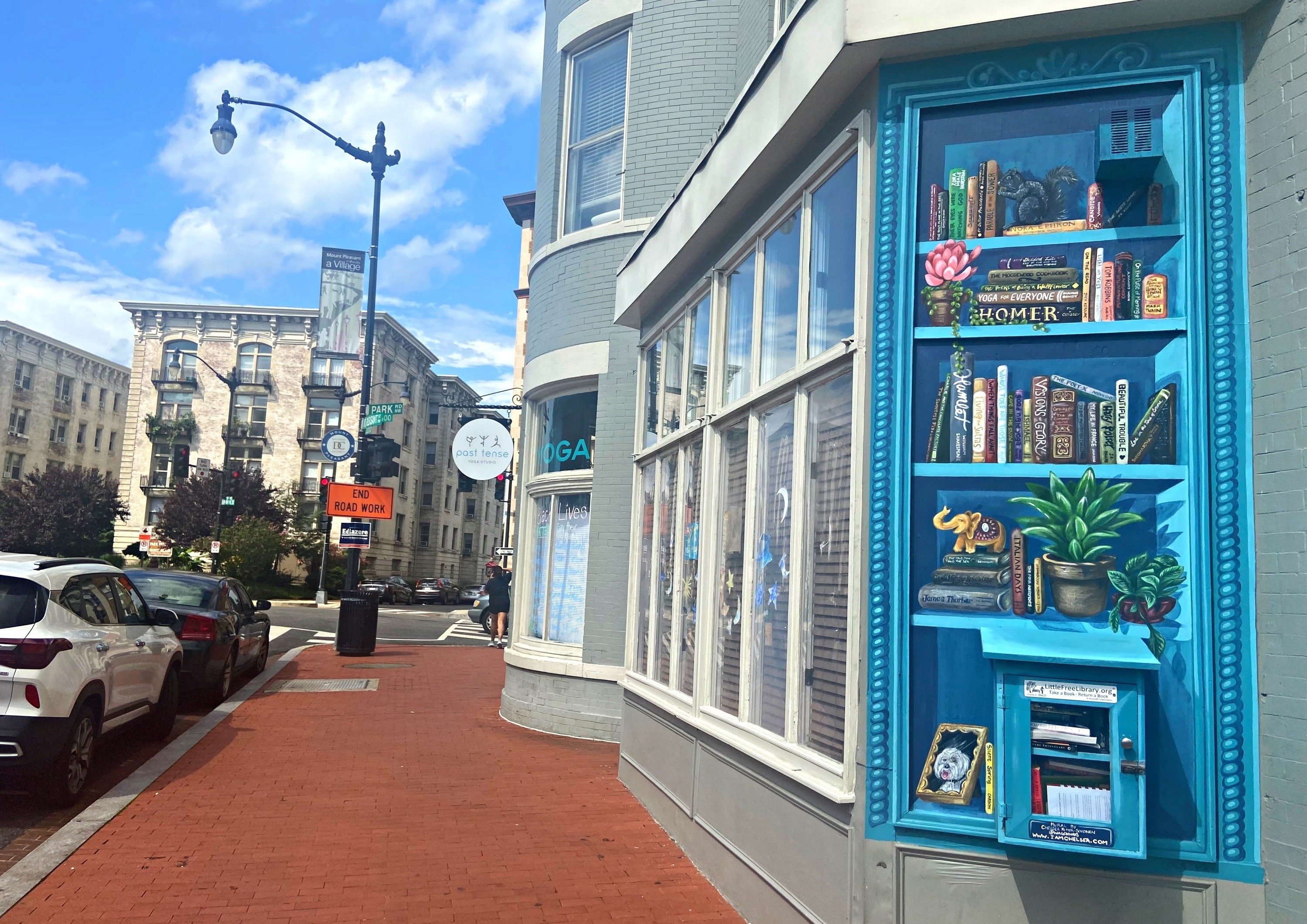
In late April, Chelsea Ritter-Soronen began painting the first of two commissioned murals at Past Tense yoga studio in Mount Pleasant, which was temporarily closed due to the pandemic.
Ritter-Soronen is an experienced street artist, but working on this project was unlike anything she’d done before. Instead of chatting with passersby and letting kids hold her paintbrushes, she got to her worksite 4:30 a.m. to avoid people as much as possible.
“People were so afraid of each other,” Ritter-Soronen says. She drew an outline on the sidewalk to keep people six feet from her work station. She wore a mask at all times.
But, she kept telling herself, at least she could work.
Ritter-Soronen earns part of her income as a chalk artist, creating sidewalk drawings and messages for businesses and private clients’ special events. She lost a dozen commissions at the beginning of the pandemic. But soon after, her mural work started to pick up. She secured the commission at Past Tense, as well as gigs at Mellow Mushroom and Tribute Fashion Collective in Adams Morgan.
The owner of Past Tense, Kelly DiNardo, says her decision to invest in a mural might have been a little hasty in retrospect. What she thought would be a temporary closure now has no end in sight. The yoga studio has been closed since March, and her landlord only agreed this month to reduce her rent.
“Because it was the beginning of the pandemic, I think I was a little naive about the finances,” DiNardo says. “But even now, knowing we’re in for a longer struggle, I don’t regret it…I think it brings so much to the neighborhood—this vibrancy and boldness and joy, at a time when we really need it.”
And, little by little, the world began to make its way into the art.
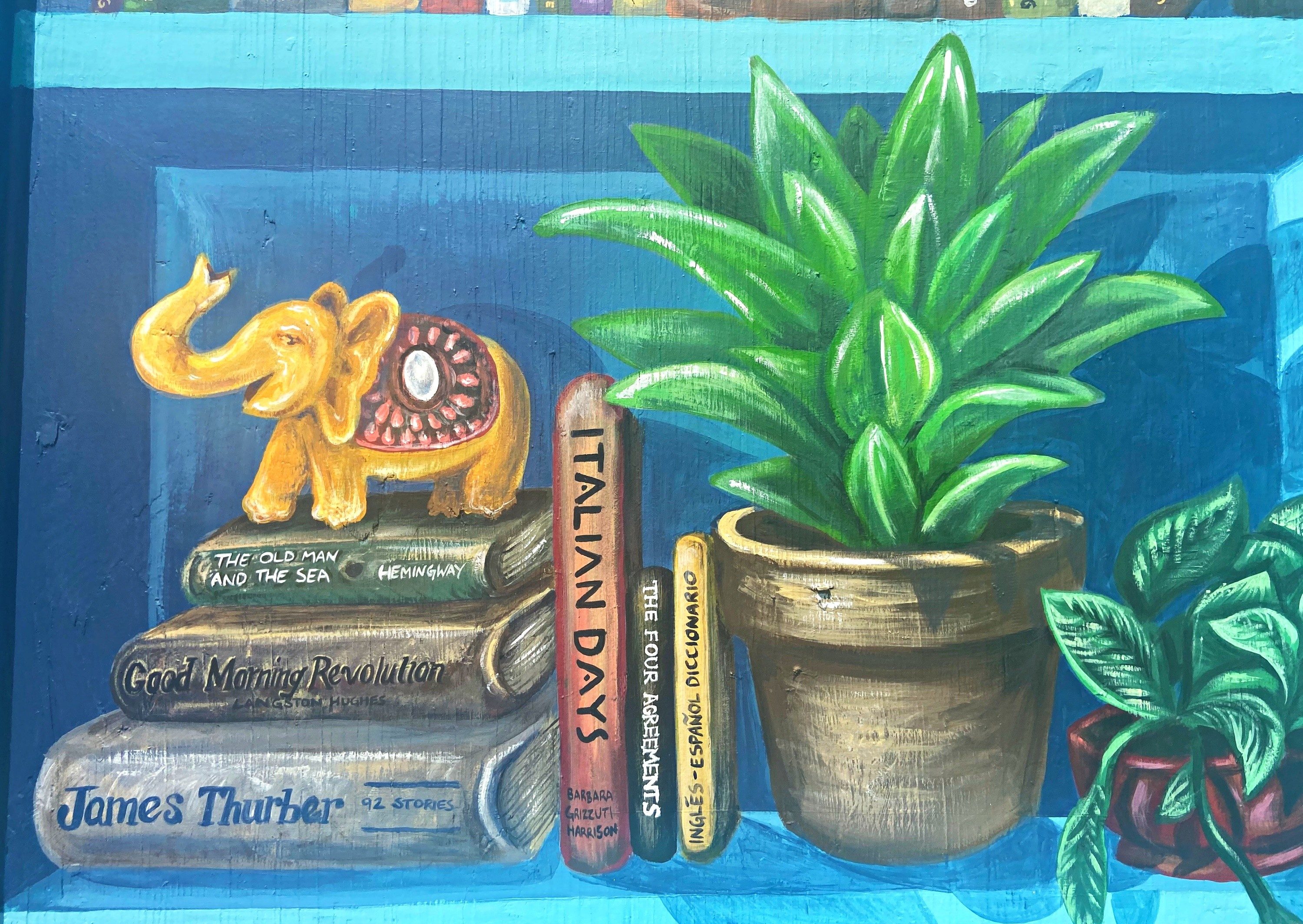
While Soronen was painting the first mural—a bookshelf that incorporated a blue Little Free Library on the wall—passersby started making suggestions for books to go on the painted shelf. One neighbor emailed DiNardo to say the titles lacked sufficient racial and geographic diversity. Ritter-Soronen added more titles by local authors, Black and Hispanic authors, and a Spanish-English dictionary to better reflect the neighborhood’s cultural makeup.

The independent yoga studio’s very presence is a potentially fraught symbol of how the neighborhood has changed. Mount Pleasant was a majority Black neighborhood through the 1970s. The Latino population grew significantly in the 1980s, with many immigrants from El Salvador arriving. Now the neighborhood is majority white.
“Yoga studios have an image of young, white, female,” DiNardo, who is white, acknowledged. “If a studio wants to be a community hub, it isn’t just on the mat.”
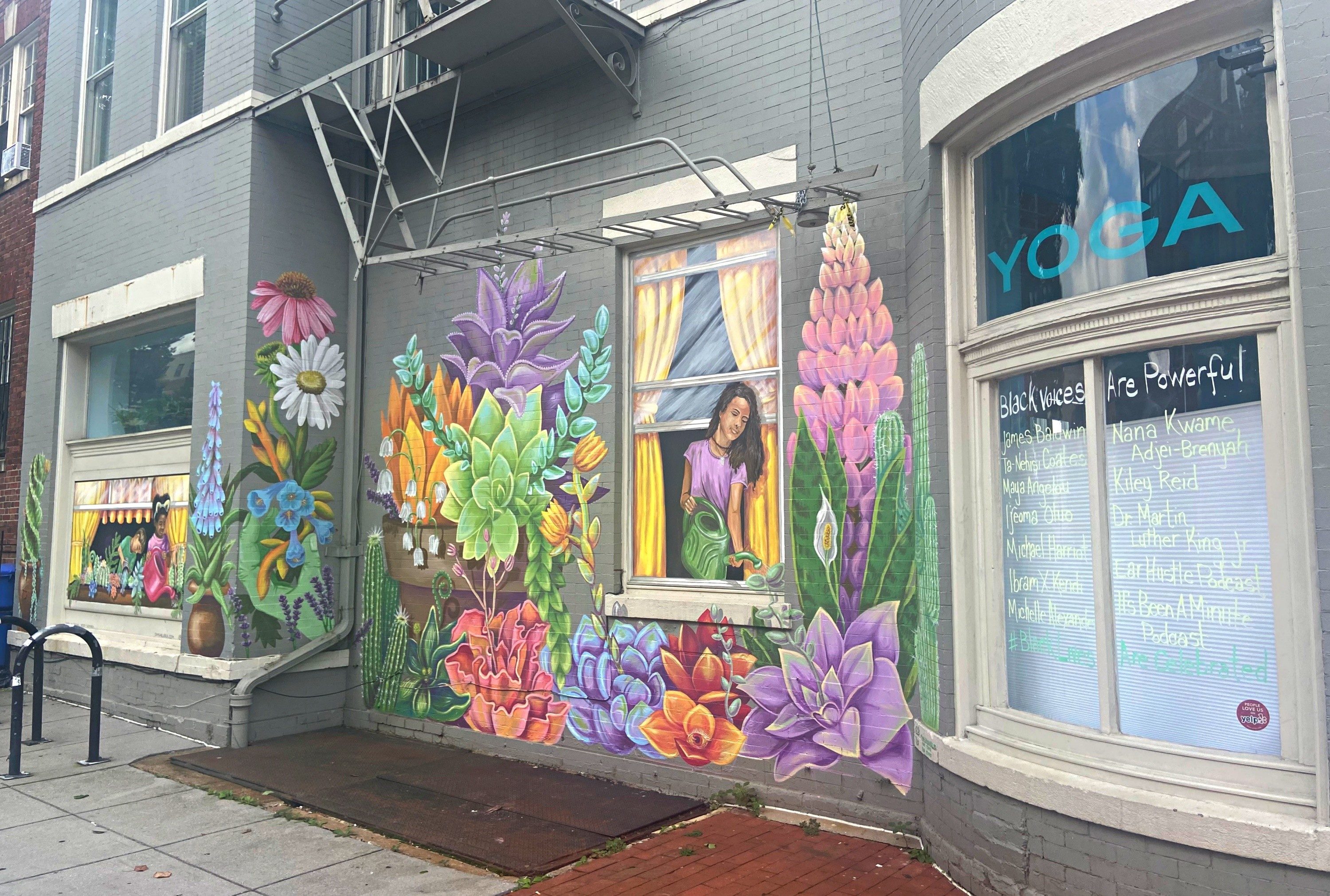
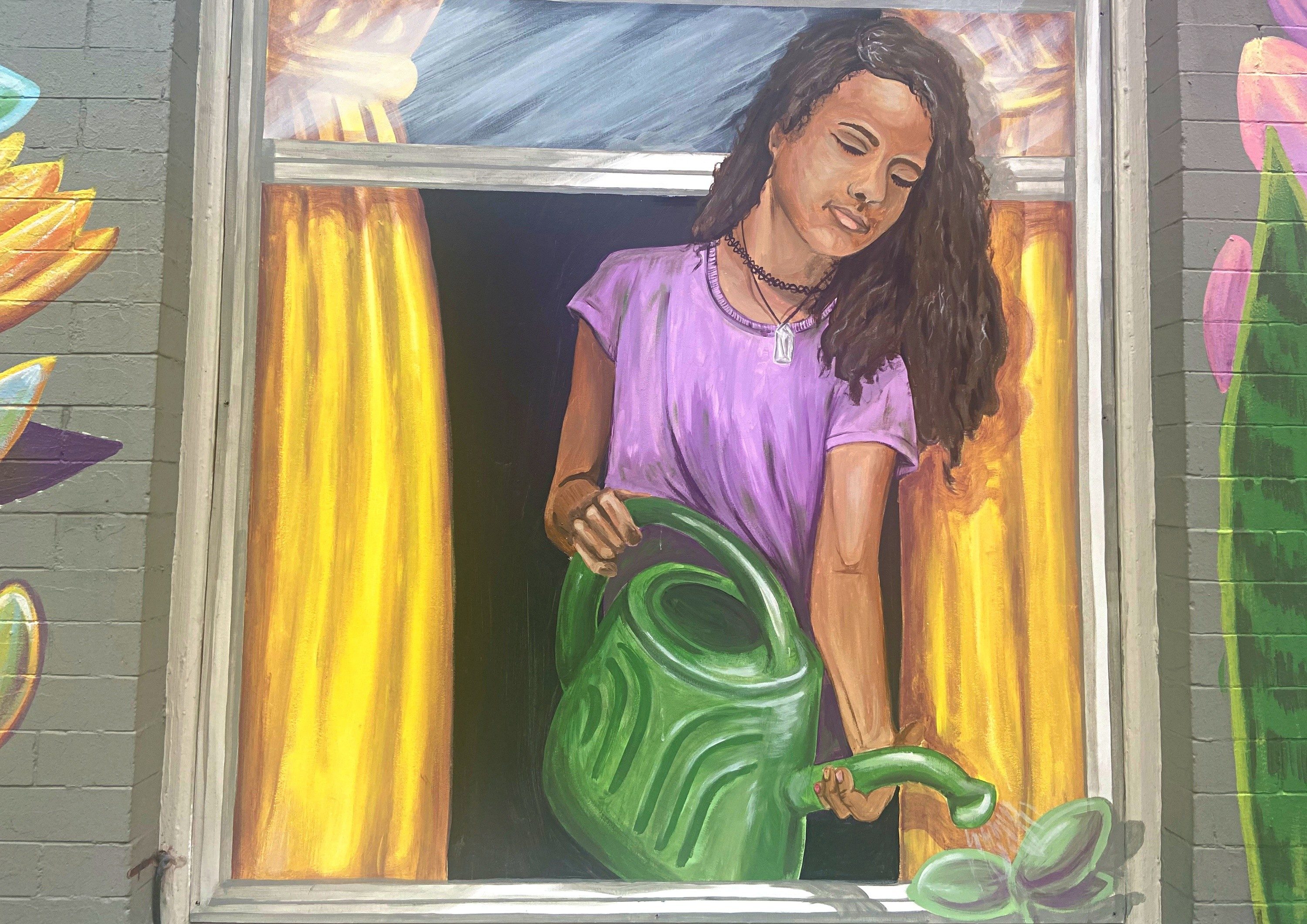
Once the bookshelf was finished, Ritter-Soronen went around the corner to work on a larger, garden-themed mural. The three kids in the mural are based on her best friend’s children, who live in Washington state.
“This was selfishly a way to keep them closer to me,” Ritter-Soronen says. “And given all the discussions around race today, it was also important to represent mixed families in America.” (Her friend’s two biological children are biracial, and her third child is adopted.)
By that point, it was early July, and having conversations on the street felt less like a health threat and more like a necessary means of connection.
“I got to meet more people in my neighborhood in two weeks painting everyday there than I have in a year,” Ritter-Soronen says. Like the bookshelf, the garden mural changed based on suggestions from the neighborhood. For one, she incorporated a peace lily on the suggestion of a Sudanese immigrant named Oliver who stopped to chat one day.
The finished mural features many varieties of succulents, a major source of inspiration for Ritter-Soronen. She also hopes they resonate with all the people channeling their energy into houseplants these days.
“Often succulents and cacti will randomly blossom when you least expect it,” she says. “I think there’s a lesson in that too.”