Jacob Fenston
This story was updated at 11:45 a.m.
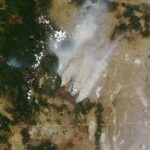
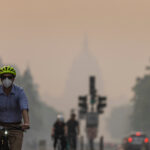
The sky in the D.C. region has had an eerie glow this week, the sun at times an orange orb glowing weakly through a layer of haze. That haze is smoke from wildfires raging some 2,500 miles away, according to the National Weather Service.
The West is burning, with more than 4 million acres charred across 10 states. It’s one of the worst fire seasons in history. More than 30 people are dead and many more are missing. Air quality in Portland is the worst in the world, and skies in the Bay Area turned a dark, sci-fi orange.
Now, smoke from the fires has drifted across the country, dimming the sun and possibly cooling the temperature on the East Coast. Plumes have stretched across most of the continental U.S. and much of Canada, and are creeping north toward Greenland across the Labrador Sea.
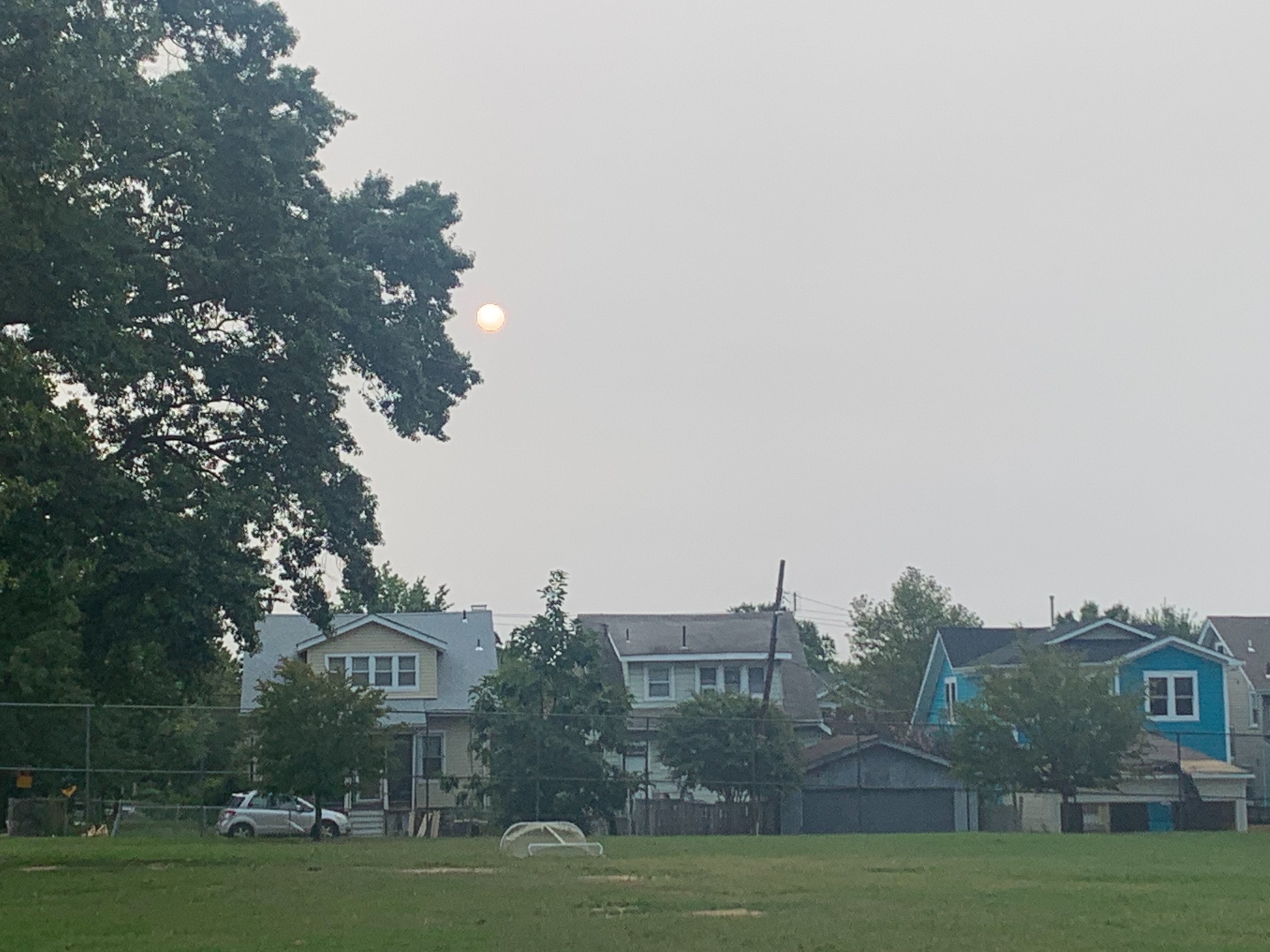
“Smoke from wildfires will likely continue to obscure the sky to some extent,” according to the National Weather Service forecast for D.C. on Tuesday morning. Because of the smoke, high temperatures in D.C. “could be a couple degrees cooler,” according to the NWS forecast.
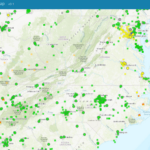
In D.C., the air quality has remained good, despite the hazy appearance. This is because the smoke is high above the region, in the jet stream. However, smoke from distant fires could make air unhealthy if weather conditions change and the smoke descends.
Air quality monitors in D.C. have not registered any smoke at ground level, according to a spokesperson with the Metropolitan Washington Council of Governments, which tracks air quality in the region. The smoky layer is about 3 miles above the city, according to the spokesperson. “The region’s air quality forecasters will be tracking this over the next few days,” she wrote in an email to DCist.
Smoke in the atmosphere changes the color of light in much the same way that sunsets and sunrises. Particles in the smoke allow longer wavelengths of light through — like red and orange — but they block out shorter wavelengths, like yellow, blue and green.
This story was updated to include more information from MWCOG.