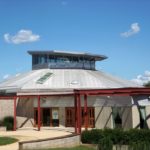
Montgomery County loosened health and safety restrictions on houses of worship on Tuesday following requests from faith leaders.
County Executive Marc Elrich issued an updated executive order outlining new guidelines that allow for larger gatherings, after consulting the county’s health officer, Dr. Travis Gayles, according to a press release. It was unanimously approved by the county council.
The new guidelines, which will go into effect at 5 p.m. Tuesday, state that houses of worship can determine gathering size “by dividing the total square footage of the worship space by 50,” with a maximum of 40% of permitted occupancy.
Religious facilities in the county, including churches, synagogues, mosques, temples, and other similar facilities of any faith, were previously required to cap attendance at one attendee or household group per every 200 square feet of religious ceremony space. Earl Stoddard, head of emergency management in Montgomery County, said the restrictions were updated at the urging of faith leaders, according to The Washington Post.
Rabbi Herzel Kranz of the Orthodox Silver Spring Jewish Center in Kemp Mill, who was among religious leaders who have called for the county to loosen restrictions on religious gatherings in recent months, told the Post, “It’s not completely what we wanted. But it’s enough for now.”
The county, however, has capped indoor dining capacity at 50%, after Gov. Larry Hogan announced last week that restaurants could increase to 75% capacity, marking Maryland’s first Restaurant Week. Montgomery County is among several counties in Maryland that opted to remain in Phase 2 of reopening, while the rest of the state began moving into Phase 3 earlier this month.
Hogan previously announced that houses of worship and retail stores could increase capacity from 50% to 75%, though local jurisdictions are legally allowed to make their own decisions regarding moving into Phase 3.
Montgomery County officials previously said the decision caught them off guard.
“I am disappointed because none of the elected officials in the state got consulted on this,” County Executive Marc Elrich said at a briefing earlier this month. “Nobody asked us what we know. What do we think? What are you hearing? What are you experiencing?”
The county has recorded over 21,000 cases of COVID-19 and more than 800 deaths.
Officials have allowed some previously closed businesses and venues — including museums, bowling alleys, and soccer fields — to reopen, but has not provided a timeline for moving into Phase 3.