 Jordan Pascale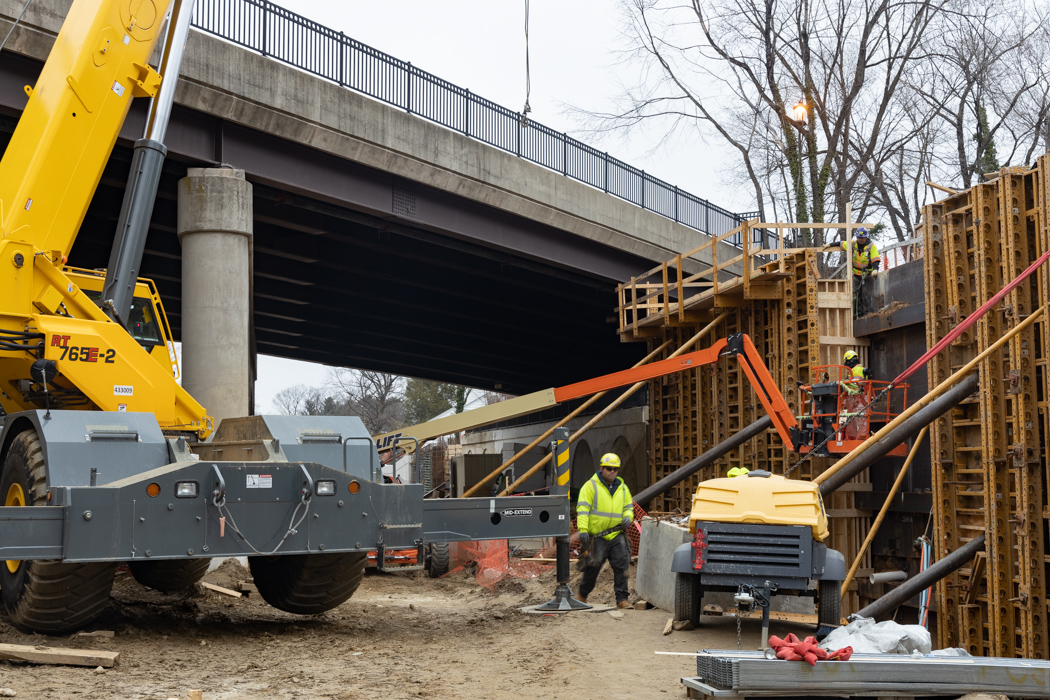
Contractors working on Maryland’s Purple Line light rail line are starting to wrap up their work sites after a judge ruled earlier this month that the private partner building the project could leave because of delays and cost overruns.
Bridges are half-built, roads still are torn apart and other work remains across both Prince George’s and Montgomery counties. The line is about half done.
State transit officials told the Prince George’s County Council that subcontractors will continue to pack up into next week, the Washington Post reports.
The developments could add one or two years of delay to the already-late project. That could push the opening into 2026. It was originally scheduled to open in March 2022.
The question is how long will it take for Maryland to either find a new private partner to build the line or take over management of the project itself.
Maryland Transit Administrator Kevin Quinn said they’re still “evaluating” whether to keep the project in-house or hire a firm to take over for Purple Line Transit Partners (PLTP), Maryland Matters reports.
“It’s a little too early to speculate and we’re looking at about a 4-to-6 month period to evaluate that,” he said. “What I can say is there are a number of good contractors in this market who want to take on this work.”
The state could also settle with PLTP over the $800 million which would put the construction subcontractors back to work, but that appears to be increasingly unlikely.
On Sept. 10, PLTP said, “PLTP continues to strongly believe that a settlement of its delay and compensation claims… is the best interest of itself… and all others stakeholders involved.”
Negotiations have not been successful.
The Post reports Matthew Pollack, the state’s Purple Line project director, said the construction contractors “will, in essence, hand over the keys to their storage yards and all their protected fenced-in areas, and the project would then come under the state’s management.”
The state would then seek to work with those subcontractors.
Maryland has committed to finishing the line.
But the additional costs will likely drastically affect funding for other transportation projects in the state including transit, highways, MARC commuter rail and more.
In public-private partnerships, the private company takes on the burden of risk and cost while the state retains ownership. PLTP was responsible for partially financing, plus designing, constructing, operating and maintaining the project.
In this case–one of the largest public-private partnerships (P3) ever–it did not work. The state is also exploring a P3 for expanding and adding express toll lanes to the Beltway.
Public officials and residents in both counties have been frustrated by the stalled project and what further delays could mean for residents dealing with the construction and the future of the line.
Prince George’s County Councilmember Dannielle Glaros called the situation “an absolute massive failure.
“Leaving abandoned, half-completed infrastructure for a year is just not going to work.”