Morgan Baskin
When D.C. Attorney General Karl Racine took the extraordinary step of suing the city’s public housing authority in June over failures to keep many of its properties safe, executive director Tyrone Garrett lambasted his own staff.
In a public statement at the time, Garrett implied that the fault lay with his own employees and that he had limited knowledge of the allegations: “The filing indicates that the Attorney General’s office failed to receive timely and complete cooperation on several of these matters during the course of their planning and discovery,” Garrett said. “If true, this is completely unacceptable behavior from DCHA staff.”
But correspondence dating back to June 2019 between Racine’s office and the DC Housing Authority, obtained by DCist, shows that a senior member of Garrett’s legal team — chiefly, general counsel Kenneth Slaughter — was notified of the myriad safety issues at 10 DCHA properties roughly a year before Racine filed the lawsuit. (Earlier this month, Racine and Garrett reached a settlement agreement.)
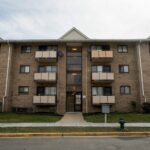
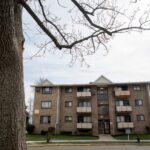
The documents, obtained by DCist through the Freedom of Information Act, include five separate Notices of Unlawful Activity that detail dozens of incidents of drug- and firearm-related crimes at public housing complexes in D.C., including Syphax Gardens Apartments, James Creek Apartments, LeDroit Apartments, Arthur Capper/Carrollsburg, and Langston Terrace. Incidents outlined in the notices span from January 2018 to June 2019.
The notices warn that the attorney general’s office “may take action” against property owners who neglect to remediate nuisance-related issues and repeatedly urge Slaughter to “meet with members of the Office of the Attorney General” and respond to the notices within 14 days of receipt.
“The law places the responsibility on you to ensure that your property is not used in a manner that is detrimental to the welfare of the surrounding area,” the notices state.
Sending notices of unlawful behavior to property owners is “an early step after getting proof of nuisance activity” and is typically followed by a mediation process, says Marrisa Geller, a spokesperson for the Office of the Attorney General. In the District’s complaint against DCHA, the attorney general’s office notes that DCHA “failed to provide either a substantive response or schedule a meeting” with OAG after receiving the notices.
DCHA has refuted this characterization of its response to the OAG and maintains that once Garrett personally learned about OAG’s attempts to reach out to the agency, he took steps to address the office’s concerns. (In his public statement about the lawsuit in June, Garrett said that DCHA would launch “a thorough internal investigation into these alleged failures to respond.”)
“Since becoming aware of OAG’s efforts to engage with DCHA on these matters, our Executive Director pledged to work closely with OAG to address the issues provided in their complaint. DCHA advanced its plans to create enhanced security systems for our properties,” Jose Sousa, a spokesperson for the Authority, told DCist in an emailed statement. “Many other operational initiatives outlined in the [settlement] agreement were previously planned by DCHA or were already being performed.”
Sousa also noted that the DC Housing Authority hired a new general counsel in August 2020.
Aside from throwing into question Garrett’s public response to the lawsuit — including the implication that it was lower-level staff who mishandled the Authority’s response to OAG — the documents also show the extent to which public housing property conditions continue to degrade, even as Garrett makes plans to redevelop much of the Authority’s portfolio. Many of the buildings targeted in OAG’s lawsuit, for example, host some of the worst living conditions among DCHA’s properties.
The notices also illustrate that the strategy Racine used to compel DCHA to address property and safety conditions reflects a “tough on crime” approach to the public housing community that relies on the Metropolitan Police Department making dozens of arrests, often for low-level drug offenses. Several of the incidents outlined in OAG’s notices include arrests for public consumption of marijuana, possession of marijuana, and intent to distribute marijuana, crimes that Black people in D.C. are disproportionately charged with.
The incidents described in OAG’s initial notices, which also include arrests for burglaries, possession of PCP and unregistered guns, and carrying guns without a license, would go on to serve as the bulk of its complaint against the Authority. The complaint accused DCHA of violating D.C.’s Drug-, Firearm-, or Prostitution-Related Nuisance Abatement Act for failing to address those drug and gun crimes.
“DCHA [is] refusing to address systematic drug- and firearm-related activity at ten (10) of its properties. More than 5,000 community members are affected by the violent criminal activity at DCHA’s properties,” the complaint says.
In September, OAG and the Housing Authority agreed to a nearly multimillion-dollar settlement agreement that will see DCHA “install and maintain lights and security cameras, hire additional security personnel, secure vacant units, perform daily inspections, and perform frequent property maintenance,” OAG said at the time in a public statement.
As part of the agreement, DCHA must also invest $500,000 in violence interruption programming over a five-year period, routinely engage with property residents to ensure safety, and submit monthly compliance reports to Racine’s office.
This story has been updated to correct the date that DCHA hired its new general counsel.