 Christian Zapata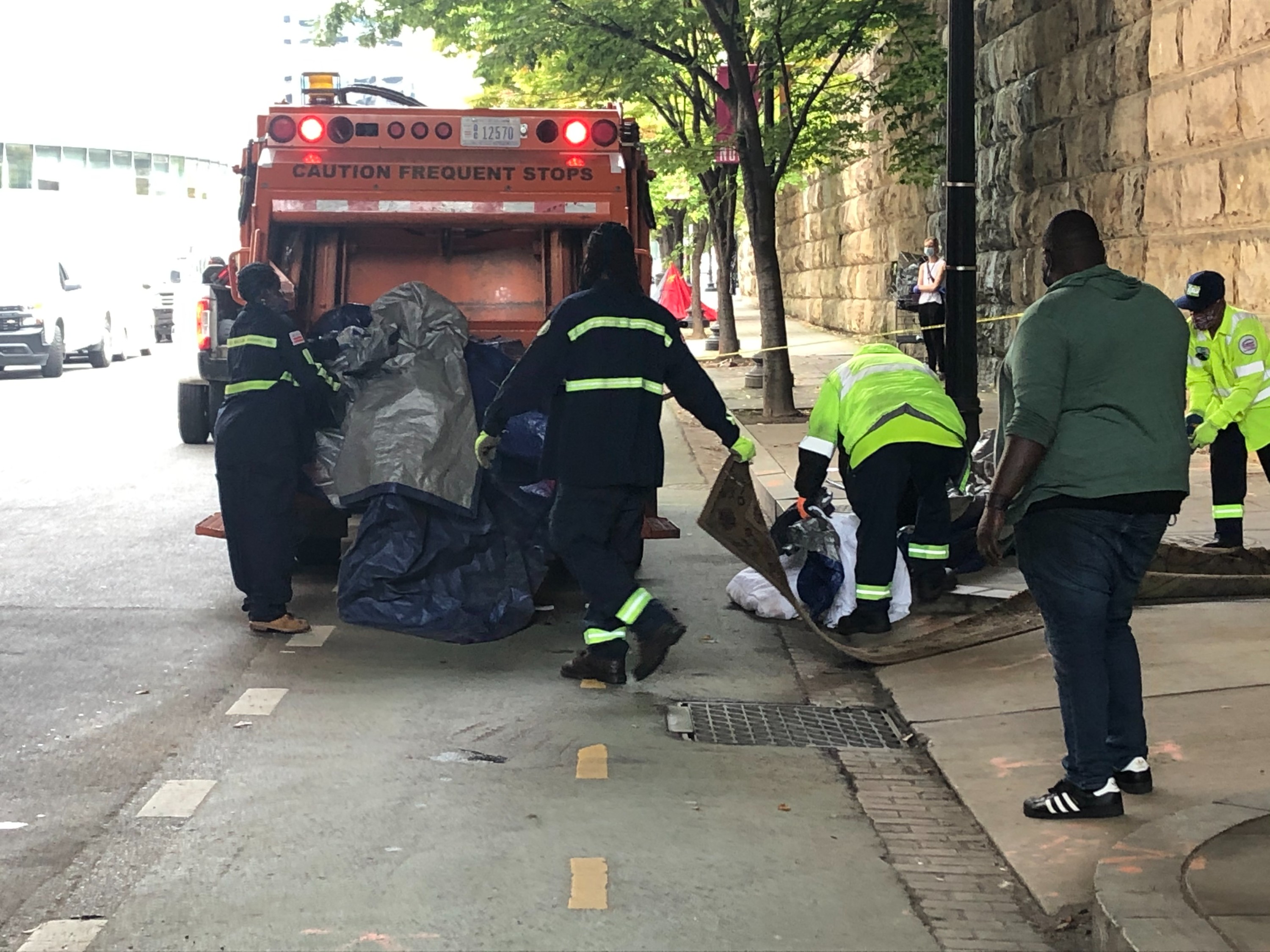
Charles Bailey started living at an encampment on New Jersey Ave and O Street a few weeks into the public health emergency.
Not long into his stay between April and May, the District scheduled one of its periodic encampment cleanups in the area, meaning Bailey had to move the weathered tent he called home and all of his belongings a few feet from where he was staying.
But when Bailey tried to pitch it back up, it wouldn’t stay. “We had to go over and get donations and buy another tent because the tent I had was so used,” he says. “Once you took it down, you couldn’t get it back up.” Bailey ended up spending the next two nights sleeping on the ground out in the open.
Every time the District conducts a full cleanup, or “engagement,” as the city calls them, encampment residents are given two weeks’ notice before they have to vacate the premises for the city to clean. This was the second full cleanup Bailey had been through since he moved to the spot earlier this year, and well into the city’s response to COVID-19, which has had an especially devastating effect on the homeless community.
Though the city has taken measures to protect homeless residents against the coronavirus, by installing handwashing stations and port-a-potties near encampments, advocates say that officials’ practice involving so-called engagements have run up against Centers for Disease Control and Prevention guidance.
At the start of the pandemic, the CDC advised cities not to conduct full homeless encampment cleanups, which temporarily displace people experiencing homelessness, cautioning that they could increase spread of the virus. But D.C. and a number of cities across the country have continued the practice, raising alarm bells among local advocates who fear the potential harm to unhoused residents.
According to recently updated CDC guidance, forcing encampment residents to move out can also be a health risk. “Clearing encampments can cause people to disperse throughout the community and break connections with service providers. This increases the potential for infectious disease spread,” the organization says.
Between the start of D.C.’s public health emergency on March 11 up through Aug. 20, the city carried out eight full engagements (some of which included power washing the streets) and 18 trash-only cleanups.

Reginald Black, advocacy director for the People For Fairness Coalition, says the “push around and push out” that encampment cleanups cause has destabilized the work that his group and Ward 6 Mutual Aid Network are doing to equip people experiencing homelessness with Personal Protective Equipment and other essential supplies.
“People are in this rush to get back to normal,” he says. “Normal for the homeless community is constantly being pushed around, having to, you know, scramble for everything. Right now, there’s a little more stability because people have to stay in place to keep themselves safe … It’s not helpful that [the city is] coming around to say ‘You have to clean, you have to move.’”
For people living in encampments, being part of a community is an essential way to gain access to other resources like food and water. Maurice Cook with the Ward 6 Mutual Aid Network has worked alongside organizers from the People For Fairness Coalition to distribute supplies to people in encampments since April and says it’s difficult for someone to regain access to that support system once they’ve been displaced.
“[People experiencing homelessness] know to survive on very little because they are aware of resources that are readily available to them,” he says. “When you displace them they lose these networks, they lose these community access points to acquire the basic resources that they need to survive.”
A spokesperson for the Office of the Deputy Mayor for Health and Human Services, which oversees encampment cleanups, told DCist/WAMU that the city has been limiting full cleanups and conducting trash-only cleanups since the pandemic started.
“The CDC guidance is just that, it is guidance,” says a spokesperson from the Deputy Mayor’s Office. “It’s not law, it’s not a requirement. It’s guidance based off the professionals on how to try and keep people safe, and the reasons that they cite in there are to not displace people in encampments so that they move to other locations and potentially spread the virus.”
The office also refuted the assertion that encampment residents are separated from the community during cleanups. “We know that in D.C. most of the folks after a cleanup come right back to the same location,” the spokesperson says.“We are not displacing people.”
Black, of the People For Fairness Coalition, says that while many people do return to their encampment after a cleanup, even temporarily moving people is considered displacement.
“For the moment they literally have to pick up their things and go somewhere else,” he says. “And just because they come back, that doesn’t mean they’re not displaced from an actual residency in the city, one that is safe and habitable to be in.”
Black says that process forces people experiencing homelessness to make a decision: stay in D.C. or move elsewhere. If they leave, they risk severing their connection to essential resources.
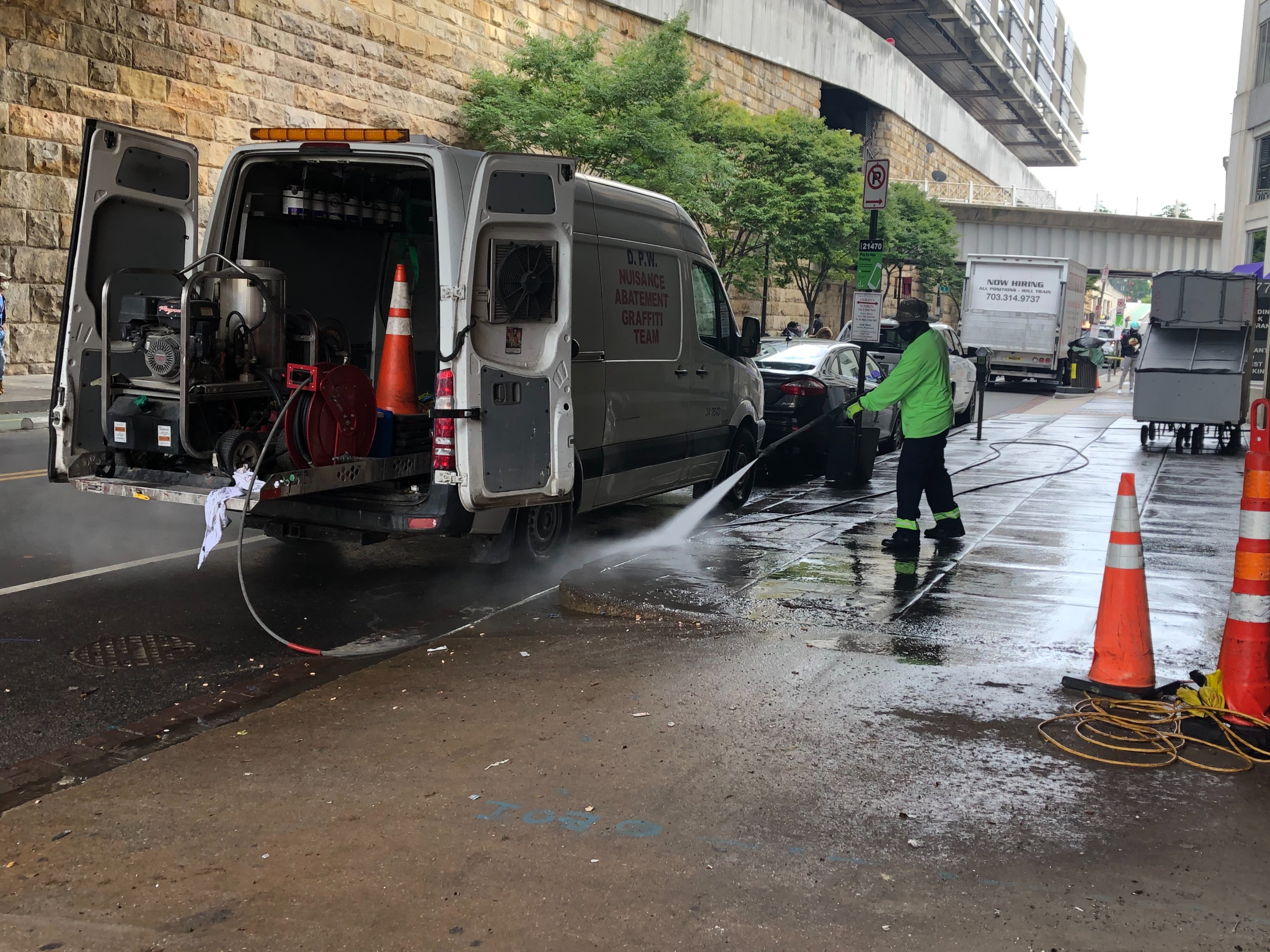
The District has been on a regular twice-a-week cleanup schedule — with exemptions for inclement weather — for the last several years, says Ann Marie Staudenmaier, an attorney at Washington Legal Clinic for the Homeless. She has petitioned for the Office of the Deputy Mayor for Health and Human Services to stop conducting full engagements since the start of the pandemic.
“The reason that [the city gives] for deviating from the CDC guidance … is that these are emergency health and safety issues that are raised that they have to deal with, and so they have no choice but to do a full engagement,” she says.
But Staudenmaier says that at New Jersey Ave and O Street, where Bailey is staying, there is no imminent health and safety concern that would have required the city to clean. The site has had some of the most complaints from neighbors than anywhere else she has seen in the city. DCist/WAMU has reached out to the city to confirm whether there was an immediate health or safety concern at the encampment site.
“Our belief is that these full engagements are not driven by health and safety reasons, they’re driven by the number of complaints and sort of loudness of the complaints from the neighborhood,” Staudenmaier says. Other advocates that DCist/WAMU spoke with echoed these concerns.
Bailey says that when the city came to conduct a cleanup, workers mostly just picked up trash.
“All they did was come through here and sweep, so what’s the point of taking the tents down if all y’all did was sweep?” he says.
The Office of the Deputy Mayor for Human Service tells DCist/WAMU that it is not scheduling engagements around the number of complaints it receives.
When asked why the city has continued to schedule full engagements during the public health emergency, the office said certain instances (such as excessive rodents) still require full cleanups.
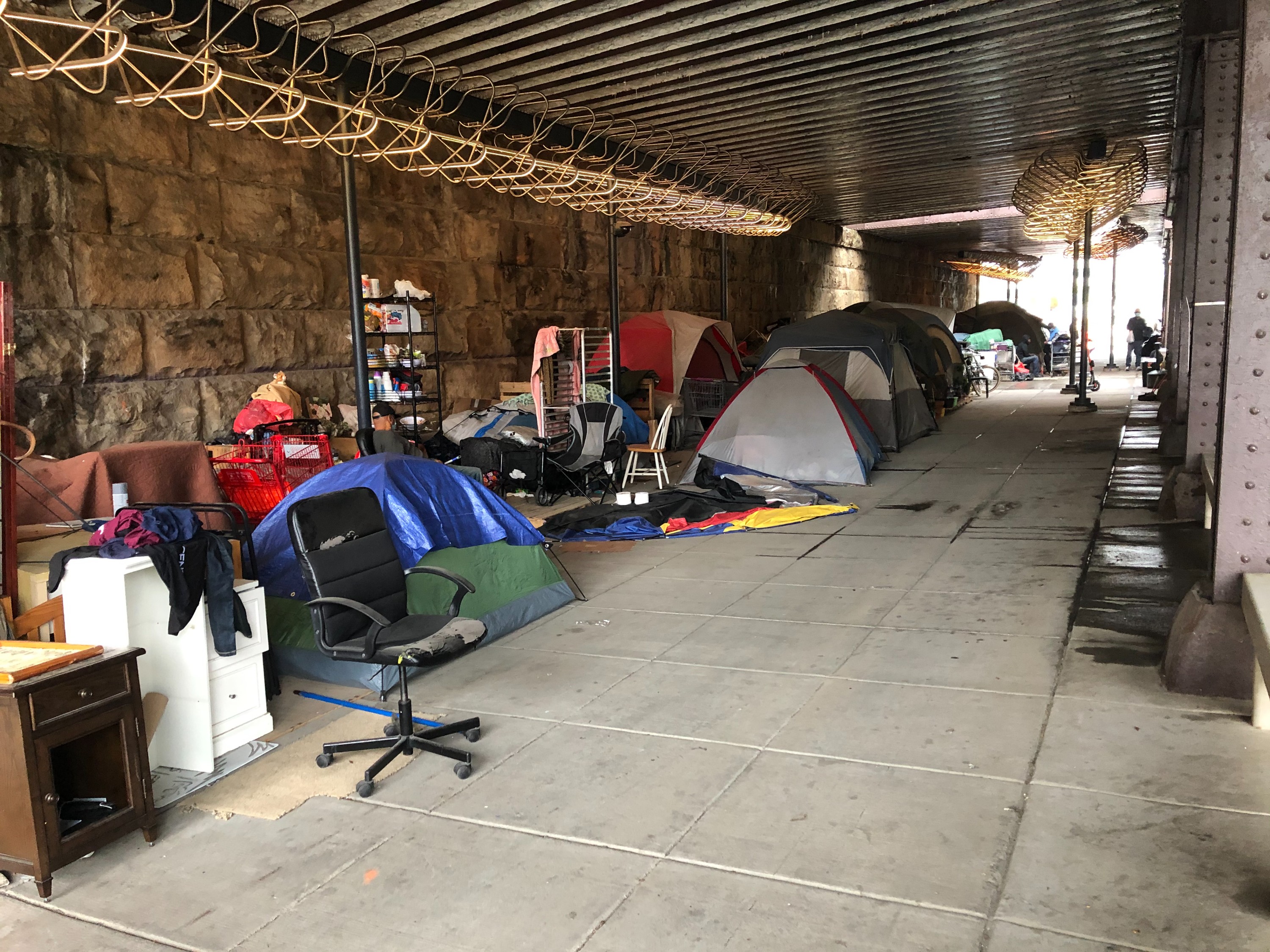
Encampment cleanups have long been a contentious issue in the District. For years, advocates and nearby residents have petitioned the city to stop full cleanups because they displace unhoused residents and instead asked officials to offer long-term solutions, including building more affordable housing. Other housed residents, meanwhile, have complained that encampments make it difficult to walk through parts of the city and can pose a danger.
Among the most notable instances of recent public outcry was an open letter published last year by the NoMa Business Improvement District citing resident complaints that conditions at the encampments on K Street were worsening. The letter alleged that people were being harassed, menaced, and aggressively panhandled, and cited “bloody hypodermic needles and other drug paraphernalia, rotting food, trash, broken glass, public nudity, prostitution, sales of illegal drugs, and human urine and feces” encountered by people walking through the area.
The city permanently shut down the encampment in January, citing a high number of tents crowding the sidewalk. “We were noticing over time that pedestrians were stepping into the street to not interfere with the encampments,” Wayne Turnage, the D.C. deputy mayor for health and human services, said at the time. “We needed to address it before someone got hurt.”
During the public health emergency, encampments have become an alternative to shelters, which have been a hotbed for the coronavirus, and temporary hotel rooms that the city has set aside for those who test positive for COVID-19 until their two-week quarantine period ends.
Washington Legal Clinic for the Homeless started a petition earlier this year addressing the need for non-congregate placements, or uncrowded spaces to house people with COVID-19 or who have been exposed to the coronavirus, for all people living on the street during the pandemic. They asked D.C. Mayor Muriel Bowser to provide universal testing and affordable housing as part of the District’s pandemic response.
The homeless community has faced disproportionate rates of infection and death from COVID-19. As of Oct. 11, an estimated 7% of people staying in shelters have contracted COVID-19 — that’s based on a point in time count that tracked the number of people staying at shelters in the city on a given day in 2019.
Charles Bailey knows he’ll do what it takes to survive, but he’s not just taking care of himself. He looks after his friend Rick, a 70-year-old veteran, who’s in a wheelchair and relies on him to use the bathroom, pick up his mail, remind him to eat, and watch that his belongings don’t get stolen.
Bailey knows that if it weren’t for him, Rick would have a hard time accessing those essential resources and moving his belongings during cleanups, the same goes for many of the elderly and disabled people living at the encampments.
“It’s only going to get worse,” he says. “Every day people are looking for a way to survive.”
This article is part of our 2020 contribution to the DC Homeless Crisis Reporting Project, in collaboration with other local newsrooms. The collective works will be published throughout the day at DCHomelessCrisis.press. You can also join the public Facebook group or follow #DCHomelessCrisis on Twitter to discuss further.