The area’s first monument honoring women in the military was unveiled at the Women In Military Service For America Memorial in Arlington National Cemetery during a private ceremony on Saturday.
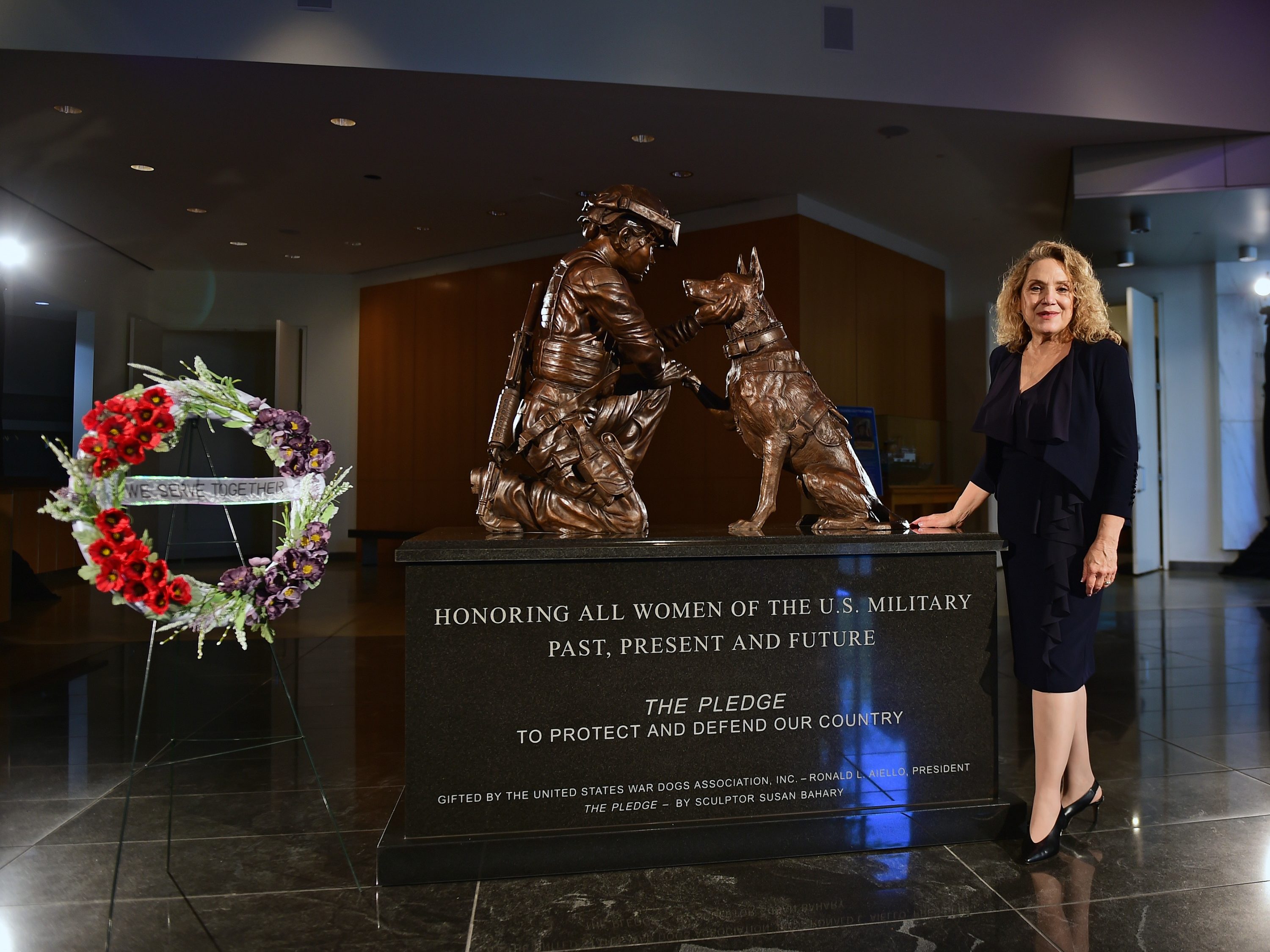
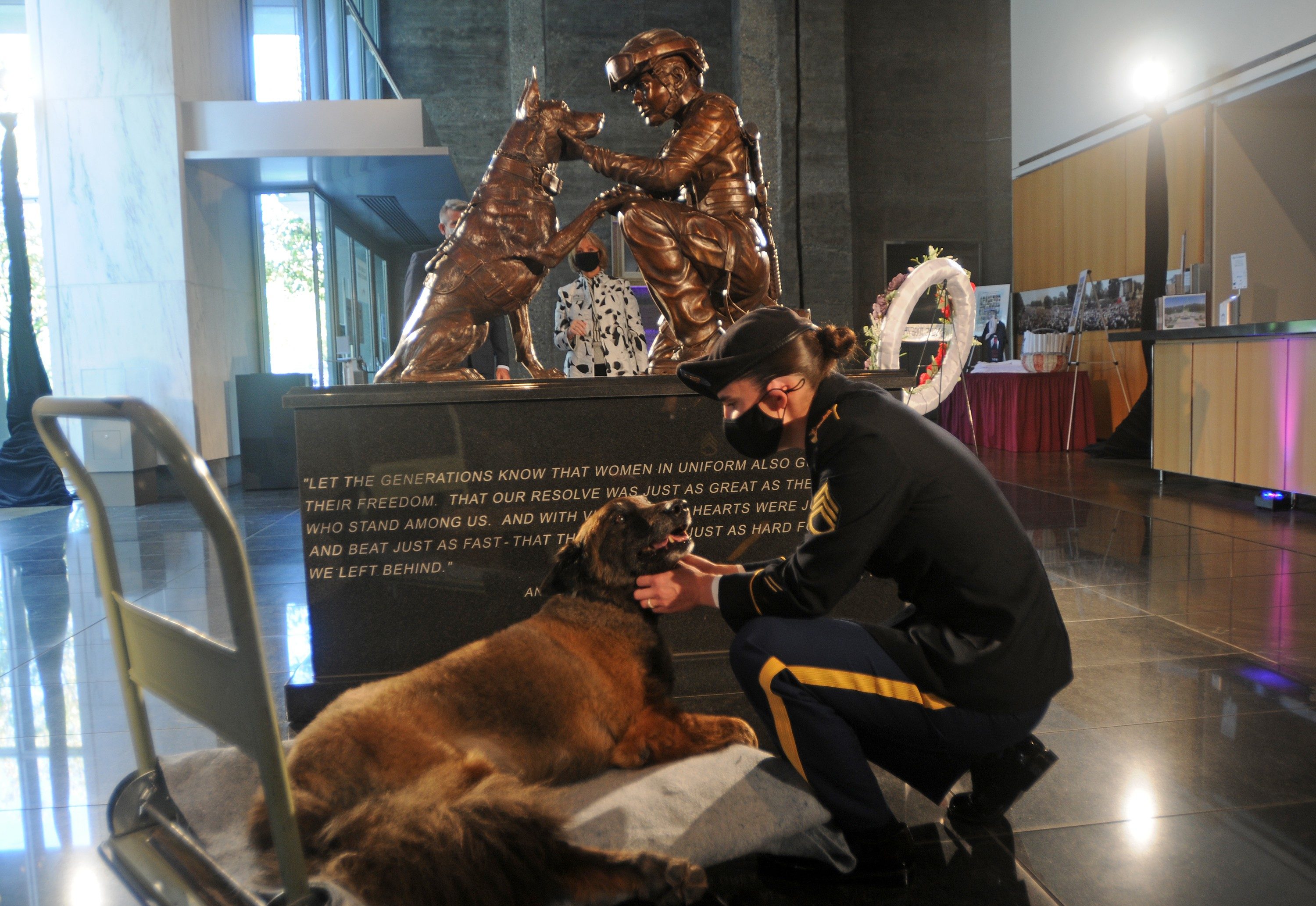
Commissioned by the nonprofit US War Dogs Association and sculpted by acclaimed artist Susan Bahary, The Pledge is a bronze statue that depicts a kneeling servicewoman locking eyes with her working military dog.
In addition to being the area’s first statue to honor all servicewomen, the statue is also the first monument in the nation to honor female military working dog handlers.
“They wanted it to look like it could be anyone, any woman, that you could see yourself in it somehow and all women in the military would be able to relate to it,” Bahary told DCist.
Bahary sculpted the soldier and her dog in full combat gear, and the expression between them is meant to emulate the promise of loyalty made between a soldier and their combat dog before going out into battle.
A quote from Anne Sosh Brehm, a first lieutenant in the Army Nurse Corps during World War II, is inscribed on the side: “Let the generations know that women in uniform also guaranteed their freedom. That our resolve was just as great as the brave men who stand among us. And with victory, our hearts were just as full and beat just as fast — that the tears fell just as hard for those we left behind.”
Bahary has long been known for her sculptures honoring the animal and human bond. She is the artist behind the nation’s first official war dog memorial, Always Faithful, that was unveiled at the Pentagon and dedicated at the US Marine Corps War Dog Cemetery in Guam in 1994. Bahary is also the designer for the proposed National Service Animals Monument and is behind the campaign to bring the international symbol for service animals, The Purple Poppy, to the United States. While her studio is in California, she traveled to D.C. on Saturday to be a part of the socially distant ceremony.
The 4.2 acre semicircle entrance to the Arlington National Cemetery has been home to the nation’s only major national memorial for servicewomen since 1997. The memorial includes a museum with exhibits such as the Fallen Military Women Quilt,, which displays a quilt with the names of 113 of the servicewomen who have died in the wars in Afghanistan and Iraq. The women’s memorial has struggled financially in recent years, and the memorial’s president, Phyllis Wilson, told Stars and Stripes earlier this month that a fundraising push and redesign are in the works in the next few years.
The Pledge is the memorial’s first statue and is now located at the front entrance to the museum. Though Arlington National Cemetery has reopened to the public, the women’s military memorial is still deciding its opening schedule, and will update on its website, according to a spokesperson.
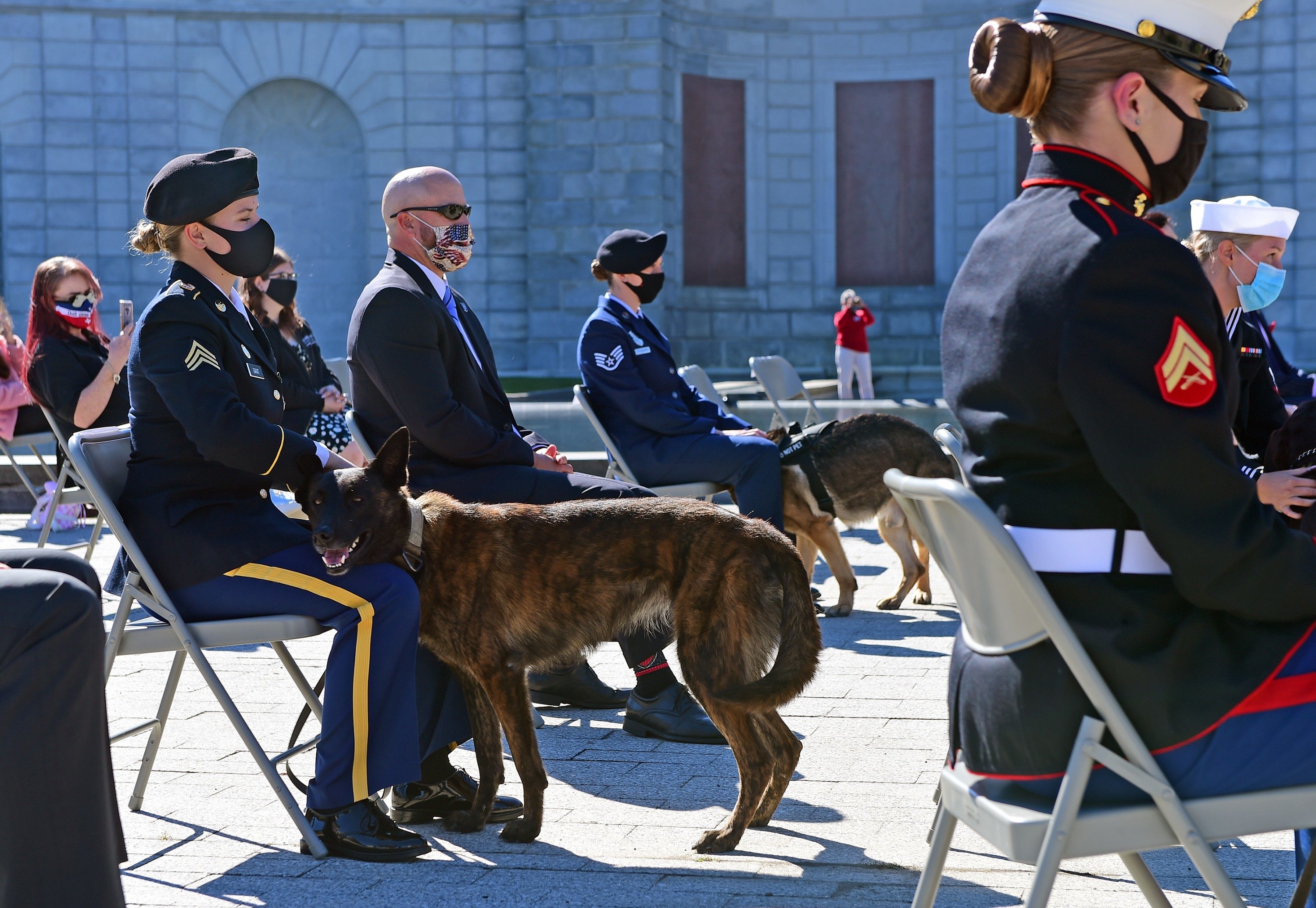
Saturday’s private unveiling at the memorial was attended by current and former military working dog handlers, many of whom brought their dogs with them to the ceremony. Speakers included Wilson, Staff Sgt. Ashley Welchel and her retired military dog Diesel, Retired Army Gen. John Nicholson, and others. US War Dogs Association President Ron Aiello, who all spoke on the significance of the statue.
“At these dedications of memorials and monuments, the statue, they’re always a male,” said US War Dogs Association President Ron Aiello in his remarks. “And I always walk away kind of disenchanted … so I decided that it’s time we start looking at our organization to creating a monument to honor all women.”
While women still make up the minority of the armed forces, according to the Pew Research Center, the number of active-duty enlisted women has risen seven-fold since 1973, from about 42,000 women to 167,000. While there are no formal statistics about the number of female military working dog handlers, according to speakers at Saturday’s ceremony, the majority of handlers have historically always been men.
Sgt. Brittany Gavit, a female military working dog handler in attendance at the ceremony, mentioned it was her first time seeing a dedicated statue for servicewomen.
“I’ve been a dog handler for four years now, and to see a female statue for the first time, it feels great and it really just means the world,” Gavit said. “She could be any one of us, in any rank of the military, and it’s so significant.”