Margaret Barthel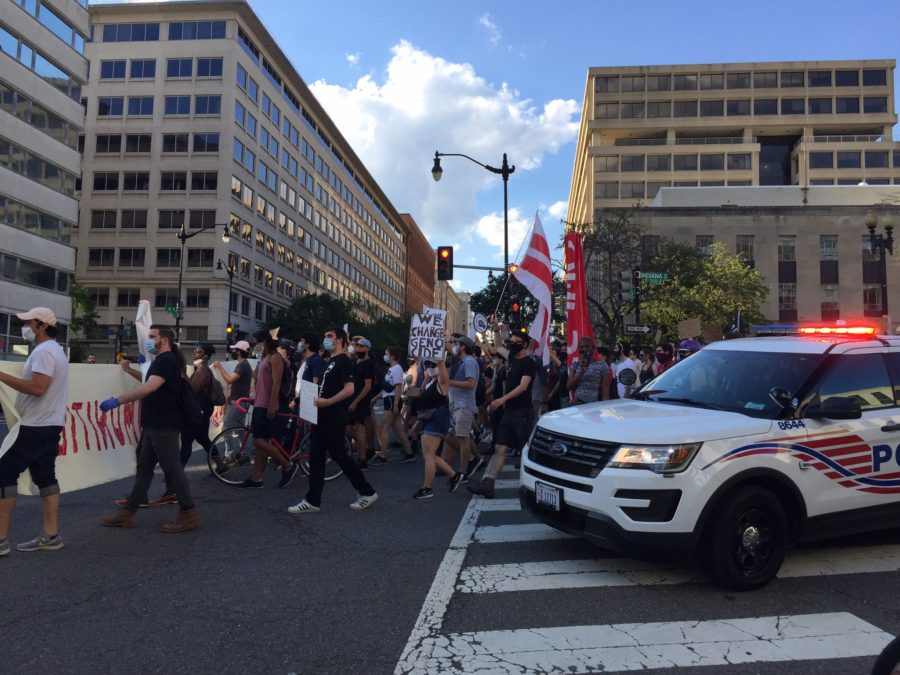
D.C. Mayor Muriel Bowser is requesting permission from the D.C. Council to transfer $43 million from elsewhere in the District budget to cover the costs of police overtime expenses during racial justice protests since the spring.
The money would come out of the Workforce Investment Fund ($12.7 million), the Department of Health Care Finance ($28.3 million), and from repayment of interest on short term borrowing ($2 million).
The reprogramming proposal is raising some criticism.
Councilmember Brianne Nadeau (D-Ward 1) tweeted concerns about the $28.3 million that would come out of the Department of Health Care Finance.
“This is concerning because when we were trying to fund even a scaled down version of an Alliance recertification legislation, which makes access to healthcare coverage easier for many of the District’s most vulnerable residents, we were told there wasn’t enough funding at DHCF to do so,” Nadeau tweeted. “The District should prioritize funding B22-231, which would streamline Alliance recertifications to improve access to healthcare, with any available DHCF funds instead of giving more money to MPD.”
Janeese Lewis George, the Democratic nominee for the Ward 4 Council seat, reacted to Nadeau’s tweet.
“Wow. Sooo we can defund health during a global pandemic but not the police? But Black Lives Matter,” she wrote.
“Slashing healthcare and workforce investments during a public health and economic crisis in order to double down on police presence for protests is comical, but also on brand for a Mayor who is complicit in perpetuating and worsening the severe racial disparities of our city,” tweeted Martín Miguel Fernández, an independent candidate for the Ward 2 seat on the D.C. Council.
A letter from the District’s Chief Financial Officer says the District doesn’t expect any “adverse impacts” on the agencies supplying the funds.
“Funds are available because of cost savings across multiple programs and comptroller source groups within the agencies,” the letter says.
Others criticized the move on the grounds of D.C. officers’ use of force during protests, which have been almost entirely peaceful.
“All those rubber bullets and tear gas don’t grow on trees,” tweeted Markus Batchelor, a member of the D.C. State Board of Education who is running for an at-large seat on the D.C. Council.
“So MayorBowser wants to take $43 million from DC’s budget to police ‘First Amendment protests,’ including $28M from the agency that runs Medicaid in DC and other health care programs for immigrants and children,” tweeted local organizer Alex Taliadoros. “Think #FundCareNotCops, but exactly the opposite.”
Metropolitan Police Department officers have used chemical irritants like pepper spray and tear gas, flash-bangs, and rubber bullets during protests since the beginning of the summer. Officers have also used “kettling” tactics to surround groups of protesters and perform mass arrests. Their arresting decisions have even drawn criticism from the U.S. Attorney for D.C., Michael Sherwin, who has said he can’t prosecute all of those arrested due to lack of evidence of their specific wrongdoing.
D.C. police officers’ alleged involvement in the law enforcement push to clear Lafayette Square of protesters prior to President Donald Trump’s now-infamous photo op outside of St. John’s Church has drawn a lawsuit from the American Civil Liberties Union.
D.C. councilmembers will have 14 days to weigh in on the Bowser administration’s request to move funds to cover police overtime. Per D.C. Code, the request will be approved if no councilmembers present a disapproval resolution opposing it. If a councilmember does present a disapproval resolution, though, the Council will have to consider the disapproval request within 30 days of Bowser’s original request.