 Mikaela Lefrak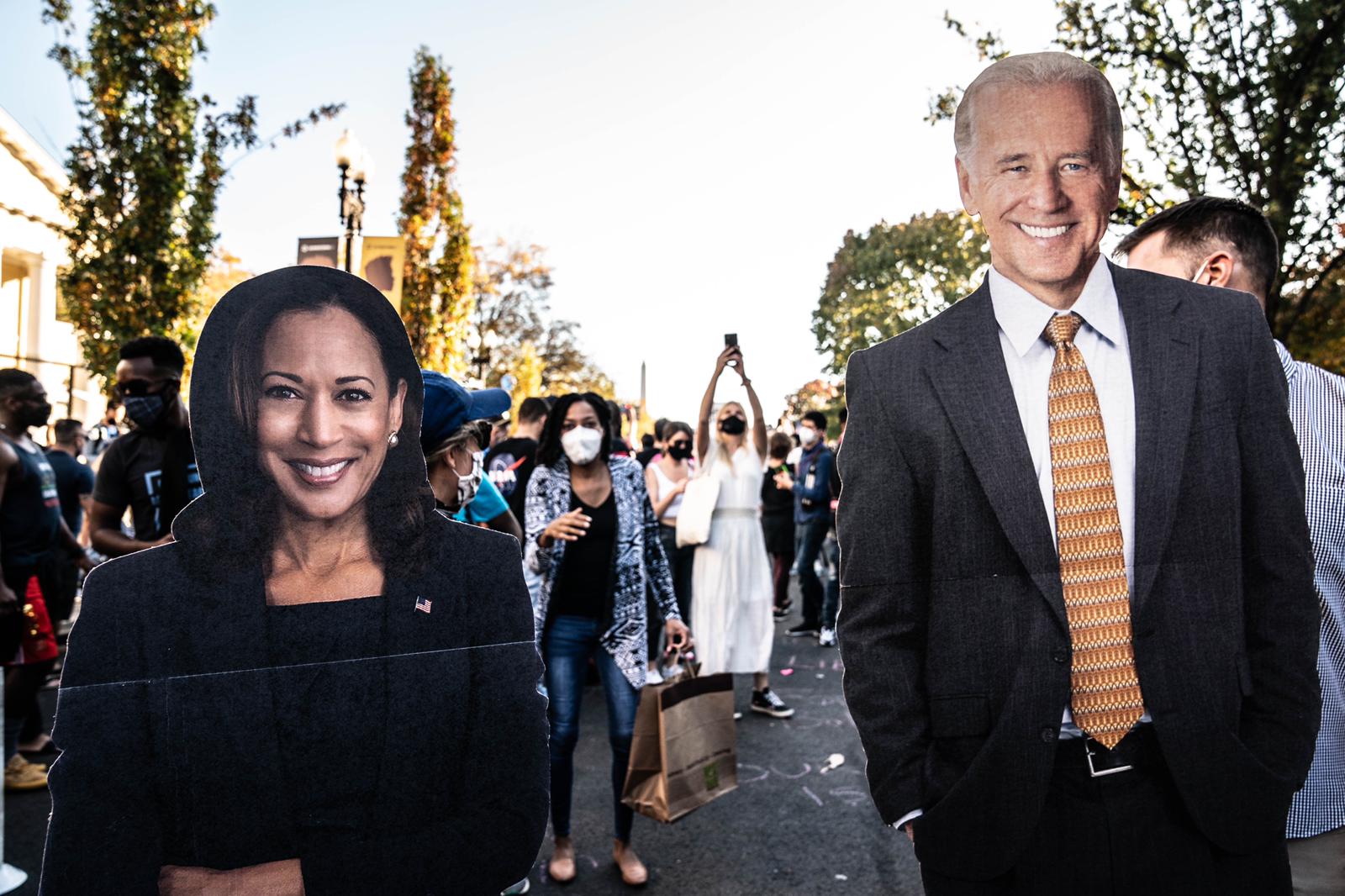
The toxic dust from the 2020 elections has started to settle, now that the presidential race has been called for former Vice President Joseph R. Biden, Jr. and Sen. Kamala Harris. The U.S. Senate remains something of a question mark, though: The results of Georgia’s runoff elections for its two Senate seats will determine whether Republicans hold onto their slim majority.
The election results will impact Washington, D.C.’s push to become the 51st state in the next few years. After what was an eventful year for the movement, Democratic politicians, activists and pro-statehood lawyers are starting to reshape their advocacy plans and strategize around the 2022 midterms.
2020 has already been a landmark year for D.C. statehood. The U.S. House of Representatives voted to pass a bill in June approving D.C. statehood. It was the first time a chamber of Congress had ever passed such legislation.
For D.C. to become a state, the current Senate would also need to pass a statehood bill and the president would have to sign the legislation. With Biden in the White House, that last bit wouldn’t be a problem.
“I certainly think he will be an advocate,” says D.C. Del. Eleanor Holmes Norton. (Last week she got reelected to her seat with more than 86% of the vote.)
Biden, like pretty much every elected Democrat, is now on board with statehood. It makes political sense for Democrats: If D.C. becomes a state, its 705,000 residents will almost certainly elect all Democrats to their three seats in Congress.
But it’s extremely unlikely a statehood bill will make it to Biden’s desk anytime soon. As Norton puts it, “the Senate looks like it’ll continue to be an obstruction.”
Senate Majority Leader Mitch McConnell has made no indication that he’ll put D.C. statehood up for a floor vote for the current Senate. That means the process would have to start all over again once the new Congress is in place early next year.
The new House could theoretically pass another statehood bill — it would likely pass handily, like H.R. 51 did in June. But it would just as likely stall in the Senate. Even if Democrats won the two seats from Georgia, the Senate would be evenly divided, leaving Harris to cast deciding votes. But more conservative-leaning Democrats could still stand in the way of a D.C. statehood bill, and 60 votes — not a simple majority — would be needed to overcome an expected Republican filibuster.
All this comes as a bit of a disappointment for statehood activists, many of whom were crossing their fingers that Democrats would flip more Senate seats than they did.
“That’s what the excitement was about, that maybe that window was going to open earlier than we thought it was going to open,” says Bo Shuff, the executive director of the statehood advocacy organization DC Vote. “But I’m not personally depressed about it. We have a program and we’re ready to go with it.”
DC Vote’s statehood strategy actually hinges on the next election cycle, not this one, according to Shuff. After the 2016 election, his team looked at all the senators up for reelection over the next few years. They found one election cycle that would be the most conducive to creating a statehood-friendly Congress: 2022. There will be 34 seats up for grabs, 13 currently held by Democrats and 21 by Republicans.
“The class of senators that is up for reelection in 2022 is more conducive to statehood-friendly members winning than is the class of 2020,” he says.
But what does that mean for the D.C. statehood movement now? Is everything just on pause?
Some local advocates say they’re going to refocus on educating people outside the Washington region about D.C.’s fight for representation. Many Americans don’t know how many people actually live in the nation’s capital or about Washingtonians lack of voting rights.
A handful of lawyers are taking a completely different route. They filed a lawsuit arguing that it’s unconstitutional for District residents not to have full voting representation in Congress. A federal court ruled against the D.C. residents, but the lawyers plan to file an appeal with the U.S. Supreme Court this week.
“Having the lawsuit pending works hand in hand with the statehood movement, because both the lawsuit and the statehood bill bring visibility to our lack of democracy and gives us two ways to get there,” said Walter Smith, the executive director of D.C. Appleseed, on WAMU’s Kojo Nnamdi Show last week.
Even with a conservative Supreme Court, Smith insists there’s a chance they’d rule in D.C.’s favor.
Meanwhile, Del. Eleanor Holmes Norton plans to keep making statehood an issue in Congress, even if the Senate or President-elect Biden don’t make it a priority.
“When a new administration comes in, a matter affecting only one jurisdiction is hard to be at the top of the list. And it’s not going to be at the top of the list now,” she says. “But we’ll make very substantial progress.”
Next year will mark Norton’s 30th year as D.C.’s delegate to Congress. Even with all the political setbacks and the lingering uncertainties in the Senate, she says the past year has made her feel more hopeful than ever about the District someday becoming the 51st state.
“Well there’s nothing like passing a statehood bill for the first time to make you feel energized,” she says. “So I’m feeling very good about 2021.”
Reporting for this story comes from 51st, a six-part podcast series about Washingtonians’ fight for representation. Subscribe here.