Metro’s board has approved a new budget that addresses the harsh financial reality of the pandemic.
While it largely avoids service cuts, it does call for eliminating 1,400 jobs through buyouts, layoffs and cutting positions that are not associated with safety or other core missions.
Metro’s largest union, Amalgamated Transit Union Local 689, opposes the decision to cut jobs.
“We’ve moved the city since this pandemic began, and the appreciation we get is to be laid off despite putting our families’ lives in danger,” 689 President Raymond Jackson said in a statement. “Essential workers in the Washington D.C. area depend on our members to operate buses and train to and from hospitals, clinics, airports, and grocery stores.”
The 2,000 workers that are retirement-eligible will get information about the buyouts, which include a $15,000 bonus to leave, on Friday. It’s unclear what the deadline will be or when the remaining layoffs will be announced.
The union argues that Metro could wait for a Biden administration and new Congress to pass funding relief. The transit industry is asking for $32 billion from the feds, but it’s not clear if or when that will happen.
Metro officials say if the funding does come through, they would be able to rehire laid-off workers. Metro is facing a $177 million budget gap and has take a number other belt-tightening measures including hiring freezes and reduced bus service.
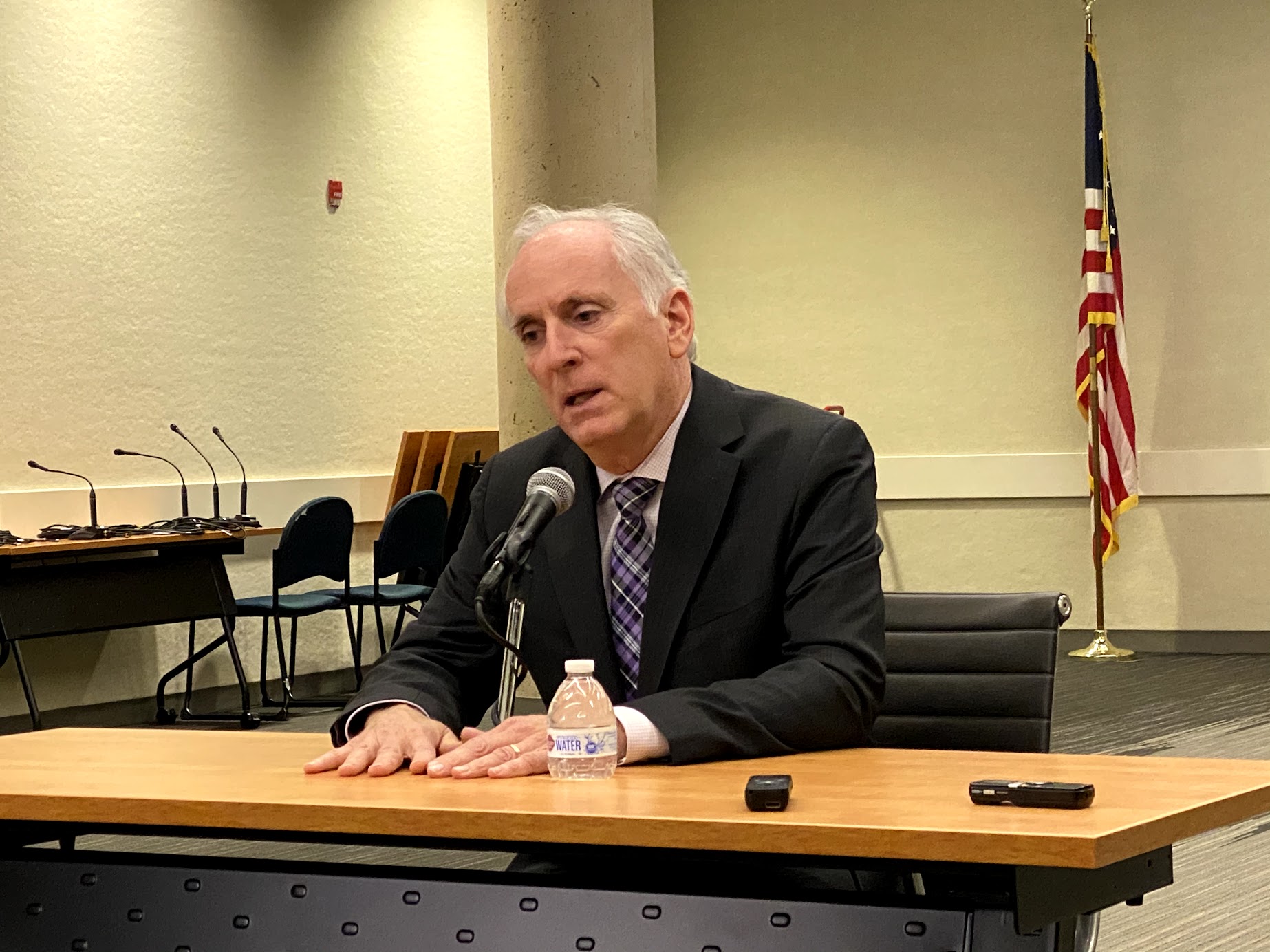
Board Chair Paul Smedberg says layoffs are the toughest part of the budget deliberations.
“Employees of WMATA are so essential to the operation,” he said. “(But) we have to deal with what we have to deal with right now.
“The situation necessitated it.”
General Manager Paul Wiedefeld noted the transit agency is in a historic crisis.
“No board in recent history has faced the challenges this board has faced,” he said.
The transit agency last faced this lean of a budget after the 2008 financial crisis. In 2009, it had a similar $176 million gap and was faced with cutting nearly 900 positions to put the staff at about 10,000 employees.
Metro has about 12,000 employees now. It’s offering $15,000 for retirement-eligible employees to leave in hopes of having to cut fewer people.
The board had previously considered other cost-saving measures like closing the rail system at 9 p.m. instead of 11 p.m. and instituting turnbacks on the Red and Yellow lines, which would’ve reduced service at the end of those lines. They decided against those after rider input that said it would negatively affect service and other essential workers with non-traditional hours.
Under the new plan, Metrorail trains will run every 12 minutes on all lines, all day on weekdays. Red Line trains would run every six minutes. On weekends, trains will run every 15 minutes except for the Red Line that will run every 12 minutes. That’s a slightly longer time between trains than the current peak service which sees trains every eight minutes and every five minutes on the Red Line.
Many survey takers said they were ok with that level of service if it was temporary. The changes will be in effect from February 13 through June 30.
Bus riders will also have to start paying fares again in January.
Ridership has been historically low, with Metrorail ridership down about 80% compared to 2019 and bus ridership down nearly 60%. The recovery has been far slower than Metro previously estimated.
Board Member Devin Rouse said the budget seems like a simple math problem, but “it has a real world impact on a lot of people. And I think a lot of effort has gone into this, a lot of people on your staff and just in the general community… thank you for everything you tried to look at and all the different angles you’ve investigated for this first (before layoffs).”
Next month, board members will start on the budget that runs from July 2021 to June 2022. They’re bracing for even tougher cuts if federal funding doesn’t come.
“We have a monumental job ahead and we are working through it with the best information we have month by month,” Smedberg said. After the meeting, he said he’s not sure how much stock to put into federal funding with a new administration. “All we can do is make our best case and show how it impacts our community and how important transit is to recovery efforts.”
Matt Letourneau, a board member from Virginia says he worries the cuts they’re making now “are just the tip of the iceberg absent some significant changes that may come from the federal government.”
Storeroom Clerk Is Transit Agency’s Second COVID Death
Metro announced its second COVID-related death on Thursday. A person who worked in a storeroom as a clerk had been sick for more than a month with the coronavirus and died over the weekend.
“The entire Metro family sends our deepest condolences to our colleague’s family and loved ones,” the transit agency said in a release. Metro did not give the person’s name for privacy reasons.
Metro has had 435 employees get COVID, but 408 have returned to work. A Rail Operations Control Center employee died in August. So far, Metro has been able to avoid a large number of deaths like New York’s MTA, which has more than 125 COVID-related deaths.
Board Wants Electric Bus Plan Accelerated
Metro is buying 12 electric buses with federal grant funds as part of reaching its sustainability goals. It wants to get an all-electric fleet eventually but hasn’t laid out how or when.
The board wants a more aggressive and precise path to an all-electric future.
“Maybe it should be that the Metro bus fleet will be 50% all-electric by 2030 and 100% by 2035,” board member Michael Goldman said. “Something like that… to show that we’re committed to this goal.”
Metro lags behind many regional and national transit agencies when it comes to trying electric buses.
Jeff Marootian, a Metro board member and head of DDOT and the Circulator bus system, is close to transitioning to all-electric.
“Obviously, it’s a much smaller fleet, but I’m keenly aware of the challenges,” he said. “We’ve heard from a number of residents and members of the community who are eager to see our fleet become all-electric.
“I share that eagerness and that sense of urgency and appreciate the amount of work that will go into that.”
Metro has preferred to take a slower approach while the electric bus and battery technology matures, says Tom Webster, EVP of strategy, planning and program management.
“What we have learned from peers is the challenges of new and emerging technology,” he said. Metro plans on getting a small number of buses — the 12 buses will be from a mix of different manufacturers — to try out different models to see what works best for a larger rollout.
Still this small roadmap isn’t enough, says board member Stephanie Gidigbi.
“Maryland, Virginia and the District have set some very aggressive goals for what they expect in terms of both sustainability and clean energy,” Stephanie Gidigbi said. “If anything, it seems like WMATA has not necessarily come along in the journey in making sure that we set some really also comparable aggressive standards and targets.”
General Manager Paul Wiedefeld says they’ll set an aspirational, but achievable goal, but it’s too early to commit to a full-electric date.
There’s a number of hurdles — modernizing facilities, preparing the electric grid and the cost… $2 billion over the next 25 years to replace the entire 1,600-bus fleet.
Others say Metro could do more for the environment by running more buses and trains more efficiently with bus-only lanes. Those faster trips may encourage people to stop driving by themselves.