Colleen Grablick
D.C. reported 316 new COVID-19 cases on Friday, the city’s second consecutive day with more than 300 new cases, as pandemic metrics continue to surpass springtime peaks across the region.
On Thursday, the city recorded 322 new COVID-19 cases, the third-highest daily count ever reported in the pandemic. Less than a week ago, the District saw 371 new cases in a single day, breaking the record set in the spring of 335 new cases on May 1.
The spikes in the the daily case count are joined by several other troubling trends in the city’s metrics. D.C.’s average daily case rate on Friday hit a number not seen during the pandemic: For every 100,000 residents, the city saw 29.04 new COVID-19 cases, according to data from Dec. 2. This number peaked at 27.56 in May.
Meanwhile, the positivity rate, which measures the number of positive tests out of total tests administered, is now at 5.3% — a number not recorded since June, when the city had still not moved into its phased reopening.
Hospitalizations in the city also ticked up this week. While the utilization of acute care beds dipped down to “sufficient capacity” last week and early this week, that number jumped back up to 86.2% as of Dec. 2. The city considers any percentage above 90 to be “insufficient capacity” — a benchmark the city hit in November.
D.C. recorded one new death today, bringing the city’s total death count to 693. In November alone, 38 D.C. residents lost their lives to COVID-19, a large jump from the monthly totals recorded earlier in the fall. Over October, the city recorded 20 deaths.

The picture of the pandemic in neighboring Virginia and Maryland looks just as grim.
On Friday, Maryland reported a record high of 3,792 new cases, shattering the previous peak of 2,910 set on Nov. 10. The state’s seven-day average positivity rate (which in October had dropped below 3%) is now 8% — a peak for the fall, and up three percentage points since this time last week.
Following November’s trends, hospitalizations and deaths continue to increase in the state. More than 30 Maryland residents died of COVID-19 on both Tuesday and Wednesday. In October, the daily death count on a single day peaked at a high of 12. A total of 4,630 people have died of the virus in the state.
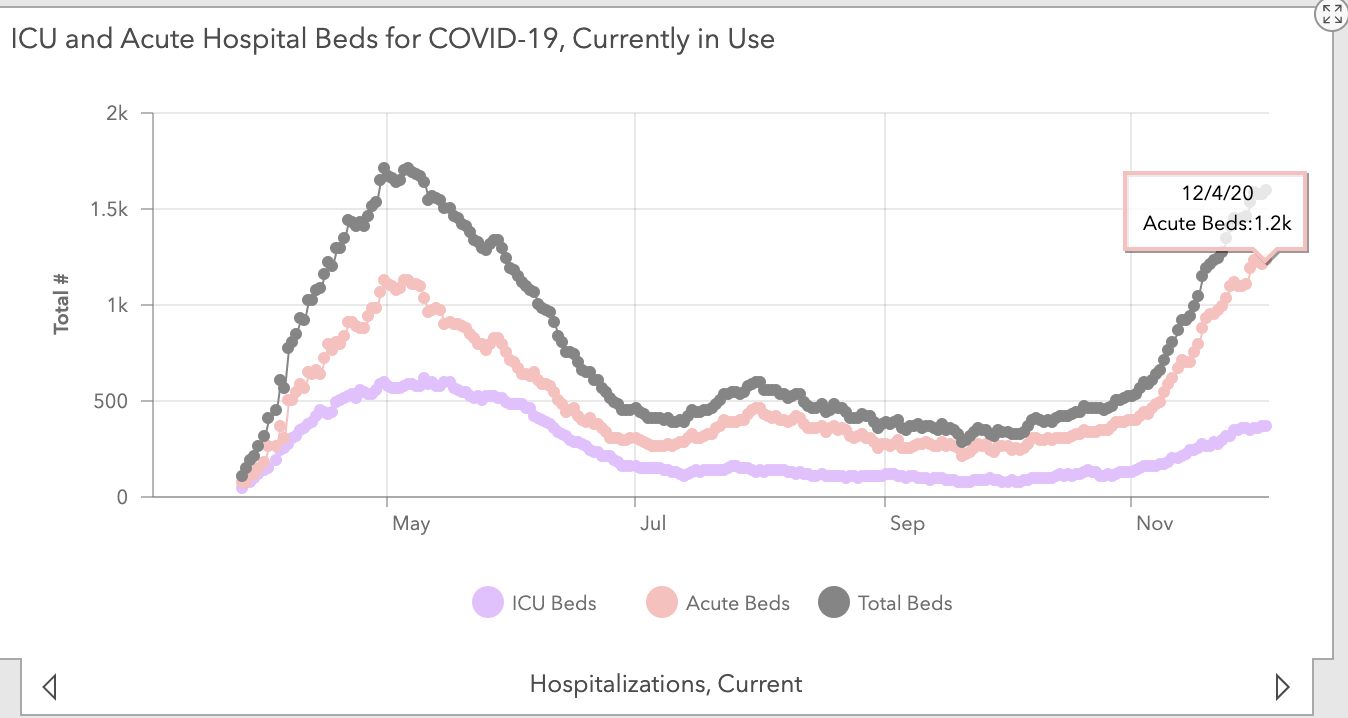
As of Friday, there are 1,600 patients hospitalized with COVID-19 (a count not seen since early May), with 1,200 acute care beds filled for the first time ever in the pandemic.
In Prince George’s and Montgomery counties, the state’s hardest-hit and most populous jurisdictions, pandemic metrics are surging, and in some cases surpassing records set in the spring. Prince George’s County reported a positivity rate of 9.65% on Friday (a peak for the fall) and a case rate per 100,000 residents of 37.12 — topping the state-wide rate of 32.25, and more than doubling the county’s daily case rate at this time last month. Montgomery County’s positivity rate also hit a fall peak at 6.18% on Friday, and its case rate per 100,000 resident set a pandemic record on Dec. 1 at 31.04.
While Maryland’s total daily case rate had managed to stay behind D.C. for much of the fall, the state is now leading the District and Virginia in that metric with an average of 3,421 new infections per 100,000 residents this week, according to the Washington Post’s regional coronavirus tracker.
In Virginia, the commonwealth’s average positivity rate jumped from 7% at this time last week to 9.5% on Friday — a number last reported in early June. Virginia recorded 2,877 new infections on Friday, the third-highest ever daily count for the state, behind 3,173 recorded on Nov. 28, and 3,242 on Nov. 23.
Like Maryland, the commonwealth is seeing record-high hospitalizations, reporting 1,860 patients hospitalized with the virus on Tuesday. As of Friday, the seven-day average number of hospitalized patients is the highest it’s ever been at 1,742. Deaths, however, have steadied since spiking in late November. While the seven-day average number of deaths reached 21 on Nov. 25, that metric has since ticked downward to 16.6. The commonwealth reported 13 new deaths on Friday, bringing Virginia’s total death toll to 4,160.
In Northern Virginia, a hotspot for the virus in the state, the average number of daily new cases has trended down since setting a record of 815.7 new case on Nov. 28. But daily counts continue to hit spring-like numbers, with the region recording 662 new cases on Friday.
The region’s record-breaking metrics on Friday come after the Thanksgiving holiday, and as the country faces a national outbreak shattering spring peaks. More than 270,000 people have died in the U.S., and the country reported a record-high of 200,000 new infections in a single day on Wednesday.
But despite cases rampantly increasing across the D.C.-area — and all three jurisdictions recording positivity rates above the 5% threshold that epidemiologists recommend for reopening — local leaders have stopped short of reinstating full lockdowns, and instead amended the measures of their phased reopening orders.
In November, Maryland Gov. Larry Hogan set new restrictions on restaurants, limiting indoor dining capacity from 75% to 50%. He later mandated that restaurants close at 10 p.m., and limited capacity in all retail businesses (including grocery stores) and knocking the cap capacity in religious institutions down to 50% from 75%.
Last month, Virginia Gov. Ralph Northam announced announced a slew of new COVID-19 restrictions: limiting public and private gatherings, both indoors or outdoors, from 250 to 25 people, prohibiting alcohol sales past 10 p.m., and expanding the mask mandate to include children over the age of five. This week, as cases continue to rise, the governor emphasized “personal responsibility” in fighting the pandemic, and did not impose any new restrictions.
D.C. Mayor Muriel Bowser announced “adjustments” to the city’s Phase Two reopening measures before Thanksgiving, limiting indoor gatherings from 50 to 10 people, suspending indoor workout classes, and stopping alcohol sales at restaurants at 10 p.m., among other restrictions.
And while they look optimistically towards a potential vaccine rollout in the coming months, local officials are simultaneously bracing for what experts expect to be the darkest days of the pandemic. Maryland’s health department activated its hospital surge capacity plan last month, and on Tuesday, Hogan announced the state’s readiness to enlist its medical reserve personnel in the case of overloaded hospitals. In November, Northam announced plans for a more robust and centralized testing operation in the commonwealth, and D.C. expanded its public testing program to meet the high demand for testing before the Thanksgiving holiday, in addition to heated locations for the colder months.