 Christian Zapata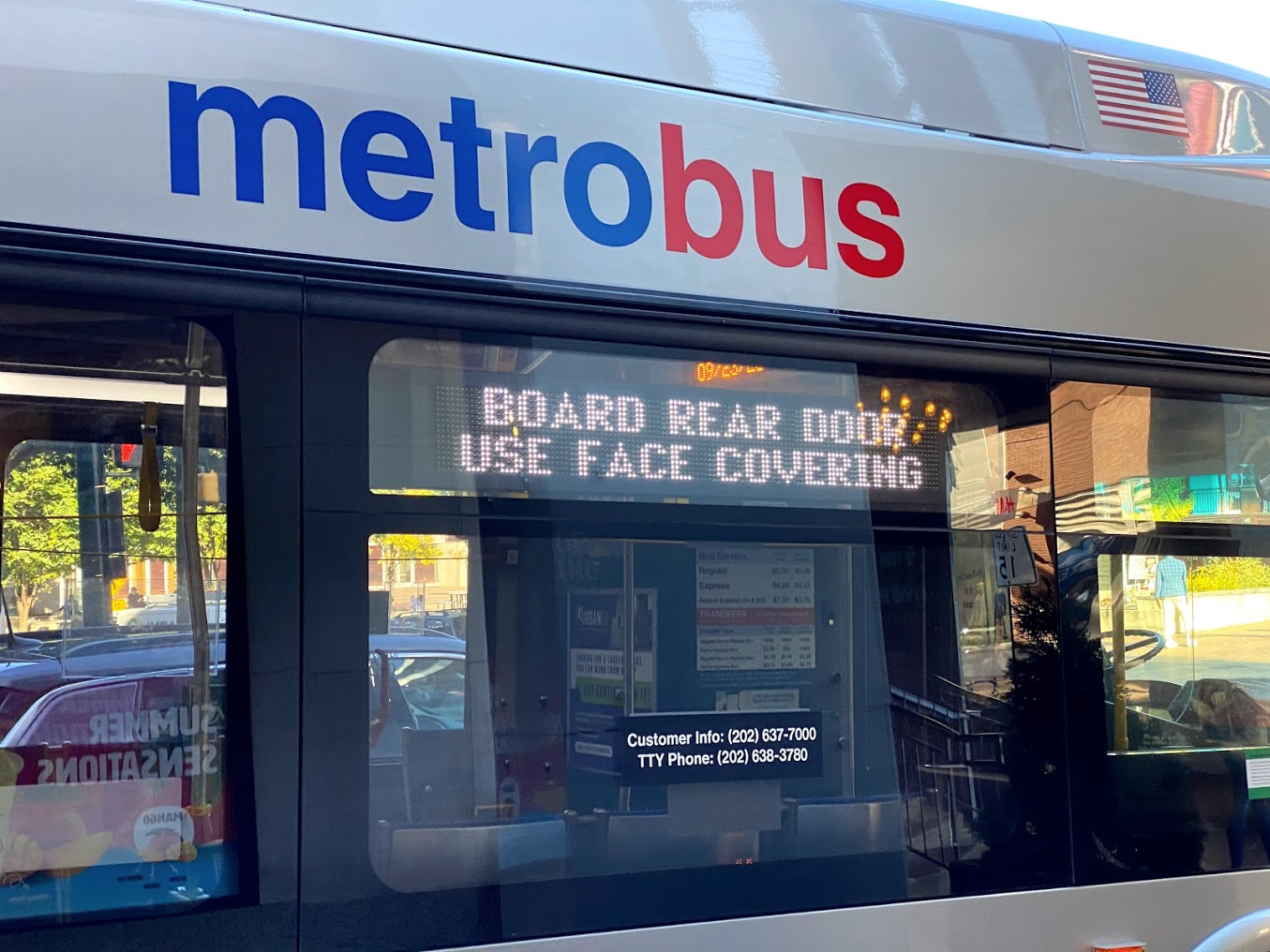
Metrobus riders will once again be asked to pay the $2 fare and board through the front doors starting January 3, 2021.
WMATA announced Thursday that it will resume fare collection as part of its pandemic recovery plan that aims to preserve service and jobs, according to a press release. The transit agency recently proposed devastating budget cuts that would nix all weekend train service, close 19 stations, scale back weekday operations with trains running every 30 minutes, make cuts to several bus routes, and result in layoffs. The cuts would disrupt the region’s transit services right as it looks to recuperate pandemic losses next year.
Riders can pay with cash, SmarTrip or new contactless payment on Apple Watch or iPhone.
Metro implemented its rear-door boarding policy in March in an effort to protect frontline employees from the coronavirus. Since fare collection happens at the front of the bus, WMATA suspended fare collection and urged riders to use its bus systems for essential travel only.
“With everyone wearing masks, shields for operators on every bus, and enhanced daily cleanings, front-door boarding is safe, expands our capacity for more riders, and helps us resume some normalcy,” said Metro General Manager/CEO Paul J. Wiedefeld in the press release. “We also need to collect fares from every rider to keep essential Metro transit employees working and continue to provide essential service.”
Metro’s largest union, Amalgamated Transit Union Local 689, expressed concerns about what the return to front-door bus boarding would mean for worker safety and called on Metro to reverse the decision.
“WMATA’s move to resume fare collections and front door boarding is not only a slap in the face of those who risk their lives each day but to say this least, it is NOT safe,” the union wrote in a letter to the transit agency on Dec. 30. The letter was first reported by NBC4.
The return of front-door boarding is consistent with recovery efforts seen by mass transit systems in cities across the country, including Los Angeles, New York, and Philadelphia, Metro writes. All of these cities and others have had transit services reduced, and proposed or implemented major budget cuts since the start of the pandemic.
WMATA and transit agencies across the country are calling on the federal government to pass a new federal coronavirus relief package that includes public transit funding — which must be signed by midnight on Friday to avoid a government shutdown. Resuming front-door boarding contributes to a small portion of the agency’s funding. Last year, Metrobus fares made up $138 million of an overall $2.1 billion budget (for context, Metro has sustained itself with about $800 million that it got from the CARES Act in May).
Earlier this year, Wiedefeld said that if federal funding arrives before April or May, the agency might be able to change course and reduce cuts. It’s expected to finalize the budget in March with changes going into effect in July.
Jordan Pascale contributed reporting. This story was updated on December 30 to include mention of Amalgamated Transit Union Local 689’s letter to Metro.