Margaret Barthel
 Jenny Gathright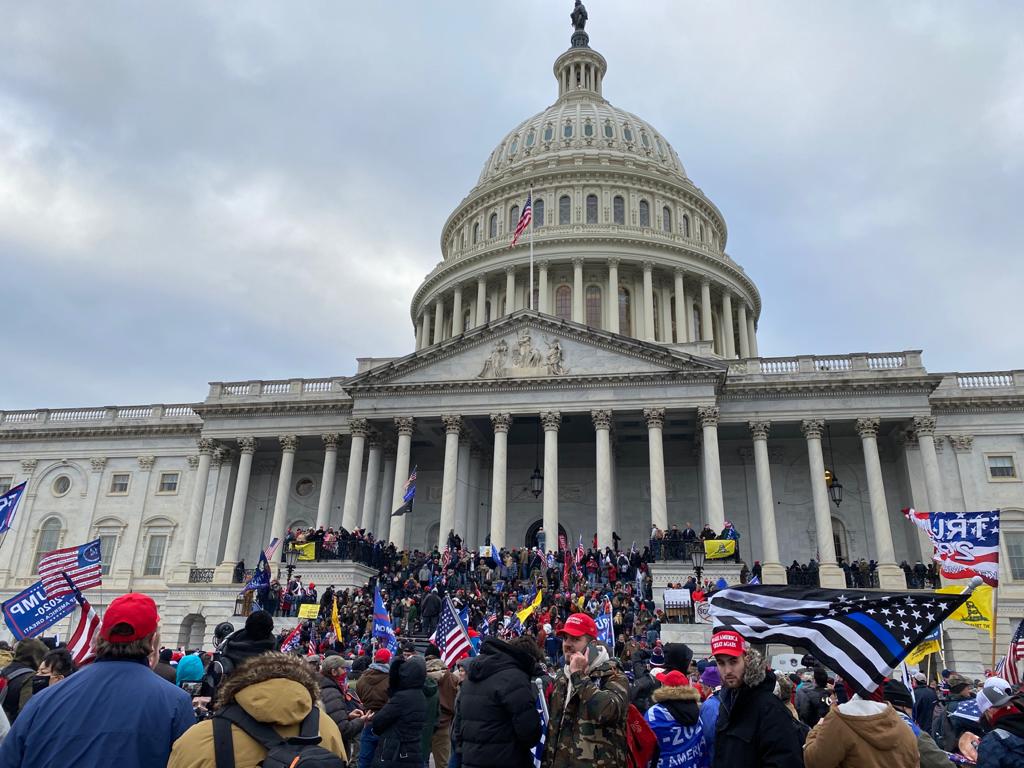
Federal authorities have issued charges for several people who stormed the Capitol Building Wednesday, in a fatal insurrection that ended with five dead, including one Capitol Police officer.
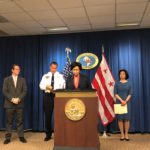
During a press call, officials with the U.S. Attorney for D.C. and the FBI Washington field office said they were actively pursuing 55 cases and issued charges in 13 cases.
“We are resolute in our commitment to holding accountable anyone responsible for these disgraceful criminal acts,” U.S. Attorney Michael Sherwin said in a press release. “To anyone who might be considering engaging in or inciting violence in the coming weeks – know this: you will be prosecuted to the fullest extent of the law.”
It is unclear whether federal or local charges for insurrection and inciting a riot would be brought against President Trump and his close allies, who made inflammatory remarks at a rally immediately before the mob attacked the Capitol on Wednesday.
Officials released specific details in four of the 15 charged cases in U.S. District Court (others are currently under seal or under review). Many of the offenses described are violent, and some include possession of weapons and explosives.
- Richard Barnett, the man who allegedly broke into the Speaker of the House’s office and posed at the desk, is now in custody, according to FBI Washington field office leader Steven D’antuono. Barnett was arrested in Little Rock, Arkansas and will face counts of knowingly entering and remaining in a restricted area, violent entry, disorderly conduct and theft of property.
- Federal officials have also taken Lonnie Coffman, of Alabama, into custody after law enforcement officers found Coffman’s truck parked near the Capitol with a cooler of 11 molotov cocktails, which included a type of homemade napalm, inside. Coffman was arrested when he asked police officers for help returning to his truck, which was behind the secure perimeter police had established to investigate reports of pipe bombs in the area. That’s according to an affidavit from one of the Capitol Police officers at the scene. Coffman also had two handguns on his person on Wednesday, and an M4 assault rifle stored in his truck.
- Mark Leffingwell will be charged with assault on a police officer, violent entry and disorderly conduct. According to charging documents, Leffingwell allegedly punched a Capitol Police officer repeatedly in the chest and head.
- Maryland resident Christopher Alberts was arrested and detained by Metropolitan Police officers at the Capitol on Wednesday. He was allegedly in possession of a loaded handgun and spare magazine at the time. He will face charges for carrying a pistol without a license, possession of a firearm on Capitol grounds, curfew violation, possession of unregistered ammunition, and possession of a high capacity magazine.
- Derrick Evans, a recently-elected delegate to the West Virginia legislature who filmed himself participating in the Capitol insurrection, will be charged with entering a restricted area, officials said.
The remaining cases — including one against a Virginia woman, Cindy Fitchett — are generally for unlawful and violent entry, disorderly conduct on Capitol grounds with the intent to impede the functions of the government. One person, Cleveland Meredith, was charged with making interstate threats against Speaker of the House Nancy Pelosi.
Officials said other charges might be added as the investigation into the insurrection continues.
“As the Attorney General emphasized, the department will spare no resources to hold all of these people accountable,” said Ken Kohl, the first assistant attorney in the U.S. Attorney’s office in D.C.
D’antuono, of the FBI Washington field office, said the more than 50 agency field offices across the country are involved in the investigative effort.
Meanwhile, some — including D.C. Attorney General Karl Racine — are raising questions about potential charges for President Donald Trump and his close allies for inciting the insurrection on Wednesday, which followed an appearance by the President at the Ellipse earlier in the day.
“Donald Trump Jr., Rudy Giuliani, even the President of the U.S. were calling on their supporters and hate groups to go to the Capitol,” Racine tweeted. “We’re going to investigate not only those mobsters, but also those who incited the violence.”
D.C. Councilmember Robert White (D-At Large) asked Racine in a letter on Thursday to examine whether Trump could be prosecuted for inciting a riot.
In the District, it’s illegal for anyone to “willfully [incite or urge] other persons to engage in a riot,” which the law defines as a gathering of five or more people who, through their actions, create “grave danger of damage or injury to property or persons.” The penalty for inciting a riot can be six months in jail and a $1,000 fine, or if someone is injured or there is significant property damage, 10 years in custody and a $25,000 fine.
The U.S. Attorney for D.C.–under the U.S. Department of Justice–typically prosecutes serious offenses, including rioting. Insurrection is also a federal offense.
But when asked by reporters about bringing insurrection or federal rioting charges against the President and others who spoke at the rally, or against the extremist mob who ultimately broke in to the Capitol, federal officials said they “[didn’t] expect to bring charges of that nature.”
That appears to be a change in tone from Thursday, when U.S. Attorney Michael Sherwin told reporters that his office was “looking at all actors here, not only the people that went into the building, but… were there others that maybe assisted or facilitated or played some ancillary role in this.”
Meanwhile, several dozen of the people being charged with crimes in connection with the insurrection were arraigned in D.C. Superior Court on Thursday.
Those who were not D.C. residents (two D.C. residents were among those arrested by the Metropolitan Police Department Wednesday) were largely given stay away orders from the entirety of D.C. and asked to return for court hearings on June 10. Many of those arraigned in D.C. Superior Court on Thursday were being accused of unlawful entry and potentially violating the District’s 6 p.m. curfew, though some also faced charges for possession of guns and other weapons.
Some are being charged with having other kinds of weaponry, like metal knuckles. One man is accused of hitting a police officer with a “hockey or lacrosse stick-like object.”
There was little discussion at the arraignments, which are different from trials, in that no arguments are presented; it’s the time when judges decide whether defendants will continue to be held in jail pre-trial based on initial statements from police and lawyers. But some defendants were already trying to clear their names.
“I didn’t commit any crime,” said James Sinclair, a man who was accused of possessing brass knuckles while being outside past curfew.
“Sir, please don’t make any statements,” responded Judge Juliet McKenna.
One person being charged in connection with the insurrection identified himself as a federal employee. The defendants who were banned from the city were asked to gather their belongings from the police station or from their hotels and leave as quickly as possible.