Jacob Fenston
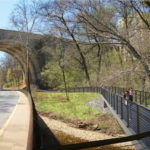
If you’ve ever been for bike ride on the multi-use path that runs along Rock Creek, you know much of it is narrow, winding, bumpy, and crowded. Some of the trail is in such bad repair it’s nonexistent — eroded into the creek and long closed to park users.
Now, the District Department of Transportation is about to begin a major overhaul of 3.6 miles of the trail, including a new bridge dedicated to cyclists and pedestrians, and a new .9 mile paved path connecting to neighborhoods east of Rock Creek Park.
“This is a momentous occasion, and we are really ecstatic,” says Garrett Hennigan, a community organizer with the Washington Area Bicyclist Association. “This is actually the result of decades of work, negotiation between advocates and and the District and the National Park Service.”
The project will begin at M St., NW in Georgetown, likely breaking ground in late February or early March, and will work its way north in 7 stages. The final stage, between Peirce Mill and Broad Branch, will be finished sometime in 2023.

The National Park Service has already redone parts of the trail while repaving the roadway of Beech Drive. That project was completed in 2019, but left long stretches of trail barely rideable.
“This trail was originally a bridle path, so it was a narrow path for horses, and they converted into a bike trail back in the ’70s,” says David Cranor, a longtime blogger on the D.C. biking scene and member of the city’s bicycle advisory council. Back when the bridle path was converted for bikes, Cranor says, there were no national guidelines for how to build such a trail. “So this will bring those trails up to current standards,” he says.
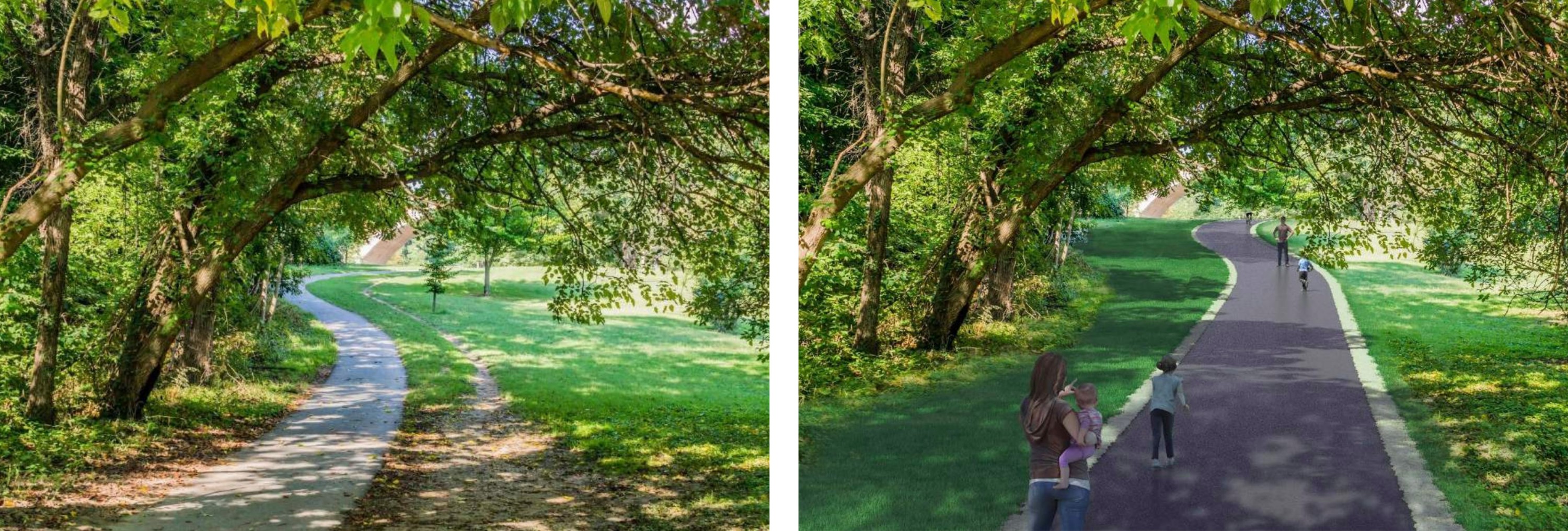
The redone path will be significantly wider — 10 feet in most places — and have better sight lines. “It’s going to make the trail a lot safer and more pleasant and reduce some of the crowding that’s on the trail right now,” says Cranor.
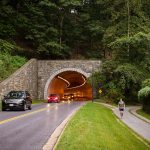
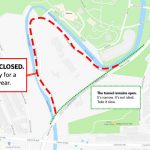
One of the biggest improvements will be by the tunnel at the National Zoo. A section of trail that bypasses the tunnel began collapsing into the creek in 2018 and has been closed ever since, forcing cyclists, runners, and pedestrians to squeeze into a very narrow sidewalk through the tunnel.
Attention cyclists, walkers, & runners: the Rock Creek Park path adjacent to the @NationalZoo is closed due to extreme deterioration from the recent flooding. @WABADC has put together the map below to show the closure and an alternate route. More info here:https://t.co/CsdM0Pakhq pic.twitter.com/VXmz4KU0tD
— Mary M. Cheh (@marycheh) July 25, 2018
Once through the tunnel, trail users heading south must once again squeeze, this time on narrow sidewalk on a bridge over the creek. The trail project will rehabilitate the tunnel bypass, allowing riders to avoid the harrowing tunnel, and construct a new bike and pedestrian bridge next to the current bridge for cars.

Farther north, the project will build a new .9-mile paved trail along Piney Branch Parkway, allowing easy access to the trail network from densely populated east-of-the-park neighborhoods including Columbia Heights, 16th Street Heights, Petworth, and Mount Pleasant.
Currently there is a “social trail” along Piney Branch — an unofficial, mostly dirt path that puts runners and cyclists inches from speeding cars. The trail is often busy, forcing users into the roadway to pass others on the narrow path.
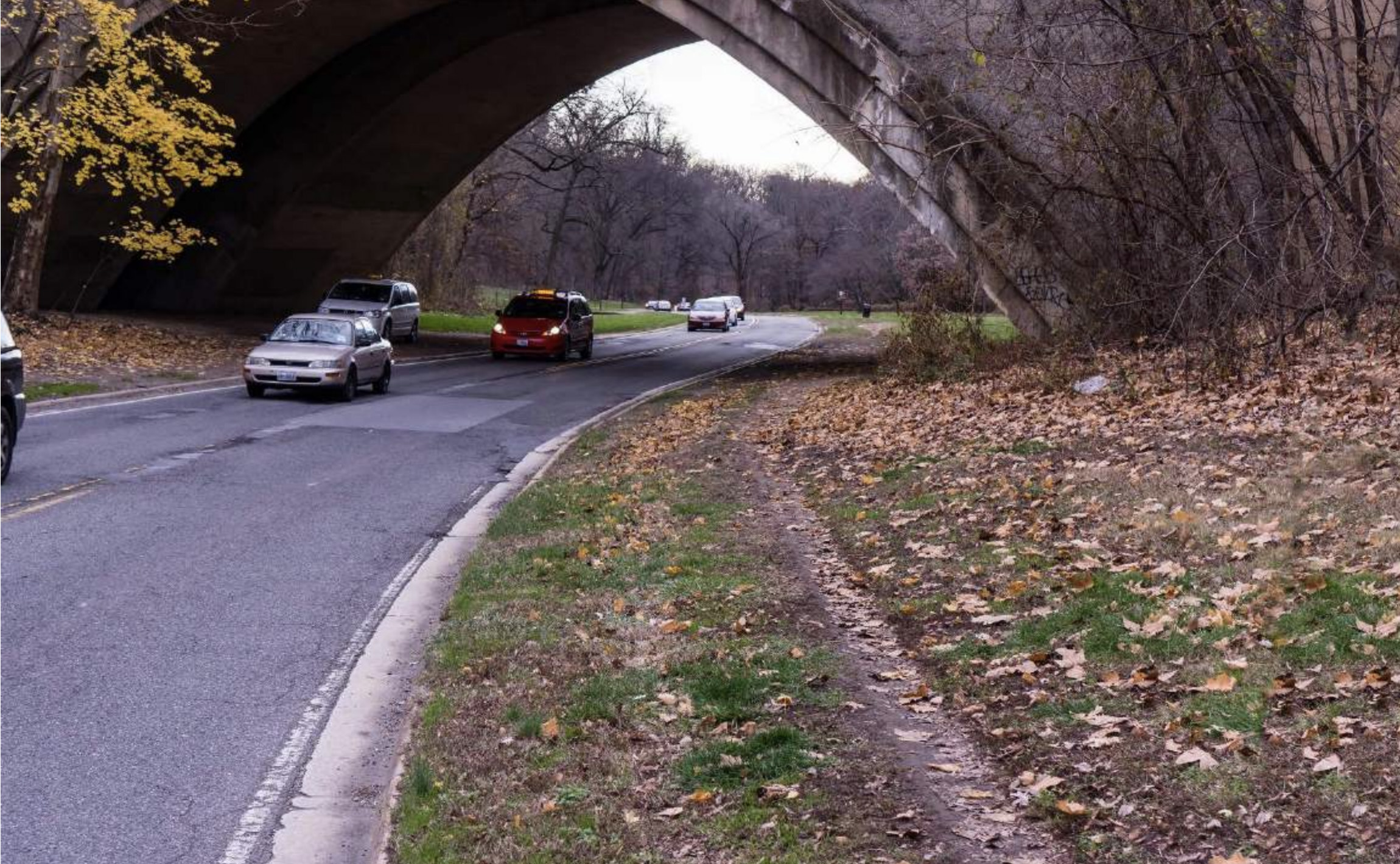
“Historically, the east side of the park has not had a lot of access points compared to the more affluent western side of the park,” says Stephanie Piperno, manager of the Capital Trails Coalition. The Piney Branch trail will help address that inequity, says Piperno, and make the trail network in the park more useful for getting around the city without a car.
“We look at these multi-use trails not only as recreational assets, but also as transportation assets. People aren’t going to opt in for other modes of transportation if these trails don’t take them places,” says Piperno.
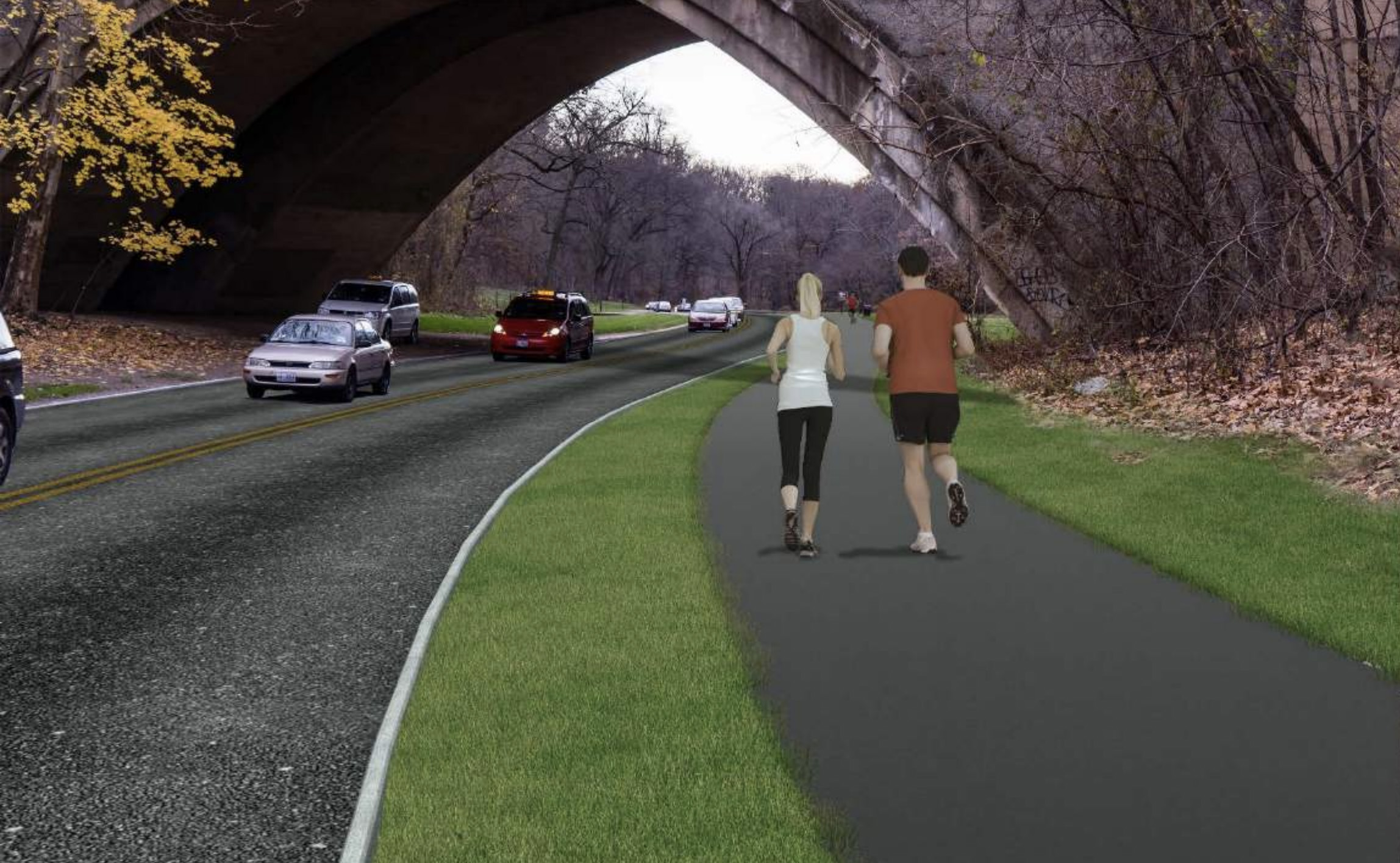
The trails in Rock Creek Park, and around the region, have been especially crowded during the pandemic, as people look for solace in the outdoors and an escape from home. The narrow path has made social distancing a challenge.
“I’ve been on it and I have felt uncomfortable trying to pass somebody, or feel really uncomfortably close just because how narrow the trail is,” says Piperno. So, she says, the project to widen the trail is timely — even though it will take a few years to finish.
DDOT plans to hold a pre-construction public meeting about the project sometime in February. The total cost of the project is estimated to be $14.7 million.