Ally Schweitzer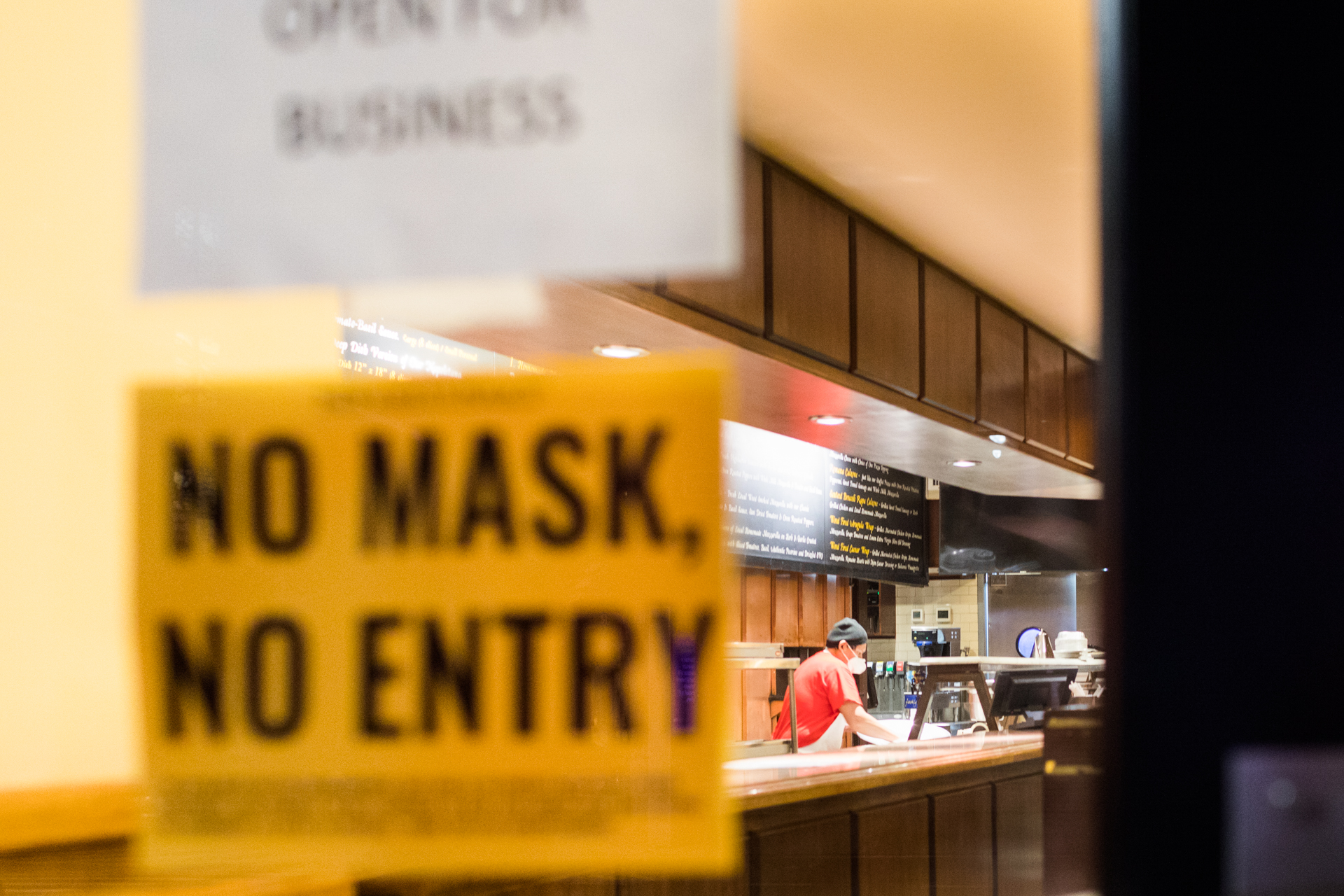
Last Summer, Virginia became the first U.S. state to adopt new COVID-related workplace health and safety standards. The regulations were temporary, and ended this week.
But on Wednesday, the state enacted nearly identical standards through at least the end of the health emergency, and possibly permanently.
The new regulations, approved last week by Gov. Ralph Northam, require all employers in the state to provide personal protective equipment when workers can’t physically distance, close or control access to common areas like lunchrooms, develop safe “return to work” plans for workers recovering from COVID-19, and regularly clean areas with heavy foot traffic, among other measures. Employees who interact with the public must wear masks.
The standards vary for workplaces deemed “low,” “medium,” “high,” or “very high” risk for viral exposure. In high-risk workplaces, employees must be screened for symptoms before each work shift, and employers must inspect their air-handling systems to make sure they’re circulating air safely.
Virginia’s Safety and Health Codes Board voted earlier this month to make the standards permanent (though they still needed final approval from Northam, which arrived last week). A provision in the standards notes that the Board can reevaluate them after Northam lifts the statewide declaration of emergency. Worker advocates hope that a new federal safety standard is enacted well before the pandemic subsides.
“This standard Virginia put in place is very specific to COVID-19,” says Debbie Berkowitz with the National Employment Law Project, “and we know at some point the Biden administration will be creating a permanent standard for all aerosol and airborne transmissible diseases.”
President Joe Biden signed an executive order last week instructing the U.S. Occupational Safety and Health Administration (OSHA) to issue revised COVID-19 guidance to employers and to consider implementing new emergency standards no later than March 15.
The Virginia Department of Labor and Industry adopted the state’s standards in the absence of new federal rules under the Trump administration. Since the pandemic began, OSHA has not issued any new enforceable health and safety requirements for employers.
Virginia’s new rules “will reduce the risk of COVID-19 exposure and protect the health and safety of Virginia workers, consumers, and communities as we move our Commonwealth forward together,” Northam said in a statement.
The standards have been hailed by labor unions and worker advocates across the state. During a public hearing earlier this month, Virginia AFL-CIO President Doris Crouse-Mays said safety standards benefit consumers, too, “because customers will not just feel safe but know they are safe as they frequent their favorite businesses.”
Business interests worked unsuccessfully to block the regulations, saying a one-size-fits-all safety standard isn’t appropriate for every business and could put pressure on employers that have lost revenue during the health crisis. In public comments, the Virginia Business Coalition said permanent safety standards are no longer necessary now that vaccine distribution is beginning to ramp up.
The Virginia Department of Labor and Industry has received more than 13,000 complaints related to COVID-19 risks in the workplace statewide, “with 100 needing full investigation due to serious concerns and 27 employers being cited,” according to a press release from the governor’s office.
Virginia has been called the worst state for workers because of its restrictions on labor unions and relatively low minimum wage, among other factors. But Debbie Berkowitz with the National Employment Law Project says the state has been a leader in workplace safety during the pandemic.
“I have to give Gov. Northam a lot of credit for being way ahead of the curve here and realizing that if you could get some very basic standards that employers had to meet — you know, this wasn’t rocket science — that you could go a really long way at mitigating the spread of COVID-19,” Berkowitz says.
Since Virginia enacted temporary health and safety rules for workplaces in July 2020, more than a dozen other states have taken similar steps, including California, Michigan, Washington, Oregon, Nevada and Minnesota.