Colleen Grablick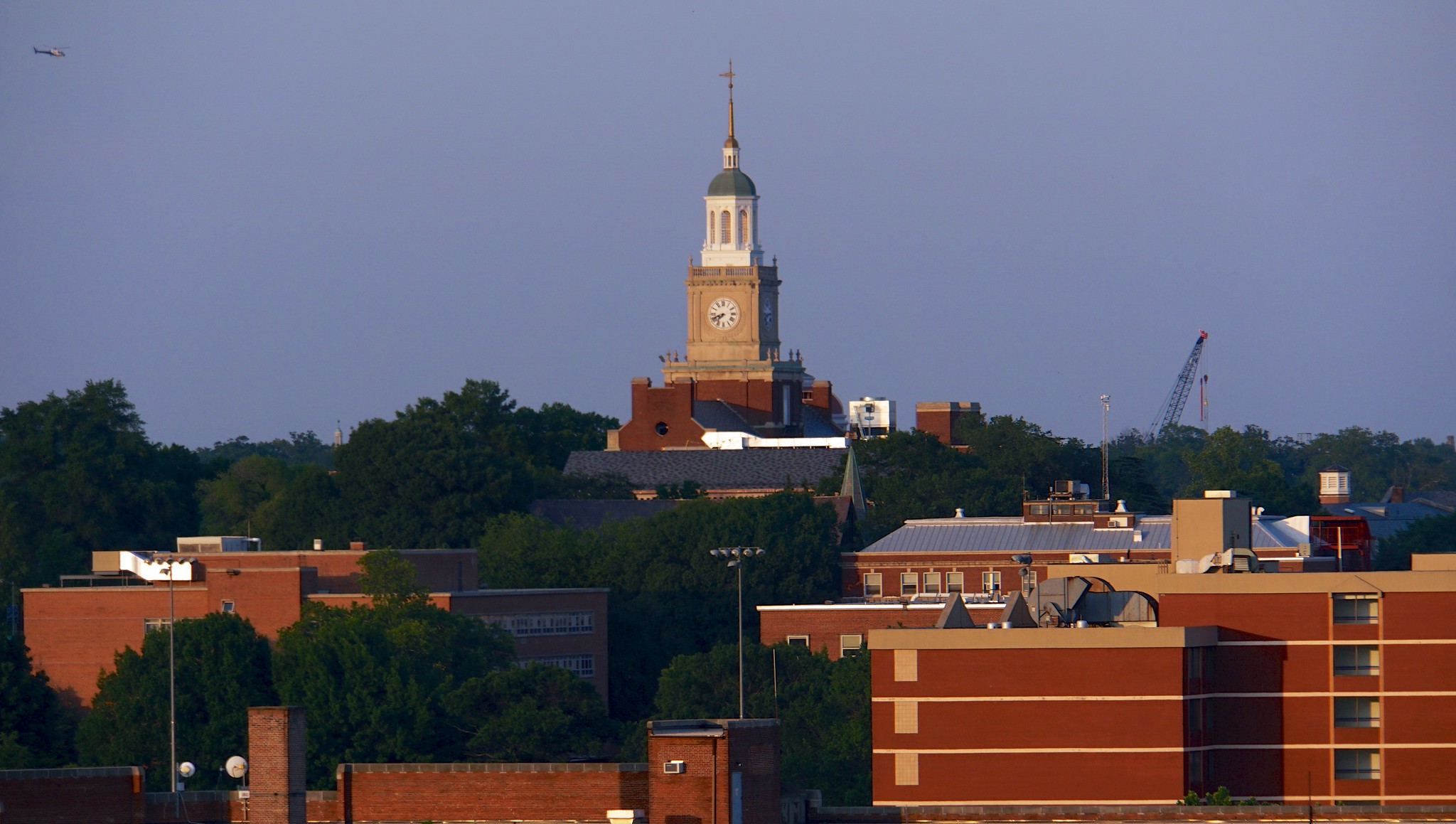
Back in March, like many around the country, Quinn Goldberg’s education at the University of Michigan moved online. When fall came, Goldberg decided to enroll in virtual classes through Northern Virginia Community College — a move that he says made both economic and academic sense. Nearly a year later, he’s entering his third semester of Zoom University, and managing all the financial, academic, and mental challenges that come with it.
“I struggled with attention issues in the first place, and not being in a classroom setting completely destroyed that,” says Goldberg, who has been supplementing his classes with work at a local Giant.
Like many students in the pandemic, Goldberg found the transition into online learning disruptive, disorganized, and detrimental to his education. Despite Goldberg’s frustrations with remote learning, he says he opted not to return to his campus when the school opened in the fall, fearing an outbreak of the virus. (University of Michigan ended up going under a lockdown in October as COVID-19 cases on campus spiked.)
“I chose not to go with that option, simply because of the fact that I didn’t feel safe,” Goldberg says. “I felt like it was kind of risking a lot for little to no reason.”
Now nearly a year into the pandemic, colleges in the D.C. area are grappling with the same issue: Officials are attempting to strike a balance between the public health risks of reopening campuses, and the negative impacts of remote learning — both on students’ mental and academic wellbeing and the institutions’ financial health.
In the fall, D.C. universities operated in a majority-remote capacity. Some offered on-campus housing for limited numbers of students, but most conducted classes virtually. This spring, headed into a third semester of the pandemic, a few are attempting to take lessons learned from the fall to open campuses for more students, while others are sticking with their virtual plans from the fall. Nationwide, more than a quarter of colleges are offering some form of in-person learning this semester, according to the College Crisis Initiative, while 40% are primarily online.
“The decision to reopen and how much to reopen, it’s really specific to the university,” says Dr. Sarah Van Orman, the chief health officer for the University of Southern California and a member of the American College Health Association’s coronavirus task force. “I don’t fault a university from doing one thing or the other. There are just a lot of factors that help people to determine, is it safe, is it reasonable to bring students back?”
According to Van Orman, smaller colleges that are highly residential are likely to have an easier time safely reopening compared to larger institutions, but still run the risk of spreading the virus into the surrounding community. After a spike in cases in mid and early January — likely fueled by holiday gatherings and travel — COVID-19 cases in the D.C. region have plateaued. But most metrics remain above records set in the spring, and experts warn that further spikes could occur if the spread of COVID-19 variants, which have been identified in Maryland and Virginia, outpace the vaccination rollout.
Most local campuses kicked off their semesters in late January — but the mode of operation for the spring varies by school. George Washington University, the University of the District of Columbia, and Howard University will be continuing to operate this spring as they did in the fall — with the majority of classes remaining remote, as will Virginia’s community college system.
Meanwhile, others are pushing towards a fuller return to in-person operation. American University and Georgetown University are bringing select groups of students back for on-campus living and boosting the amount of in-person course offerings, and Catholic University is hosting a majority of its classes face-to-face, with undergraduate housing open to all students. (American University holds the license to WAMU, which owns DCist.)
Like Goldberg, American University junior Alida Austin has been taking classes entirely remotely since last spring. While she says her experience with “Zoom school” has improved since it began last March — thanks to living on her own in an off-campus apartment in Tenleytown, free of distractions, and better preparedness from professors — she empathizes with students like her college-age sister, who haven’t returned to their college campuses and won’t for a while.
“Studying from home, I know it’s hard,” Austin says. “Making connections, really having meaningful interactions with professors and other students, has been more difficult.”
Howard University English professor Jennifer Williams says she’s witnessed students’ hardships first hand — whether it’s a student learning from a shared home with limited technology access, or a parent of young children attempting to navigate their own education while also caring for their kids.
“So many students have different needs and circumstances,” Williams says, who has opened up several channels for students to communicate with her and their classmates via text, Blackboard, and GroupMe. “I think that, like all of us, students are having emotional challenges.”
Even under the circumstances, Williams says she’s amazed at the energy her students bring to online learning, and their willingness to create a virtual community as they await a return to campus.
“One of the takeaways [of virtual learning] is just the need for compassion,” Williams says. “And to acknowledge our shared vulnerability.”
At AU, while the majority of classes will continue remotely this spring, the university is doubling the number of in-person classes it offered in the fall, expanding into fields like the sciences, visual and performing arts, and media studies. The school is also experimenting with a “mini semester” beginning in mid-March that will allow 1,250 primarily first year students to return for at least a taste of residential college life. Austin has some reservations about bringing first years back to campus.
“Part of that, it makes me a little bit nervous,” Austin says. “Just because we don’t know for sure what the [case count] is gonna look like in March.”
Other schools are developing similar measures: Catholic University, which is hosting the majority of its classes in-person (but offering hybrid options for students who choose to remain off-campus), is allowing all undergraduate students on-campus housing spots — each in single rooms. Non-academic gatherings are limited to ten people, and professors will be separated from students with plexiglass shields in classrooms.
But even for those institutions that are attempting to create a somewhat normal IRL campus experience this spring, Van Orman says students could struggle with those abnormal, pandemic-times campus precautions.
“I think [one thing] that’s been challenging for students is that even for institutions that do have in-person activity, it’s not normal,” Van Orman says. “Students come back and they expect that [the institution] is going to have the same rich social, cultural life. But you come back, it’s like ‘no you can’t gather, you can’t have events.’ Many of the things we value about college life actually aren’t going to take place right now.”
Still, Van Orman says she understands the urgency at which officials want to reopen schools and the dilemmas the pandemic has brought on. College students across the U.S. have reported emotional and mental challenges resulting from remote learning, with low-income and students of color facing disproportionate losses as on-campus housing and employment remain inaccessible. And with housing and tuition revenue declining during the pandemic, institutions are facing their own financial crises.
Last summer, American University projected a loss of more than $100 million through fiscal year 2022. The school’s student newspaper, The Eagle, reported this past fall that the spring semester plans did not change this estimate, with any new housing revenue coming in going towards the cost of COVID-19 testing and other measures. George Washington University is facing a shortfall of more than $180 million dollars, and Howard University announced a loss of nearly $40 million when it shut down last spring.
Beyond the public safety measures, like a robust testing program, building out contact tracing, and coronavirus-proofing classrooms — steps that are often costly — Van Orman says that successfully reopening an institution also depends on the campus culture, and a commitment to safety from the community.
Ann Pauley, the vice president of media relations for Trinity Washington University, says the campus successfully operated in a hybrid model thanks to the students’ willingness to adapt to the changes. Trinity, which educates the most D.C. residents of any university in the city, offered a number of hybrid courses in the fall, and kept most academic buildings and student resource centers open. The large majority of Trinity students are commuters, but Pauley says the school also housed about 200 students on campus without causing an outbreak.
“Students have been very responsive to all of our guidance and guidelines, and that’s made a huge difference.” Pauley says. “Because we are 95% students of color, I think that there’s also a great understanding of the great disparity in the impact on people of color of COVID. I think that there’s heightened sensitivity to the importance of being a safe environment and being respectful.”
Meanwhile, residential campuses like American, Howard, Georgetown, and Catholic, face the challenge of monitoring both on and off-campus spread of the virus, limiting the often highly social atmosphere on the campus and in the surrounding neighborhoods. Since the semester began, Catholic University has reported 16 positive cases of the virus — 7 coming from students on campus. American University has reported 12 cases among staff and off-campus students since beginning the semester on Jan. 19. Across the country, many schools that reopened this year have already reported clusters of the virus on campus in the first weeks of the semester.
For Goldberg, the Northern Virginia resident, he says he will wait out a return to campus life in Michigan when it’s safe to do so, and manage best he can learning remotely. Despite the University of Michigan limiting the number of on-campus students this semester, the local health department in Ann Arbor recently ordered students living in the campus area to stay home until Feb. 7 amid a rise in cases.
“Even if I was going back to campus, the kind of the social aspect, which I felt was a majority of the reason I would be there, would not exist at all,” Goldberg says. “My hope is that I will be able to return to Michigan in the fall. Honestly, right now, I couldn’t tell you whether that’s going to happen or not.”