Martin Austermuhle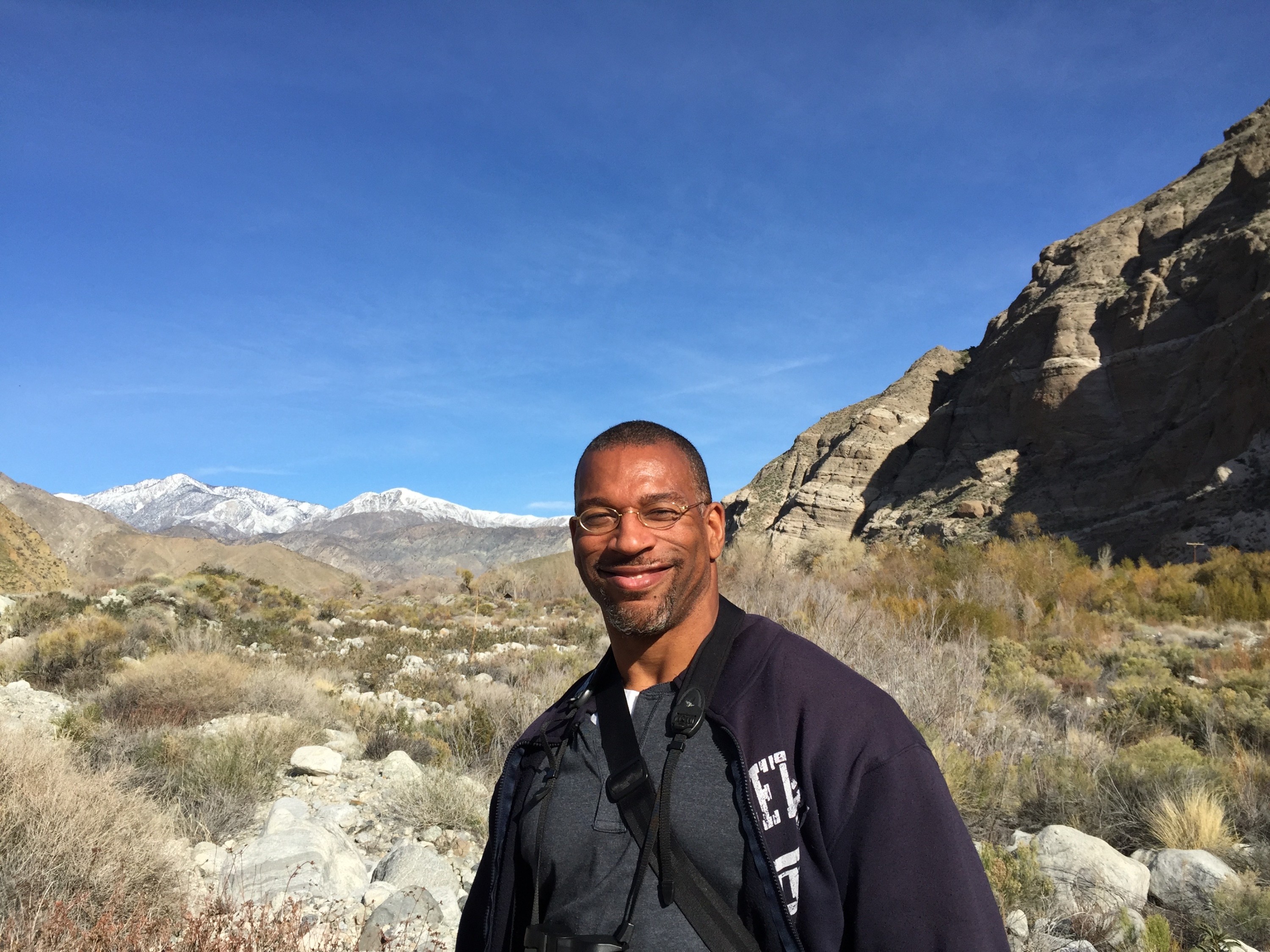
Everyone, Andy Warhol once prophesied, “will be world-famous for 15 minutes.”
Christian Cooper is leveraging his 15 minutes. Early last summer, only weeks before the country would be engulfed in protests over racial justice, Cooper, who is Black, was accosted by a white woman as he quietly looked out for birds in New York’s Central Park, and asked her to leash her dog. The incident, caught on cell phone and posted on Twitter for the world to see (views so far: 45 million), sparked discussions about what Cooper called a “deep vein of racial bias” in the country.
Suddenly, with many of the country’s eyes on him, Cooper had a perch from which to shout his support for political causes. And he has. But the native New Yorker has more recently decided to embrace a cause 228 miles to the south.
“My immediate attitude was you give me 15 minutes of fame, I’m going to use it to try to make some progress on the issues I care about,” he says. “And, right now, because of its imminence and its importance, it’s D.C. statehood.”
Last month, Cooper took to the pages of The Washington Post with an op-ed urging Senate Democrats to scrap the filibuster and immediately pass a bill to grant D.C. statehood. It was almost easy to miss; at no point did he reference the incident that made him famous, identifying himself only as a “New York City-based writer, activist and birder.” And earlier this week, after charges were dismissed against Amy Cooper, the woman who accosted him, Cooper opted not to say anything about the case when reporters called. Instead, he used the moment to make a pitch for his adopted cause.
“I am far more outraged by the U.S. Congress, which continues to deny the mostly Black and Brown people of the District of Columbia statehood, and the representation every American deserves, than by anything Amy Cooper did,” he said. “That gross racial injustice could be fixed by Congress now, today, and that is what people should be focused on, not last year’s events in Central Park.”
Cooper has also started working with 51 for 51, an advocacy group focused on statehood, speaking at a virtual event this week.
The 57-year-old isn’t the first celebrity who has come out in favor of statehood, of course. Years ago, Hayden Panettiere lobbied on the city’s behalf; Mario Van Peebles and William Baldwin have also been 51st-staters, if only briefly. But Cooper comes to the cause as it seem closer to reality than ever before — the House passed a statehood bill last year, Democrats have coalesced around the idea like never before (even then-candidate Joe Biden supported the cause), and a Fortune poll earlier this year found half of Americans on board with the extra star on the flag.
Cooper understands that his stardom, fleeting as it may be, can serve to further the city’s cause. And he speaks of the issue with a fierce sense of urgency, like he knows those 15 minutes are fast ticking down.
“You’ve got, and pardon my bluntness, American political apartheid going on in the shadow of the monuments to freedom that we all exalt and preen about,” he tells WAMU/DCist. “And yet the situation continues. And when I say American political apartheid, I’m not saying that there is a military bulldozing Black people’s houses. But what I am saying is that when you have a bunch of old white men from other parts of the country who come to Washington, D.C. and then tell the majority Black and Brown population what they’re going to do and how they’re going to live.”
Cooper admits he didn’t come to the issue immediately. He had always been aware of the city’s status, but assumed it would take a constitutional amendment to pull off changing it. (Some opponents argue the same; the current bill in Congress would simply shrink the federal district and turn the remaining land into a new state.) Once he realized that might not be the case and Democrats would control Congress, he decided it was time to make the case as publicly as possible. He sees part of his role in educating others who may have come from the same place he did.
“I had this whole conversation with a friend of mine who’s a very sort of very centrist Democrat, and he was basically reiterating Republican talking points when I raised D.C. statehood on my Facebook page,” says Cooper. “I was like, ‘Wait a minute, this, this, this, this.’ And he’s like, ‘Oh, I didn’t know all that.’ Even educated people in D.C. don’t realize all the dimensions of the issue.”
Still, significant obstacles remain to D.C. statehood. There aren’t enough votes in the Senate to pass the bill if the filibuster remains intact (even some Democratic senators remain wary) and public opinion remains divided on the topic, with most Republicans and many independents cool to adding another state, one that would most certainly elect two Democratic senators. Some polling has found that many let their negative opinions of the federal government bleed into the city that houses it.
Obstacles and challenges aside, Cooper says he’s optimistic for the cause of D.C. statehood because he says it’s a historical injustice that time will have to correct. And the time is closer now than it’s ever been.
“I’m optimistic not only because it’s so tantalizingly close, but because it’s so tantalizingly American, so joyfully American for all of us, regardless of what part of the country we live in and regardless of what race we are or ethnicity,” he says. “The Democrats have a historic opportunity to associate themselves with pure joy in the streets of Washington, D.C. They get to be associated with joy, with the celebration, with fireworks, with something all Americans can get behind, which is an expansion of democracy on our own shores. I can’t see how how people wouldn’t leap at this.”