Colleen Grablick
 Jacob Fenston
 Jenny Gathright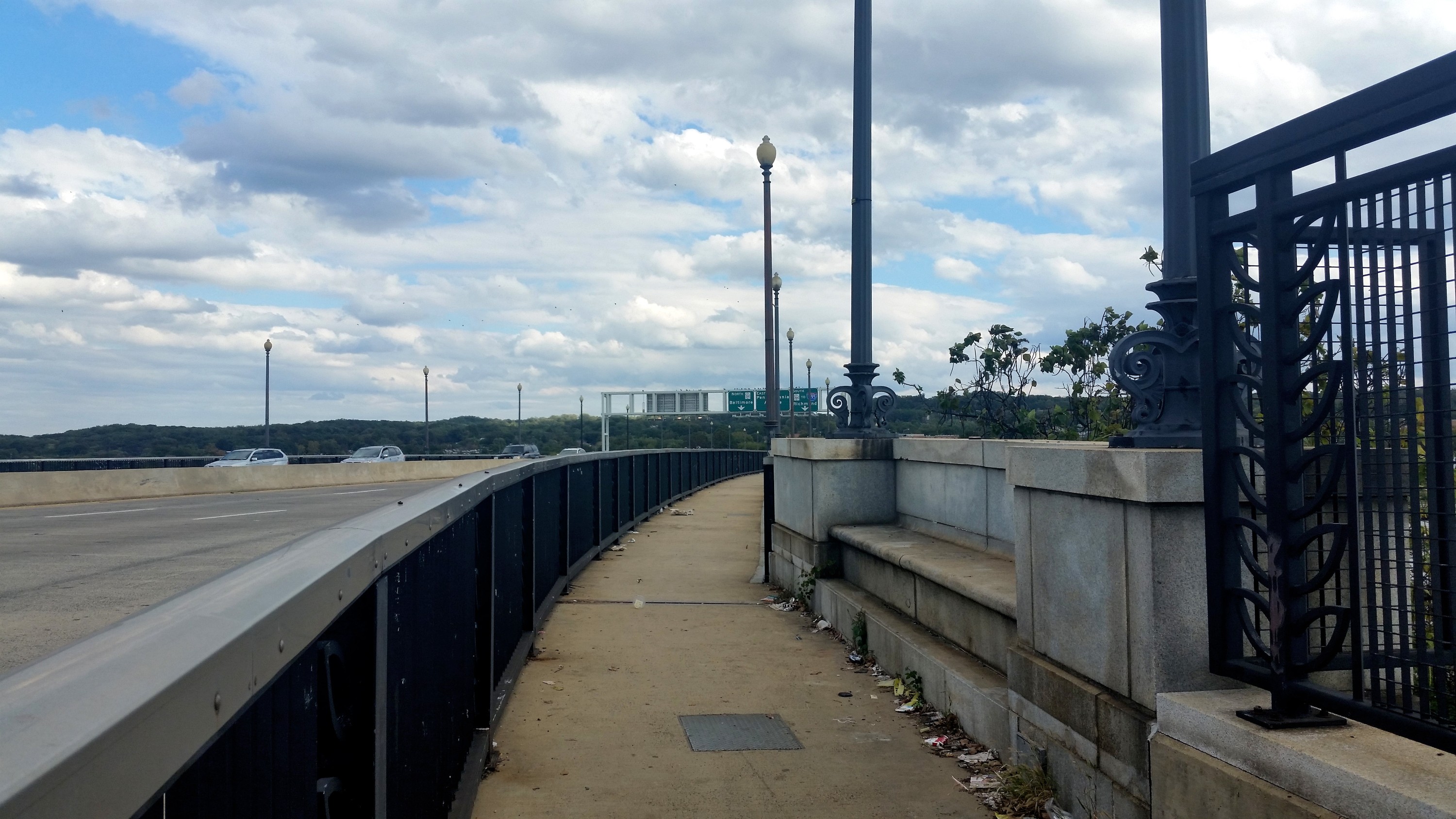
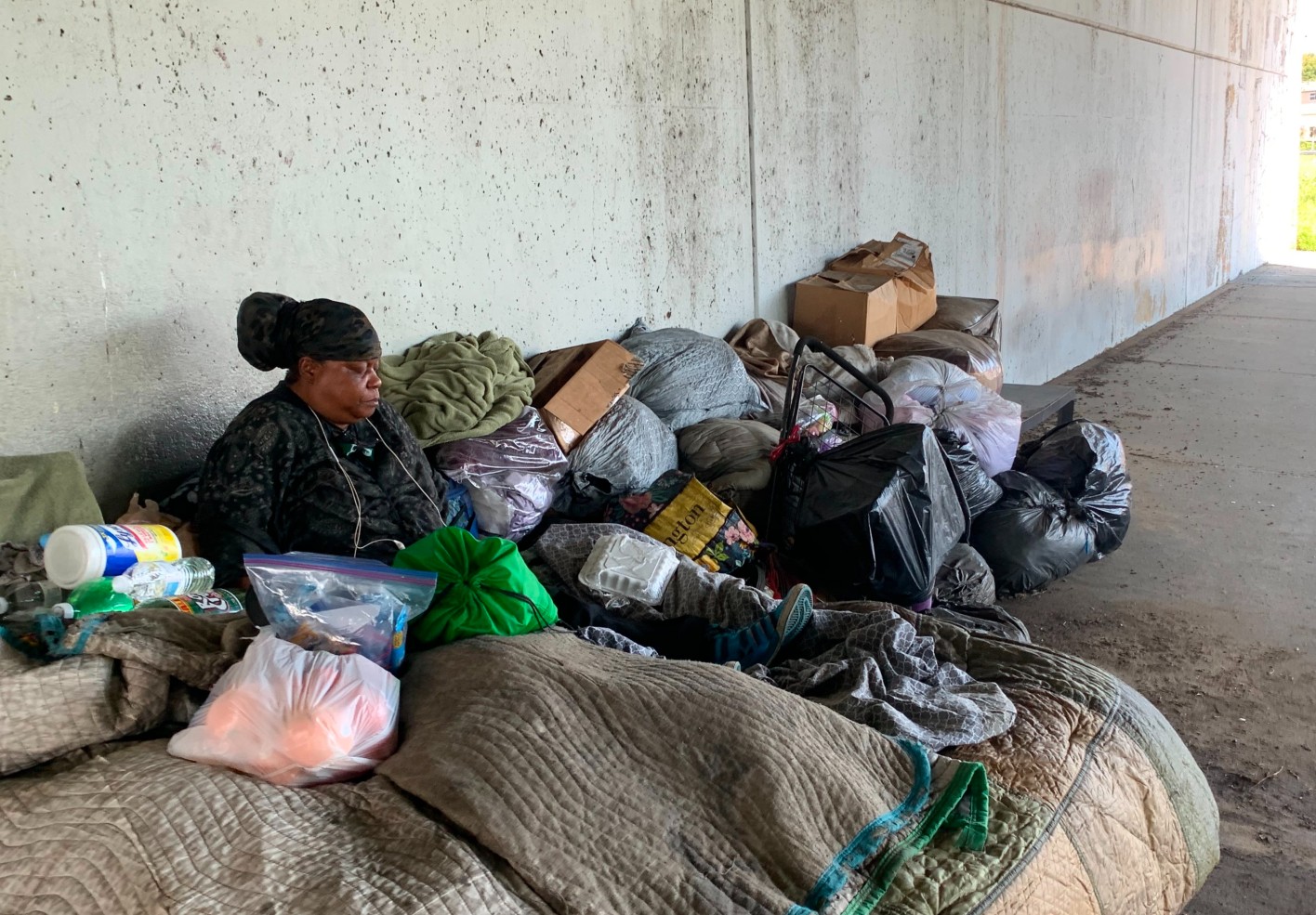
Angela Hill, a 58-year-old mother and grandmother, died last week under the I-295 overpass, where she’d lived for several years.
Now, her family and D.C. neighbors are mourning a woman they cared for deeply as a mother, grandmother, aunt, and community fixture.
“It brings a tear to my eye knowing that she was loved and that many people throughout the city know who she is,” William Jackson, Hill’s nephew, told DCist at a Saturday vigil for Hill. “Even if they’ve never met her, they just know that she’s the lady under the bridge.”
According to Ward 7 resident Linda Miley — and the dozens of residents who showed an outpouring of grief on social media in the wake of her death — Hill was a long-standing member of their community.
“Every time I see her, I would ask the lord to bless her,” Miley said of routinely passing Hill. She was the neighbor who found Hill on the morning of Feb. 17, as the city braced for yet another winter storm. The night before, temperatures had dipped well-below freezing.
Miley said she and other neighbors would frequently offer necessities for Hill: in the summers, coolers of water and Powerade; in the winter, they’d bring hot meals, blankets, and jackets.
And despite being temporarily relocated by multiple encampment clean-ups, organized by the Deputy Mayor for Health and Human Services, Hill always returned to her spot in the underpass.
“This is where she wanted to be,” said Ayanna Smith, a Penn Branch resident who organized the Saturday evening vigil. A crowd of about 80 people gathered in the cold to memorialize her under the I-295 overpass.
https://twitter.com/HillcrestWard7/status/1363253425497137159
To Jackson, the turnout from the community was moving. He said Hill’s family loved her deeply, and repeatedly tried to help her. At one point they admitted her to St. Elizabeths, the city’s public psychiatric facility—but Hill ran away, he said.
Even when Hill rejected their offers of help, Jackson said the family “never lost sight of her.”
“We brought her blankets. We brought her clothes. We brought her food out here even though she didn’t recognize us,” said Jackson.
Ashley Brown, Hill’s daughter, told the Washington Post that her mother struggled with mental illness for most of Brown’s life, and that for years, the family did what they could — giving her food and clothing and attempting to relocate her. Hill always declined to leave, Brown told the outlet.
“It’s just been a really tough, tough struggle trying to keep her alive out there,” Brown told the Post. “We just tried to make sure she had the things she needed to survive. . . . At times, we tried to take her physically somewhere, and she would fight. My mom was most comfortable where she was.”
Despite the family’s challenges, Brown recalled how her mother watched Star Trek when she was younger, and braided Brown’s hair. When Brown and her brother were put into foster care, she told the Post that Hill came to look for them. She never doubted that Hill loved her children, she said.
Jackson, who is 29 years old, said he has memories of Hill taking him and his cousins to play in the park or run errands when they were kids. And, he added, Hill was an excellent cook.
“She was just a beautiful person,” said Jackson. “Somewhere along the line, she just stopped taking her medicine and mental illness got the best of her. But I do remember a time where I had a lot of fun hanging out with my aunt growing up. And that’s what I choose to remember. I choose to remember the good times.”
For many of her neighbors, Hill was a cherished presence, whatever her troubles. Ward 8 resident and D.C. State Board of Education member Jacque Patterson said that Hill wasn’t just a community fixture, but an inspiration to his son, now 11. Since age seven or eight, Patterson said he and his son would stop by on their way to school, often dropping off items or talking with Hill.
“That’s what she was to us, she was an inspiration,” Patterson said. “She taught my son just how to care about people at an early age, and that meant a lot to me. I’m a father and I try to teach my child about caring for others, and this woman taught my child how to care for people.”
Local reporter KM News, who runs a news page that reports on crime in the D.C. area, spoke to DCist by phone as he went to drop off flowers at the underpass last Wednesday. (He asked to be identified only by the name of his page, since he says his reporting on shootings in the community could put him in physical danger.)
“She’s not just somebody that was homeless and didn’t have people that care,” he said. “Everybody, when we pass there, we look for her.”
Hill had a community of caring neighbors and family. But advocates say that the city could have done more to prevent her death.
“It’s really tragic because it doesn’t have to happen,” said Karen Cunningham, the executive director of Everyone Home DC. “We know how to prevent homelessness, we know how permanent supportive housing works, and yet we still have so many people living outside…it’s unconscionable that we allow it to happen.”
Hill’s passing follows a year where unhoused residents faced new, and in some cases deadly challenges. According to data obtained by the Washington Post, deaths amongst residents experiencing homelessness rose by 54% in 2020, owed in part to their disproportionate death rates from COVID-19. Recent weather has added another danger. On Feb. 11, Ward 1 Councilmember Brianne Nadeau shared that a man who slept in a plaza in Columbia Heights had died.
“Miss Hill’s death is tragic, [but] unfortunately, it’s not unique,” said Ralph Boyd, president and CEO of the nonprofit So Others Might Eat. “But whenever there’s a tragedy, that there are eyes on that tragedy, I think that can be the impetus for focus and refocus.”
D.C. has made progress in creating more permanent supportive housing; the city recently completed construction on the last shelter in Mayor Muriel Bowser’s plan to replace D.C. General, which includes 15 permanent supportive housing units. But Cunningham said as D.C.’s population continues to grow, gentrification expands, and the pandemic continues to wreak financial havoc on residents, the housing crisis will continue.
“We need to look at the income disparities during this pandemic. Higher income folks are often doing better than before, whereas lower income people are really struggling, and we have this really huge wealth disparity,” Cunningham said. “All of these things put pressure on people who are already living paycheck to paycheck, and some of them are going to become homeless.”
City officials, who had previously led encampment clean-ups in Hill’s area (a clearing was scheduled for Feb. 18, the day after Hill was found), said they were aware of Hill, but could not provide further detail on her relationship with agencies like the Department of Human Services, or the Deputy Mayor for Health And Human Services.
The Metropolitan Police Department confirmed that they received a report for an unconscious woman at Hill’s encampment on Wednesday morning, but could not provide further details on her death.
“Ms. Hill was known by many of our District agencies, as they diligently worked to connect her to services and supports, including housing,” Deputy Mayor of Health and Human Services Wayne Turnage wrote in an emailed statement to DCist.
Department of Human Services Director Laura Zeilinger also acknowledged Hill’s passing.
“Many District agencies, community leaders and neighbors engaged Ms. Hill on a consistent basis and are deeply saddened by her passing,” Zeilinger wrote. “We send our deepest sympathies and condolences to her loved ones and encourage residents to continue checking on neighbors experiencing homelessness, particularly during extreme weather conditions.”
To Ayanna Smith, Hill’s long-standing presence at the I-295 underpass, near the bridge that leads from Capitol Hill into Wards 7 and 8, reflects the way the area — and its residents — are overlooked.
“This is the first thing you see when you get on the other side of the Sousa bridge — homelessness and poverty and despair,” Smith said. “Seeing her there, it was a reminder that we face a lot of issues east of the river, and sometimes feel forgotten.”
Smith organized the Saturday vigil to make sure that didn’t happen to Hill.
“I think a lot of neighbors wanted to make sure that her life wasn’t forgotten, that she’s not forgotten, that the issues that she faced aren’t just glossed over or forgotten.”