Elliot C. Williams
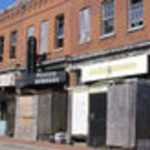
It’s just before noon at King’s Cafe, a takeout spot along Historic Anacostia’s Martin Luther King Jr. Avenue, and business is sluggish. A year ago, workers from nearby offices would have been packed inside the narrow building, debating which sandwich to order and spreading office gossip.
But on this Thursday afternoon in March, only a handful of masked customers pop in to order a bacon, egg, and cheese sandwich or fill out a lottery ticket.
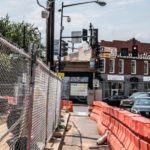
This downtown strip of Anacostia — the cultural and economic heartbeat of the majority-Black neighborhood in Southeast — is supported in large part by D.C. government employees, whose offices at the Anacostia Service Center and the DC Lottery headquarters sit nearby. On the corner of Good Hope Road and MLK Ave., construction workers are building the MLK Gateway, a major mixed-use development project. Newer arrivals like Starbucks and Busboys & Poets dot the street.
But as those offices have closed or limited access in the wake of the pandemic, King’s Cafe owners David and Theresa Han say business has dropped nearly 80%. They now close at 2 p.m. instead of 4 p.m., and they dropped their hot bar for an all-day breakfast menu. Even with these changes, after a decade of business, the Hans are struggling to pay rent.
“It’s really hard. It’s every day, praying that God will save me,” Theresa says. “I really appreciate the 20% of our customers who are regulars. They walk down here, they drive down here, and they say, ‘Ma, don’t give up. I want you to stay here. I’ll be back soon.’”
It’s unclear just how many small businesses like these in Anacostia haven’t been able to hang on during the pandemic. There is a significant lack of economic research focused on this neighborhood, and of those located east of the Anacostia River, in part because of the nature of their businesses. According to the DC Fiscal Policy Institute, most Black-owned businesses in the U.S. — and many in wards 7 and 8 — are sole proprietorships, meaning they’re run by one person. That makes it harder to track statistics like foot traffic and revenue.
But anecdotes from business owners like the Hans indicate that wards 7 and 8 haven’t faced the widespread closures other neighborhoods have seen. Instead, faced with decades of underinvestment and a lack of employment opportunities, they’ve done what they’ve always done in the face of economic injustices: they’ve adapted.
“The thing is, we’re a community that was already suffering and underserved,” says Kristina Noell, executive director of the Anacostia Business Improvement District. “Our businesses are extremely creative, and they’ve had to be. They are always having to figure out how to survive.” Longtime D.C. resident Nikki Peele, who has spent years chronicling the socioeconomic changes underway in Southeast neighborhoods like Congress Heights, puts it another way: “Some may say that [business] west of the river is getting a slight look at life east of the river.”
Noell says she can’t name any businesses in Anacostia that have closed because of pandemic-related financial pressures. The few that shuttered or changed locations were already on their way out.
But that doesn’t mean they’re not struggling. Black-owned businesses have been hit particularly hard during the pandemic, as the initial Paycheck Protection Program set up by Donald Trump’s administration was full of loopholes that wealthier companies exploited. Few businesses east of the river received aid during the first round of PPP loans, while big-name firms scooped up much of the first relief package. (Only recently did President Joe Biden’s administration make it easier for freelancers, contractors, and sole-proprietors, like the ones that make up much of Anacostia’s workforce, to apply for bigger PPP loans.)
More relief is needed for businesses east of the river, Noell says — but even those that have received small business loans have faced a wake up call.
“What the pandemic did was lift up the roof of the car,” Noell says. “A lot of these business owners had to really take a look at their back of the house and get their finances in order so that they could even apply to these grants.”
One such business owner is chef Peter Opare, operator of Ghanian takeout kitchen Open Crumb on Good Hope Road. His family, which produces food for Whole Foods hot bars from the same kitchen, took a serious financial hit when the grocery store chain closed its hot bars due to coronavirus concerns. To stay afloat, Opare changed the restaurant’s hours and nixed the breakfast menu to focus on serving lunch and dinner items like fried chicken sandwiches on homemade buns ($5), jollof rice ($5), plantains ($4), and shrimp and grits ($14).
“It takes a few years for a restaurant really to develop itself and create a reputation for returning customers. Funny enough, this was the year that we were doing that,” says Opare. “But unfortunately, because of the area we’re living in, I’m actually not seeing certain customers back.”
Opare says his revenue is largely tethered to whether his customers were able to receive unemployment benefits — a process that, during the pandemic, has been chaotic in the District. And while unemployment claims increased city-wide, wards 7 and 8 saw the highest relative growth in the unemployment rate, according to the D.C. Policy Center.
But rather than hike the relatively low prices on his menu, Opare is launching something new: a pre-packaged food line, something he hopes will carry the family business through the pandemic and beyond. Ventures like this tend to be successful in Anacostia because of the strong network of local businesses that promote each other’s work through marketing and word of mouth.
“While we might not be the biggest business community in Anacostia,” Opare says, “I feel like we really do work together to see how we can help elevate each other and get to the next level, and survive.”
Southeast native Derrick Young, who co-owns the popular Black-author-focused Mahogany Books with his wife Ramunda, says that his online store saw the benefits of a nationwide spike in sales for books about race over the summer. But Young notes that months of anomalously high sales isn’t enough to keep Mahogany solvent in the long term if the D.C. government doesn’t invest resources in the area to make it less hostile to business. He says the time to do that is now, before the big-name brands pop up across the neighborhood and eat into smaller, Black-owned business’ profits.
“The way other parts of the city have focused on some of the ancillary things that impact retail — like parking garages opening on the weekend — they do make a difference,” Young says. “Having enough restaurants around retail is an important thing, because they shop and then they want to go eat. They tie those two things together.”
Some Anacostia businesses have hardly skipped a beat since Phase Two of the District’s reopening plan began in late June. New Creation Hair Salon manager Angelina Millner, for example, says her customers were so eager to get back in the salon chair that she’s seen a 2% increase in revenue since the summer.
A city worker comes in periodically to make sure Millner’s business is practicing COVID-19 health protocols, which she doesn’t mind, so long as her customers keep coming back.
“I just try to put a little extra love in the shampoo that we give them,” Millner says, cracking a proud smile. “They’re like family now because we’ve been through it. A whole year of COVID. We have managed, we have made it, and we’re still standing.”
Ally Schweitzer contributed reporting.
More stories:
- With Just One Full-Time Jazz Club Left In The District, Local Musicians Contemplate Their Future
- D.C. Has Lost At Least 375 Businesses Since Last March. Here’s How Those Closures Have Reshaped The City
- ‘A Hole To Dig Out Of’: Georgetown Pushes To Overcome Its Flurry Of Closures
- From Howard Deli To Gregg’s Barbershop, Some Of D.C.’s Longest-Running Businesses Closed Last Year
- D.C.’s Shuttered Hair Salons Served Everyone From Toddlers To The First Lady