 Mikaela Lefrak
 Jordan Pascale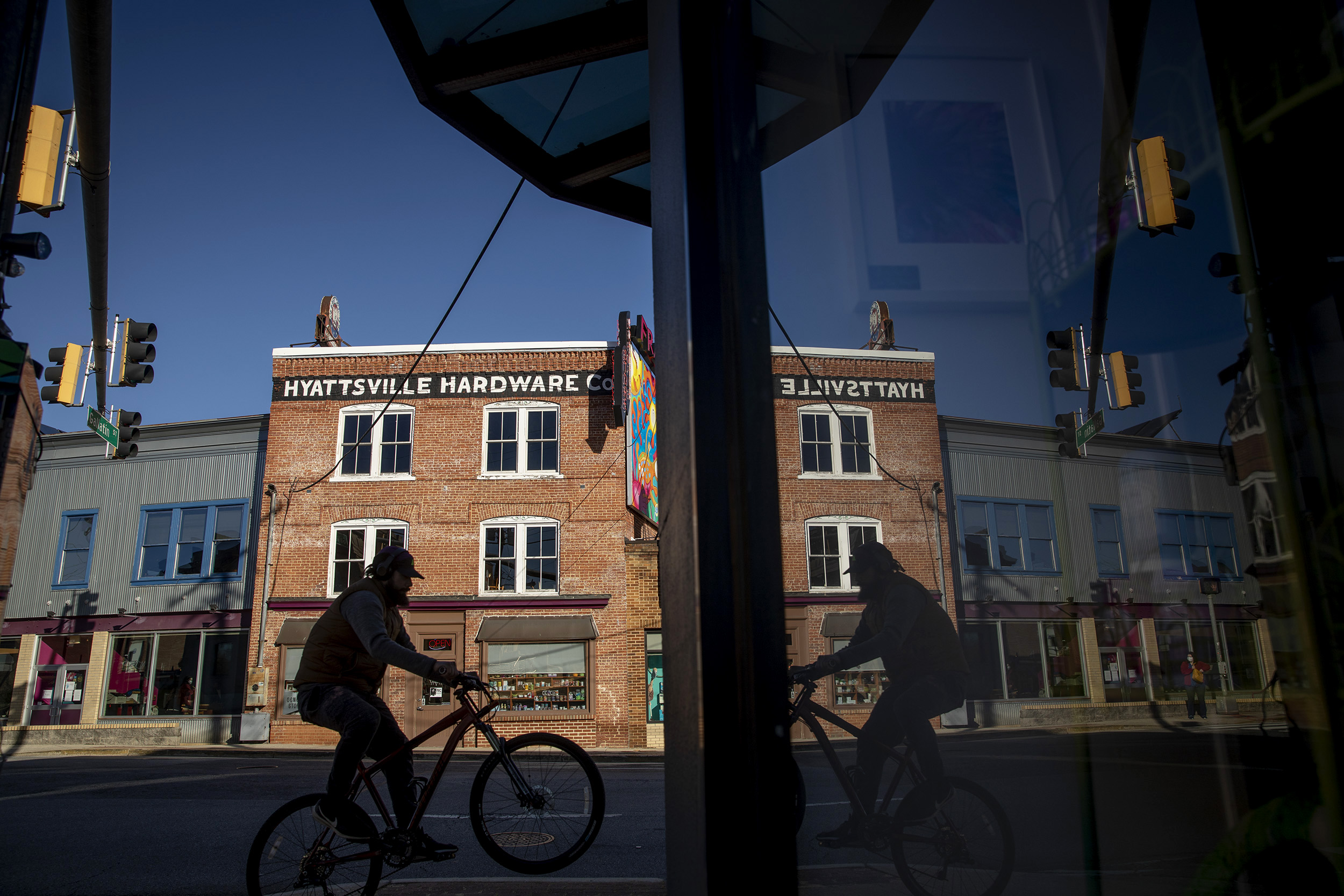
On a blustery weekday in late February, purple-haired Sue Mondeel gave a painting demonstration to her 60,000 TikTok followers from her used furniture store in Hyattsville, Maryland. Around the corner, Rozier Singletary III, a local HVAC mechanic and pipefitter, stopped into the neighborhood coffee shop for his usual order — drip coffee, splash of oat milk.
Across the street, Mike Franklin greeted regulars at his eponymous brewpub, Franklins, before darting into the attached general store to answer an employee’s question.
It’s been one year since the COVID-19 pandemic hit the Washington region with its full force. As the weather warms and vaccine distribution accelerates, people are beginning to survey the altered world around them. Is that friendly neighbor still living two doors down? Is the hole-in-the-wall restaurant up the block closed for good?
Along a three-block stretch of Route 1 between Farragut and Jefferson Streets, the commercial center is bruised but intact.
More than a dozen independent small businesses have survived the past year. There’s a sewing store, a bike shop, tattoo parlor and home improvement store. There’s a distillery, cleaning supplies store, and real estate office. There’s a Senegalese restaurant, hair salon, coffee shop, used bookstore, vintage clothing shop and upcycled furniture store. Meanwhile, the housing market in the area is arguably the hottest it’s ever been.
That’s not to say there haven’t been closures and significant losses. A handful of boutiques did not renew their leases, and a café decided to shutter temporarily until the end of the pandemic. A hair stylist closed up shop and reconfigured her business in a smaller space elsewhere. A menswear shop on the corner just recently closed.
But in a time of uncertainty, the remaining small business owners along this modest stretch of road offer stories of resilience, of tentative hope.
In mid-March of last year, Chris Vigilante’s life was about to get a whole lot more complicated.
He didn’t know it at the time, but his coffee shop was about to shut down for a month. The local distillery nearby, Sangfroid, would shutter the tasting room it had opened just two weeks prior. Love Yoga Studio across the street would cancel all its in-person classes.
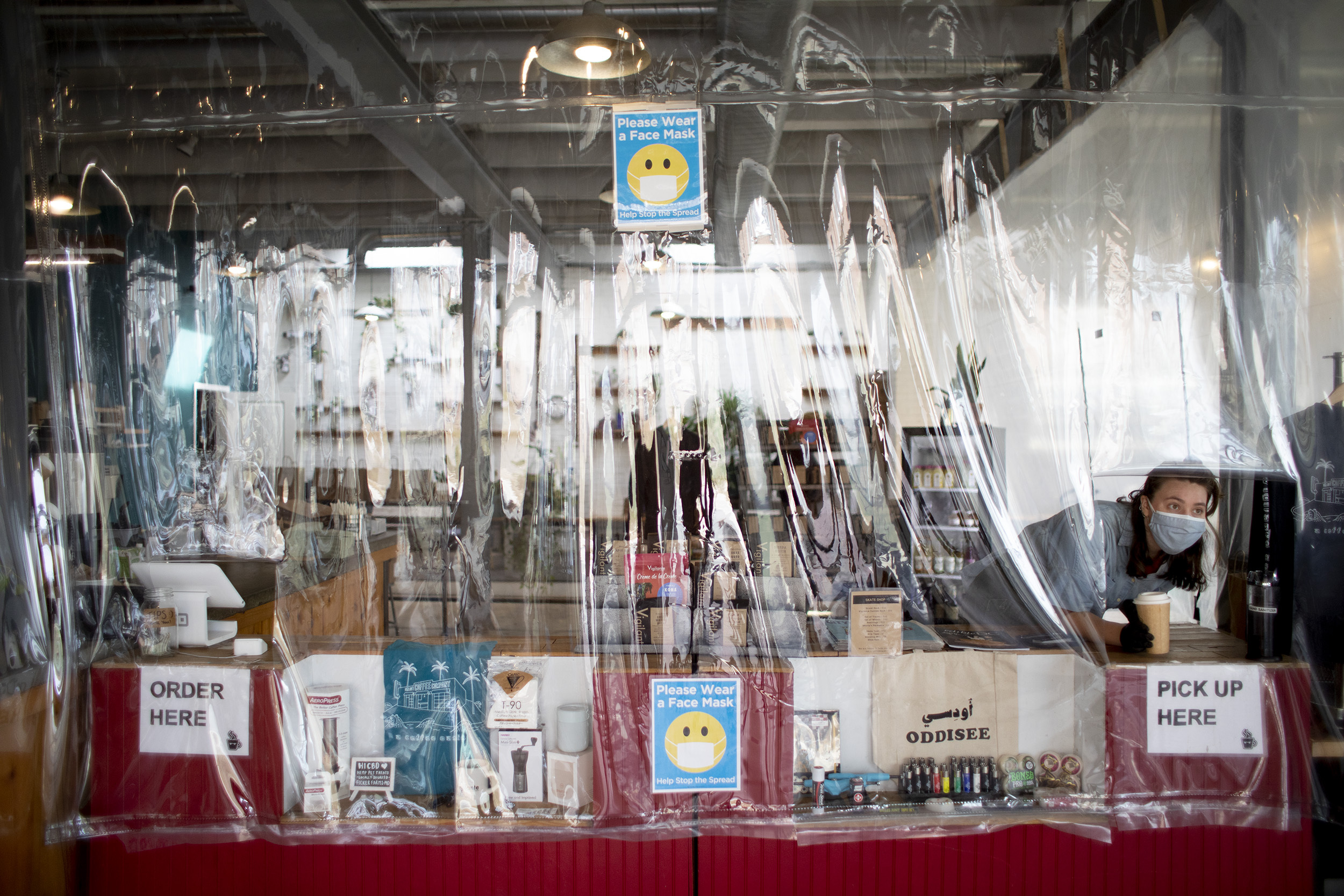
Vigilante closed his coffee shop — scattered with ample potted plants and sleek French presses for sale — on March 16, 2020. When he reopened a month later, he realized he needed to change nearly everything about how he did business. His team took online orders for the first time and reorganized the shop’s layout. They hung plastic sheeting from the ceilings of the coffee shop — originally a Model T garage — to separate staff from customers. (Vigilante splurged on custom-fitted sheeting so it wouldn’t look too “janky,” as he puts it.)
“We just tried to stop the bleeding,” Vigilante says. Still, business dropped by a quarter.

Misery loves company, as they say, and Vigilante had a lot of company.
The COVID-19 pandemic has drastically altered the Washington region’s small business landscape over the past year. In D.C. alone, hundreds of small businesses have shuttered permanently.
Others are hibernation mode: Business owners eked out deals with their landlords and closed up their storefronts, while furloughed employees signed up for unemployment benefits or took on side gigs to pay the bills. President Joe Biden frequently cites a disturbing statistic: 400,000 American small businesses have closed since the beginning of the pandemic.
But in Hyattsville and around the region, local and federal government assistance, community support, and a willingness to innovate allowed many small businesses to survive.
“The things that have really saved us have been the grant,” says Asia Vianna Leak, the co-owner of Love Yoga Studio. Leak applied for and received two grants from the Hyattsville’s pandemic relief fund after the studio had to cancel all its in-person classes and lost two-thirds of its members. She received a Paycheck Protection Program loan in the second round, after her first application was denied.
“It wasn’t enough, but it helped,” she says. “I just didn’t want to give up.”
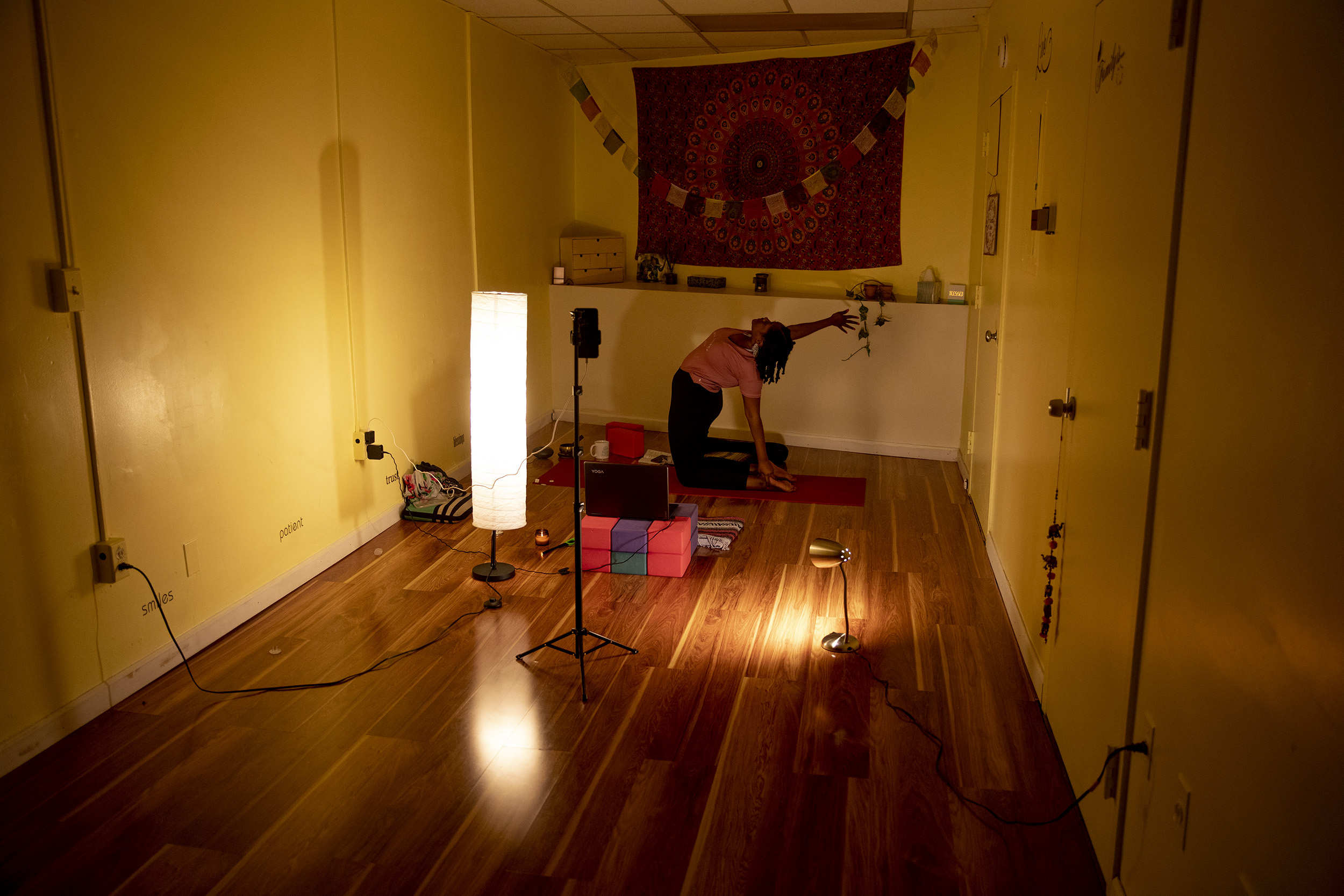
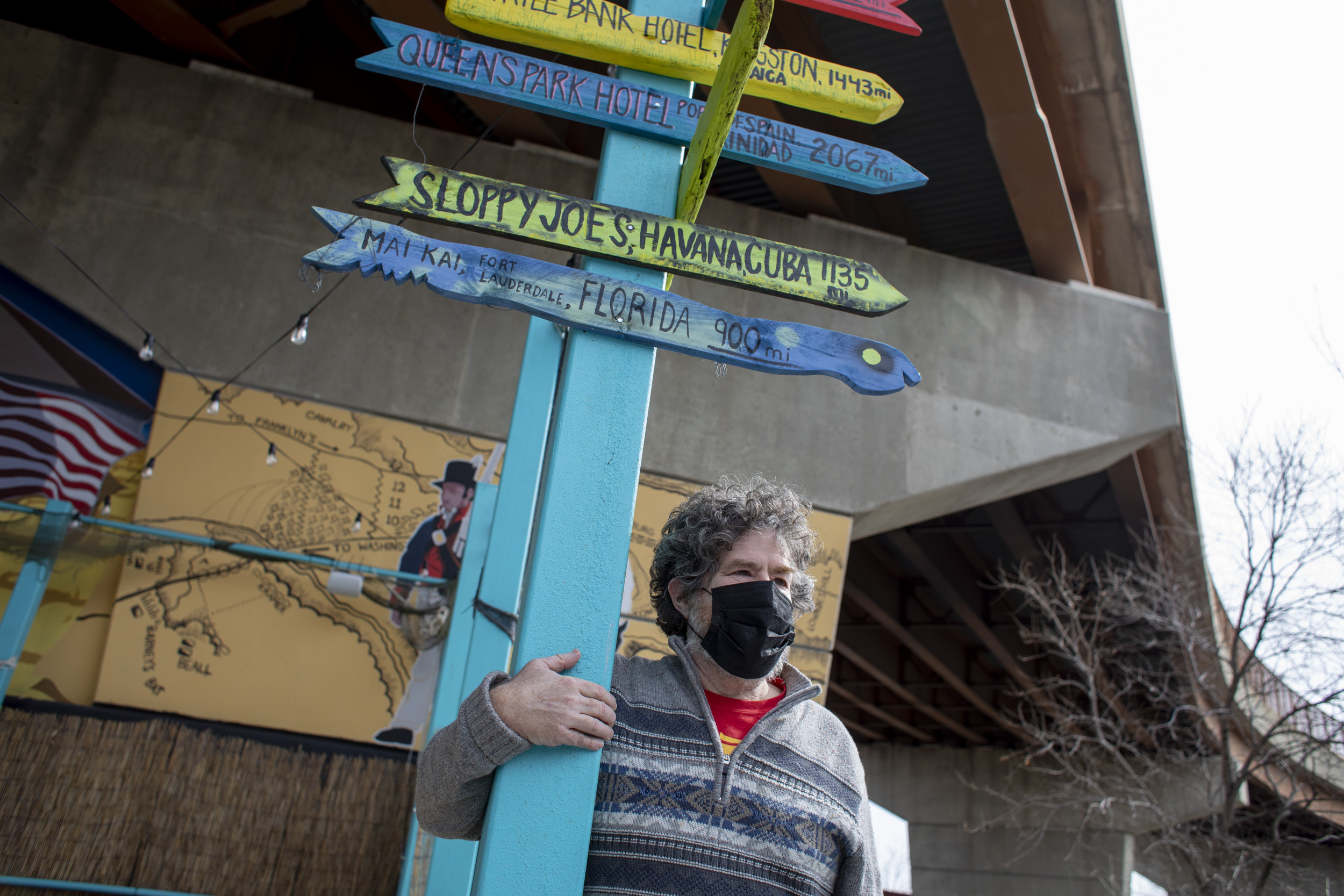
A few storefronts down from Love Yoga, Mike Franklin walks through his 30-year-old brewery, restaurant, and general store.
“We feel like we will make it through to the late fall with the help of PPP,” he says. “If we’re not out of this by the end of November, you know, God help us all.”
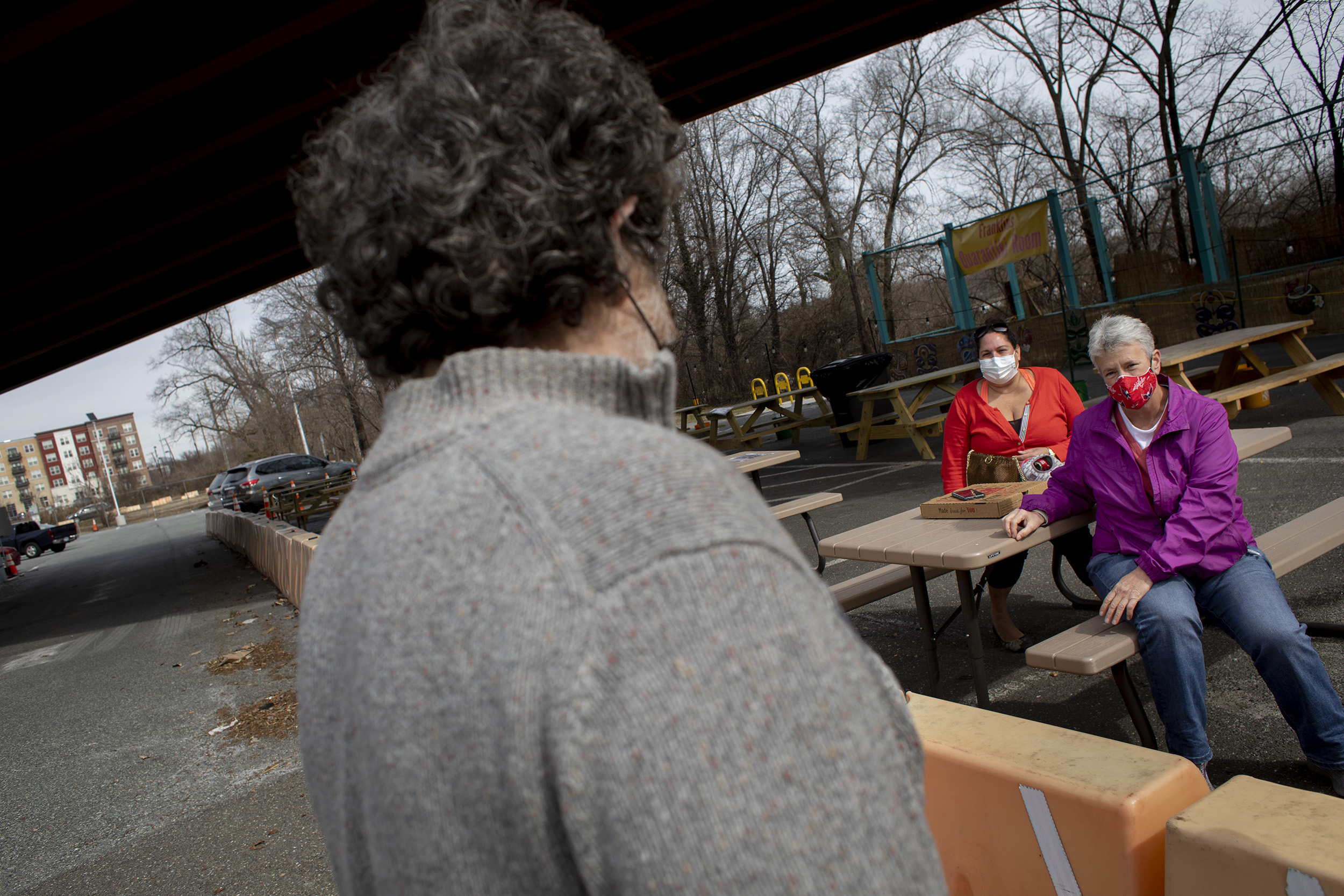
Along with the loans, Franklin adapted his menu and restaurant setup to COVID times. Out went signature dishes like sizzling mussels (“They flat out do not translate into carryout,” he says.) In came a big new idea: An outdoor “quarantiki” bar, complete with sand and festive decorations in the adjacent parking lot. He worked closely with local officials to gain access to the space.
The new bar didn’t pull in much revenue over the winter, but he’s hopeful about the spring. His business is surviving, and for now, that’s enough.
Franklins, Vigilante, and Love Yoga have another thing going for them: They’re part of a tight-knit community of small businesses. Stuart Eisenberg of the Hyattsville Community Development Corporation says many commercial districts have “community,” but he’s not sure other places have it to the level of Hyattsville.
“Maybe the secret sauce is that there is a social network,” he says. “And the intelligence that we are sharing together. We’re all strategizing together.”
Some of this secret sauce arrived before the pandemic in the form of the SoHy Co-Op, a nonprofit group dedicated to helping small businesses in the area collaborate.
“It’s been a tough year,” says Bronwyn King, who helped found the co-op. “I mean, businesses have definitely been struggling, as businesses are everywhere.”
They launched socially-distanced sidewalk sales in the fall, which local business owners are still talking about to this day. Those community sidewalk sales brought in more customers than they’d seen in months.
But these modest efforts weren’t always enough. Just recently, De Clichy Menswear, a men’s clothing boutique, shut its doors for good.
Zoom out even further, and you’ll see that Hyattsville’s reorientation toward small business started decades before the COVID-19 virus.
In the 1990s, the area was “reeling from white flight and exurban expansion,” Eisenberg says. “What we had was blight and undeveloped land, lots of vacancies.” When Mike Franklin opened his business in 1993, he brought with him one of the first establishments on the strip where residents could gather as a community. It stayed that way for a while: Commercial properties were still 60% empty in 1999, according to Eisenberg. Car dealerships dominated the landscape.
Around that time, local leaders established a planning committee and a revitalization plan. Prince George’s County founded the Gateway Arts District in 2001, with the hopes of spurring development along the Route 1 corridor. Hyattsville was part of that plan.
The Route 1 corridor began to transform from a stretch of road dominated by vacant buildings to a commercial district full of art galleries, trendy restaurants like Busboys and Poets, and new residents.
Artists moved in and set up galleries, attracted by new income tax waivers. Public-private partnerships offering below-market rates lured in arts organizations from other parts of the region.
Eisenberg says they’ve been able to keep the corridor vibrant through careful planning. The city focused on attracting artists, local entrepreneurs and restaurateurs. They created events like an annual homes tour and an arts festival, which pulls in about 5,000 visitors a year.
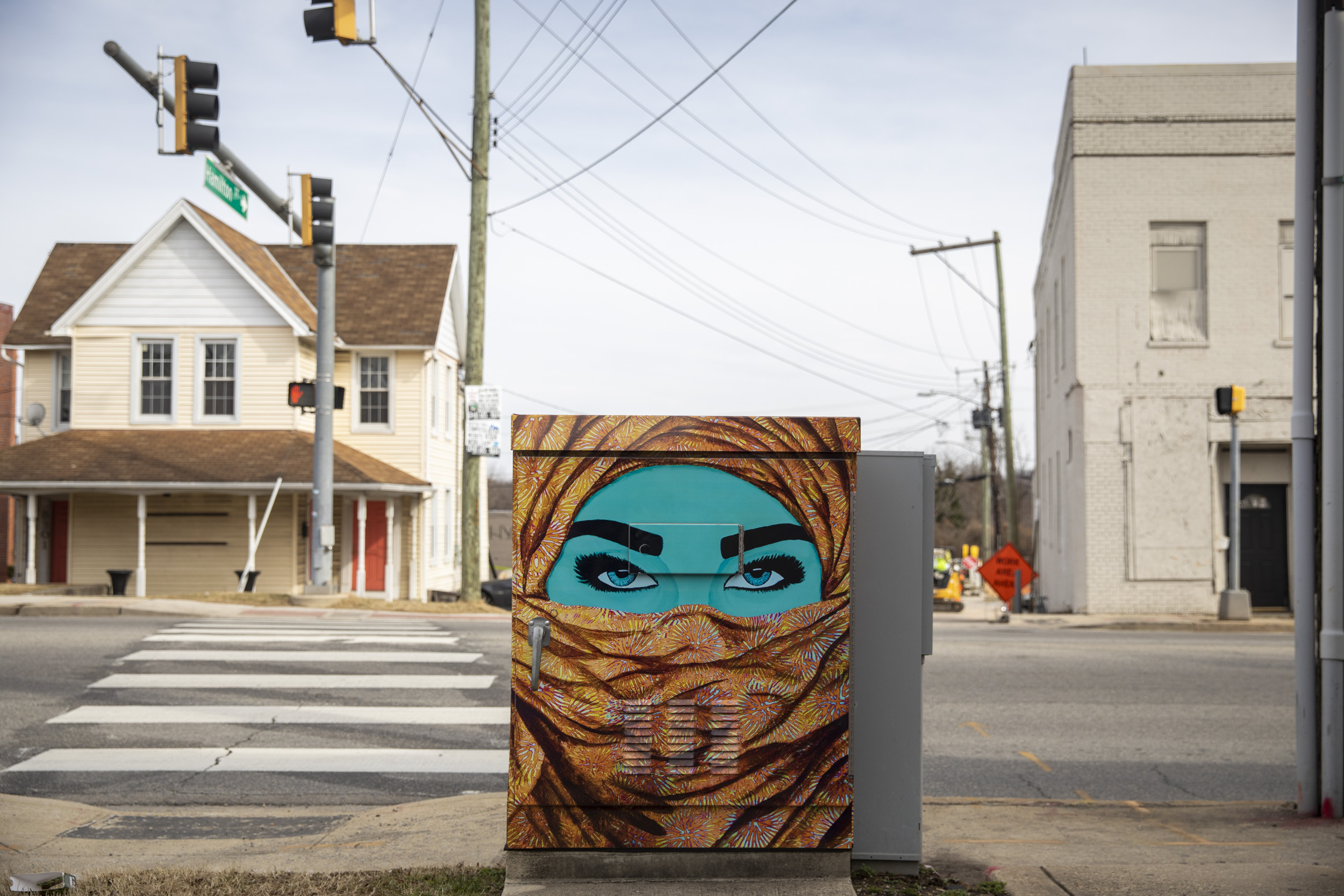
The pandemic brought that rush of energy to an abrupt halt. Foot traffic along Route 1 — already rather hard to come by, due to the road’s vehicular traffic — all but disappeared. Sales from office workers on their lunch breaks and local shoppers dried up. A handful of small businesses, many of which were struggling before the pandemic, relocated or closed. Many of them were minority-owned. The closed businesses for which DCist/WAMU could find contact information did not respond to requests for comment.
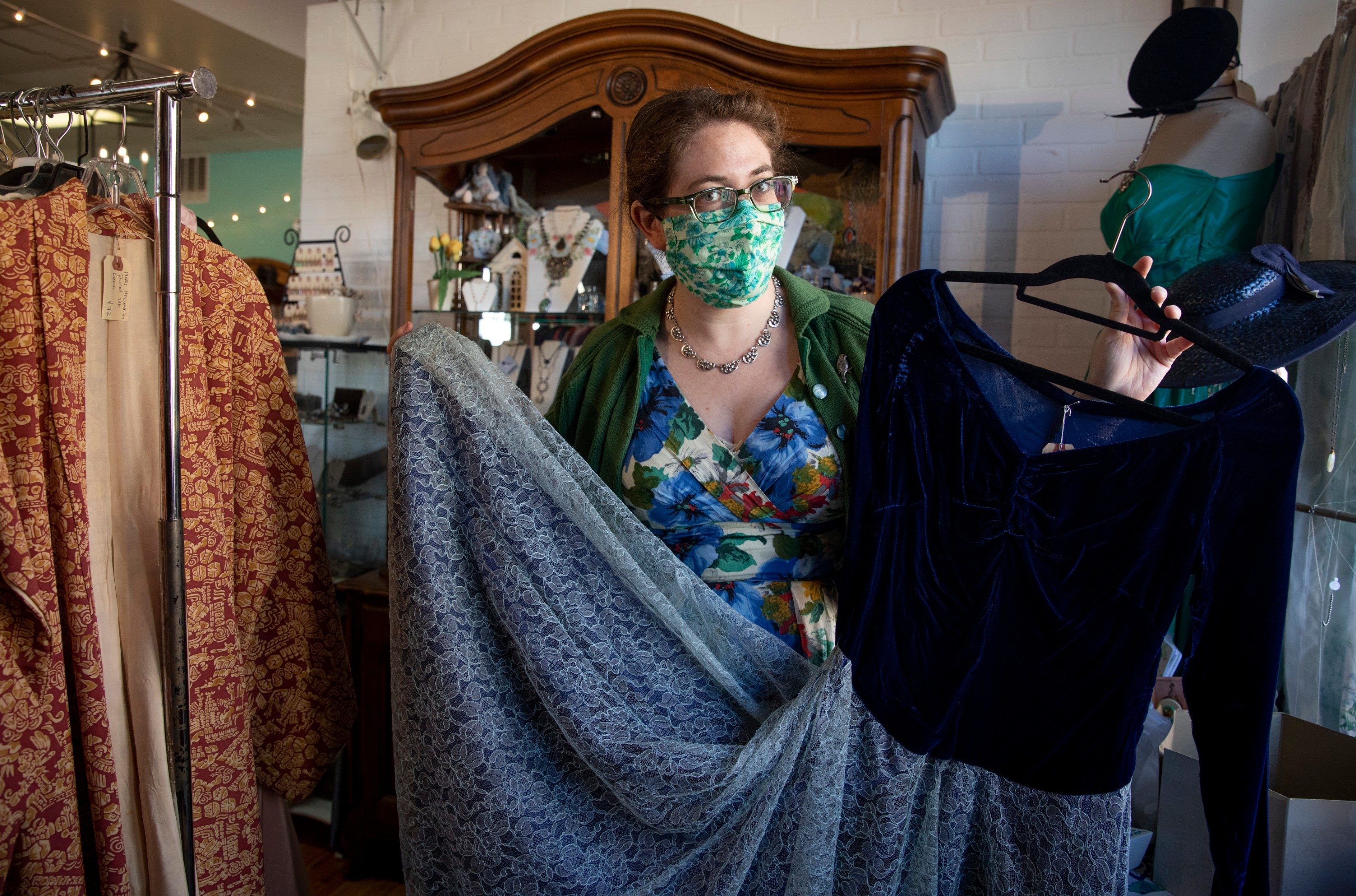
Holli Mintzer, the owner of the vintage clothing boutique Suffragette City, rarely had to enforce social distancing in her store because there were so few customers. “There were never enough people inside for me to have to worry about it,” she says of the past year.
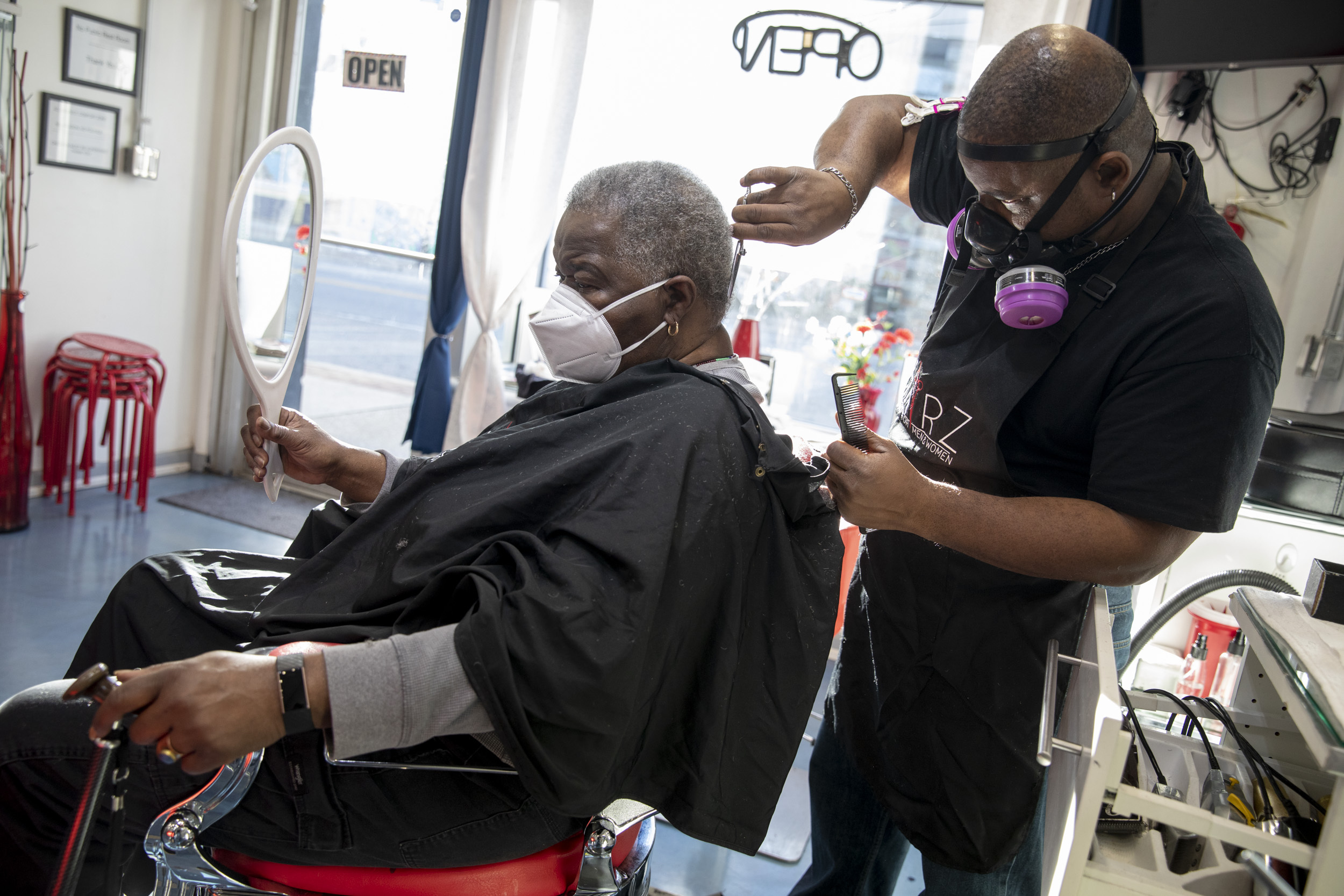
Across the street from Suffragette City, Fred Hall waited for his next appointment to arrive at his salon, Hairz. “A lot of my customers are going through a lot,” he says.
After clients started dropping off, he had to dip into his own savings. “It’s definitely been a struggle, but I stayed optimistic,” he says.
For Love Yoga, the new reality brought a slew of major challenges: The boutique studio couldn’t compete with famous yogis who’d been offering online classes for years. And when students did show up to virtual classes, they rarely turned on their cameras.
“That was a big adjustment because yoga is very kinesthetic,” Leak says. “It’s also a connection of energy. So when you’re teaching, you’re going off of the biofeedback that you’re getting as you see that person move, or you see their facial expression or even the level of their breath.” Virtual teaching took away the client interaction she craved.
Over at Vigilante Coffee, sales initially dropped 25%. Chris Vigilante was amazed it wasn’t worse. His College Park location, which relied on patronage from University of Maryland students, lost 60% of its business in the early months of the pandemic.
“The support from the neighborhood from the very beginning has been tremendous,” he says of the Hyattsville location. Customers donated to a staff support fund, ordered Vigilante beans to their homes, and bought coffee brewing equipment from Vigilante’s online store rather than Amazon.
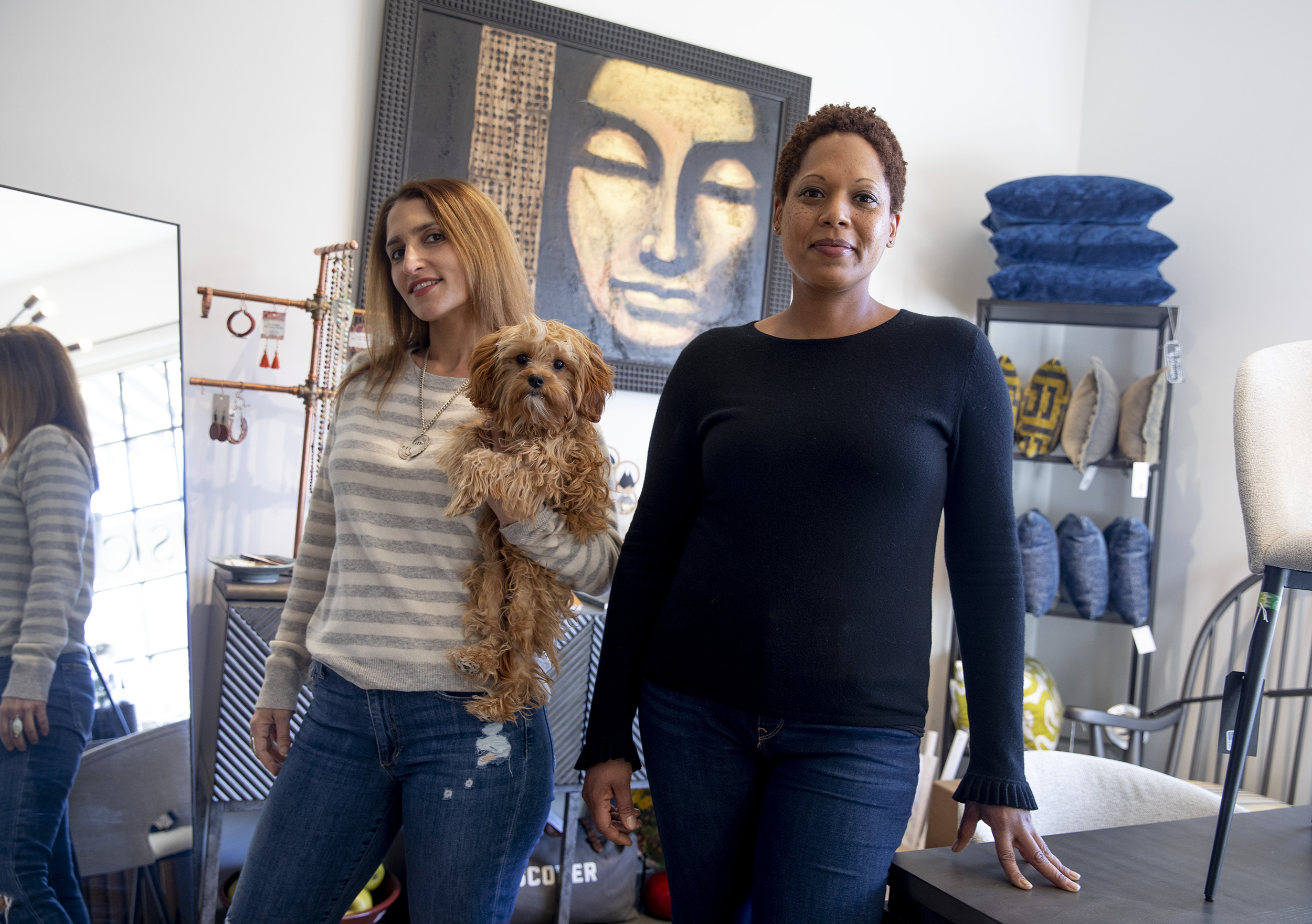
Down the block, the co-founders of the interior design company Green Owl Designs, Angela Justice and Erica Riggio, say they shifted their focus from commercial to residential contracts during the first few months of the pandemic.
“There was that moment of complete silence [in the early days],” says Justice. “It can drive you crazy and really be scary. But you just have to power through it, and keep shifting your gears until something works.”
Furniture painter and artist Sue Mondeel also kept her business, Tanglewood Works, alive through an abrupt shift in strategy. She started broadcasting on TikTok and Facebook Live every weekday under the name “Tanglewood Sue.”
Her accounts now have about 60,000 and 17,000 followers respectively. She films herself giving painting tutorials, visiting local architectural design stores and interacting with clients. “I’ve built a real amazing community,” she says. “They love it because I get them out of the house.”
Cultivating that following has brought in both sales and advertising revenue: These days she makes about the same amount of money from online sales as she does from her brick-and-mortar shop. She’s also helped others in the industry set up online sales platforms.
While this stretch of Route 1 has been in something of a holding pattern during the pandemic, the neighborhood is on the brink of change.
For one, the local housing market is booming. D.C. residents looking for more space can have a much easier time affording a house in Hyattsville, where the average home price hovers around $400,000, than in similar suburbs.
“[This] was already a place that has traditionally been attractive to D.C. residents,” says realtor Don Bunuan of Go Brent, a real estate agency along the corridor. “It’s still great value relative to, you know, Bethesda or Arlington or these other communities … and it’s managed to retain sort of a small town feel.”
The area currently has a diverse population: Of its more than 18,000 residents, 37% are Latino, 30% are Black, 25% are white, 4.5% are Asian and 3.5% are multiracial, according to the latest Census Bureau data from 2019. Immigrants make up a third of the city.
But increased demand for the suburbs has driven up costs. The average home price in Hyattsville has doubled in the past 10 years, according to Zillow.
A significant new building project, spearheaded by the local developer UIP, will bring 31,660 square feet of retail, 285 apartments, and 680 parking spaces to this modest commercial strip.
“We needed more customers to support the retail market we have,” Eisenberg says of the decision to work with UIP. “Converting unused space isn’t displacement.”
The word that goes unsaid is “gentrification.”
New development projects could lead to more customers frequenting the area’s small businesses, but they could also drive up rent prices — and drive small businesses out.
“I’m a little worried about some of the changes,” says Krissi Humbard, one of the co-founders of the SoHy Co-op. “It seems like it’s going more high scale on some of the housing and things. I’m worried about people getting pushed out.”
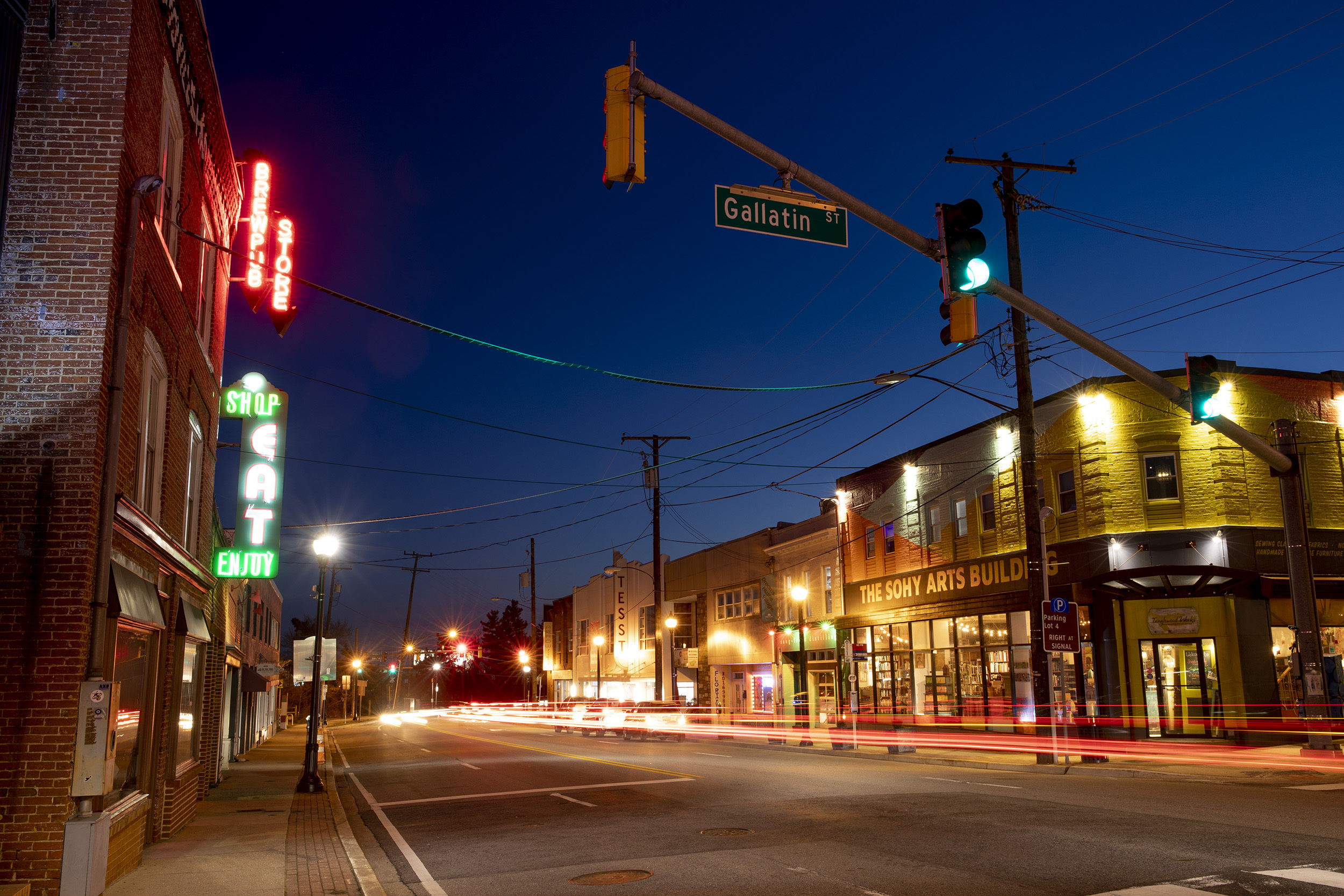
Over the past year, the pandemic already pushed out some small business owners. Many of the remaining ones cater to a more well-off clientele. Still, they see themselves as part of the fight in the small business trenches.
“Small business owners do not know how to give up,” says artist Sue Mondeel. “I think we all probably went out of business years ago, but we just haven’t admitted it yet. Nobody’s told us.”
Bronwyn King of the SoHy Co-Op is more hopeful. She predicts a post-pandemic renaissance for her neighborhood’s small businesses. “There’s pent up demand,” she says. “I feel like people are going to just burst out of their homes.”
As the weather warms, Chris Vigilante is already seeing more customers take advantage of his coffee shop’s picnic tables and outdoor benches. But a year into the pandemic, he’s still thinking about ways to adapt to the new reality. “I’m just gonna take it day by day, week by week, and hope for the best,” he says. “But in my mind, you know, I’m just kind of always planning for the worst.”
That’s not pessimism. That’s business in a pandemic.