 Dominique Maria Bonessi
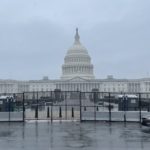
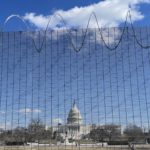
Artist Katherine Ludwig stands on Washington Ave. SW watching and painted the scene with lines of blue ink as a group of five contractors remove razor wire from the 8-ft. black fencing that’s been erected around the Capitol since the insurrection on Jan. 6.
“I’ve got to paint fast! These guys are moving so quickly,” Ludwig says while standing over her folding bike and balancing a piece of white cardboard on a sidewalk post just next to the fence.
The removal of the razor wire comes as the U.S. Capitol Police informed the Acting House Sergeant at Arms that “there does not exist a known, credible threat against Congress or the Capitol Complex that warrants the temporary security fencing.” Multiple news outlets reported Friday evening that Constitution Avenue and Independence Avenue would re-open to traffic by Monday. Earlier this week Capitol Police said they were improving access to the U.S. Capitol.
Barbed wire on the black Capitol fences is being removed today @wamu885 @DCist pic.twitter.com/QyQPZXAHyJ
— Dominique Maria Bonessi (@dbonessi) March 20, 2021
“The USCP has already modified fencing along 3rd St., NW, Louisiana Ave., NW, and Washington Ave., SW to help drivers and pedestrians. For security reasons, we will not provide a detailed timeline of specific, future changes,” Capitol Police officials wrote in a statement.
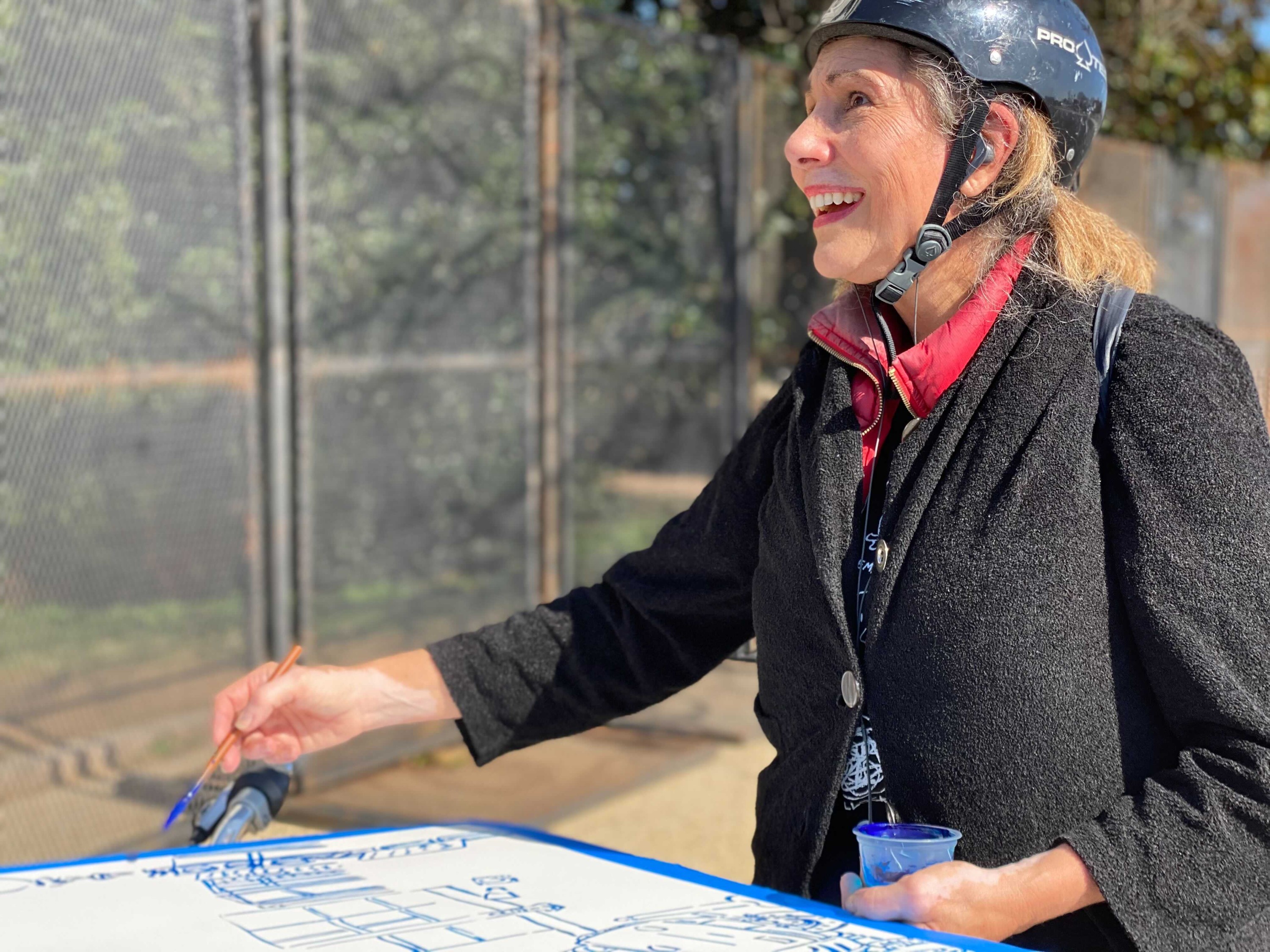
Like many in the Capitol Hill community Saturday afternoon, Ludwig says she’s happy to see the bared wire coming down. She moved to the District from Brooklyn, NY in September to paint the monuments and buildings. She watched and painted as the fences went up around the Capitol.
“It’s very moving to see the people’s house sequestered, closed in by razor wire,” Ludwig says as she continues to paint a flatbed truck full of miles of curled razor wire. “This gorgeous city turned into the insane-looking city by, but it’s coming back again.”
Ludwig she says she’s excited to start painting other things —like the cherry blossoms — soon.
Along D Street SE across from the black fencing Ally, who wouldn’t give her last name, and her husband, are out for a walk to see if they can get to the National Mall from their home in Capitol Heights without having to walk around the fencing.
“It’s just a sad reminder of where things are and it’d be nice to start healing and moving past the physical reminders of that,” she says.
Ally says they bought their house on Capitol Hill in July because they “loved the neighborhood feeling, we wanted to raise a family here, and live in a quiet street, good schools, get to know your neighbors, and yeah, hard during COVID, harder with everything else going on.”
Ally says she’s hoping that once the fences are down, a bit of normalcy can return to life on Capitol Hill.
Further up D St., Julie and DeAngelo Mohead from Dallas, TX are trying to take their four kids to see the Capitol steps. This DCist reporter informed them of the situation.
“We did the bus tour today and, of course, we walked around all the monuments, but the bus tour didn’t even go around the Capitol. I’m assuming because of all the fences,” said Julie Mohead.
The family returns to Texas Monday.
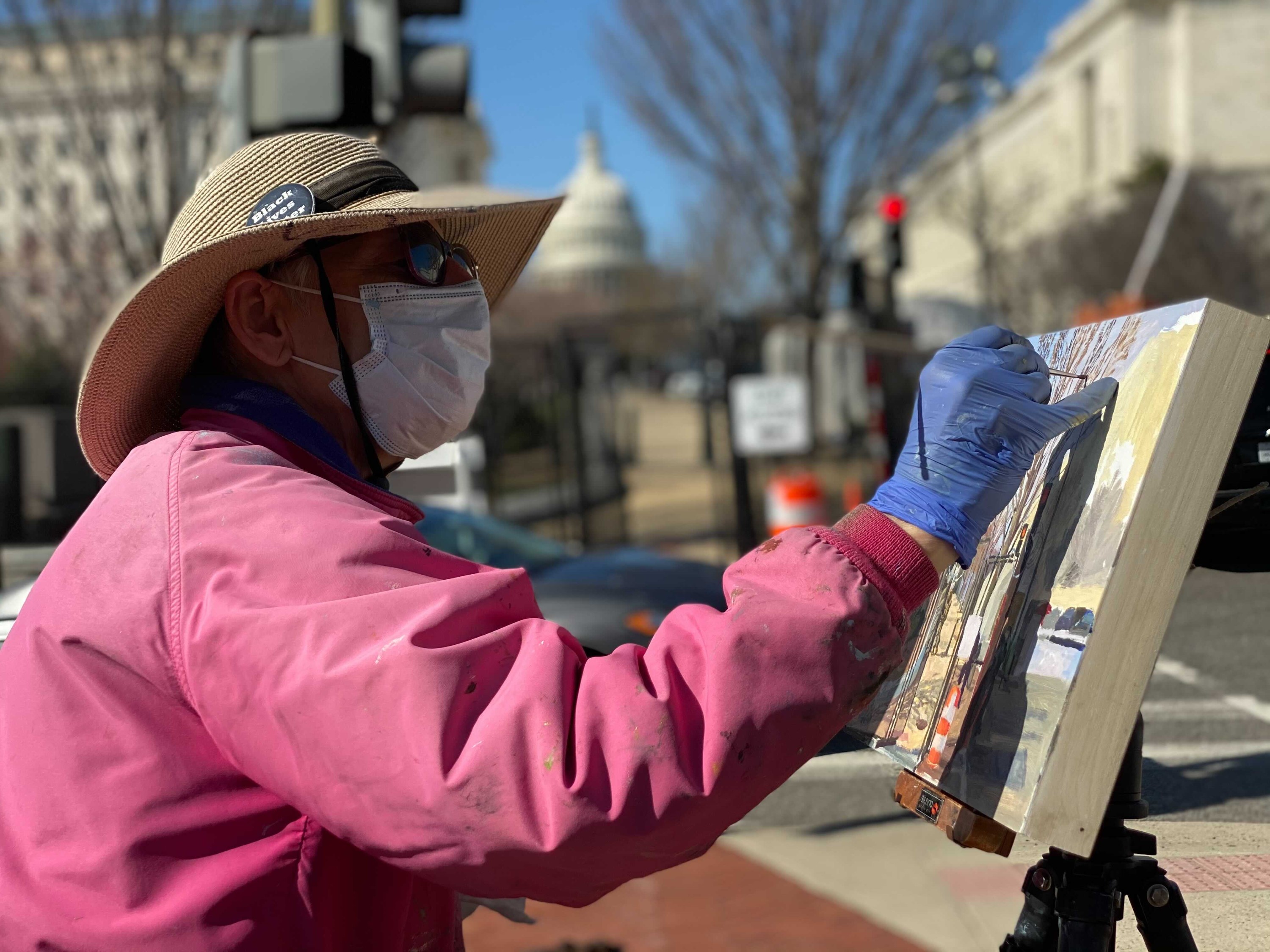
Another local artist, Elaine Wilson from Silver Spring, stands at an easel on the corner of D St. and New Jersey Ave. SE. Wilson has been working on her painting of the Capitol with the fencing around it for a couple of weeks.
“I’m really ready for [the fence] to be taken down, and if I don’t end up making any paintings of it it’s probably good for the city,” Wilson chuckles. “I’d rather we take the fence down than me make a bunch of paintings.”