Elliot C. Williams
This year’s outdoor Grammy Awards ceremony — different as it was because of the pandemic — still proved to break new ground in other ways. Women swept the top award categories, Beyoncé set a record for her wins, and the night’s live performances built on the momentum of the Black Lives Matter protests from the summer.
A number of artists also skipped the awards show as a form of protest, and one musician in particular skipped to highlight a criminal justice movement rooted in the D.C. area: courtroom transparency.
Fiona Apple, the one-of-a-kind indie artist who famously described the cultish world of celebrity and pop culture as “bullshit,” was nominated for three Grammys (winning two) for her fifth studio album, Fetch the Boltcutters. But Apple wasn’t there to collect her prizes.
Instead, Apple used her time to ask fans via an Instagram video to sign a petition for continued virtual access to Prince George’s County courtrooms.
“They’re trying to shut us out, and you gotta question it. Like, why are you trying to shut us out? What don’t you want us to see?” Apple asked. “There’s people who are being held pretrial on nonviolent charges on bonds they can’t afford, or no bond; and it’s ruining families and fucking with futures that we need to help protect.”
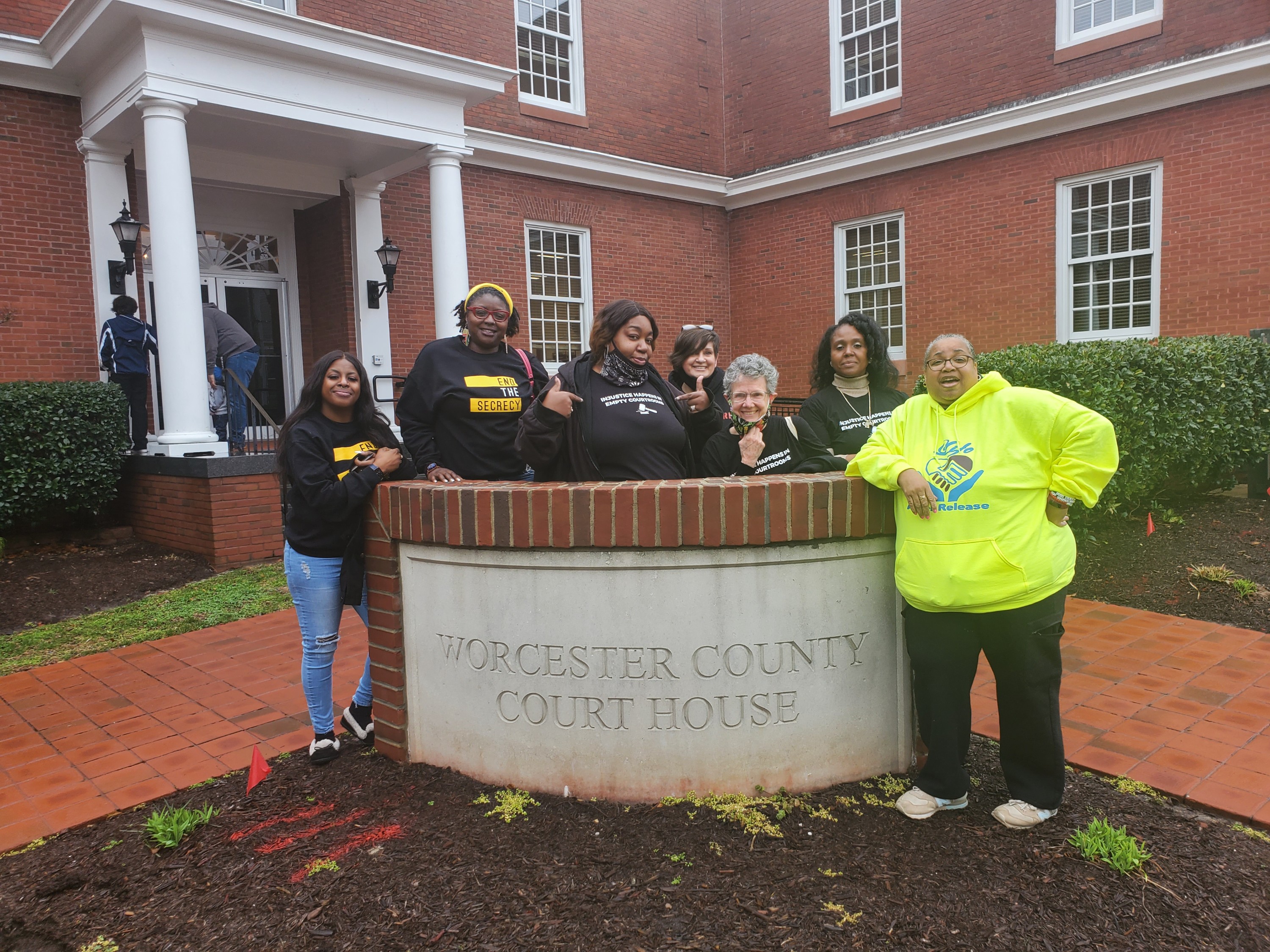
Courtwatch PG, a local grassroots initiative that launched a year ago with the goal of creating more transparency within Maryland’s court system, is behind the petition. And the shoutout from Apple — a New Yorker who lives in California — helped the group take off, its leaders tell DCist. It went from having just a few members to more than 100 trained volunteers from across the U.S. in less than a month, and its petition has garnered more than 7,000 signatures in just two weeks, many signers adding notes like “Fiona sent me.”
View this post on Instagram
“What did [Apple’s shoutout] do? It took us from having one lone court watcher … to two weeks later having 175 people send us email saying they wanted to learn more. They want to be a part of it,” says Qiana Johnson, executive director and founder of Life After Release, Courtwatch PG’s parent organization. “We still have emails that are coming in.”
Apple’s label and publicist didn’t respond to interview requests, but Johnson says the Grammy-winner has been committed to criminal justice work since her own brush with the law — the singer was arrested for cannabis possession in 2012 and faced up to ten years in a Texas prison.
The singer met Johnson through a project called Gasping for Justice, which featured videos of public figures like actors Jesse Williams and Alec Baldwin reading sworn testimony of inmates at the Prince George’s County jail, the site of a COVID-19 outbreak last summer. Apple read the testimony of a man who tested positive for COVID-19 and described the unsanitary conditions he faced in an isolation cell: “I understand, I have a disease,” the testimony read. “But it’s not like I volunteered for this.”
Johnson says Apple is regularly on Courtwatch PG’s Zoom meetings and that she “doesn’t feel like a Grammy-winning person.”
The group’s committees meet weekly and, quite literally, watch the courts. Volunteers sit in on bail review and other court hearings to collect data and pen letters to Maryland’s Chief Judge Mary Ellen Barbera, advocating for those caught in the labyrinthine criminal justice system.
Before the pandemic, the state of Maryland didn’t allow courts to livestream those hearings, meaning family members or activists who wanted to provide support had to call out of work or find transportation to show up in person. But last May, Barbera issued a court order and guidelines that allowed remote hearings, ensuring virtual access to the public. With virtual access, family members have been able to sneak away to the bathroom during lunch breaks and call in to hearings over Zoom, the organizers say.
“It’s very important that when a loved one is placed in jail, they have some type of family support,” says Carmen Johnson, the director of Courtwatch PG. “And a lot of times, because this disparity has targeted our poor Black and Brown families that are in the community, their families cannot come into the courtroom to support them. Most of them don’t have cars.”
Advocates for criminal justice reform have made a new push in recent years to increase court transparency and end flawed practices that disproportionately harm Black and Brown residents. In Virginia, progressives have called for an end to cash bail, saying it creates a wealth-based justice system based on who can afford to pay for release. In D.C., where cash bail was eliminated in 1992, advocates continue to fight for inmates’ rights, citing the fact that many people remained in the D.C. Jail for months while waiting for trials to resume last year.
A number of obstacles are in the way of eliminating the cash bail system in Maryland, mainly because local political campaigns take in huge donations from bail bond companies, according to Qiana Johnson. A 2017 study by Common Cause Maryland showed that Maryland ranks third among states in bail bond industry contributions — only California and Florida have higher donations.
Prince George’s County State’s Attorney Aisha Braveboy sparked hope among activists two years ago when she disavowed the cash bail system and said her prosecutors would seek pretrial alternatives, such as counseling and electronic monitoring, for those accused of nonviolent crimes. But Life After Release and other local groups have criticized Braveboy, saying these policies exist in name only. It’s still up to judges to decide whether cash bail is a condition of someone’s release.
Courtwatch PG plans to publish a report card for each judge to assess their practices — for example, monitoring how long an arrestee sits in the county jail waiting for a court ruling — and wants supporters to show up en masse to an April 7 county town hall about Maryland courts’ transition back to full operating status as COVID-19 restrictions continue to lift.
Courtwatch PG also fears the virtual access to hearings is only temporary, and the organizers say the most recent administrative order leaves room for interpretation by county judges once the pandemic ends. The group wants to keep bond review hearings and all other hearings accessible via Zoom and phone on a more permanent basis.
A spokesperson for the Maryland Judiciary told DCist/WAMU in an emailed statement that the judges are aware of concerns that virtual access will be cut off, but that “these concerns are unwarranted.” The spokesperson said that Chief Judge Barbera supports the continued use of remote hearings through each phase of the health emergency, and that Prince George’s County Administrative Judge Lisa A. Hall Johnson supports the use of remote technology through Phase 5, where appropriate. (Phase 5 is when the courts will go back to being fully operational.)
The spokesperson did not confirm whether Maryland Courts plans on keeping hearings virtually available on a permanent basis after the public health emergency ends. The courtwatchers want the administrative judge or chief judge to write an order that says virtual access will be permanent, not up to each individual judge to decide.
“We want the community to know that we’re watching, we want the judges to know that we’re watching, and we also want our state legislators to make a move,” Qiana Johnson says. “We want them to not be silent in this fight for justice. We want them to understand that their actions or lack there of plays into the role of mass incarceration.”
Some may wonder why it took a celebrity to bring attention to an important local topic like this, particularly since celebrities often add their name to a social justice cause for their own brand, their name taking precedent over the issues they’re championing. But the court watchers don’t see it that way: They say Apple’s involvement led to greater resources and stronger community relations.
And while they appreciate the nod from Apple, the organizers say they will continue building the movement — with or without a celebrity endorsement.
“Wherever there is a court,” Johnson says, “there will be a court watched in Prince George’s County.”
This story has been updated with a statement from a spokesperson for Maryland Courts.