 Dominique Maria Bonessi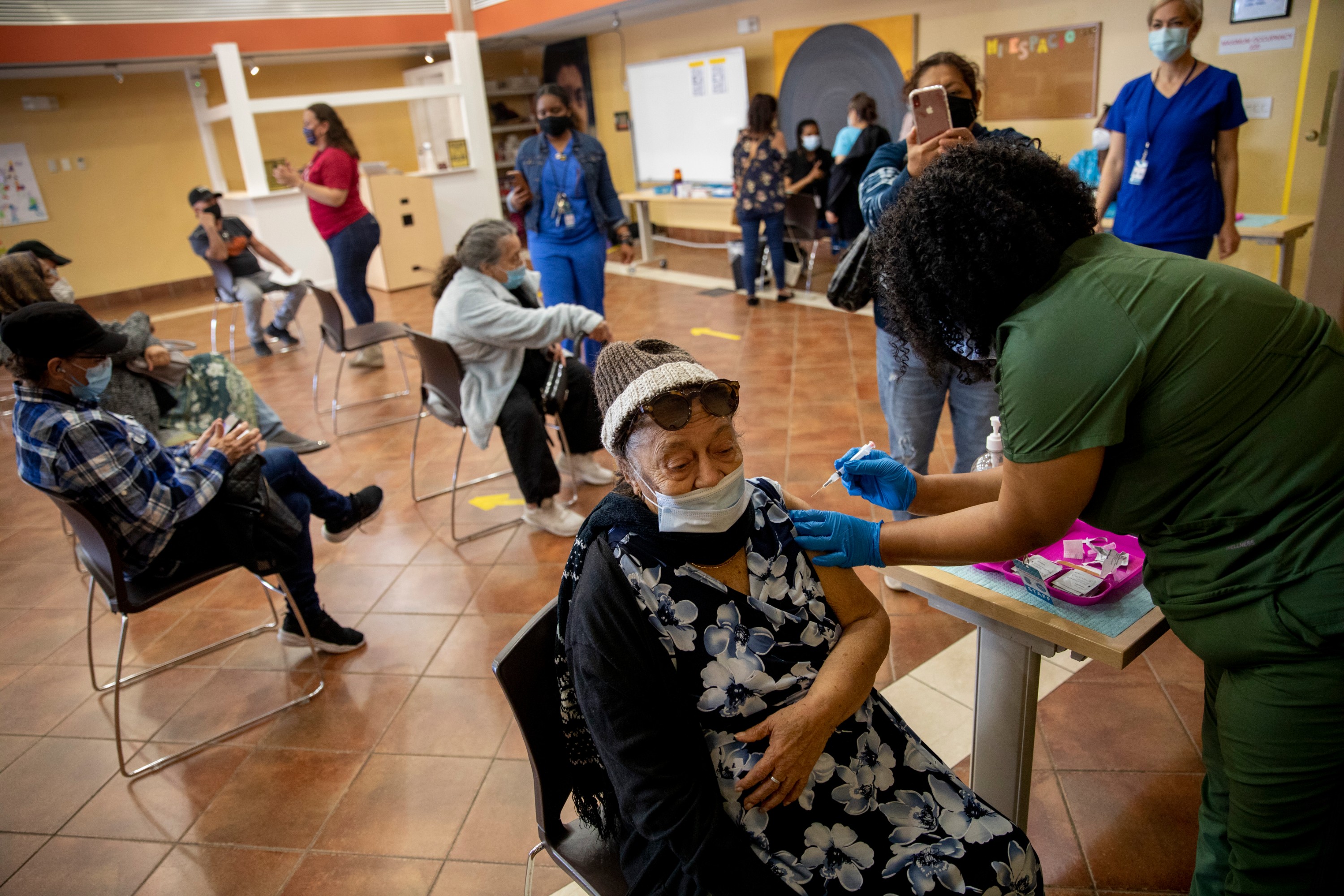
Now that Hyattsville Resident Ilda Garzon, 89, is fully vaccinated she’s hoping to go visit her family in Ecuador. She says, in Spanish, that her family has been begging her to visit.
“My two nieces [in Ecuador] have received the vaccine because they’re doctors,” Garzon says. “But the rest of my family hasn’t received it. There aren’t a lot of vaccines. The president is very bad and doesn’t take care of the people living in the villages.”
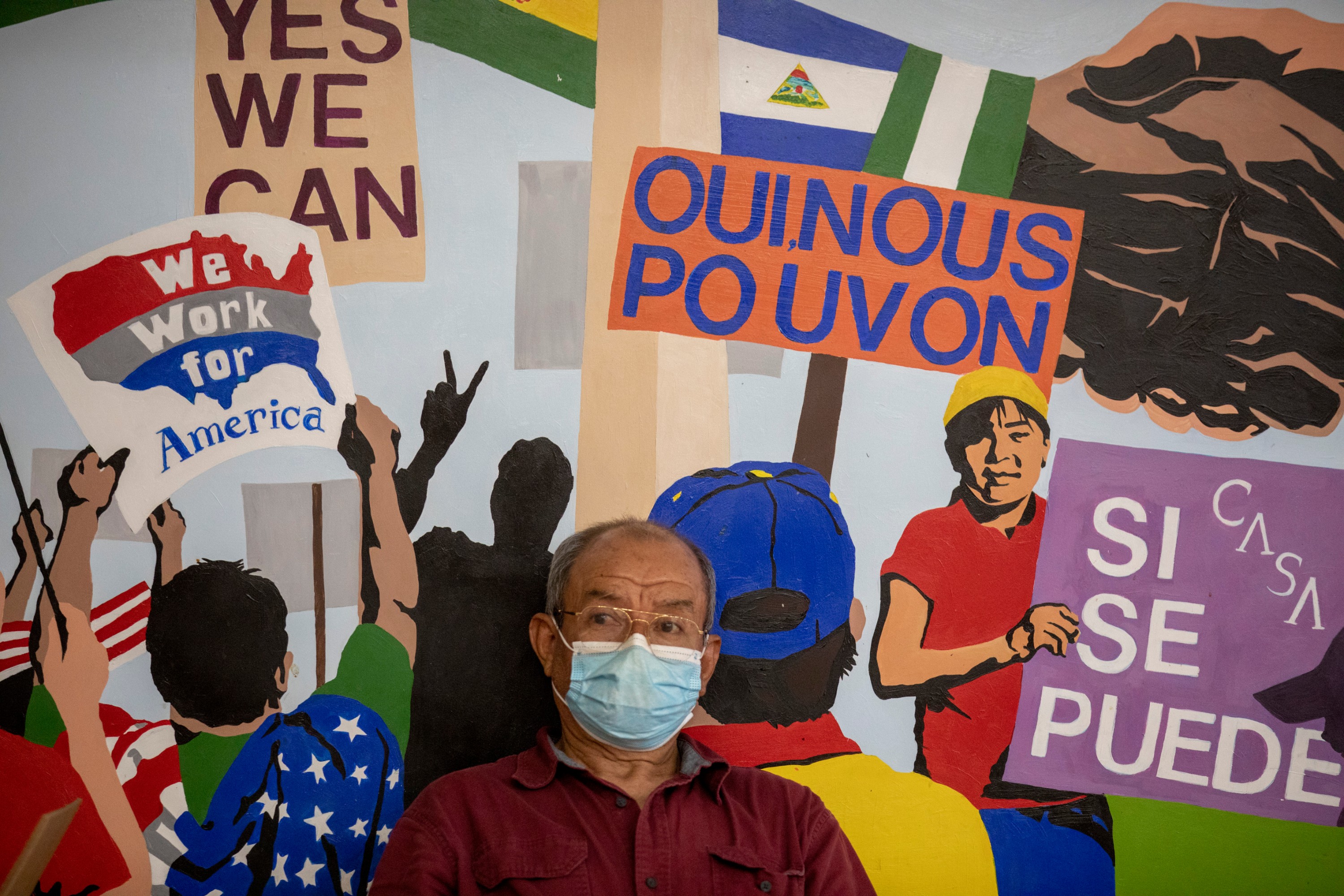
Garzon along with 99 other elderly Latino residents are getting vaccinated on a recent Friday morning at CASA’s headquarters in the 20783 ZIP code of Hyattsville, a predominantly Latino neighborhood. It’s the worst hit area in Prince George’s County, with more than 5,000 confirmed cases since the pandemic began, according to county health data.
“Our community very much needs to get vaccinated, very much wants to get vaccinated and so it’s worth the effort that we put in to make these happen,” says Michelle LaRue, CASA’s director of health and human services.
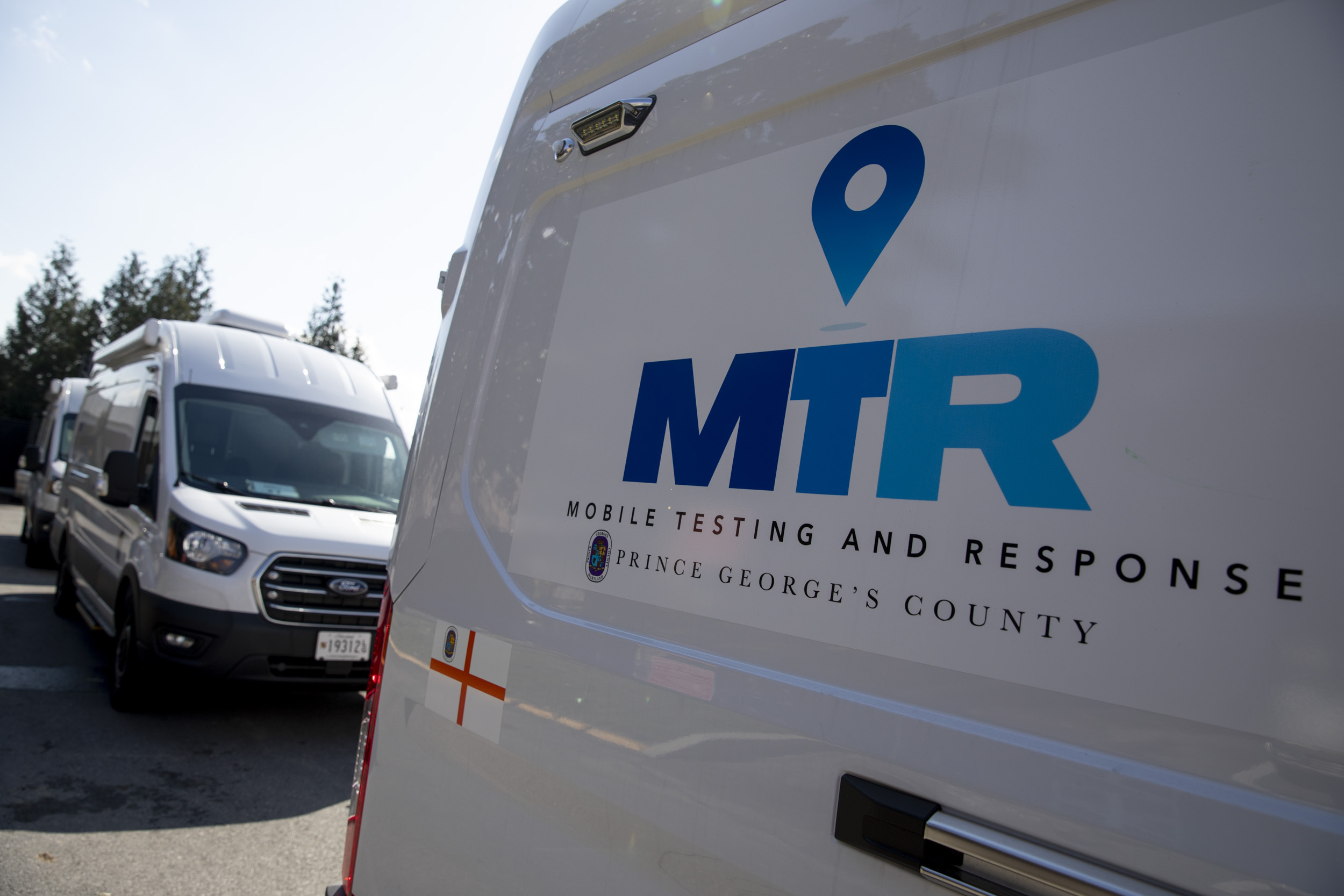
LaRue is standing just outside the organization’s front door, greeting and directing people where to go to get their vaccines. As residents walk around the back of the building to enter the clinic, they’re greeted by the soft humming sound of three large, white county vans parked outside the makeshift clinic, filled with 300 Moderna vaccines. LaRue says they have extras in case people show up without appointments, because they don’t want to turn anyone away and “we won’t let a dose go to waste.”
CASA’s vaccination clinic is just one of many community organizations working with the state and county governments to close the distribution gap between Latino residents and their white counterparts — who receive vaccines at more than twice the rate, according to state health data.
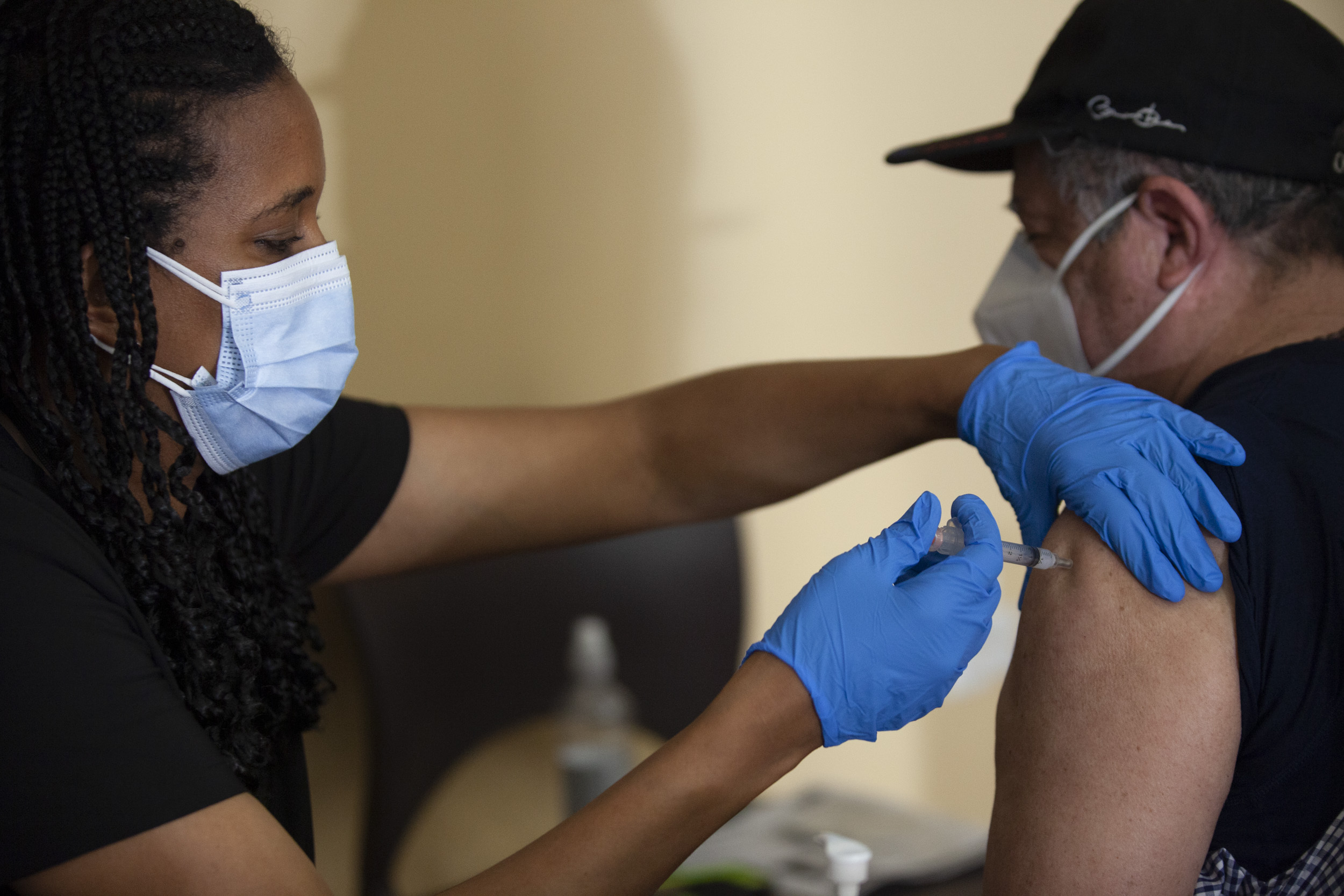
Inside the clinic, residents are registered by bilingual workers. They are then sent to the opposite side of the room to get their vaccine from one of the nurses. Head Nurse Angela Mugo is standing next to small red and white coolers full of vaccine vials. At the beginning of the pandemic, Mugo worked in an emergency room.
“So this for me is really truly full circle,” Mugo says. “It’s gratifying to be out in the community getting our people vaccinated. There’s a dim light now at the end of the tunnel for this community and I’m excited to be a part of it.”
Once vaccinated, residents sit socially-distanced in chairs in the middle of the room to be monitored for 15 to 30 minutes.
Resident Esperanza Bonia, 78, got her second dose with her daughter Francis Besa and four-year-old granddaughter by her side. Besa says the past year has made them miss their family who lives in Chicago.
“I’ve wanted to give my family that I haven’t seen a big hug and let them know I love them,” Besa says.
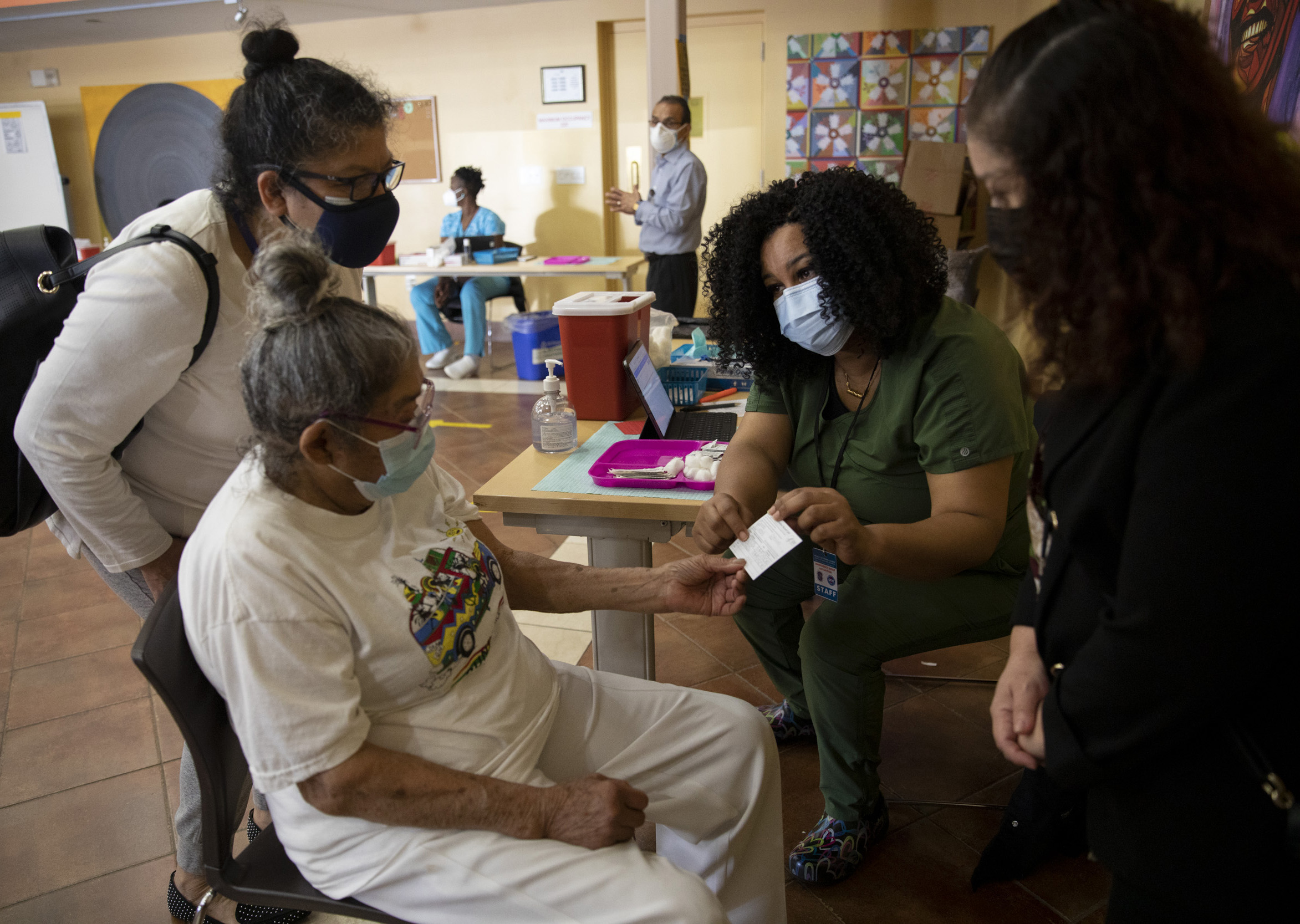
Besa says the past year has been stressful for her because she’s been worried about her mother because of her age, and about her husband, who works in construction and has diabetes. But she says they’re lucky no one in their Guatemalan American family has gotten COVID.
“God has been good to us. I know sadly many families can’t say the same, but we’ve been good with God’s help,” Besa says.
Indeed, not everyone has been as fortunate. Luis Alfredo Santizo, 71, lost his brother, Eduardo Santizo last April.
“If my brother were here now we would both be happy that we got vaccinated,” Santizo says.
Santizo says he’s happy the county is helping with the clinic and supporting his community, but he’s worried that there are some people who don’t want to get vaccinated.
“I beg you, please. Get vaccinated. And take care because there are a lot of people that don’t take care of their health at all,” Santizo says.
This is the fourth clinic sponsored by CASA, and LaRue says they’re trying to make it a weekly event. For residents, it’s the chance to get vaccinated at a place they trust, that’s close to home and speaks their language.
As he leaves, Santizo slips back on his masks, saying “I can’t say I’m free yet because we have to keep taking precautions, but at least having the vaccine puts us at an advantage.”
This story has been updated to reflect CASA’s current organizational title.