 Jenny Gathright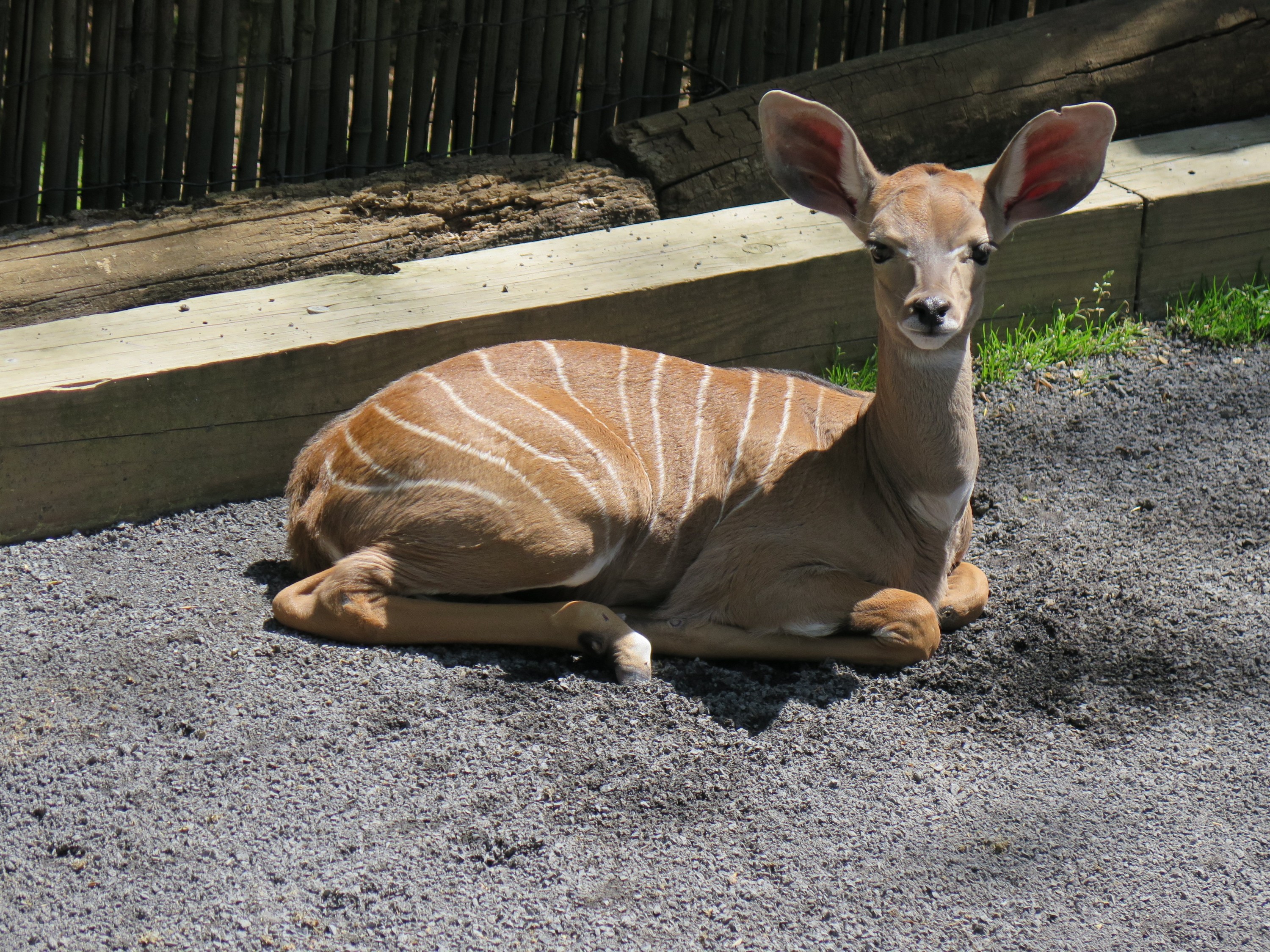
There’s been a lot of attention on a certain sleepy baby at the Smithsonian National Zoo: the panda Xiao Qi Ji, who visitors can sign up to see when the zoo reopens on May 21.
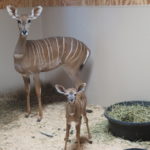
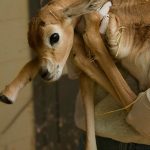
Now there’s another new animal baby to celebrate as well. Cheetah Conservation Station keepers at the Smithsonian National Zoo announced Thursday that a new male lesser kudu calf was born there last month.
“As the newborn kudu acclimates to his habitat, visitors may be able to view him and his family exploring their surroundings,” the National Zoo wrote in a press release announcing the birth.
Rogue, the calf’s 7-year-old mother, gave birth to the calf — who remains nameless — on March 28. The next day, zookeepers discovered the calf and found him to be “healthy and strong.” Rogue, along with the calf’s 10-year-old father, Garret, have two other children: Kushukuru and Toba, who were both born in 2019. A spokesperson for the National Zoo said the animal care team is currently researching names for the calf and people can stay tuned for updates through the zoo’s social media channels.
Rogue and her calf are currently bonding in a quiet enclosure “behind the scenes,” according to the National Zoo. Older brother Toba, who was present for the birth, is also spending evenings with them. Garret and Kushukuru can engage with the rest of the family through a mesh “howdy” window that allows them to see, hear, and smell Rogue, Toba, and the new baby.
Keepers say that Garret is “a calm influence and a great role model for his sons.”
The lesser kudu — which you should be careful not to confuse with the larger, differently-marked, and bearded greater kudu — is native to the arid and semi-arid areas of northeastern Africa, including parts of Ethiopia, Somalia, Kenya, Sudan, Uganda, and Tanzania.
Conservationists estimate that there are between 80,000 and 100,000 lesser kudu in the wild, and say the population is threatened by animal and livestock expansion, hunting, and disease. The International Union for Conservation of Nature categorizes the species as “near threatened,” which means the population is declining but the species is not yet considered “vulnerable” or “endangered.”
This story has been updated with additional information on the naming process for the lesser kudu calf.