 Aja Beckham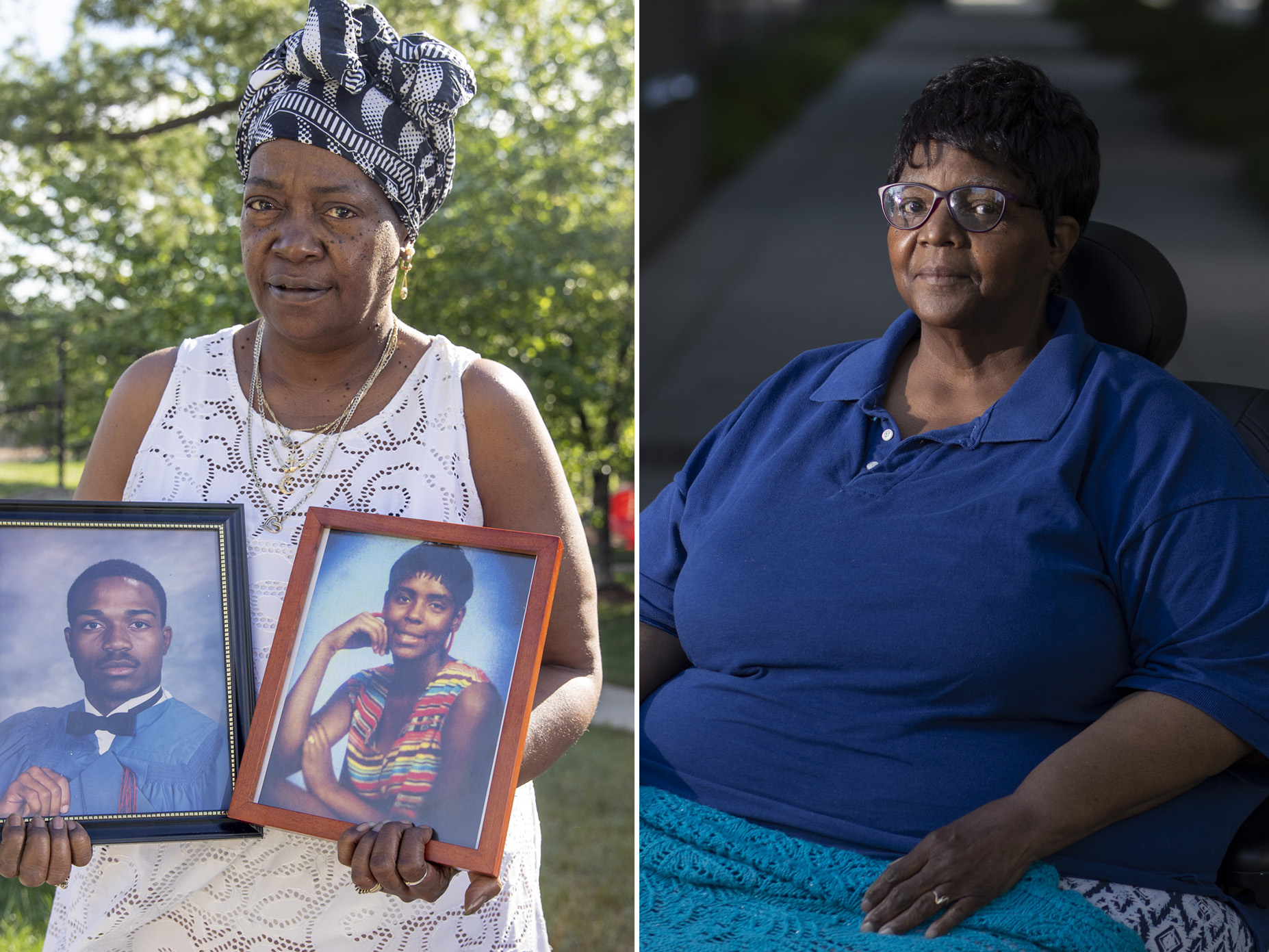
Mother’s Day is not a celebration for some moms. Some are remembering their children who were slain by gun violence. Some moms are grieving the loss of their only child, while others are grieving the loss of multiple children.
“It’s overwhelming to have to deal with the death of your children,” says Aileen Mizzel, 71, whose two children were murdered by gun violence.
In D.C., homicide rates are climbing. Last year, there were 198 killings, the highest number in more than a decade — up 19% over 2019. Thus far this year, there have been 66 homicides, a 35% increase compared to this time last year. City officials have largely suggested that the spike is due to the accessibility of illegal guns.
The widespread gun violence has left mothers trying to cope. As recently as April, one Southeast D.C. mother, Phillina Thompson, buried her son Randy, who was shot and killed while in his car. She had already lost another son, Damonta, in 2017, after he was shot and killed following a dispute. Another Southeast D.C. mother, Phyllis Gray, buried four sons who were murdered between 2001 and 2016.
The process of mourning looks different for each parent.
DCist spoke with three mothers about the loss of their children, their path toward healing, and how they’re spending this Mother’s Day.
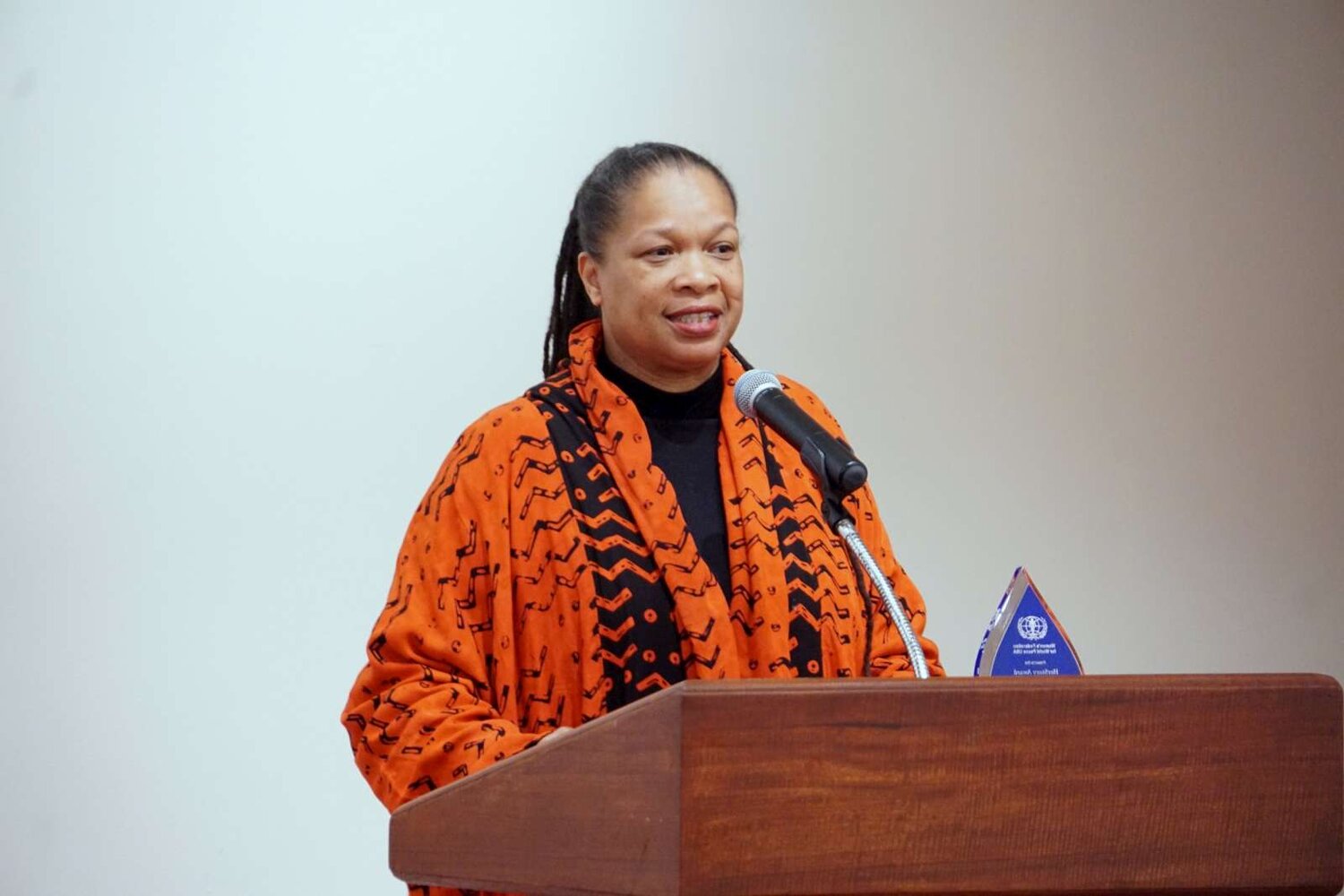
In 1999, Valencia Mohammed lost her 14-year old son, Said Raqib, when a gun went off in her home. She says that Raqib was with two friends playing Russian roulette, a game where the players take turns putting revolver to their heads and pulling the trigger in hopes that the loaded chamber will not discharge the bullet.
Mohammed says that she doesn’t know whether Raqib or a friend pulled the trigger. Years later, the homicide has gone unsolved.
“I never thought that would happen to Said,” says Mohammed. “I just didn’t want to live, but I didn’t want to kill myself. I was in some other world. I stayed in bed a lot.”
In 2004, another son, Imtiaz Mohammed, 23, was murdered, shot five times in the back of his head.
“What they said in court was that the guy [who murdered Imtiaz] owed Imtiaz $35 and didn’t want to pay the $35, and he killed him,” says Valencia Mohammed.
She says after losing Said, she felt “hopeless, powerless, and worthless.” But when Imtiaz was murdered, her instinctive reaction was to solve the murder herself.
She began her own detective work, staking out parking lots in Northeast D.C. at 2 a.m., and giving $20 to anyone on the street who would share tips or leads. Then she would share that information with detectives who were formerly assisting with the case.
The same year that Imtiaz passed, Mohammed founded Mothers of Unsolved Murders, a group that organizes mothers to make demands to city officials through protests and lobbying. In 2005, Mohammed also organized dozens of mothers to lobby on Capitol Hill for the District’s first crime forensics lab. “We went from zero to $250 million in a year. Now the city has its first forensics lab to assist in solving the thousands of unsolved murders on the books. This was a major victory for the families,” said Mohammed when receiving an award from the Women’s Federation for World Peace International.
Imtiaz’s murderer was convicted in 2005, says Mohammed.
Still, though there was some closure, she says that she felt broken. Then one day, Mukhtar Raqib, one of her four living children asked her a question that put things into perspective: “He asked, ‘What about us? We are alive. We are here for you. We are still living,’” she says.
“I had to wake up and realize that I had other babies, other children who wanted to see me pull out of this,” she says about her children who range from the ages 30 to 45. “In order to heal the family, the mother must be healed. She’s the matriarch. They’re looking to her for direction.” (One of Mohammed’s children was diagnosed with schizophrenia after Said passed.)
Mohammed also has four grandchildren, and two of whom are named after Imtiaz and Said. She says that they look like them, too, and their interests in math and technology are similar.
Mohammed says that her children and grandchildren are a reminder of why she’s decided to press forward: “I’m trying to set an example for them of how to be positive, strong, don’t dwell on the negative. It happened. Look at the future,” says Mohammed. “What happened is permanent, and you have no way of correcting that situation to bring that person back to life.”
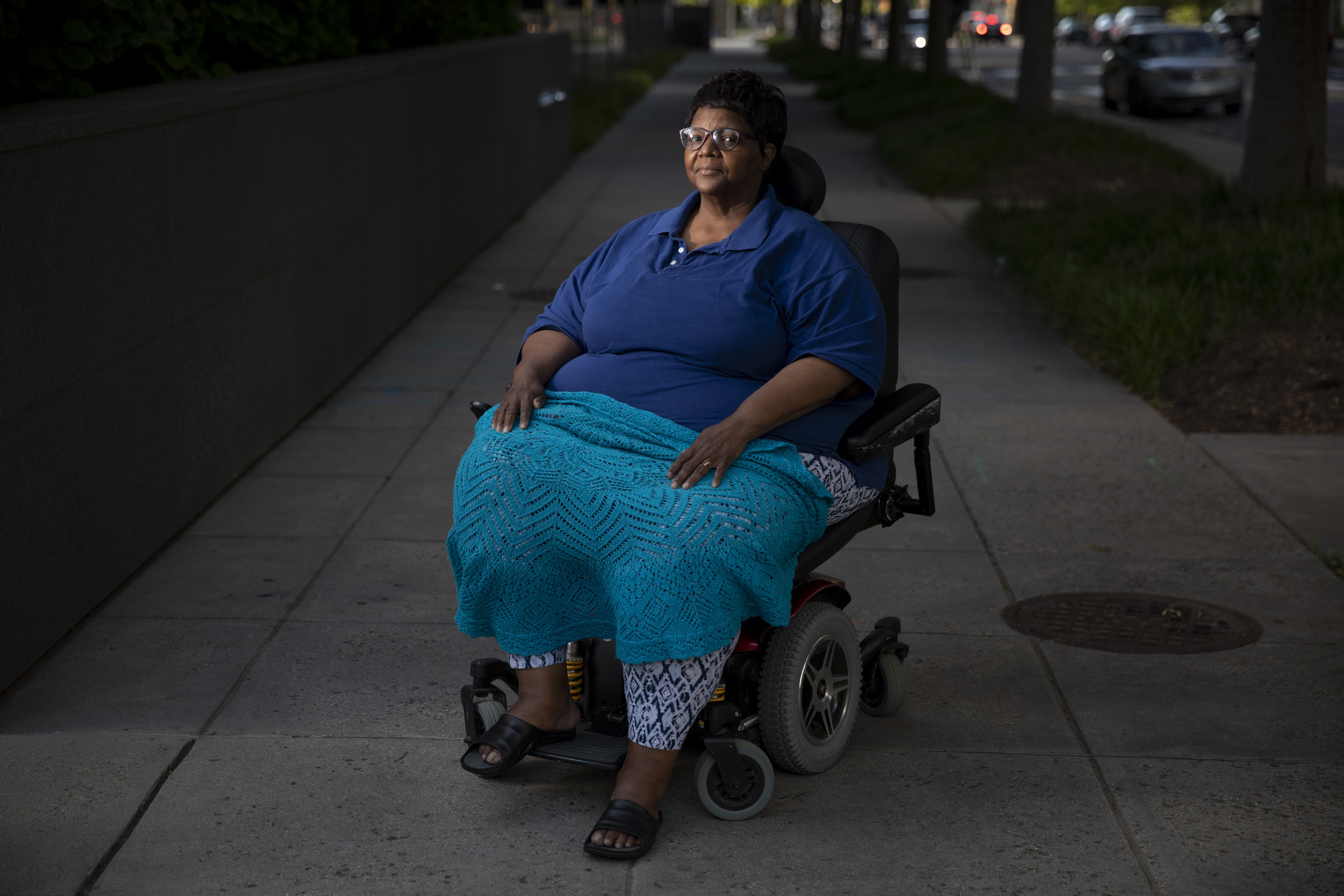
Mizzel has weathered many storms throughout her life, including the loss of two sons and the death of her grandmother and mom in the same week.
In 1996, Mizzel’s mother and grandmother died suddenly from health related causes. Then, another tragedy occurred. In 1998, her son Kenneth Dorsey, 28, was murdered after leaving a Heart & Soul Cafe club in Southeast. On Mother’s Day, in 2000, her son James Johnson, 26, was shot and killed when withdrawing cash from an ATM in Virginia, she says. James’ murderer was convicted but Kenneth’s case has gone unsolved.
Mizzel, once addicted to hard drugs, recovered after enrolling in drug treatment programs, and she says that had she not stopped using prior to the death of her sons, she would have tried to overdose and commit suicide.
“I went into a deep depression. I wanted to stay in the dark. I didn’t want to talk to nobody on the phone. … I was very withdrawn,” she says. “When you’re in that storm, you don’t see the other side of the rainbow.”
Mother’s Day is difficult for Mizzel, who has 18 children, 31 grandchildren, and 15 great-grandchildren. Sometimes she spends the day in bed or will shop and journal to cope. Also, over the years, Mizzel has gained weight and now weighs 386 pounds. Her goal is to lose the weight and no longer need the support of a wheelchair.
Because Mother’s Day is difficult, she asks her children to not plan anything.
“On Mother’s Day, I say, ‘Don’t y’all even think about trying to make no arrangements and try to [plan] what you all think I should be doing.’ Last Mother’s Day, I was in bed the whole day. I wasn’t crying. I was exhausted,” she says.
Mizzel raised 9 of her children, but didn’t raise the other 9 because she was struggling with addiction during that time. She says some children don’t call her and she prays that they will learn forgiveness.
During this year’s Mother’s Day, her gift to herself was using her stimulus and tax refund checks to move to a new neighborhood with less gun violence. Mizzel lived in Northeast for four years. “When I hear gunshots, I feel nauseous,” she says. Last week she moved to Southwest Washington, just a few blocks away from her only daughter.
That daughter, Felicia Dorsey-Cooper, named her son after Kenneth.
But just two months ago, Mizzel’s grandson, twelve-year-old Kenneth Dorsey, was shot in the hip when walking back from the barbershop. The assault case is still unsolved.
“My heart flooded,” she says. It’s still difficult to talk about.
On this Mother’s Day, Mizzel will spend the day in the park sitting in the sun and coloring a book of rainbows. Throughout the years, she’s coped by practicing self-care, including joining a women’s group, doing yoga, reading self-help and religious books, and praise dancing.
She says that if she feels heavy emotions, she doesn’t block them. “I sit in a corner, if I need to, and cry. I release it. I share my pain,” she says. “I refuse to wallow. I want to come out [of this] cocoon and be a butterfly.”
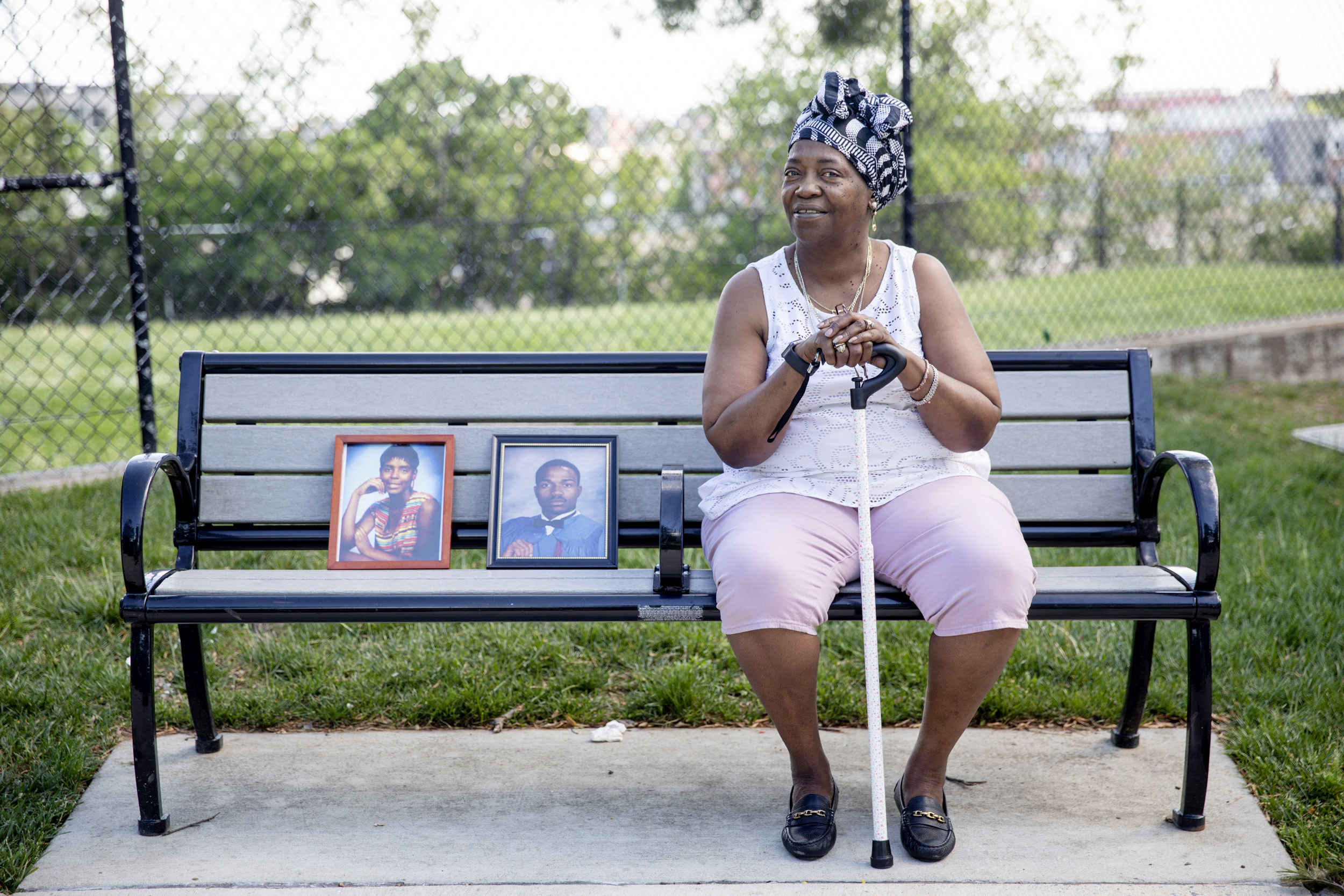
The week prior to Christmas in 1993, Shanda Smith, 60, says, her children were on their way to a Southeast D.C. Christmas party that was hosted by former D.C. Mayor Marion Barry.
Her son and daughter Rodney, 19, and Volanté, 14, drove over to the party, and while sitting at a traffic light, gunfire was sprayed into the vehicle.
“The young man who they found guilty, he thought they were someone else,” says Smith. “It was mistaken identity.”
They both died at the scene.
During the trial, the suspects were facing death penalty. “I prayed. I didn’t want the person responsible to die because that mother was going to hurt, just like I was hurting,” says Smith. The murderer was convicted of a double homicide eight years later.
One year after her children’s murder, Smith created an organization called MURDERMISTAKEN that helps families of homicide victims to grieve and celebrate the life of their loved ones. Smith hosts an annual Christmas party in Northeast, where she and sponsors gift 100 children with toys, games, as well as winter gloves, hats, and scarves. Smith helped to advocate for the D.C. Forensics Lab with Valencia Mohammed as well.
Smith says the death of her children caused her to “wake up” and end a decade-long drug addiction, saying she hasn’t used drugs since her children were murdered. She decided to get her GED in 1994 as well. After earning it, she says “I realized I can do anything.”
And she says that she had two other children to raise — the other children were two and four years old when the shooting occurred. Smith moved from Southeast to Northeast because she wanted to raise her children in a safer neighborhood.
The move also brought her closer to where Rodney and Volanté are buried.
She comforts herself by going to their graves at Glenwood Cemetery, just four blocks away from her home. On their shared tomb, it says, “The Lord is my light and salvation.” She says that her faith keeps her grounded, and one of the verses that she leans on the most is Philippians 4:13: “I can do all things through Christ who strengthens me.”
Every Mother’s Day she calls 30 to 40 other moms who have lost their children to gun violence to encourage them and uplift their spirits. This Mother’s Day, she’s going to go to brunch with a couple of those other moms. When they meet, she says, she will choose to focus on the positives that happened after her children’s passing.
“I’ll never forget. [But] who wants to grieve for the rest of their life? You still have life. You have to live your life,” says Smith.
This post has been updated with additional context about recent gun victims of gun violence in D.C.