 Dominique Maria Bonessi
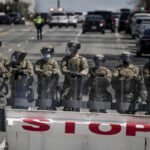
Thousands of National Guard troops are set to leave their mission at the U.S. Capitol on May 23 following months of on and off deployments in the wake of the insurrection on Jan. 6. And there are now discussions in Congress about establishing a permanent military unit at the Capitol.
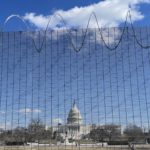
While 2,200 guard troops are leaving, the black fencing — which has been scaled back since the January attack — will remain in place until the Capitol complex can increase its security measures in and around the building.
Recommendations on improving the Capitol complex’s security measures were part of a report released in March and include creating a quick reactionary military force to assist U.S. Capitol Police, installing retractable fencing, and establishing a new federal agency–similar to the Department of Homeland Security–to coordinate the region’s law enforcement during emergencies.
Congresswoman Rosa DeLauro (D-CT) and other U.S. House leaders are proposing $531 million to cover the ongoing cost of the guard’s deployment to the Capitol and another $200 million to mobilize a quick reactionary military force.
“This emergency supplemental appropriation addresses the direct costs of the insurrection and strengthens Capitol security for the future,” DeLauro, who chairs the House Committee on Appropriations, said in a statement to Military.com. “It is also long overdue recognition of the work of the Capitol Police, the sacrifices that they and their families have made, and the changes they need.”
DeLauro’s proposal for a quick reactionary military force is just one of two options that the report details. The report says a force could be mobilized by using military police from units across the country that would serve on three-to-six-month rotations.
“Another option would be to create a [force] that permanently resides within the D.C. Guard by reestablishing a military police battalion and staffing it with active Guard reserve troops who live in or near the city year-round, perpetually on active duty,” the report says.
It’s still unclear what a permanent force would look like. Currently, traditional National Guard members — also known as Dual Status Guardsmen) serve one weekend a month and otherwise are activated when needed. Traditional Guard members have full-time civilian jobs.
If guard members were to be used to stand up a permanent response force, the president would need to declare a permanent state of emergency in the District so that guard members activated to assist at the Capitol could receive healthcare and other benefits.
Similar action was taken in New York City following the 9/11 attacks when the state received $3 billion in federal homeland security funds for its counterterrorism efforts — including protecting critical infrastructure in the city — through the creation of Joint Task Force Empire Shield. This is a group of about 500 NY guard troops who work full time alongside the city’s law enforcement agencies to protect transit facilities like Grand Central Terminal, LaGuardia Airport, and others. These troops remain under the control of New York’s governor and have the ability to work in a law enforcement capacity.
Disclosure: Reporter Dominique Maria Bonessi’s spouse works for the National Guard, but had no input into this story.
This story has been updated to clarify different Guard categories.