 Jordan Pascale
A key connector for safe cycling that has been stalled for years without official explanation is moving forward.
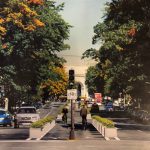
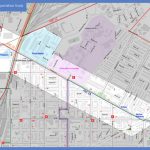
The plan is to build the Eastern Downtown protected bike lane project on 9th Street NW starting in 2022. The 1.6-mile bike lane will stretch from Florida Ave. NW to Pennsylvania Ave. NW.
Cyclists say it was delayed far too long, but are calling it a big win for safety. Businesses and churches in the area aren’t pleased by the sudden, unexpected announcement.
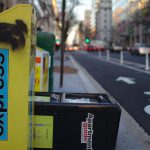
The project would remove one of two northbound travel lanes from Massachusetts Avenue to Florida Avenue/U Street NW. A District Department of Transportation traffic analysis found that it should have minimal impact to traffic congestion. The cycletrack would be on the east side of 9th Street and would protected by parked cars, according to plans that are about 30% complete. It does remove about 80 metered parking spaces along the corridor to allow for left-turn lanes and relocates many other parking spots to the west side of the street.
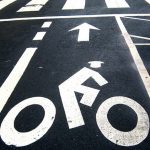
The two-way cycletrack — distinct from a bike lane in that it includes two lanes going in both directions and is protected by more than paint — will be physically separated from traffic with bollards and other measures and can be used by cyclists, scooter riders, and more.
The study for the project began in 2015, but as of this afternoon, the website shows no activity after the final report in 2017. A District Department of Transportation spokesperson told DCist/WAMU the project is moving forward because there is now money in the budget for it. Councilmember Brianne Nadeau’s staff says she pushed and got funding in prior years, but the money has sat idle for some time.
“This project will make our city safer and travel downtown more accessible,” Mayor Muriel Bowser said in a release. “With the 9th Street cycle track we are improving D.C.’s infrastructure to make it safer, more sustainable, and more efficient for everyone who travels through this corridor.”
A north-south cycletrack on 15th Street is heavily used. A crosstown cycletrack on Irving Street NW was finished last year.
Ten percent of all trips originating in the Shaw neighborhood are by bicycle, more than double the average bike trips District-wide, according to DDOT.
“We are thrilled to move forward with such an important project that will make our city safer for those cyclists traveling in the eastern downtown area,” acting DDOT director Everett Lott said. “This two-way cycle track supports the corridor’s strong and growing bike usage, and lower vehicular speeds, making the corridor safer for drivers and pedestrians, too.”
Greg Billing, executive director of the Washington Area Bicyclist Association for the past ten years, was surprised by the news on what was his last day in the job. He said he felt relieved that the project was moving forward and that it will create a better network of safer streets for cyclists, scooter riders and pedestrians.
“Networks of lanes is what will move the needle on riding,” Billing said. “Safety is number one reason people don’t ride… they look at the worst part of their route and see what they can tolerate… and if it’s unsafe they just won’t ride.”
He does say while it feels like it’s not a win for anyone.
“People have been hurt during the delay… there’s going to be changes for businesses and churches,” he said. “Having some direction is good and as a community, hopefully, we can find a path forward and not leave this project hanging.”
Several council members including Brianne Nadeau (Ward 1), Brooke Pinto (Ward 2), Mary Cheh (Ward 3), and Charles Allen (Ward 6) tweeted support for the news. The Council last year tried to force the construction of the lane, the vote was pulled last minute.
DDOT originally was looking at streets between 4th Street NW and 9th Street NW before it landed on looking at 6th and 9th.
Not Everyone Happy With The News
The Shaw Main Streets business group said it was upset with the decision to move forward, saying the project could “cripple and even extinguish their small, independent businesses, already struggling due to more than a year of pandemic closures.” They pointed to several outdoor dining parklets that may be lost. The group says they were shown the plans in late 2019 and early 2020 but were never formally presented to business owners. They’re calling on DDOT to re-engineer the project
“No one wants to see bicyclists injured or killed on our streets,” Alexander M. Padro, Executive Director of Shaw Main Streets, said in a release. “But the plans… need to be modified in order to avoid a business bloodbath.”
Eric Eden, co-owner of Unconventional Diner, which has an 80-seat outdoor dining area on 9th Street wondered how Uber and Lyft pick-up and drop-offs would work.
“While we appreciate the environmental benefits of alternative transportation, we are baffled by the city’s plan to drop to one, north-bound vehicular lane on our super busy and blossoming street,” he said. ” As business owners who live and work in the District, we ask that the powers that be carefully consider the economic impact – likely in the millions of dollars – to our businesses and the loss of sales tax from those sales. More studies and more community outreach are in order.”
The project has been controversial in the neighborhood as it threatened to take away parking from area churches, many of which are predominantly Black. In 2015, The Washington Post reported that congregants of the New Bethel Church did not want their parking taken away on Sundays.
“This ain’t London, this ain’t Europe. The United States is built on the automobile and we need to respect that,” Michael Green, a deacon at New Bethel Baptist Church, told The Post at the time.
Shaw’s United House of Prayer, meanwhile, sent a letter to DDOT in 2015 arguing that a bike lane near its home at the corner of M and 6th streets NW would conflict with the church’s “constitutionally protected rights of religious freedom and equal protection of the laws,” per The Post.
Padro, of Shaw Main Street, says the loss of current diagonal parking during church services on Sundays have to be balanced against the need for cyclist safety.
“If this project is going forward, everyone who lives and works on 9th Street needs to have the opportunity to weigh in and have their concerns addressed,” he said.
New Bethel Baptist Church has been an anchor member in the Shaw community for 120 years. Rev. Dexter Nutall, pastor at New Bethel, told WAMU/DCist that he’s not against change or progress or bike lanes. He says he is more disappointed in the lack of engagement and transparency in rolling out the plan and how it affects many of the historic churches in the area. Many of the more than 2,000 members of the church drive to services.
“New Bethel provides affordable housing, food service, information and access to healthcare, and other services to Shaw residents and people throughout the city. Yet, there’s been a lack of consideration and meaningful partnership (with the church),” he said about the bike lane project. “We believe we are a valuable, cornerstone stakeholder in the community. We should have the opportunity to participate before decisions are made.”
He hopes to still be able to influence the process going forward. DDOT says it has more community engagement planned for later this year before construction.
In March 2020, the Washington Area Bicyclists Association advocated for the cycletrack as the council tried to force the project to get built.
“The discussion by Councilmembers on the dais focused on long-standing, citywide concerns about racial tension, affordability, displacement of communities of color, and gentrification,” WABA staff wrote in a blog post. “These are real, pressing challenges that need to be addressed by anyone working to make the District a better place to live. At the same time, crashes on 9th Street are frequent. Using a street safety project as a proxy for concerns about neighborhood change has real, physical consequences that are measured in ambulance rides and lives permanently changed. We don’t think that’s acceptable.”
Bowser introduced her budget on Thursday, which calls for 30 miles of protected bike lanes over the next three years. (The city currently boasts 16 miles of protected lanes, out of 94 miles of bike lanes total.) She also wants 17.4 miles of new pedestrian and bicycle trails, 80 new Capital Bikeshare stations, which would put every resident within 1/4 mile of a rentable bike and 3,500 new e-bikes for the Bikeshare fleet. She also wants a pilot of 20 adaptive bikes for people with disabilities to be able to rent.
This story was updated with comments from Shaw Main Street, New Bethel Church, and WABA.